When pollen season arrives, tackle your cleaning in a strategic order. Start by decluttering the entry points—remove shoes and gear to limit allergen spread. Move on to the living room, focusing on vacuuming with a HEPA filter and dusting surfaces. In the bedroom, wash bedding weekly and use allergen-proof covers. Don’t forget your HVAC system; change filters regularly and use air purifiers. Stick to this routine to keep allergens at bay. You’ll find more helpful tips just ahead.

Get cleaning gear delivered free with Prime
- Fast, free delivery on millions of items
- Prime Video, Amazon Music and more included
- Member-only deals all year
Key Takeaways
- Start by cleaning the entryway to minimize pollen from shoes and outdoor gear, ensuring a pollen-free environment as you enter.
- Vacuum carpets and rugs in common areas using a HEPA filter, followed by dusting surfaces with a damp cloth to capture allergens.
- Wash bedding weekly in hot water and use allergen-proof covers to effectively reduce allergens in the bedroom.
- Regularly change HVAC air filters and use air purifiers to improve indoor air quality and capture airborne pollen.
- Maintain a consistent cleaning schedule throughout pollen season to prevent buildup and alleviate allergy symptoms effectively.
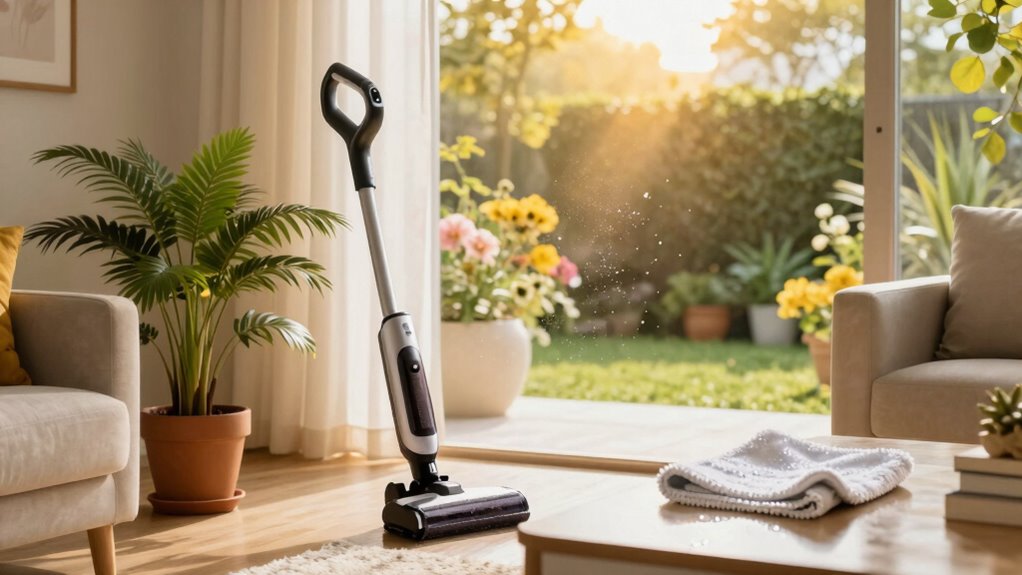
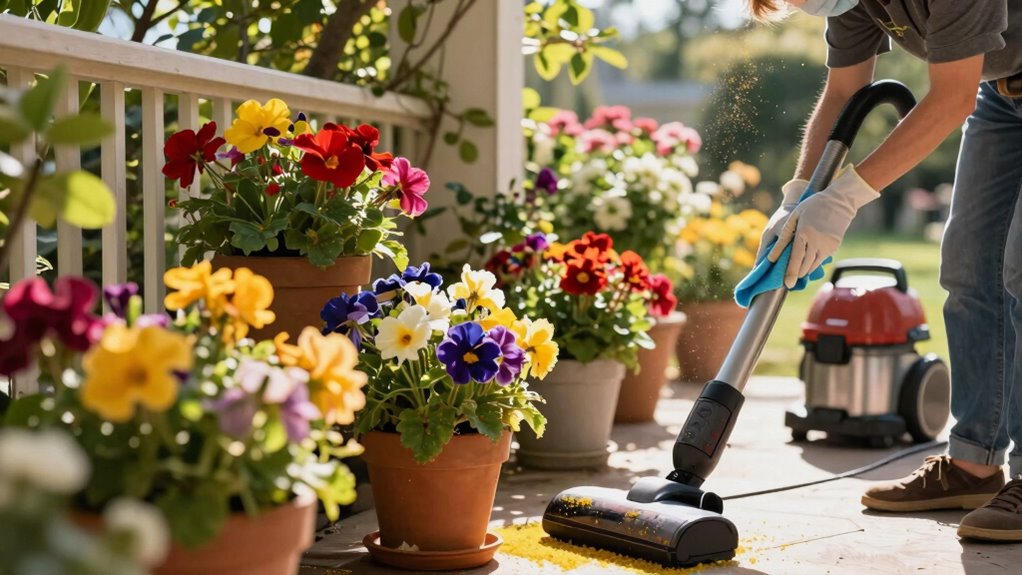
As spring arrives and pollen fills the air, you might find your home becoming a sneeze-inducing zone. The vibrant blooms outside are beautiful, but they can wreak havoc on your allergies. To tackle this seasonal challenge effectively, you need a smart cleaning strategy that enhances your indoor air quality and provides real allergy relief.
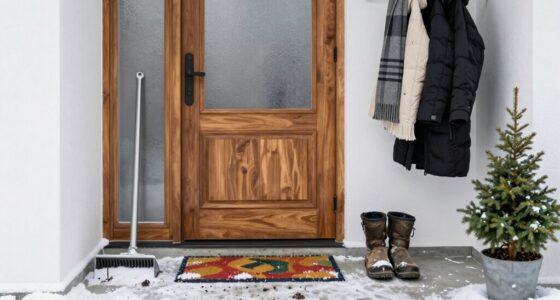
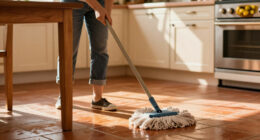
Start by focusing on the entry points of your home. Dust and pollen can hitch a ride on your shoes, clothes, and even your pets. Make it a habit to remove shoes at the door and have a designated area for outdoor gear. This simple step keeps most allergens from spreading throughout your living space. Next, give your entryway a thorough cleaning. Sweep or vacuum the floor and dust surfaces to eliminate any pollen that may have settled there.
Focus on entry points to minimize allergens. Remove shoes at the door and keep outdoor gear organized for a cleaner home.
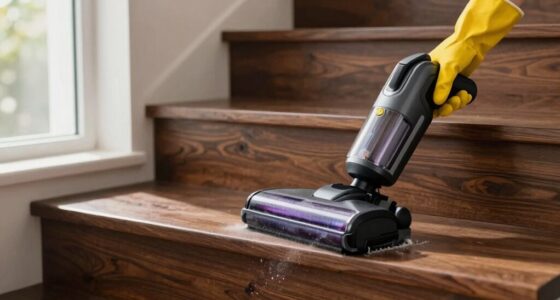
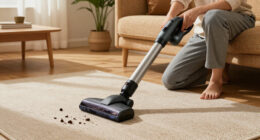
Once you’ve tackled the entryway, move on to your living room and common areas. Here, you should vacuum carpets and rugs using a vacuum equipped with a HEPA filter. These filters capture tiny particles, including pollen, helping improve your indoor air quality. Don’t forget to dust surfaces, including shelves and electronics, with a damp cloth to avoid sending dust back into the air. Regularly cleaning and maintaining indoor air quality is essential for allergy sufferers, especially during pollen season. Incorporating air quality monitoring can help you track pollen levels indoors and adjust your cleaning routines accordingly. Additionally, using natural cleaning products can reduce the amount of chemical pollutants that might irritate sensitive respiratory systems. Using a microfiber cloth can also trap more pollen and dust compared to traditional dusters.
Next, turn your attention to your bedroom. Wash your bedding in hot water at least once a week. This helps remove allergens that may have accumulated during the night. Also, consider using allergen-proof covers on pillows and mattresses to create a barrier against pesky allergens. If you have curtains, it’s time to give them a good wash or vacuum, as they can trap pollen and dust. Using air filtration systems can further improve your indoor air quality by reducing airborne allergens.
Now, let’s not forget about your HVAC system. Change your air filters regularly, ideally every month during pollen season. A clean filter can greatly improve indoor air quality by trapping airborne allergens. If you have an air purifier, run it in high-traffic areas to help reduce pollen levels. Moreover, keeping windows closed during peak pollen times can significantly limit outdoor allergens from entering your home.
Finally, it’s important to maintain a consistent cleaning routine throughout the pollen season. Regular cleaning not only helps with immediate allergy relief but also prevents pollen from building up in your home. By following this order for cleaning, you’ll create a more comfortable environment that keeps sneezing at bay. Implementing effective cleaning tools alongside these routines can make the process more efficient and thorough. With these proactive steps, you can enjoy the beauty of spring without the sneezes.
As an affiliate, we earn on qualifying purchases.
Frequently Asked Questions
How Can I Reduce Indoor Pollen Levels Effectively?
To reduce indoor pollen levels effectively, start by identifying pollen sources like open windows and plants. Keep your windows closed during high pollen days and use air purifiers with HEPA filters. Regularly vacuum and dust to remove any trapped pollen. Maintain indoor humidity below 50% to discourage mold growth, which can also contribute to allergens. Finally, consider using washable curtains and furniture covers that you can clean frequently.
What Cleaning Products Are Best for Allergy Sufferers?
For allergy sufferers, natural cleaners and hypoallergenic sprays are your best bet. They effectively reduce allergens without harsh chemicals that can irritate your respiratory system. Look for products with ingredients like vinegar or baking soda, which are both safe and effective. When you’re cleaning, don’t forget to use microfiber cloths to trap dust and pollen. This combination helps create a healthier environment for you and minimizes allergy symptoms considerably.
Should I Wear a Mask While Cleaning?
Yes, you should wear a mask while cleaning, especially during pollen season. A well-fitted N95 or surgical mask can help filter out allergens and dust. When using cleaning techniques that stir up particles, like vacuuming or dusting, it’s essential to protect your airways. This simple step can greatly reduce your allergy symptoms, making your cleaning experience safer and more effective. Don’t underestimate the power of a good mask!
How Often Should I Clean During Peak Pollen Season?
During peak pollen season, you should clean at least twice a week, especially if you’re tracking pollen levels. Studies show that over 50 million Americans suffer from seasonal allergies, making regular cleaning essential. Vacuuming and dusting help reduce pollen accumulation, so don’t skip these tasks. Pay attention to air filters, too; changing them can improve indoor air quality. Staying proactive with cleaning can greatly ease your allergy symptoms.
Can Air Purifiers Help During Pollen Season?
Yes, air purifiers can help during pollen season. They filter out various pollen types, reducing your exposure to allergens indoors. If you have indoor plants, be mindful of their watering and maintenance, as excess moisture can promote mold growth, worsening allergies. Investing in a quality air purifier with a HEPA filter can greatly improve your air quality, making your home a more comfortable space during peak pollen times.
As an affiliate, we earn on qualifying purchases.
Conclusion
As pollen dances through the air like tiny confetti, tackling your cleaning routine becomes essential. By starting with the outside, you’re sweeping away that sneaky invader before it settles in. Next, you’ll fortify your indoor fortress, dusting and vacuuming to reclaim your space. Remember, a little effort now means fresh, breathable air later. So, roll up your sleeves, embrace the challenge, and let your home shine brighter than a sunlit spring day!
air purifier for pollen allergies
As an affiliate, we earn on qualifying purchases.
As an affiliate, we earn on qualifying purchases.
As an affiliate, we earn on qualifying purchases.
Halloween Picks
halloween
As an affiliate, we earn on qualifying purchases.