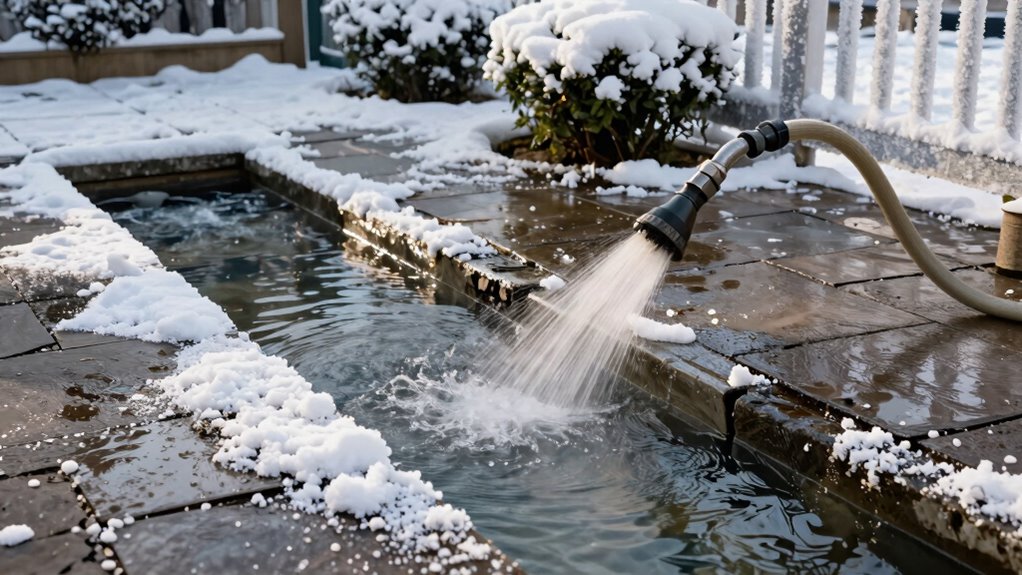

To wash winter salt residue off outdoor surfaces effectively, start by rinsing the area with a garden hose using a high-pressure nozzle on mild days above freezing. Use a soft brush with a solution of mild detergent and warm water to gently scrub cracks and joints where salt collects. Rinse thoroughly afterward, and consider using a vinegar and water mix for extra cleaning power. Continuing will give you more tips to keep your surfaces protected and safe.

Get cleaning gear delivered free with Prime
- Fast, free delivery on millions of items
- Prime Video, Amazon Music and more included
- Member-only deals all year
Key Takeaways
- Rinse surfaces thoroughly with a high-pressure hose on mild, above-freezing days to loosen and remove salt deposits.
- Use a soft-bristled brush with a mild detergent and warm water to scrub cracks and joints where salt accumulates.
- Neutralize remaining salt with a vinegar and water solution to prevent further damage and corrosion.
- Avoid harsh chemicals; opt for eco-friendly cleaning solutions to protect surfaces and surrounding vegetation.
- Regularly clean outdoor surfaces during winter to prevent salt penetration and prolong surface lifespan.
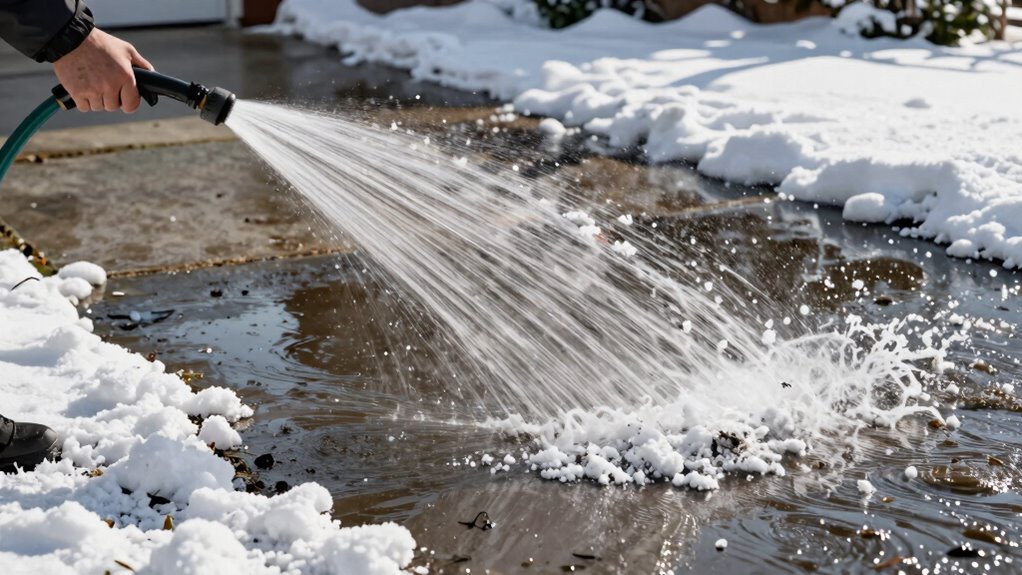
Winter salt helps keep your walkways safe, but if left on outdoor surfaces, it can cause damage and corrosion. Salt damage is a common issue during winter, especially when salt accumulates on concrete, brick, or stone surfaces. Over time, the salt seeps into tiny cracks and crevices, accelerating deterioration and weakening the material’s integrity. To prevent this, you need to remove winter salt residue promptly and effectively. Proper surface protection begins with understanding the significance of washing away residual salt before it causes lasting harm.
Removing winter salt promptly protects outdoor surfaces from damage and prolongs their lifespan.
When you’re ready to clean, start by rinsing the surface with a garden hose, using a high-pressure nozzle if possible. This initial rinse helps loosen and wash away the bulk of the salt deposits. It’s best to do this on a mild day when temperatures are above freezing, so the water doesn’t freeze and create an even bigger hazard. After the initial rinse, prepare a cleaning solution using mild detergent mixed with warm water. Avoid harsh chemicals that could further damage the surface or harm surrounding vegetation. Using a soft-bristled brush, scrub the surface gently but thoroughly, paying close attention to areas where salt tends to accumulate, like cracks and joints.
Once you’ve scrubbed the area, rinse thoroughly to remove any lingering salt and soap residues. It’s vital to wash away all traces of salt because residual salt can continue to cause damage even after cleaning. If you notice stubborn spots, you can repeat this process or use a mixture of vinegar and water for extra cleaning power. Vinegar’s acidity helps neutralize salt deposits, reducing the risk of surface damage. Additionally, understanding biodiversity and selecting environmentally friendly cleaning methods can help protect surrounding plant and animal life during your maintenance routine. Being aware of surface material properties can also inform the most effective cleaning techniques and prevent accidental harm. Incorporating environmentally conscious methods can also minimize the impact on local ecosystems, especially when using eco-friendly cleaning solutions.
Consistent cleaning throughout the winter season is essential for surface protection. Removing salt residue promptly reduces the risk of deterioration, extends the lifespan of your outdoor surfaces, and keeps your walkways safe. Regular maintenance also involves understanding the effects of salt on different materials, which can influence your cleaning approach. Remember, the key is not just cleaning but doing so before the salt has a chance to seep deep into the material. By staying proactive, you protect your surfaces from corrosion and costly repairs down the line. Proper maintenance now ensures your outdoor areas stay durable and safe, even after harsh winter conditions.
high pressure garden hose nozzle
As an affiliate, we earn on qualifying purchases.
As an affiliate, we earn on qualifying purchases.
Frequently Asked Questions
How Often Should I Wash off Winter Salt Residue?
You should wash off winter salt residue as soon as possible after snow removal, ideally within a week or two. Salt can damage surfaces over time, so regular cleaning helps prevent corrosion. If you’re concerned about harsh effects, consider using salt alternatives during snow removal. This way, you minimize residue buildup and protect your outdoor surfaces, keeping them in good shape throughout the winter season.
Can Salt Residue Damage Different Types of Outdoor Surfaces?
Imagine your concrete driveway, now stained with salt residue after a harsh winter. Salt corrosion can cause surface staining and damage to various outdoor surfaces, like brick, stone, or metal. For example, metal fixtures may rust faster, while stone surfaces might weaken over time. Salt residue indeed poses risks, leading to surface deterioration and staining, so it’s essential to clean it promptly to protect your outdoor spaces.
What Tools Are Best for Removing Salt From Concrete?
You should use a stiff-bristled brush and a garden hose to remove salt from concrete effectively. Applying salt neutralizers can help break down residue, making cleaning easier. For stubborn spots, consider alternative cleaning methods like a pressure washer or specialized concrete cleaners. Always follow instructions carefully to protect your surface. Regularly rinsing with water and using these tools guarantees your concrete stays intact and free from damaging salt buildup.
Is There Eco-Friendly Salt Removal Options?
You might worry eco-friendly options won’t work, but natural alternatives and biodegradable solutions can effectively remove winter salt residue without harming the environment. Using vinegar, baking soda, or eco-friendly commercial products helps protect plants and waterways. These solutions are safe, sustainable, and gentle on your surfaces, giving you peace of mind while keeping your outdoor spaces clean and salt-free. Embrace greener choices for a healthier, more beautiful environment.
How Do I Prevent Future Salt Buildup?
To prevent future salt buildup, you should focus on minimizing salt absorption into your outdoor surfaces. Apply a protective surface sealing product that creates a barrier against salt penetration. Regularly clean your surfaces to remove any salt residue early, and consider using eco-friendly de-icing alternatives when possible. These steps will help maintain your surfaces and reduce damage caused by salt, keeping them in better condition over time.
As an affiliate, we earn on qualifying purchases.
Conclusion
So, there you have it—your secret weapon against winter’s salty revenge. With just a spritz and a scrub, you can turn your icy mess back into a pristine paradise. Who knew cleaning could be so satisfying? Now, go forth and wage war on salt residue—your outdoor surfaces will thank you, and maybe even forgive you for those icy slip-ups. Remember, a clean patio is a happy patio—winter’s salty grip doesn’t stand a chance!
As an affiliate, we earn on qualifying purchases.
vinegar and water cleaning solution
As an affiliate, we earn on qualifying purchases.
As an affiliate, we earn on qualifying purchases.
Columbus Day / Indigenous Peoples' Day Picks
long weekend sales
As an affiliate, we earn on qualifying purchases.