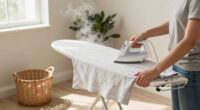
To improve indoor air while cleaning with your windows partly open, always opt for natural cleaning products to minimize VOCs. Use damp cloths to capture dust and allergens effectively, and mist your cleaner onto the cloth instead of spraying it directly. Clean in sections from top to bottom, and keep an eye on air quality with sensors. For better ventilation, consider using air purifiers. Keep going, and you’ll discover even more tips for a healthier home.

Get cleaning gear delivered free with Prime
- Fast, free delivery on millions of items
- Prime Video, Amazon Music and more included
- Member-only deals all year
Key Takeaways
- Use natural cleaning products to minimize VOCs and enhance indoor air quality during cleaning.
- Mist cleaner onto a damp cloth to reduce airborne particles and allergens.
- Clean in sections, starting from the top, to effectively capture and contain dust.
- Keep windows partly open for fresh air circulation while monitoring pollen levels outside.
- Use air purifiers to help remove pollutants and maintain cleaner air during the cleaning process.

When you clean your home, you might not realize that the products and methods you use can greatly impact your indoor air quality. If you want to improve air quality while cleaning, especially with your windows only partly open, you need to be mindful of the cleaning techniques and products you choose. The right approach not only helps in maintaining a fresh environment but also protects your health.
First, consider the cleaning products you’re using. Many conventional cleaners contain harsh chemicals that can release volatile organic compounds (VOCs) into the air. These compounds can linger and degrade your air quality, especially in spaces with limited ventilation. Opt for natural or eco-friendly cleaning products that are free from these harmful substances. Ingredients like vinegar, baking soda, and essential oils can effectively clean and disinfect without compromising your air quality.
Consider using natural or eco-friendly cleaning products to avoid harsh chemicals and improve your indoor air quality.
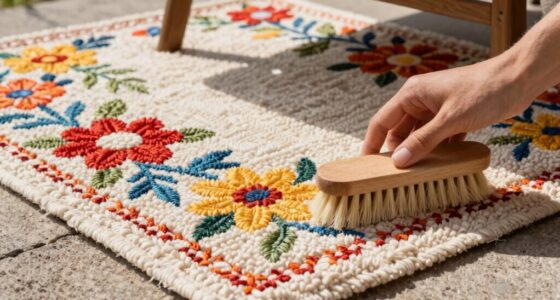
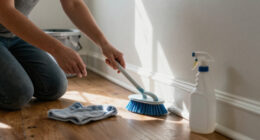
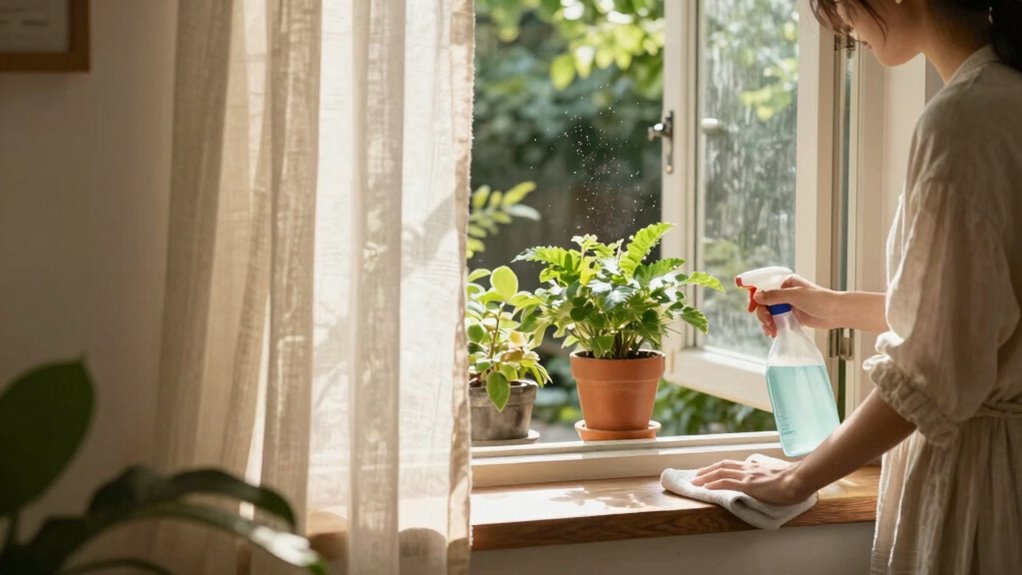
Next, think about your cleaning techniques. Instead of using sprays that aerosolize particles into the air, which can irritate your respiratory system, try using damp cloths or mops. This method helps trap dust and allergens, preventing them from becoming airborne. If you do need to use a spray cleaner, mist it onto the cloth instead of directly onto the surfaces. This reduces the amount of cleaner that evaporates into the air. Additionally, using air quality sensors can help you monitor the effectiveness of your ventilation and cleaning practices. Maintaining good indoor air quality is essential for overall health, especially during cleaning routines. Incorporating proper ventilation strategies can further enhance air circulation and pollutant removal. Regular cleaning of air filters and ensuring proper air exchange can also significantly improve indoor air quality.
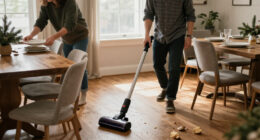
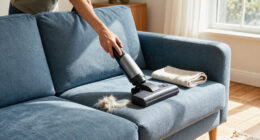
It’s also a good idea to clean in sections. When you tackle one room at a time, you limit the amount of dust and dirt that circulates throughout your home. Start from the top and work your way down, so dirt falls to the floor and can be cleaned up last. This technique guarantees you’re not just moving dust around but effectively capturing it.
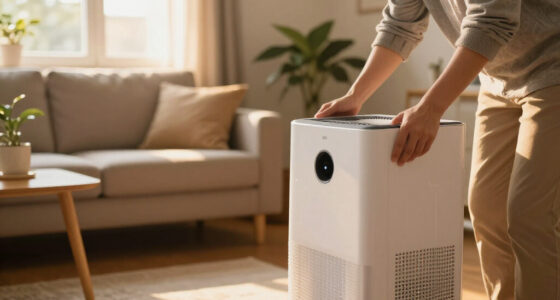
While you’re cleaning, keep those windows partly open to allow for some fresh air circulation. Even a small airflow can help dilute any remaining pollutants in the air. However, if it’s a high pollen day or you have other allergens outside, you might want to close them again after a short while. Using air exchange methods can further improve indoor air quality by effectively removing indoor pollutants. Air purifiers can also be an excellent investment if you’re serious about maintaining good indoor air quality. They filter out particulates and can work alongside your cleaning efforts.
Ultimately, by being conscious of the products you choose and the techniques you employ, you can greatly enhance your indoor air quality while cleaning. It’s all about making smarter choices that contribute to a healthier living environment.
Products Worth Considering

Levoit Vital 100S-P Air Purifier for Home and Pets

LEVOIT Air Purifier for Home, Pets, Bedroom, Smart WiFi

Coway Airmega AP-1512HHS Smart HEPA Air Purifier, Black
As an affiliate, we earn on qualifying purchases.
Frequently Asked Questions
Can Air Purifiers Help While Windows Are Partly Open?
Yes, air purifiers can definitely help while your windows are partly open. They improve airflow dynamics by circulating air and filtering out pollutants, which enhances purifier efficiency. Even with some outdoor air mixing in, your purifier can still trap dust, allergens, and other contaminants, making your indoor environment cleaner. Just guarantee you choose a high-quality model to maximize its effectiveness while you clean.
What Indoor Plants Improve Air Quality During Cleaning?
Snake plants and peace lilies are great indoor plants that can improve air quality during cleaning. Snake plants filter toxins like formaldehyde and benzene, while peace lilies absorb harmful chemicals and release moisture, helping keep the air fresh. Placing these plants around your home not only enhances aesthetics but also boosts your indoor air quality. So, while you clean, enjoy the added benefits these plants provide in your space.
How Often Should I Clean Air Filters?
You should clean or replace your air filters every one to three months, depending on usage and filter type. Regular filter maintenance is essential for maintaining good air quality in your home. If you have pets or live in a dusty area, you might need to clean them more often. Keeping your filters clean not only helps your HVAC system run efficiently but also guarantees you breathe cleaner air indoors.
Does Humidity Affect Indoor Air Quality When Cleaning?
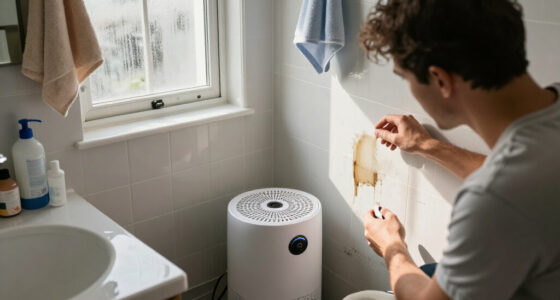
Yes, humidity levels greatly affect indoor air quality when you’re cleaning. High humidity can hinder drying and promote mold growth, while low humidity can cause dust and particles to become airborne. When using cleaning techniques, consider using dehumidifiers or fans to manage moisture. Keeping windows slightly open helps, too, as it balances humidity and brings in fresh air. Your cleaning efforts will be more effective with ideal humidity levels.
What Cleaning Products Are Safest for Indoor Air?
The safest cleaning products for your indoor air are natural alternatives and eco-friendly options. You can use vinegar, baking soda, and lemon juice for effective cleaning without harmful chemicals. These options not only reduce indoor air pollution but also keep your home fresh and safe. Avoid products with strong fragrances and toxic ingredients, as they can worsen air quality. By choosing these alternatives, you’ll breathe easier while maintaining a clean space.
Conclusion
Improving your indoor air quality while cleaning doesn’t have to be a challenge. Did you know that keeping windows only partly open can reduce indoor air pollutants by up to 50%? By utilizing this method along with natural cleaning products and houseplants, you can create a fresher, healthier environment. So, next time you clean, embrace these strategies. You’ll not only enjoy a cleaner space but also breathe easier, making your home feel more inviting and revitalizing.