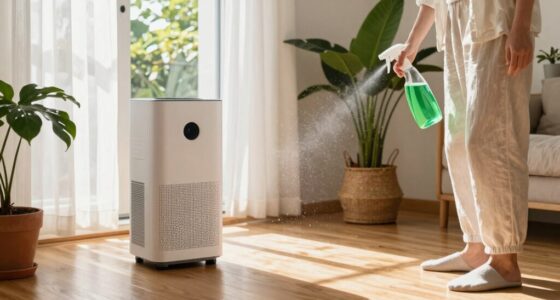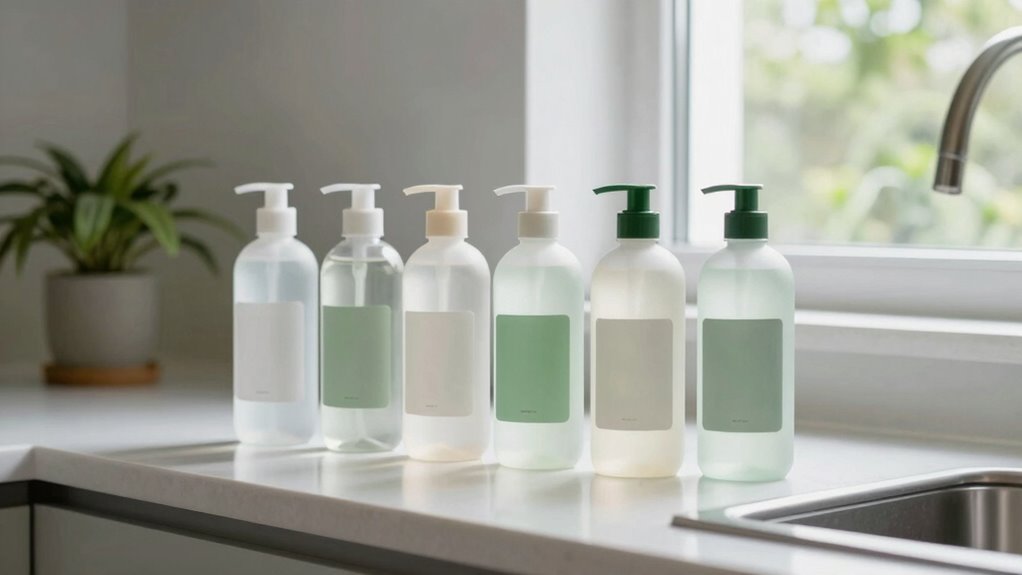

‘Low VOC’ cleaning products contain fewer volatile organic compounds, chemicals that can vaporize and pollute your indoor air. Using these products helps reduce chemical exposure, improve air quality, and create a safer home environment. They often have transparent labels and certifications that verify their eco-friendly claims. While they work well for most cleaning tasks, it’s helpful to understand how to spot genuine low VOC products—there’s more to learn to make smarter choices.

Get cleaning gear delivered free with Prime
- Fast, free delivery on millions of items
- Prime Video, Amazon Music and more included
- Member-only deals all year
Key Takeaways
- ‘Low VOC’ cleaning products emit fewer volatile organic compounds, reducing indoor air pollution and health risks.
- They typically contain less than around 50 grams per liter of VOCs, meeting specific environmental standards.
- Certification labels like Green Seal verify that products meet strict VOC emission limits and environmental criteria.
- ‘Low VOC’ cleaners often feature transparent ingredient lists and fewer harsh chemicals, supporting indoor air quality.
- Using low VOC products helps create healthier living environments by minimizing chemical exposure and indoor air contaminants.
As an affiliate, we earn on qualifying purchases.
What Are VOCs and Why Do They Matter in Cleaners?

Have you ever wondered what VOCs are and why they matter in cleaning products? VOCs, or volatile organic compounds, are chemicals that easily become vapors or gases at room temperature. When you use traditional cleaners, these compounds can pollute your indoor air, leading to increased chemical exposure. Breathing in VOCs can cause headaches, dizziness, and even long-term health issues. Because indoor air often contains these airborne chemicals, your home can become a source of ongoing exposure, especially if ventilation is poor. Understanding VOCs helps you realize why choosing low-VOC or VOC-free cleaning products is important. They reduce the amount of harmful chemicals released into your indoor environment, making your home safer and healthier.
eco-friendly low VOC disinfectant
As an affiliate, we earn on qualifying purchases.
As an affiliate, we earn on qualifying purchases.
How Are ‘Low Voc’ Labels Different From Regular Cleaning Products?
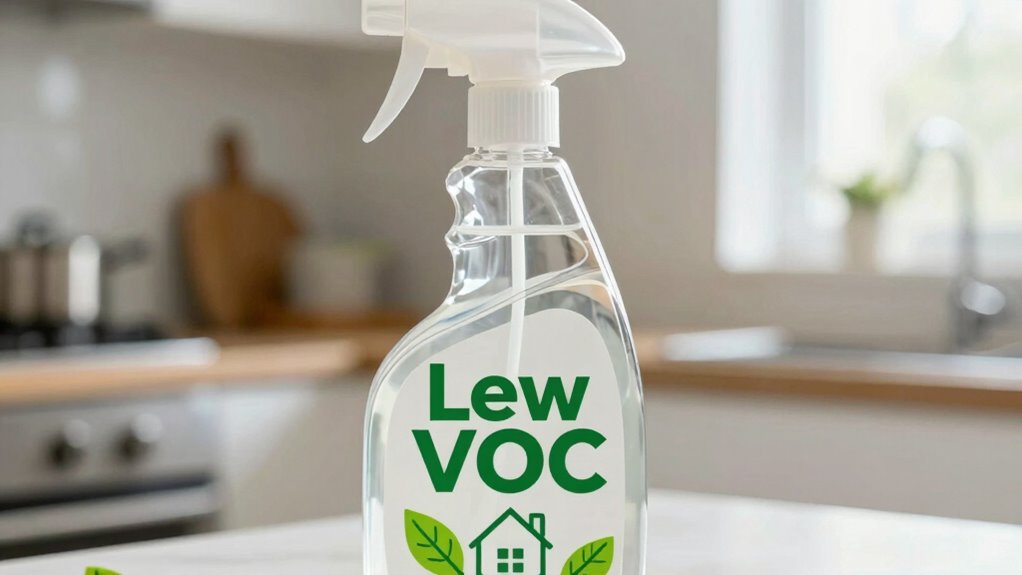
Low VOC labels mean the products meet specific VOC content standards, making them less harmful to indoor air quality. You’ll notice differences in ingredient transparency, with low VOC cleaners often listing fewer or safer chemicals. Additionally, these products tend to have a smaller environmental impact due to reduced emissions and pollution. Incorporating at-home beauty technology into your routine can also benefit from choosing low VOC products, as many gadgets and tools are designed to be used with environmentally conscious cleaners. Furthermore, selecting products with low VOCs can support broader sustainable practices, contributing to healthier ecosystems. Using low VOC cleaners can also improve indoor air quality, which is especially important in homes with sensitive individuals or respiratory issues. Choosing products with low VOCs can also encourage industry innovation, leading to the development of safer and more eco-friendly formulations. Awareness of VOC regulations can help consumers make more informed choices about the products they use daily.
VOC Content Standards
Understanding VOC content standards is key to distinguishing ‘low VOC’ cleaning products from regular ones. These standards set specific limits on the amount of volatile organic compounds in products, ensuring they emit fewer harmful fumes. ‘Low VOC’ labels typically mean the product contains less than a certain threshold, often around 50 grams per liter, depending on regulations. This reduces emissions of fragrance ingredients that can cause irritation and limits the VOCs released from packaging materials over time. As a result, ‘low VOC’ products contribute to better indoor air quality. Additionally, color accuracy in manufacturing processes can influence the consistency of VOC levels in cleaning products. Regular cleaning products may not adhere to these strict limits, often containing higher levels of VOCs. European cloud innovation aims to support sustainable practices, including the development of eco-friendly cleaning options. Knowing these standards helps you make informed choices for safer, more environmentally friendly cleaning. A thorough understanding of VOC regulations can also guide consumers toward choosing products that align with health and environmental priorities. Moreover, manufacturing consistency plays a significant role in ensuring that VOC levels remain within safe limits across different batches of products.
Ingredient Transparency Differences
While both ‘low VOC’ and regular cleaning products aim to clean effectively, they differ markedly in ingredient transparency. ‘Low VOC’ labels often mean manufacturers provide clearer information about ingredient sourcing and label transparency. You’ll likely see detailed lists specifying ingredients, including potential irritants and hazardous substances, making it easier to avoid certain chemicals. Regular products may have vague or generic labels like “fragrance” or “surfactants,” hiding specific ingredients. To illustrate, here’s a comparison:
| Aspect | Low VOC Products | Regular Cleaning Products |
|---|---|---|
| Ingredient Transparency | Clear, detailed labels | Vague, generic labels |
| Ingredient Sourcing | More traceability | Less traceability |
| Hazardous Substance Info | Explicit disclosures | Often hidden |
| Customer choice | Better informed decisions | Less informed |
| Regulatory Focus | Emphasizes transparency | Less emphasis |
Environmental Impact Factors
Compared to regular cleaning products, those labeled as ‘low VOC’ tend to have a considerably smaller environmental footprint. They contribute less to emission reduction, helping decrease airborne pollutants released during use. This reduction directly benefits indoor air quality, making your home safer and healthier. Traditional cleaners often emit volatile organic compounds that can linger indoors, affecting your respiratory health and overall well-being. In contrast, low VOC products release fewer harmful chemicals, minimizing the impact on the environment and your indoor environment. By choosing low VOC options, you support greener practices and reduce chemical exposure. This smaller environmental impact aligns with efforts to promote sustainable living and healthier indoor spaces. Additionally, selecting low VOC products can enhance the Gold IRA Markets, emphasizing environmentally responsible choices. Incorporating low VOC products can also contribute to indoor air quality improvements, leading to a healthier living environment. Overall, low VOC labels indicate a conscious choice for cleaner, safer cleaning that benefits both the planet and your household. Moreover, opting for low VOC cleaners can promote air quality standards that safeguard indoor environments for everyone.
certified low VOC cleaning products
As an affiliate, we earn on qualifying purchases.
As an affiliate, we earn on qualifying purchases.
Where Do VOCs Come From in Household Cleaners?
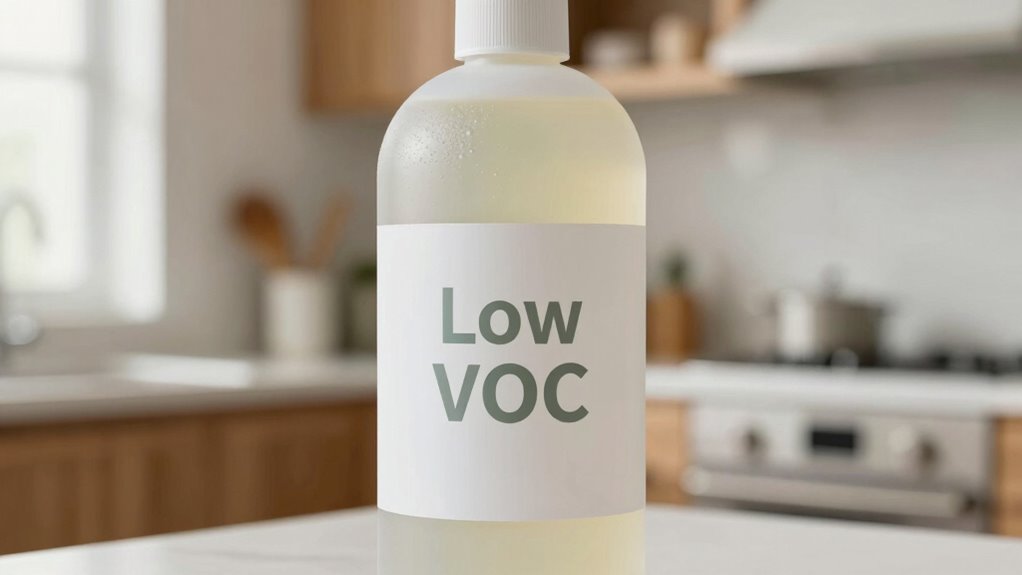
Household cleaners release volatile organic compounds (VOCs) when you use them, often without realizing it. These VOCs originate from the chemicals in your products that undergo chemical reactions during cleaning. The scent profiles you notice are a result of these compounds evaporating into the air. Different ingredients contribute distinct VOCs, shaping the overall smell and potential health impacts. Being aware of chemical reactions in cleaning products can help you select safer alternatives. Additionally, understanding how formulations influence VOC emissions can guide you toward choosing products with reduced chemical volatility. Research indicates that the specific personality traits associated with certain ingredients can also affect the types and amounts of VOCs released. Recognizing the chemical processes behind VOC release can empower you to make more informed choices about household cleaners. For example, newer green cleaning options often utilize fewer volatile compounds, reducing VOC emissions and potential health risks.
natural low VOC bathroom cleaner
As an affiliate, we earn on qualifying purchases.
As an affiliate, we earn on qualifying purchases.
How to Spot Truly Low VOC or Eco-Friendly Cleaners
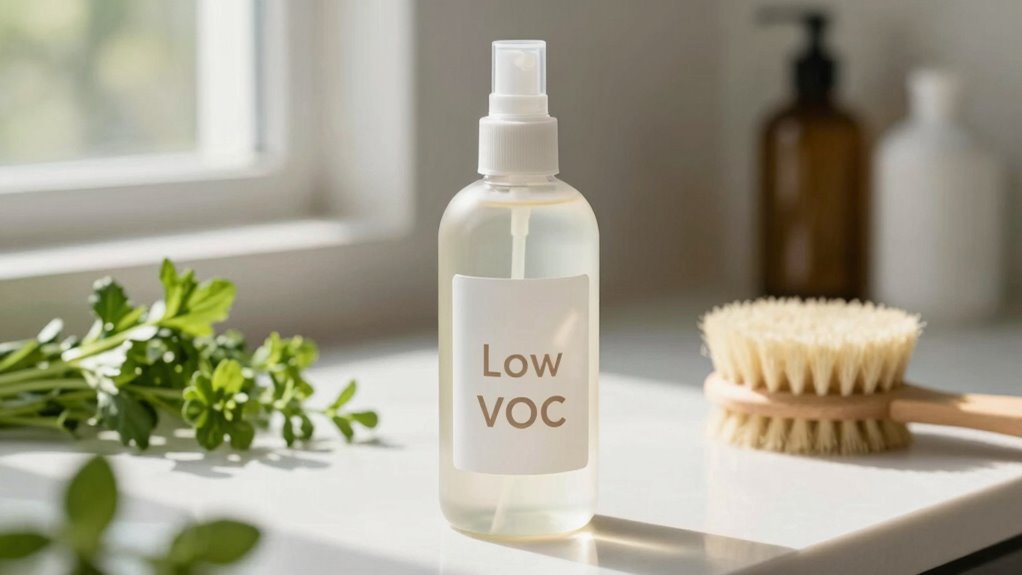
Spotting truly low VOC or eco-friendly cleaners starts with reading labels carefully. Look for certifications like Green Seal or EcoLogo, which indicate the product meets strict environmental standards. Check the ingredient list for natural or plant-based components, avoiding harsh chemicals that can linger in indoor air. Products labeled “low VOC” should specify VOC content levels; if not, they may not be as eco-friendly as they seem. Remember, reducing chemical exposure indoors helps improve indoor air quality and minimizes health risks. Avoid aerosol sprays or products with strong fragrances, which can release volatile compounds into the air. Trust transparent brands that openly share ingredient information. Additionally, dog-friendly cleaning products can ensure your home remains safe for pets while maintaining a healthy environment. Being aware of indoor air quality factors can further guide your choice towards truly eco-friendly options. Incorporating air quality testing can help verify the effectiveness of your chosen cleaners. Understanding VOC content levels can help you select products that truly minimize emissions and pollutants. To further reduce indoor pollutants, selecting products with certified eco-labels ensures adherence to recognized environmental standards. By being vigilant, you can select cleaners that genuinely support a healthier, less toxic home environment.
Why Use Low VOC Cleaning Products at Home? Benefits Explained
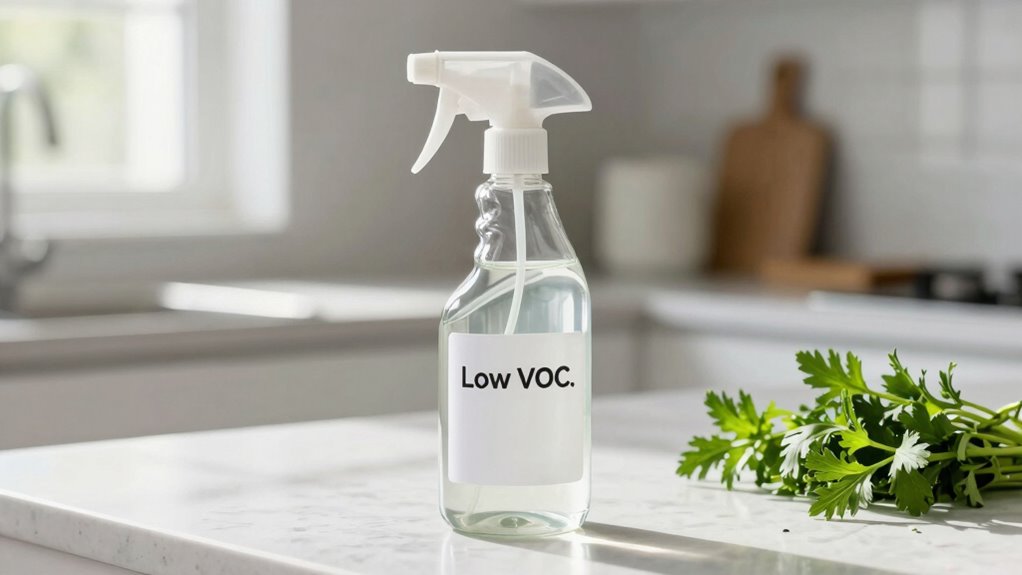
Using low VOC cleaning products at home can considerably improve your family’s health by reducing exposure to harmful chemicals. They also help protect the environment by minimizing air and water pollution. Making the switch is a simple step toward creating a safer, greener living space for everyone. Additionally, opting for products with eco-friendly ingredients supports sustainable manufacturing practices and further reduces your ecological footprint. Understanding VOC emissions can help you make more informed choices about the cleaning products you select. For example, being aware of the essential oils used in some products can guide you toward options that are both effective and safer for your household.
Health Benefits for Families
Choosing low VOC cleaning products can substantially improve your family’s health by reducing exposure to harmful chemicals. These products help maintain better indoor air quality, which directly impacts your loved ones’ well-being. Limiting chemical exposure decreases the risk of respiratory issues, allergies, and other health problems. Here are three key benefits:
- Cleaner indoor air – Low VOC products emit fewer volatile compounds, ensuring your home feels fresher.
- Reduced allergy triggers – Fewer chemicals mean less chance of irritating sensitive family members.
- Safer environment for children and pets – Lower chemical levels minimize accidental ingestion or contact.
Environmentally Friendly Choice
Opting for low VOC cleaning products is a smart way to protect the environment while keeping your home spotless. These products release fewer volatile organic compounds, which helps improve indoor air quality and reduce harmful chemical exposure. By choosing low VOC options, you’re supporting eco-friendly practices and minimizing air pollution both inside and outside your home. Fewer chemicals in your cleaning routine mean less strain on the environment and a healthier space for you and your family. Not only do you reduce your carbon footprint, but you also create a safer living environment free from strong chemical odors and irritants. Making this switch demonstrates your commitment to sustainability and a cleaner, greener future for everyone.
Do Low VOC Cleaners Work as Well as Regular Ones?
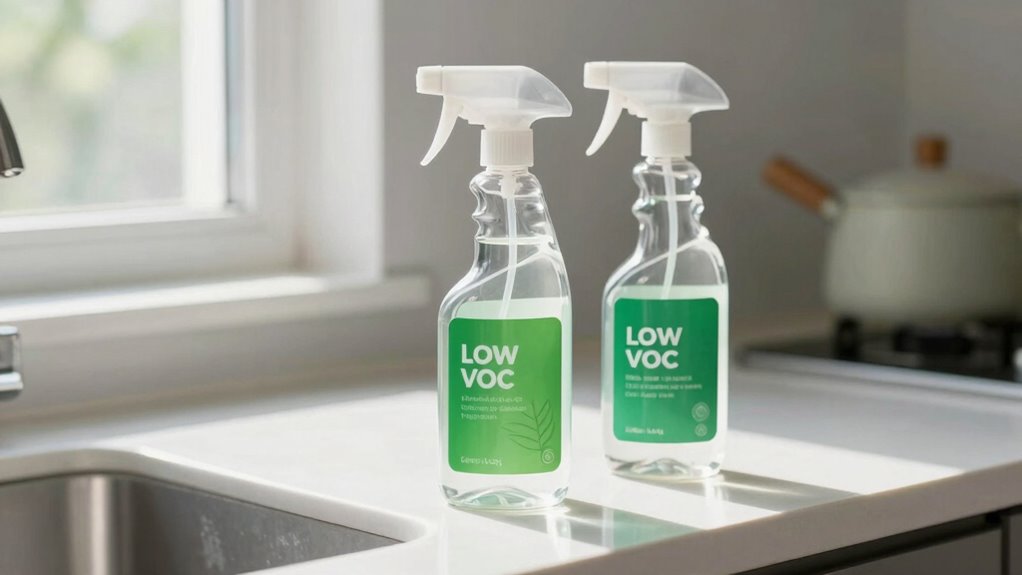
Many people wonder if low VOC cleaners are just as effective as regular products. Rest assured, they often are, but there are some factors to mull over. First, you might notice differences in fragrance concerns, as low VOC options tend to have milder scents or use alternative fragrances. Second, effectiveness can vary based on the cleaning task; for instance, heavy-duty stains may require stronger solutions. Third, cost considerations come into play, as some low VOC products can be more expensive upfront but may save money by reducing health risks or environmental impact. Overall, many low VOC cleaners deliver comparable results, especially for routine cleaning, making them a smart choice if you prioritize health and sustainability without sacrificing performance.
Certifications and Tips to Verify a Product’s Low VOC Status
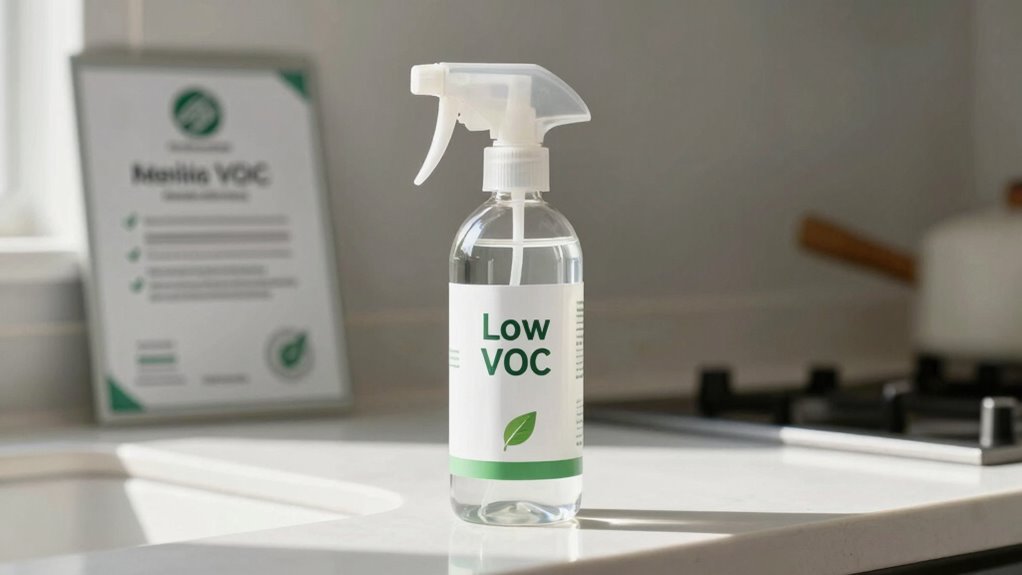
To guarantee a cleaning product truly lives up to its low VOC claims, it’s important to look for credible certifications and verify labeling. Certification labels from reputable organizations indicate the product has been tested for volatile organic compounds and meets strict standards. These labels help you distinguish genuinely low VOC products from those that merely market the claim. Always read the fine print and check the certification’s credibility, such as Green Seal or EPA’s Safer Choice label. Additionally, scrutinize the ingredient list for any hidden VOC sources. Remember, a certified low VOC product not only reduces indoor air pollution but also supports healthier environments. By paying attention to certification labels, you can confidently select cleaning products that align with your eco-friendly and health-conscious goals.
How to Choose Safe and Eco-Friendly Cleaning Products
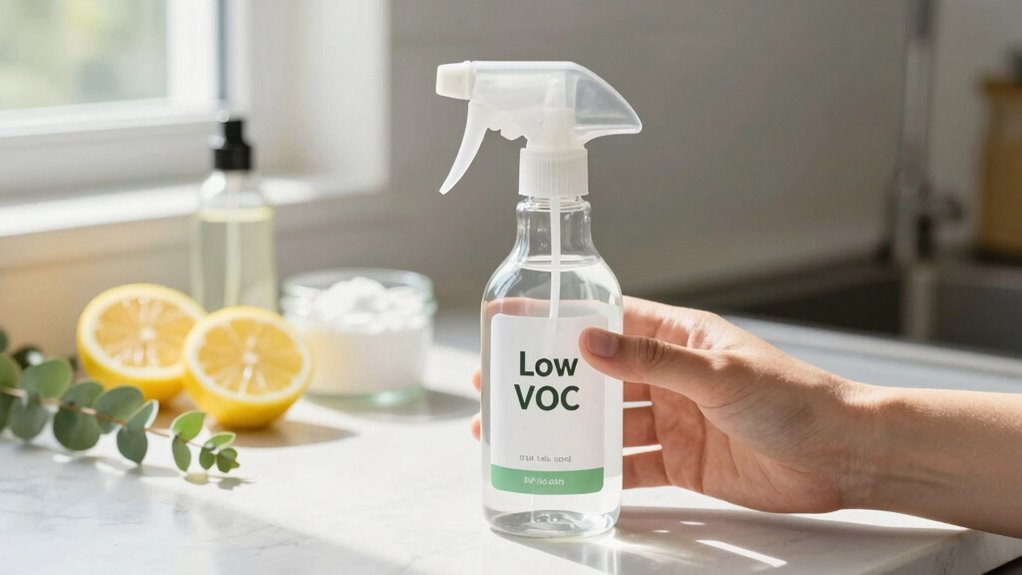
Choosing safe and eco-friendly cleaning products starts with understanding ingredient labels and making informed choices. To address air quality concerns and chemical safety considerations, consider these steps:
Opt for eco-friendly cleaning products by reading labels, checking certifications, and choosing plant-based, low-VOC options.
- Check for certifications like Green Seal or EPA Safer Choice, which ensure products meet strict environmental and health standards.
- Read labels carefully to identify low or zero VOC declarations, reducing indoor air pollution.
- Prioritize plant-based or biodegradable ingredients that minimize harmful chemical exposure and support eco-friendliness.
Frequently Asked Questions
Are ‘Low Voc’ Products Completely Odorless?
No, low VOC products aren’t completely odorless. While they emit fewer volatile organic compounds, some still have a mild scent from odor masking agents or natural ingredients. If you prefer scent-free options, look for products labeled as such, since they’re designed to minimize or eliminate odors altogether. Keep in mind that even scent-free, low VOC cleaners can sometimes have subtle smells, but they’re generally much less intrusive than traditional cleaners.
How Long Do VOCS Linger After Cleaning?
VOCs typically dissipate within a few hours to a few days after cleaning, depending on ventilation and the product’s VOC level. You might notice lingering odors for a while, especially in poorly ventilated areas. To accelerate VOC dissipation, open windows, use fans, and allow fresh air to circulate. Proper ventilation helps reduce lingering odors and ensures the VOCs leave your space faster.
Can Low VOC Cleaners Be Used Around Children and Pets?
Yes, low VOC cleaners are safer to use around children and pets because they emit fewer harmful fumes, supporting children safety and pet health. By choosing these products, you diminish the risk of respiratory irritation and chemical exposure. Always read labels to guarantee the product is certified low VOC, and use them in well-ventilated areas to maximize safety for your family and furry friends.
Do All Eco-Friendly Labels Guarantee Low VOC Content?
Ever wonder if an eco-friendly label truly guarantees low VOC content? Not necessarily. While eco labels aim for accuracy, they don’t always ensure low VOC levels, especially if chemical disclosures are incomplete or vague. It’s essential to read the labels carefully, check for transparency, and verify the manufacturer’s commitment to eco standards. Don’t rely solely on the label—dive into ingredient lists to make truly safe, eco-conscious choices for your home.
Are There Any Health Risks From Long-Term Exposure to Low VOC Cleaners?
Long-term exposure to low VOC cleaners generally poses fewer health risks, but it’s still important to take into account potential chemical exposure. Some low VOC products may contain other chemicals that could cause health effects over time, especially if used regularly or in poorly ventilated areas. You should always read labels carefully, use products as directed, and ensure proper ventilation to minimize any potential long-term health risks from chemical exposure.
Conclusion
Think of choosing low VOC cleaners as planting a seed for a healthier home. As you nurture this choice, you’re cultivating a space that breathes easier—free from invisible toxins. Like a clear sky after a storm, your home becomes a sanctuary of purity and peace. Each mindful pick is a drop of sunlight, illuminating your path to safer, eco-friendly living. Embrace this journey, and watch your environment flourish with energy and clarity.
Columbus Day / Indigenous Peoples' Day Picks
long weekend sales
As an affiliate, we earn on qualifying purchases.