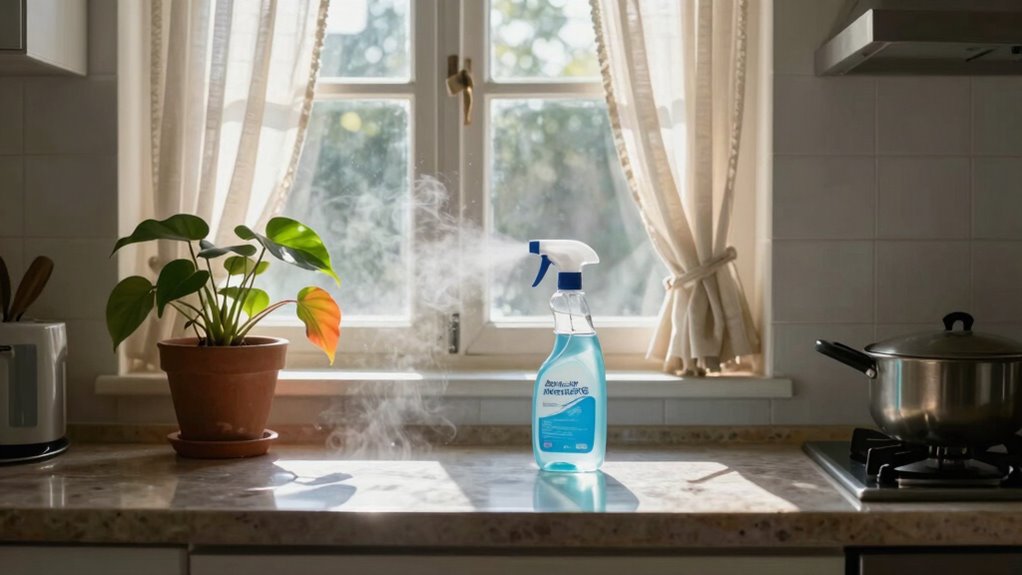
Over-spraying cleaners can seriously affect your home’s air quality longer than you might realize. When you over-spray, you release harmful volatile organic compounds (VOCs) that linger in the air, even after the fresh scent fades. These chemicals can irritate your lungs and worsen asthma symptoms, especially in poorly ventilated spaces. The surface residues continue to emit toxins over time, making the air you breathe unhealthy. There’s much more to reflect on about how cleaning impacts your indoor environment.

Get cleaning gear delivered free with Prime
- Fast, free delivery on millions of items
- Prime Video, Amazon Music and more included
- Member-only deals all year
Key Takeaways
- Over-spraying cleaners introduces excessive aerosol particles, leading to a lingering cocktail of harmful substances in the air.
- Chemical reactions from over-spraying release volatile organic compounds (VOCs), which can persist long after cleaning.
- Residues left on surfaces emit harmful particles gradually, affecting air quality over time.
- Poor ventilation exacerbates the accumulation of indoor pollutants, increasing health risks.
- Mindful cleaning practices, including targeted application, can significantly improve indoor air quality and reduce long-term effects.
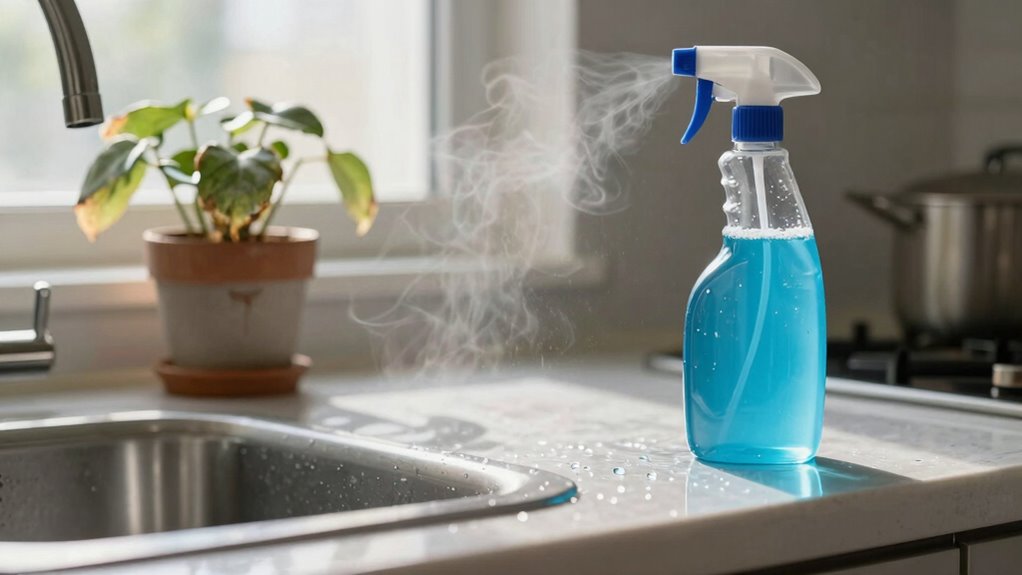
When you think about indoor air quality, you might not realize how much the cleaners you use can impact it. Over-spraying cleaners can introduce a cocktail of aerosol particles into your home’s atmosphere, leading to a variety of unintended consequences. You may be surprised to learn that the very scents you associate with cleanliness can indicate deeper issues related to air quality.
Every time you spray a cleaner, chemical reactions occur, releasing volatile organic compounds (VOCs) into the air. These VOCs contribute to poor air quality and can linger long after you’ve finished cleaning. You might enjoy the fresh scent of a newly cleaned surface, but that scent perception often masks the potential respiratory effects these chemicals can have on you and your family. The pleasant aroma could actually signal the presence of harmful substances that can irritate your lungs and exacerbate conditions like asthma.
Every spray of cleaner releases VOCs that can linger and affect respiratory health, masking harmful substances with a seemingly fresh scent.
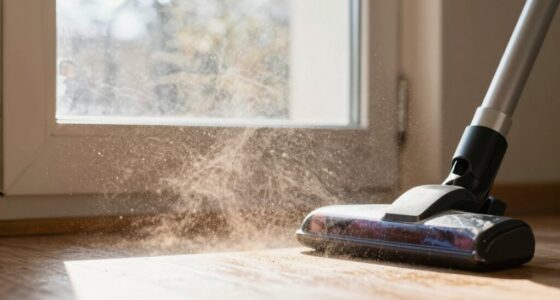
As you spray cleaners, surface residues remain on countertops, floors, and other areas. Even after you wipe them down, these residues can continue to emit harmful particles into the air. If you’re not mindful about how much cleaner you’re using, you could inadvertently create an environment where those residues continue to release harmful chemicals, affecting your indoor air quality over time. This isn’t just about the immediate aftermath of cleaning; it’s about what happens hours or even days later. Additionally, chemical emissions, such as VOCs, can accumulate if ventilation is inadequate, leading to higher indoor pollutant levels. Improving air exchange can help mitigate this accumulation and promote a healthier environment. Proper cleaning practices can further reduce chemical buildup and improve overall air quality. Using environmentally friendly cleaning products can also minimize chemical emissions, making your home safer for everyone.
Additionally, consider the ventilation impact. If your home isn’t well-ventilated, those aerosol particles have nowhere to go. They accumulate, leading to a higher concentration of pollutants that can affect your health. Good ventilation helps dilute these compounds and brings in fresh air, but if you’re continuously over-spraying, you’re counteracting any positive effects. Proper cleaning practices can significantly reduce the buildup of airborne chemicals and improve air quality.
Taking a more measured approach to cleaning can make a significant difference. Instead of saturating surfaces, focus on using the appropriate amount of cleaner for the task at hand. Not only will this help maintain a healthier indoor environment, but it’ll also reduce the likelihood of overwhelming scents and potential respiratory issues.
In short, the way you use cleaners directly affects your indoor air quality. By being mindful about over-spraying, you can guarantee a safer, cleaner living space for everyone in your home.
air purifier for indoor air quality
As an affiliate, we earn on qualifying purchases.
As an affiliate, we earn on qualifying purchases.
Frequently Asked Questions
How Do Different Cleaners Impact Indoor Air Quality Differently?
Different cleaners impact indoor air quality based on their chemical compositions. Some contain volatile compounds that easily evaporate, releasing harmful particles into the air. If you over-spray, you might leave cleaning residue that lingers, affecting air circulation. This can lead to a buildup of pollutants that you breathe in. Always check labels to choose cleaners with fewer harsh chemicals, ensuring a healthier indoor environment for you and your family.
Can Natural Cleaners Also Affect Indoor Air Quality?
Yes, natural cleaners can affect indoor air quality too. While they often contain safer ingredients, overusing them may still release volatile organic compounds (VOCs) that impact air quality. It’s crucial to choose natural alternatives with ingredient safety in mind. Even seemingly harmless substances can contribute to poor air quality if sprayed excessively. So, you should use them sparingly and guarantee proper ventilation to maintain a healthier indoor environment.
What Symptoms Indicate Poor Indoor Air Quality From Cleaners?
If you’re feeling under the weather, it might not just be bad luck. Symptoms like headaches, respiratory issues, and skin irritation can point to poor indoor air quality from chemical exposure. Sensitive populations, like children and the elderly, often experience these effects more acutely. Over time, these long-term effects can sneak up on you, making it crucial to monitor your cleaning habits and choose products that keep your air fresh and safe.
How Often Should I Clean to Maintain Good Indoor Air Quality?
To maintain good indoor air quality, you should clean your home at least once a week. Regular cleaning helps reduce indoor pollutants like dust, pet dander, and allergens. Don’t forget to vacuum carpets and rugs, as they can trap pollutants. If you notice any buildup or lingering odors, increase your cleaning frequency. Keeping surfaces dust-free and using air purifiers can also enhance your indoor environment, making it healthier for everyone.
Are There Specific Brands of Cleaners That Are Safer for Indoor Air?
When it comes to keeping things clean, you can’t judge a book by its cover. For safer indoor air, look for eco-friendly options like Seventh Generation or Mrs. Meyer’s. These brands often provide effective cleaning without harsh chemicals. While brand comparisons can help you find the best choice, always check labels for certifications like Green Seal. Your indoor air quality will thank you for choosing cleaners that are kinder to your environment.
As an affiliate, we earn on qualifying purchases.
Conclusion
Over-spraying cleaners can linger in your indoor air longer than you might expect, potentially affecting your health. In fact, studies show that some chemicals can remain airborne for up to 30 minutes after use. So, next time you reach for that spray bottle, remember that less is more. By using just the right amount, you’re not only improving air quality but also creating a healthier environment for you and your loved ones. Breathe easy!
natural environmentally friendly cleaning products
As an affiliate, we earn on qualifying purchases.
As an affiliate, we earn on qualifying purchases.
As an affiliate, we earn on qualifying purchases.
Fall Picks
fall essentials
As an affiliate, we earn on qualifying purchases.