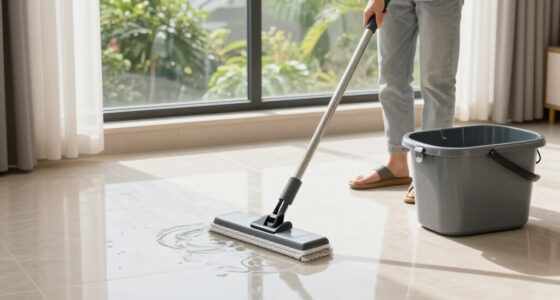
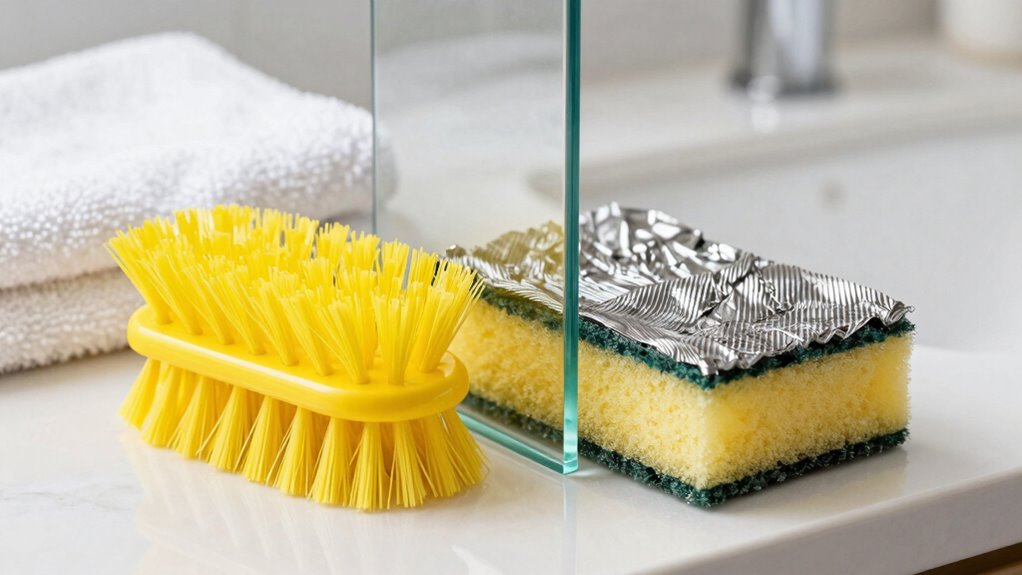

To prevent cross-contamination, keep your bathroom and kitchen cleaning tools separate, using different brushes, cloths, and sponges for each area. Label or color-code your tools to avoid mix-ups, and regularly disinfect them with antimicrobial solutions. Make sure tools dry completely and store in well-ventilated spots to prevent mold. Switch tools between areas and wash your hands afterward. For more tips on maintaining a hygienic cleaning routine, discover additional strategies below.

Get cleaning gear delivered free — and shop member deals
- Fast, free delivery on millions of items
- Access to Prime Big Deal Days deals on October 6–7
- Prime Video, Amazon Music and more included
Key Takeaways
- Designate separate cleaning tools for bathroom and kitchen areas, and label or color-code them accordingly.
- Ensure tools are thoroughly dried and stored in well-ventilated areas to prevent mold and bacteria growth.
- Regularly disinfect and replace sponges, brushes, and cloths to maintain hygiene.
- Avoid reusing soap dispensers for different areas without proper cleaning and sanitization.
- Always wash hands thoroughly after handling cleaning tools from either area.
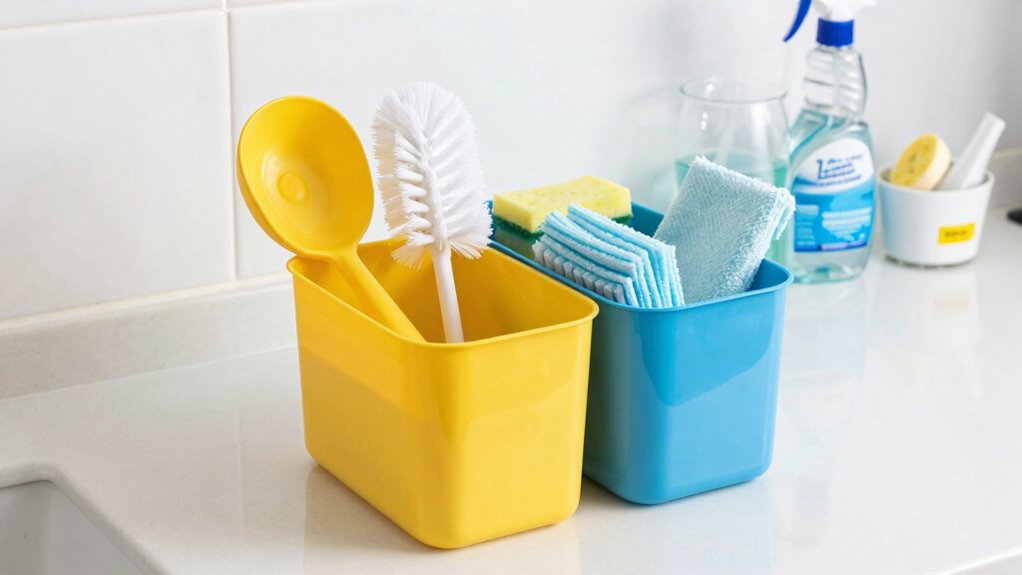
Cross-contamination between bathroom and kitchen cleaning tools can pose serious health risks, so it’s important to keep these tools separate and properly maintained. When you use the same sponge or cloth for both areas, you risk transferring bacteria, mold, and dirt from the bathroom to your food preparation zones. To prevent this, designate specific tools for each space. For example, keep separate brushes, scrubbing pads, and microfiber cloths—label or color-code them if needed. This simple step helps cut down on cross-contamination and makes sanitizing easier.
Keep bathroom and kitchen cleaning tools separate and labeled to prevent cross-contamination and maintain hygiene.
Mold prevention is another essential aspect of maintaining hygiene in both your bathroom and kitchen. Bathrooms tend to be damp environments, which create perfect conditions for mold growth on cleaning tools. Regularly inspect your sponges, brushes, and cloths for any signs of mold or mildew. Discard or replace tools that show visible mold, and guarantee your cleaning supplies dry completely between uses. Proper storage is key—store tools in well-ventilated areas to prevent moisture buildup, and consider using drying racks or hangers designed for cleaning tools. This minimizes the risk of mold spreading to other surfaces or your workspace. Additionally, understanding the importance of proper tool maintenance can significantly reduce the likelihood of bacterial growth. Using antimicrobial cleaning agents periodically can further help in keeping your tools sanitized and safe.
Soap dispenser hygiene is often overlooked but plays a crucial role in preventing cross-contamination. If you reuse soap dispensers for different cleaning tasks or personal hygiene, bacteria can quickly build up inside the reservoir. Always use fresh soap or disinfect the dispenser regularly—at least once a week—to prevent bacteria from multiplying. When refilling, wash the dispenser thoroughly with warm water and soap, then rinse and let it dry completely before refilling. This reduces the chances of bacteria, mold, or other pathogens contaminating your cleaning tools or surfaces.
Another tip to keep your cleaning routines safe is to sanitize your tools frequently. Use diluted bleach or a disinfectant spray to wipe down brushes and sponges after each use, especially when switching between bathroom and kitchen cleaning. Never use the same cloth or sponge for both areas without disinfecting it first. Additionally, always wash your hands thoroughly after handling bathroom cleaning tools before touching kitchen surfaces or food items to prevent transferring germs.
color-coded cleaning brushes set
As an affiliate, we earn on qualifying purchases.
As an affiliate, we earn on qualifying purchases.
Frequently Asked Questions
Can Cleaning Tools Be Reused After Cross-Contamination?
Cleaning tools can be reused after cross-contamination if you follow proper disinfection frequency and cleaning tool storage practices. Always sanitize your tools thoroughly with disinfectant, especially after using them in the bathroom or kitchen. Make certain to store them separately to prevent further cross-contamination. If tools show signs of wear or cannot be properly disinfected, it’s safer to replace them. Regular maintenance ensures safety and hygiene.
What Are the Best Storage Methods for Cleaning Tools?
You should store cleaning tools in a well-organized, dry space to prevent cross-contamination. Use separate storage containers or racks for bathroom and kitchen tools, ensuring each area is clearly designated. Regularly maintain your tools by cleaning and drying them thoroughly before storage. Proper storage organization minimizes bacteria spread and extends tool lifespan, making your cleaning routine safer and more efficient.
How Often Should I Replace My Cleaning Sponges?
Think of your cleaning sponge as a trusted warrior on your cleaning battlefield. To keep it effective, substitute it regularly, following the replacement frequency guidelines of every 1-2 weeks or when it shows signs of wear. The lifespan of your cleaning sponge depends on use and care, but don’t wait until it’s visibly filthy—early replacement ensures germs don’t gain a foothold. Stay vigilant to maintain a hygienic environment.
Are Antibacterial Sprays Effective for Preventing Cross-Contamination?
Antibacterial sprays can be effective for preventing cross-contamination if they have strong antibacterial efficacy. However, you should always consider spray safety—follow the instructions carefully, avoid inhaling fumes, and keep sprays away from children or pets. While they help reduce germs on surfaces, they shouldn’t replace thorough cleaning. Using antibacterial sprays as part of a complete cleaning routine ensures better protection against germs without risking misuse or over-reliance.
Is It Necessary to Disinfect Cleaning Tools After Each Use?
Think of your cleaning tools as soldiers on a mission; they need to be ready for battle at all times. Disinfecting after each use isn’t always necessary, but frequent cleaning depends on your cleaning frequency and tool material. For sponges or porous materials, disinfect daily to avoid bacteria buildup. For non-porous tools like plastic or metal, a thorough rinse or disinfectant wipe after each use keeps germs at bay, ensuring safety.
As an affiliate, we earn on qualifying purchases.
Conclusion
To keep your home safe, always separate your bathroom and kitchen cleaning tools. Regularly disinfect and store them separately to prevent bacteria transfer. Did you know that kitchen sponges can harbor up to 10 million bacteria? By following these simple steps, you greatly decrease the risk of cross-contamination, protecting your family’s health. Stay vigilant and make cleaning routines a priority—your well-being depends on it.
As an affiliate, we earn on qualifying purchases.
disinfectant spray for kitchen and bathroom
As an affiliate, we earn on qualifying purchases.
As an affiliate, we earn on qualifying purchases.
Evergreen bestsellers Picks
bestsellers
As an affiliate, we earn on qualifying purchases.