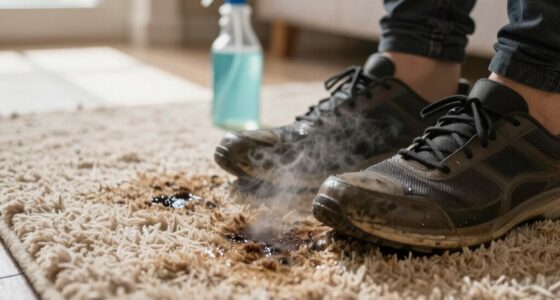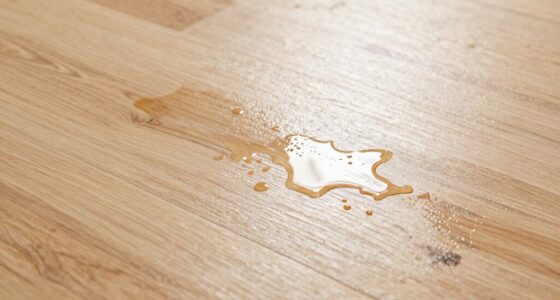
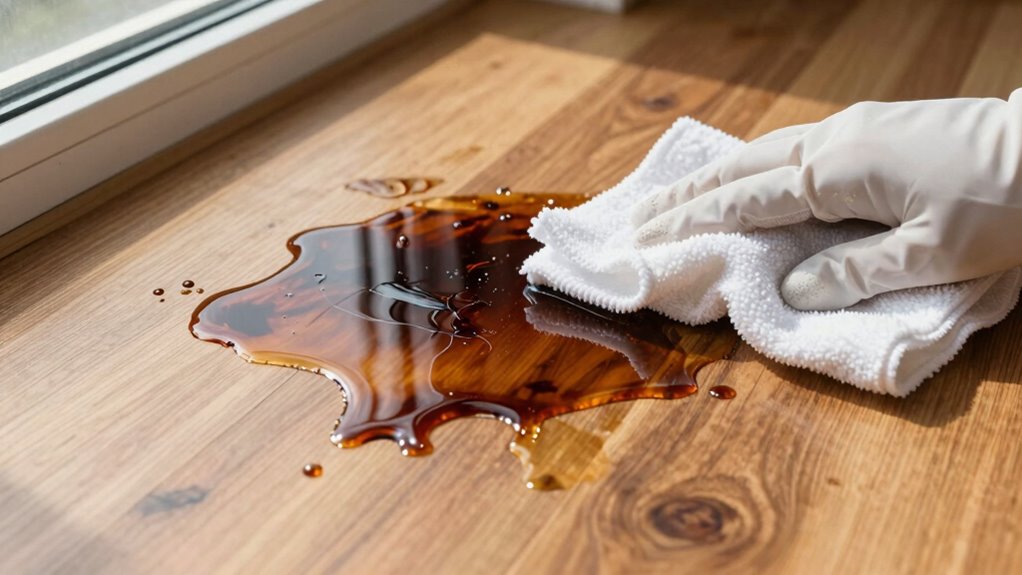

To prevent stains from garbage juice on your floor, act immediately by removing any solid waste and soaking up excess liquid with paper towels or an absorbent cloth. Next, use a cleaning solution like a mix of warm water and disinfectant to thoroughly wash the area. Rinse with clean water and dry completely to avoid residue. Properly disposing of used materials and maintaining regular cleaning will keep your floors cleaner longer—keep going to learn more tips.
Key Takeaways
- Remove excess garbage juice immediately with absorbent materials like paper towels or rags.
- Clean the area with a disinfectant or mild cleaning solution to eliminate bacteria and odors.
- Rinse the floor thoroughly with water to dilute remaining residues and prevent staining.
- Dry the surface completely with a clean towel or mop to prevent moisture-related stains.
- Apply a protective floor sealant if necessary to create a barrier against future leaks and stains.

If you’ve noticed a foul smell or sticky mess on the floor, chances are it’s caused by garbage juice—liquid seepage from trash bins that can quickly spread bacteria and odors. Addressing this issue promptly is essential, not just for cleanliness but also for health and hygiene. Proper waste management techniques are key to preventing garbage juice from becoming a recurring problem. One of the most effective ways to manage waste is understanding the importance of recycling. When you separate recyclables from regular trash, you reduce the volume of waste that can produce leaks and spills. Recycling helps contain liquids and prevents the buildup of soggy, smelly waste that’s more prone to leaking. It also minimizes the amount of trash in your bin, decreasing the chances of overflow and seepage.
Proper recycling reduces waste volume, prevents leaks, and keeps your space clean and odor-free.
Implementing waste management techniques involves more than just sorting waste; it requires regular cleaning and maintenance of your trash bins. Rinsing out bins periodically helps remove residual liquids that can turn into garbage juice. Using liners or bags that are sturdy and leak-proof can contain spills and make cleanup easier. When you notice leaks or spills, don’t wait—tackle them immediately. Wearing gloves, you should remove any contaminated liners and rinse the bin thoroughly with hot water and disinfectant. Drying the bin before placing a new liner reduces moisture that bacteria love, further preventing odors and bacterial growth. Additionally, smart waste management solutions, such as sensor-equipped trash bins, can alert you when they are full or need cleaning, making maintenance more efficient and preventing leaks before they happen.
Another essential waste management technique is ensuring your trash is sealed tightly. Loose or poorly sealed bags can rupture, releasing liquids and attracting pests. Regularly checking and replacing damaged bags helps contain the mess. If your trash area is outdoors, consider using covered bins to shield waste from rain, which can greatly increase the volume of garbage juice. Additionally, cleaning the floor area beneath and around your bins with disinfectant helps eliminate residual bacteria and odors that garbage juice leaves behind.
Preventing garbage juice also involves mindful disposal practices. Avoid overfilling bins, which can cause liquids to spill out. Wrap particularly messy waste, like food scraps or liquids, in plastic before discarding it. This extra step keeps liquids contained and reduces the risk of seepage. Overall, understanding recycling importance and applying effective waste management techniques create a cleaner, healthier environment. By staying proactive in cleaning and maintenance, you prevent stains and stains-related damage, ensuring your space remains hygienic and odor-free. Taking these steps not only keeps your floors clean but also promotes responsible waste handling, reducing environmental impact and making your cleanup routine more manageable.
Frequently Asked Questions
How Long Does Garbage Juice Typically Take to Dry Completely?
Garbage juice usually takes about 30 minutes to a few hours to dry completely, depending on environmental factors. If the room is warm and dry, it’ll dry faster, sometimes in under an hour. Cooler or humid conditions can extend the drying time to several hours. To speed up the process, increase airflow with fans or open windows. Keep in mind, the exact drying time varies based on the amount of liquid and surface material.
Are There Eco-Friendly Methods to Clean Garbage Juice Stains?
Think of eco-friendly cleaning methods as a gentle rain washing away stains. You can use biodegradable cleaners and natural stain removers to clean garbage juice stains effectively. These eco-conscious options break down harmful chemicals and are safe for the environment. By choosing natural solutions, you protect your surroundings while keeping your floors spotless. So, yes, there are sustainable ways to tackle garbage juice stains without harming the planet.
Can Garbage Juice Damage Certain Types of Flooring?
Garbage juice can damage certain flooring materials, especially porous ones like wood or carpet, by causing stains or warping. To prevent this, act quickly for stain prevention and clean spills immediately. Use appropriate cleaning methods based on your flooring material, and avoid harsh chemicals that might worsen damage. Properly addressing garbage juice guarantees your floors stay intact and look their best, protecting your investment and maintaining a clean, safe environment.
What Protective Gear Should I Wear During Cleanup?
When cleaning up garbage juice, you should wear protective gloves and a respirator mask. Gloves shield your skin from bacteria and chemicals, while a respirator mask prevents you from inhaling harmful fumes and airborne particles. By wearing these protective gears, you minimize health risks and guarantee a safer cleanup process. Always prioritize safety, especially when dealing with potentially hazardous waste like garbage juice.
Is It Safe to Use Bleach on Garbage Juice Spills?
Like a knight wielding a double-edged sword, using bleach on garbage juice spills demands caution. While bleach safety is essential, it effectively acts as a disinfectant, breaking down germs and odors. However, you must guarantee proper ventilation and avoid mixing it with other cleaners to prevent dangerous fumes. When used correctly, bleach’s disinfectant effectiveness helps you conquer spills without risking harm or damage to surfaces.
Conclusion
Now that you know how to clean up garbage juice quickly, you can prevent stains before they set in. Just remember, a stitch in time saves nine—acting fast keeps messes from turning into bigger problems. Keep a cleaning kit handy and stay proactive. When spills happen, don’t let them fester; deal with them right away. That way, you’ll keep your floors looking fresh and avoid unnecessary headaches down the line.