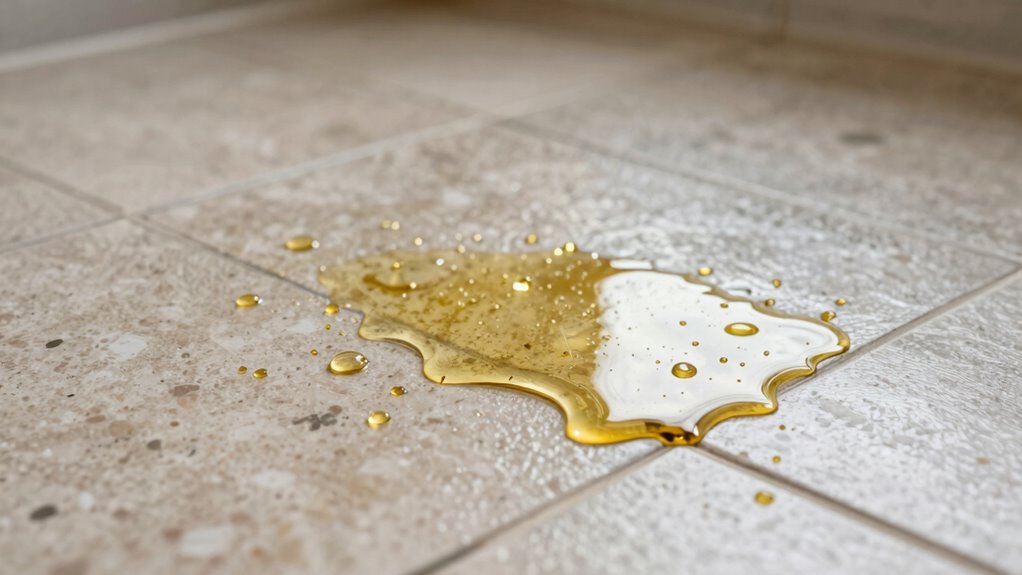

To de-grease tile without slipping, start by blotting excess oil with paper towels and avoid spreading it. Prepare a warm water and dish soap mixture, then scrub the area with a mop or brush, rinsing often. After cleaning, make certain you dry the floor thoroughly with a towel or microfiber cloth to prevent slickness. For extra safety, use non-slip mats and check for any remaining residue. Keep going to discover more tips for a safe, grease-free kitchen floor.
Key Takeaways
- Use absorbent materials to remove excess oil before cleaning to prevent spreading and slipping.
- Apply a degreasing cleaner or vinegar thoroughly, then rinse with clean water to eliminate grease residue.
- Dry the cleaned area completely with a towel or microfiber cloth to prevent moisture buildup and slips.
- Avoid oversaturating the floor with water during mopping; focus on targeted cleaning to reduce slickness.
- Install non-slip mats or rugs around cooking zones and promptly clean spills to enhance safety and prevent slips.
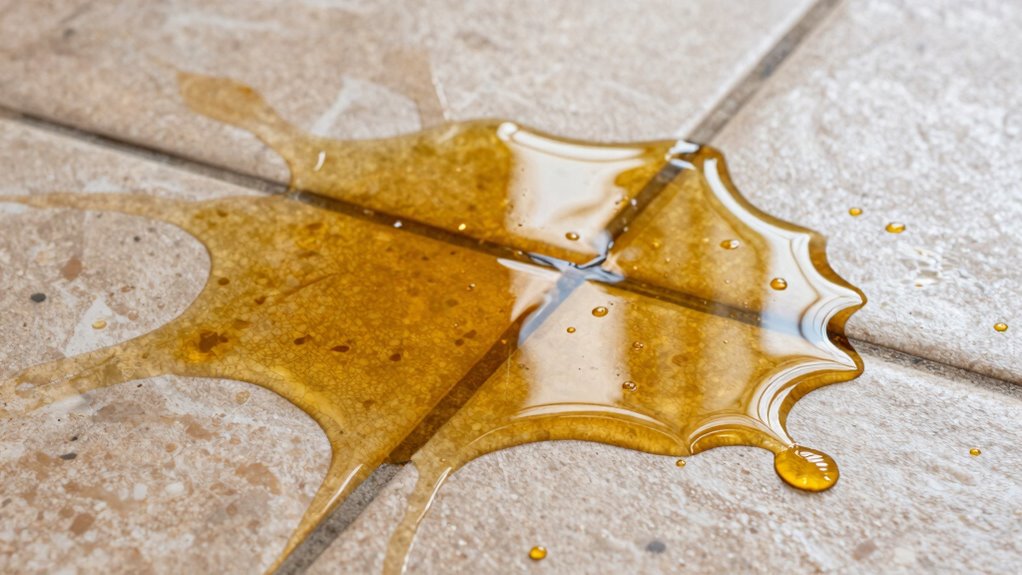
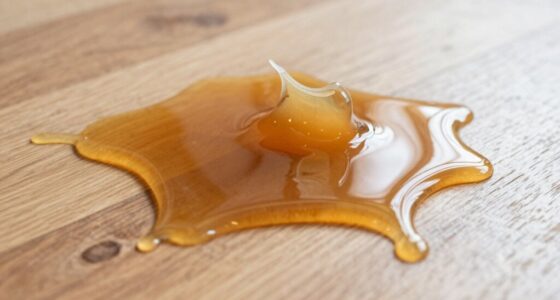
Cooking oil spills on tile can be a common and frustrating problem in the kitchen. When it happens, your first priority is to clean it up quickly and effectively. Using the right cleaning techniques is essential to remove the greasy residue without making the floor dangerously slippery. Start by blotting up as much oil as possible with paper towels or a clean cloth. Avoid rubbing, as this can spread the oil further or push it into the grout lines. Once you’ve absorbed the excess, prepare a cleaning solution. Mix warm water with a few drops of dish soap, which is effective at breaking down grease. Dip a mop or scrub brush into the solution and work it into the oily spots. Rinse the mop frequently to prevent spreading the grease around. After cleaning, go over the area with a clean, damp cloth to remove any remaining soap residue. For stubborn grease, you can add a small amount of vinegar or a degreasing cleaner specifically designed for kitchen surfaces. Be sure to rinse thoroughly afterward to leave your tile looking clean and shiny.
Slip prevention is vital after cleaning oil spills, as leftover residue or overly wet floors can still be hazardous. Once you’ve wiped down the area, dry the surface thoroughly using a clean towel or a microfiber cloth. If you want extra safety, lay down non-slip mats or rugs around the kitchen, especially near cooking zones where spills are more likely. These mats help prevent accidents if any residual grease remains or if the tile gets wet again. When mopping, avoid overly saturating the floor with water, as excess moisture can create a slick surface once it evaporates. Regularly inspect your tiles and grout lines, and clean spills promptly to maintain a safe environment. If you notice any persistent greasy patches, re-clean the area with an appropriate degreasing agent to guarantee no slippery residue remains.
In addition to cleaning techniques, keeping your kitchen safe involves proactive slip prevention measures. Use slip-resistant footwear while cooking and cleaning, and always be cautious when moving around the kitchen after a spill. Establish a routine of immediate cleanup for oil spills to prevent buildup and reduce the risk of slips. Properly sealing your grout lines can also help prevent grease from seeping into the porous material, making future cleaning easier. Overall, managing cooking oil on tile requires swift, effective cleaning and ongoing slip prevention strategies. By staying vigilant and using proper techniques, you’ll keep your kitchen safer and your floors spotless.
Frequently Asked Questions
Can Baking Soda Fully Remove Cooking Oil Stains From Tile?
Baking soda is effective for removing cooking oil stains from tile, but it might not fully eliminate tough, old stains. To maximize stain removal, create a paste with baking soda and water, then scrub gently. For stubborn stains, let the paste sit for a few minutes before wiping. While baking soda helps lift grease, combining it with other stain removal techniques can improve results and keep your tiles clean and safe.
Are There Eco-Friendly Degreasers Safe for Tile Surfaces?
Yes, there are eco-friendly degreasers safe for tile surfaces. You should look for products with biodegradable solvents and natural cleaning agents, which effectively cut through grease without harmful chemicals. These degreasers are gentle on your tiles, reduce environmental impact, and minimize slipping hazards. Always follow the manufacturer’s instructions, test on a small area first, and guarantee proper ventilation to keep your cleaning safe and eco-conscious.
How Often Should I Deep Clean Greasy Kitchen Tiles?
You should deep clean your greasy kitchen tiles at least once a month to maintain proper kitchen maintenance. Regular cleaning helps prevent grease buildup and keeps your tiles looking fresh. If you cook frequently or notice more grease, consider increasing the cleaning frequency to every two weeks. Establishing a consistent cleaning schedule guarantees your tiles stay safe, slip-free, and hygienic, making your kitchen a healthier and more pleasant space to work in.
What Are Quick Fixes for Fresh Oil Spills on Tile?
If fresh oil spills on your tile, grab paper towels or an absorbent cloth immediately. Blot the spill gently to absorb excess oil, preventing staining and future slip hazards. Then, sprinkle baking soda or cornstarch directly onto the stain—these absorb oil effectively. Let it sit for 10-15 minutes, then wipe away. This quick fix helps with oil absorption and stain prevention, keeping your tiles safe and clean.
Does Frequent Cleaning With Vinegar Damage Tile Grout?
Frequent cleaning with vinegar can lead to vinegar damage and grout deterioration over time. Vinegar’s acidity erodes the grout’s surface, causing it to weaken and stain. To prevent this, avoid using vinegar excessively and opt for pH-neutral cleaners designed for tile and grout. Regular gentle cleaning helps maintain your tile’s appearance without risking damage, keeping your grout intact and your tiles looking their best.
Conclusion
Now that you know how to tackle cooking oil on tile, you’re like a skilled sailor steering clear of slick hazards in stormy waters. With the right tools and a steady hand, you can clear away the grease and restore your floor’s shine without slipping into danger. Think of your kitchen as a dance floor—keeping it clean and safe lets your steps stay graceful, turning potential chaos into a smooth, confident glide.