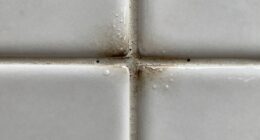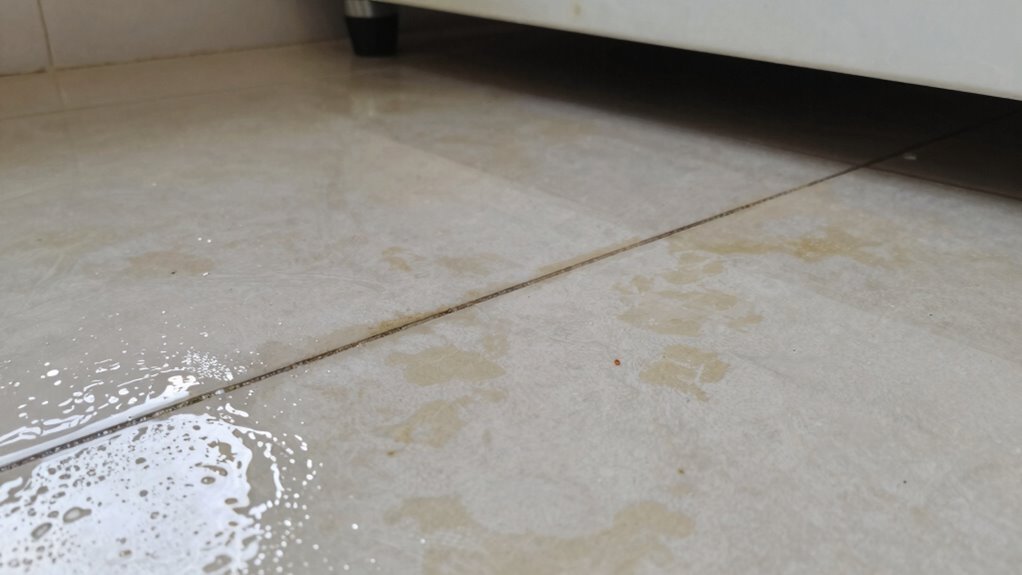

To find the hidden sources of a fishy odor on your floors, start by inspecting for residual seafood spills or pet accidents that might be soaked into the surface. Check for damp spots or stains where mold could be growing, and look for organic matter that feeds mold or bacteria, even if it’s not visible. These hidden issues could be causing the smell. Keep going for more tips to eliminate the odor effectively.
Key Takeaways
- Inspect for visible stains or damp spots that may harbor mold or organic matter causing odors.
- Check for pet accidents or spills from fish or seafood that might have seeped into the flooring.
- Look for mold growth in damp, poorly ventilated areas or beneath the flooring.
- Identify residual cleaning products or chemical traces that could emit a fishy smell over time.
- Ensure proper ventilation and air circulation to help dissipate hidden or airborne odors.

If you’ve ever noticed a strong fishy smell lingering on your floors, you’re not alone. That stubborn odor can be frustrating, especially when it seems to come out of nowhere. The good news is, identifying the source and using effective cleaning techniques can help you eliminate it completely. First, understanding where the odor originates is vital. Common culprits include spills from fish or seafood, pet accidents, mold, or even residue from previous cleaning products. Check your floors carefully for any visible stains or damp spots that might hint at hidden moisture or organic matter feeding mold growth. Once you pinpoint the source, you can move on to odor elimination strategies.
Start by thoroughly cleaning the affected area. Use a mixture of warm water and a mild detergent or specialized floor cleaner that’s safe for your flooring type. Avoid harsh chemicals that might leave behind residues, as these can trap odors or cause more problems down the line. For stubborn smells, incorporate white vinegar into your cleaning routine—vinegar is a natural deodorizer that neutralizes fishy odors effectively. Mix equal parts vinegar and water, then mop the area thoroughly. Be sure to rinse with clean water afterward to remove any leftover vinegar scent. If the odor persists, consider using a commercial enzymatic cleaner designed specifically for organic stains and odors. These products break down the odor-causing molecules at their source, making your cleaning techniques more effective.
Thoroughly clean with vinegar and water, then rinse to neutralize persistent fishy odors effectively.
In addition to cleaning, it’s imperative to ventilate the space well. Open windows and doors to allow fresh air to circulate, helping to carry away lingering smells. You might also use fans to speed up the process. If the smell is deeply embedded in porous surfaces like carpets or rugs, you may need to consider additional steps such as steam cleaning or applying a deodorizing powder designed for carpets. For hardwood or tile floors, regular cleaning paired with odor-neutralizing sprays can make a big difference. Remember that persistent odors often mean unseen residue, so repeat cleaning and deodorizing as necessary. Utilizing air purifiers with HEPA filters can also help remove airborne odor molecules and improve overall air quality.
Ultimately, the key to dealing with fishy odors on your floors is patience and consistency. Use effective cleaning techniques tailored to your flooring type, and don’t hesitate to seek out odor elimination products that target organic smells. With a bit of effort, you can restore a fresh, clean scent to your home and prevent the smell from returning. Regular maintenance and prompt attention to spills or stains will keep your floors smelling great and free from that unpleasant fishy aroma.
Frequently Asked Questions
Can Fishy Odors Come From Mold Growth Under the Floor?
Yes, fishy odors can come from mold growth under the floor. Mold detection is essential because hidden mold can emit a strong, unpleasant smell. If you notice this odor, check beneath your floors for signs of mold and moisture. To prevent future odors, make certain proper ventilation and control humidity levels. Regular inspections and prompt mold detection help maintain a fresh environment and prevent mold from becoming a persistent problem.
Are Plumbing Leaks a Common Source of Fishy Smells?
Plumbing leaks are often the sneaky culprits behind fishy smells, like a hidden leak whispering secrets. These leaks can lead to dampness and mold, which produce that unmistakable odor. As odor sources, plumbing leaks introduce bacteria and mildew that cause the fishy scent to linger on your floors. You should check for leaks around sinks, toilets, and pipes, because addressing them quickly keeps your home fresh and odor-free.
How Long Does It Take for Odors to Dissipate Naturally?
The time for odors to dissipate naturally varies based on air circulation and odor absorption. Typically, it can take anywhere from a few hours to several days. Improving air circulation by opening windows or using fans speeds up the process. Keep in mind, if the smell persists, it may be absorbed into carpets or furniture, requiring cleaning or ventilation to fully eliminate the odor.
Can Pets Contribute to Fishy Odors on Floors?
Your pet’s accidents can turn your home into a fish market overnight, releasing a pungent, lingering fishy odor on floors. Poor pet grooming and missed accidents trap moisture and bacteria, intensifying the smell. Regularly cleaning up pet messes, deep cleaning carpets, and maintaining grooming routines will help prevent these odors from taking over. Act quickly to eliminate the source before it becomes an unstoppable, fishy invasion!
Are Certain Flooring Materials More Prone to Trapping Fishy Smells?
Certain flooring materials are more prone to trapping fishy smells, especially porous surfaces like carpet or unsealed wood. Waterproof flooring, such as vinyl or tile, resists odor absorption and makes it easier to clean. If you notice persistent fishy odors, consider upgrading to waterproof options and sealing porous surfaces. Regular cleaning and proper ventilation help reduce odor buildup, ensuring your floors stay fresh and odor-free.
Conclusion
Now that you know the hidden sources behind that fishy odor on your floors, will you take action to find and eliminate them? Don’t ignore that persistent smell—it could be more than just a nuisance, possibly signaling hidden issues like leaks or mold. By checking these areas first, you’re protecting your home and your family’s health. Isn’t a fresh, clean space worth a little effort? Take charge today and breathe easy again.