When tackling paint drips on floors, the cleanup method depends on whether the paint is wet or dried. Wet paint feels sticky, looks shiny, and can be wiped away easily with water or gentle solvents. Dried paint, however, becomes firm and dull, requiring scraping or stronger solvents like mineral spirits. Using the correct approach prevents damage and stains. To learn effective techniques for each stage and avoid common mistakes, explore the full guide.
Key Takeaways
- Wet paint appears glossy and sticky, requiring gentle blotting or warm water for cleanup; dried paint needs scraping or solvents.
- Visual cues like sheen, color, and surface texture help distinguish wet from dried paint on floors.
- Immediate removal of wet paint prevents deep adhesion, while dried paint often requires scraping or chemical solvents.
- Use eco-friendly cleaning supplies and appropriate tools such as microfiber cloths, scrapers, and paint thinners for effective cleanup.
- Prevent drips with drop cloths and proper techniques to reduce paint spills and simplify future removal efforts.
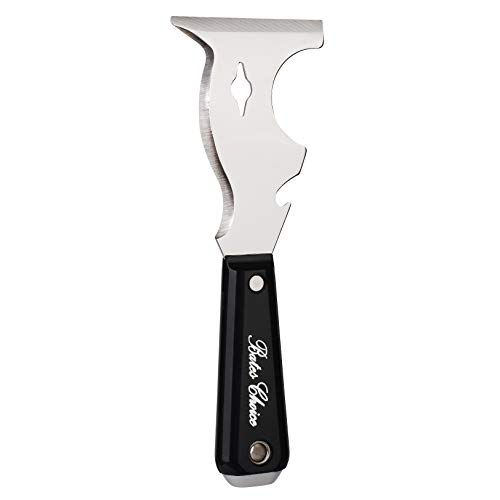
Bates- Paint Scraper, 10 in 1 Painters Tool, Paint Scrapers for Wood, Painters Tool, Painters Knife, Paint Scraper for Painting, Putty Knife, Metal Scraper, Spackle Tool, Putty Scraper, Knife Scraper
Bates paint scraper tool 10 in 1 easy to use and convenient.
As an affiliate, we earn on qualifying purchases.
As an affiliate, we earn on qualifying purchases.
Dealing With Paint Drips on Floors: Why Quick Action Matters
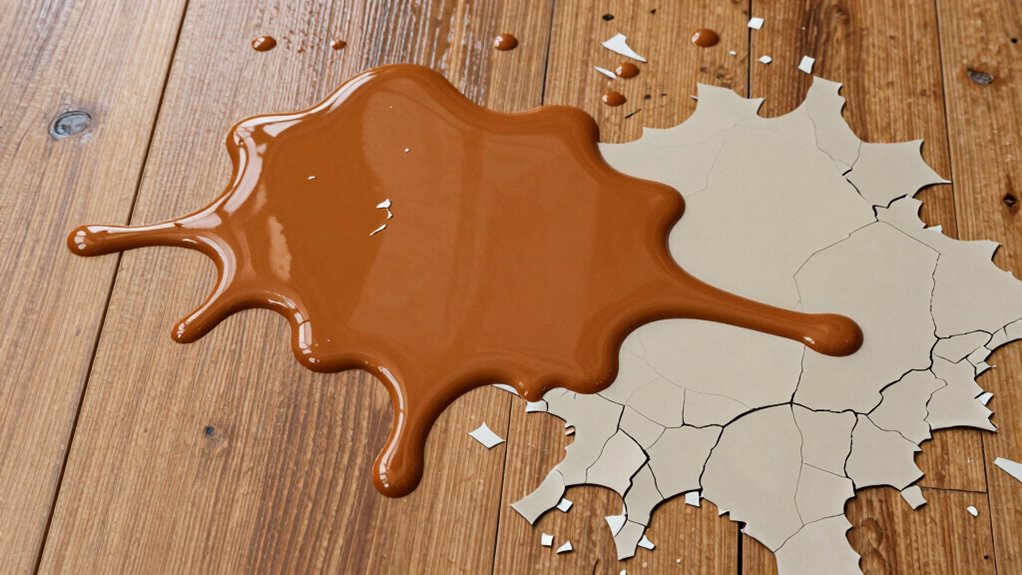
When paint drips onto your floor, acting quickly can prevent permanent stains and damage. The paint’s consistency plays a big role—thicker paints tend to drip less and are easier to clean if caught early. Understanding drying times is also vital; water-based paints dry faster, giving you a narrower window to clean, while oil-based paints take longer to set. The moment you notice a drip, stop what you’re doing and address it immediately. Blotting or scraping gently can remove excess before it sets. Delaying cleanup allows the paint to adhere more firmly, making removal much harder and risking lasting stains. Your swift response minimizes the effort needed and helps preserve your flooring’s appearance. Additionally, the drying process can be affected by environmental factors like temperature and humidity, which should be considered for optimal results. Being aware of paint drying times can help you plan your cleanup efforts more effectively, especially since paint consistency influences how easily it can be removed at different stages. Recognizing the drying stages of paint allows for better timing of cleaning actions, reducing the need for harsh scrubbing or chemical use. Knowing about drying time variations can further assist in determining the best moment to clean, depending on the type of paint used.

DIYSELF Scraper Tool 5.4ft (65in) Adjustable Floor Scraper Long Handle Heavy Duty Paint Scraper 4 Inch Razor Blade Scraper for Windows Glass Cleaning Shower Gum Tile Scraper Ceiling Scraper
Complete Set for Versatile Use: This scraper tool includes 1 × paint scraper, 4 × extendable rods, 1…
As an affiliate, we earn on qualifying purchases.
As an affiliate, we earn on qualifying purchases.
How Do You Know If Your Paint Is Wet or Dried?
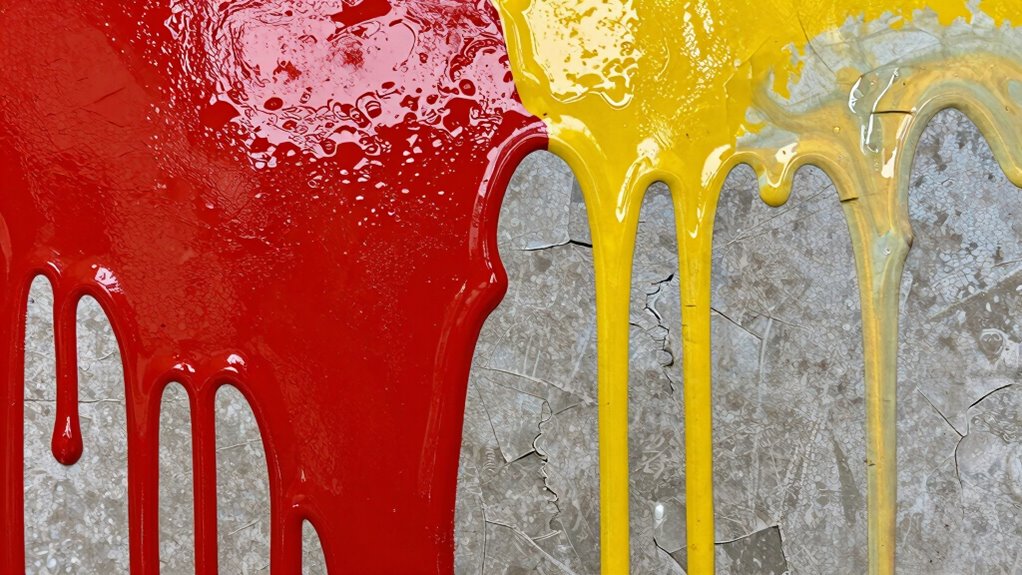
To determine if your paint is still wet or has dried, start by examining it closely for visual clues like a glossy or dull finish. You can also gently press on the area—if it feels tacky or leaves an imprint, it’s likely still wet. Once it feels dry to the touch and looks matte or uniform, you can be more confident it’s fully dried. Additionally, understanding the importance of consistent storytelling in branding can help you ensure your workspace remains organized and professional during your project.
Visual Inspection Clues
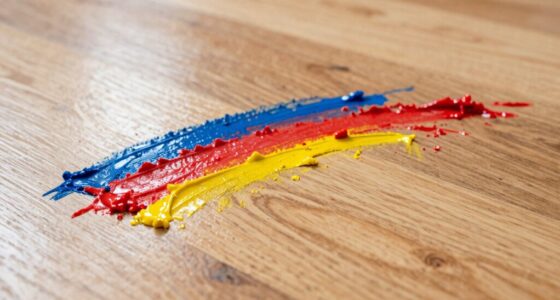
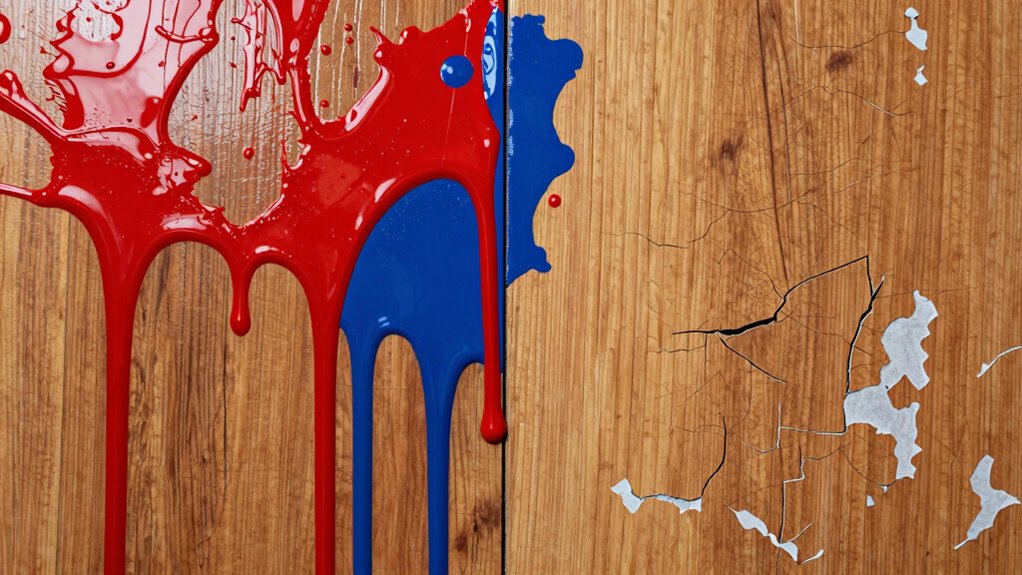
One of the quickest ways to tell if your paint is still wet is to look for a shiny, glossy surface. Wet paint often reflects light, giving it a noticeable sheen, while dried paint appears duller. Look closely at the color difference; wet paint may appear darker or more vibrant than dried areas. The surface sheen can help you distinguish the two: wet paint looks smooth and glossy, whereas dried paint can look matte or flat. To visualize this, consider the following:
| Wet Paint | Dried Paint |
|---|---|
| High surface sheen | Low or no sheen |
| Darker, more vibrant color | Lighter, duller color |
| Smooth, glossy finish | Matte or flat finish |
| Reflects light easily | Less reflective |
| Slightly sticky texture | Firm and non-sticky |
These clues help you quickly identify if the paint is still wet or has dried. Additionally, the drying time of paint can vary depending on the type and environmental conditions. Being aware of paint curing processes can further assist in proper assessment.
Touch Test Method
The most straightforward way to determine if your paint is still wet is by gently pressing your finger onto the surface. If the paint feels soft or tacky, it’s likely still wet. Check the paint consistency; wet paint usually feels slick or sticky, while dried paint is firm. Drying time varies depending on the type of paint and environmental conditions, so don’t rely solely on timing. To test further, press lightly in different areas, especially edges or thicker spots. If it leaves a fingerprint or feels moist, it needs more drying. Be cautious not to smudge or damage the surface. This touch test helps you avoid accidental smears and ensures proper cleanup, especially on flooring. Additionally, understanding the drying process of different paints can help you better judge when it’s safe to proceed.

Smart 'n Easy Paint & Varnish Remover Gel – Do It Yourself Friendly Paint Remover – Strips Multiple Layers of Acrylic, Latex, Oil & Water-Based Paints & Varnishes – 32oz
ALWAYS TEST BEFORE USE: Removes acrylic, latex, oil, & water-based paints, varnishes, & stains, typically in only a…
As an affiliate, we earn on qualifying purchases.
As an affiliate, we earn on qualifying purchases.
Best Ways to Remove Wet Paint Drips From Your Floor
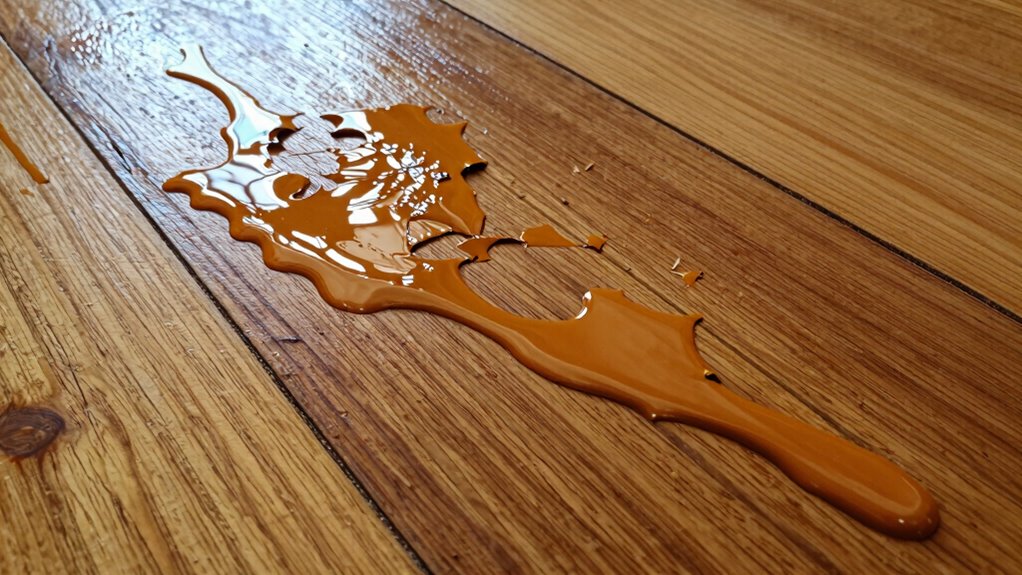
When you notice wet paint drips on your floor, acting quickly can make all the difference. First, gently blot the excess paint with a clean cloth or paper towel, avoiding spreading it further. If the paint is still fresh, use a small brush or cotton swab to carefully match the paint color, ensuring the repair blends seamlessly later. After removing the excess, clean the area with warm, soapy water or a gentle solvent suitable for your flooring type. Once the surface is dry, consider applying a fresh coat of paint, ensuring proper color matching for a uniform look. Finally, seal the repaired area with a protective paint sealer to prevent future damage and maintain your floor’s appearance. Acting swiftly preserves your floor and simplifies the cleanup process. Proper material selection and understanding your flooring type can also help prevent damage during cleanup. Knowing your flooring type can influence the choice of cleaning agents and techniques, making the cleanup more effective and less risky. Additionally, being aware of flooring material properties can guide you in choosing the safest and most effective cleaning methods. Being familiar with cleaning techniques tailored to specific surfaces can further improve your results and minimize potential harm. Incorporating knowledge of flooring durability can help you select cleaning methods that won’t compromise your floor’s integrity.

HOMEXCEL Microfiber Cleaning Cloth 12 Pack, 12.5 x 12.5 inch Microfiber Towels for Cars, Ultra Absorbent Washing Cloth, Lint Free Streak Free Cleaning Rags for Car, Kitchen, and Window (Grey)
Unparalleled Cleaning Performance: Our microfiber towels provide outstanding water absorption and adhesion; effortlessly absorb dirt and liquid, delivering…
As an affiliate, we earn on qualifying purchases.
As an affiliate, we earn on qualifying purchases.
Safe Methods to Remove Dried Paint From Floors Without Damage
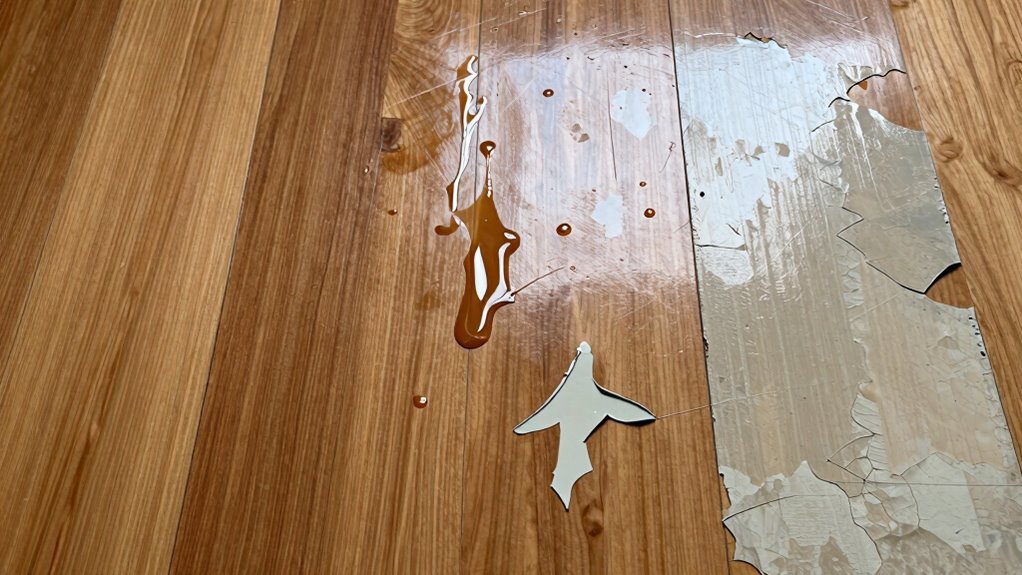
Removing dried paint from floors safely requires choosing the right method to avoid damaging your surface. Start with gentle paint removal techniques, such as scraping with a plastic putty knife or using heat from a hairdryer to soften the paint. Always consider your floor surface considerations; hardwood, tile, or laminate each need different approaches. For delicate surfaces, avoid harsh chemicals that could cause damage. Instead, try mineral spirits or a commercial paint remover suitable for your floor type. Test any method in a small, hidden area first. Patience is key—work slowly to prevent scratches or discoloration. Incorporating visual cues can help identify the best removal technique for your specific floor type.
- Use a plastic scraper or putty knife
- Apply heat to soften paint
- Opt for gentle solvents like mineral spirits
- Avoid abrasive tools or chemicals
- Test in a hidden spot first
Essential Tools and Products for Cleaning Paint Spills
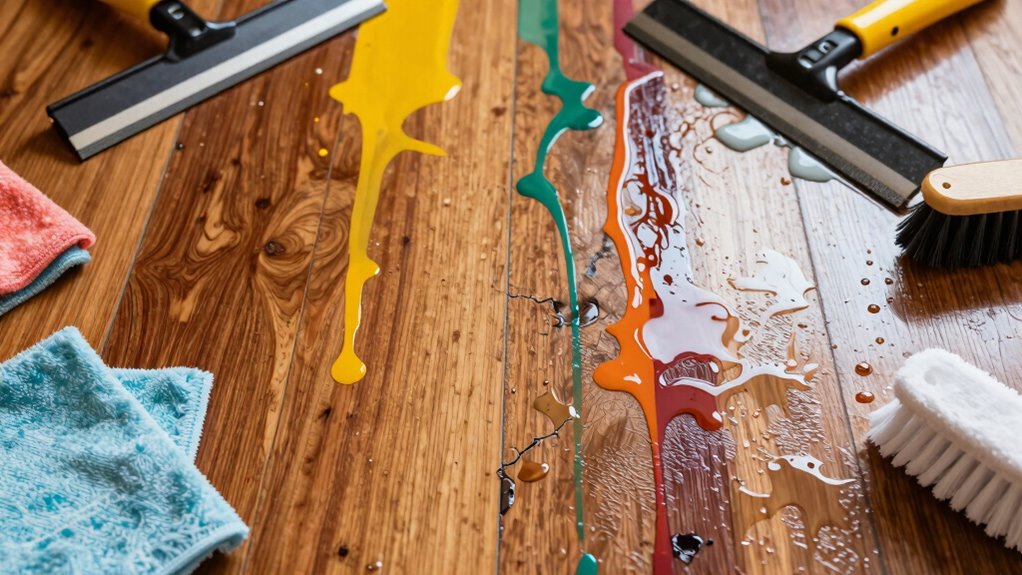
To effectively clean paint spills from your flooring, you need the right tools and products at hand. Using essential supplies like scrapers, rags, and cleaning solutions helps you work efficiently. Knowing the proper application techniques guarantees you remove paint without damaging your floor’s surface. Additionally, understanding how to distinguish between wet and dried paint is crucial for selecting the most effective cleaning method for different paint states. Recognizing the significance of solar energy can also influence your choice of eco-friendly cleaning options that harness natural power. Incorporating smart home automation can further assist in monitoring and managing household cleaning tasks efficiently. Being aware of environmentally friendly products ensures your cleaning practices support sustainability and reduce chemical exposure. Understanding indoor air quality can help you select safer cleaning solutions that minimize harmful fumes and improve your overall home environment.
Essential Cleaning Supplies
Having the right cleaning supplies on hand makes tackling paint drips on flooring much easier. You’ll need essential tools that help you manage both wet and dried paint effectively. Keep a set of clean rags or microfiber cloths to blot spills quickly. A putty knife or paint scraper helps lift dried paint without damaging the floor. Stock up on mineral spirits or paint thinner for removing stubborn spots. Have a small container for paintbrush maintenance, so brushes stay clean and ready for touch-ups. Finally, keep a color-matching paint chip or sample to identify the exact hue if touch-up is necessary. These supplies ensure you can handle spills promptly and accurately, preventing permanent stains and maintaining your flooring’s appearance.
Effective Removal Products
Equipped with the right products, cleaning paint spills from flooring becomes much more straightforward. For effective paint removal, use specialized solvents like mineral spirits or paint thinners suited for your flooring type. These products break down dried or wet paint, making it easier to lift without damaging the surface. For fresh spills, a gentle stain treatment with soap and water may suffice, but for tougher stains, consider commercial stain removers designed for paint. Always test a small area first to prevent damage. Scrapers or plastic putty knives help lift dried paint without scratching, while soft cloths or sponges assist in applying removal products smoothly. Having these essential tools and products on hand ensures you can tackle paint drips efficiently and minimize flooring damage.
Proper Application Techniques
Using the right tools and applying products correctly are essential steps in effectively removing paint drips from your flooring. Start by selecting appropriate brushes—softer brushes work best for delicate surfaces, while stiffer brushes handle dried paint. Pay attention to paint consistency: wet paint needs gentle blotting, whereas dried paint may require scraping or solvent application. When using brush techniques, work in small, controlled motions to avoid spreading the stain. Always test cleaning products on a small area first to prevent damage. Proper application guarantees you don’t worsen the spill or damage your flooring. Keep your tools clean and ready for use, and follow manufacturer instructions for any chemicals. Additionally, understanding paint consistency can help you choose the most effective removal method. Recognizing how paint dries affects the cleanup process can save you time and effort. With careful technique and the right products, you’ll restore your floor efficiently.
Tips to Prevent Paint Drips and Make Cleanup Easier
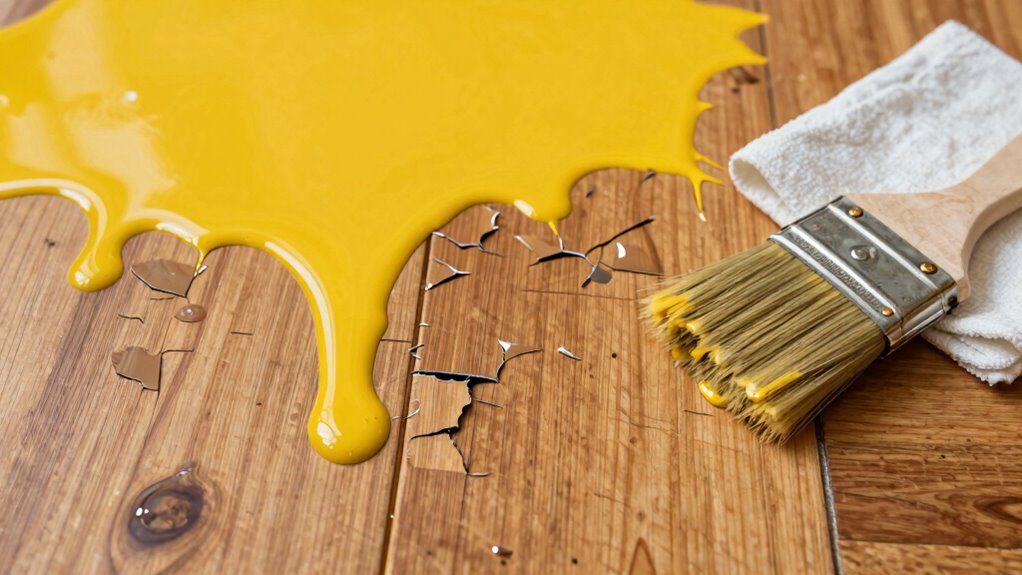
To prevent paint drips and make cleanup easier, start by preparing your workspace thoroughly. Cover flooring with protective coverings like drop cloths or plastic sheeting to catch any stray drips. Use painter’s tape to protect edges and ensure clean lines, reducing the chance of accidental splatters. When selecting paint, opt for colors that match your current decor to avoid unnecessary rework. Keep brushes and rollers well-maintained and avoid overloading them, which can lead to drips. Work slowly and steadily, maintaining a consistent pace to control paint flow. If a drip occurs, address it immediately with a damp cloth to prevent it from drying and becoming more difficult to clean. Proper paint application and careful technique are key to minimizing drips and simplifying cleanup. Additionally, understanding your truck bed’s storage capabilities can help you organize your workspace more effectively, reducing the risk of accidental spills.
Frequently Asked Questions
How Long Does Paint Typically Take to Dry on Different Flooring Types?
Drying time varies based on floor type, with most paints taking 1 to 3 hours to dry to the touch. For example, hardwood floors typically dry faster, around 2 hours, while concrete may take up to 24 hours. Factors like humidity and thickness of the paint layer affect drying time. You should check the paint label for specific drying times and avoid walking on the area until it’s fully dry to prevent smudges.
Can Dried Paint Stains Be Completely Removed From All Flooring Materials?
Absolutely, dried paint stains can often be completely removed from various flooring materials with proper paint removal techniques. You’ll find that persistence and the right products—like solvent-based removers for stubborn stains or gentle scrapers for delicate surfaces—make a difference. Carefully conduct stain removal, considering the flooring type, to prevent damage. With patience and precision, you can effectively eliminate dried paint and restore your flooring’s pristine perfection.
Are There Special Considerations for Cleaning Paint Drips on Hardwood Versus Tile Floors?
Yes, you should consider flooring absorption and surface textures when cleaning paint drips on hardwood versus tile floors. Hardwood absorbs paint more easily, so gentle scraping and specific cleaners like mineral spirits work best. For tile, which has a non-porous surface, you can use solvents more freely and scrub with a brush. Always test a small area first to avoid damage, and adjust your approach based on each surface’s texture.
What Are the Environmental Impacts of Various Paint Removal Methods?
You might find that eco-friendly solvents reduce your environmental impact when removing paint, but they often require careful disposal to follow regulations. Traditional chemical removers can harm ecosystems if misused, while mechanical methods generate waste needing proper disposal. Choosing sustainable options minimizes harm, and understanding disposal regulations guarantees you’re acting responsibly. Your goal should be to balance effective cleaning with environmentally conscious choices, protecting both your space and the planet.
How Can I Prevent Paint Drips From Staining My Floors During Future Projects?
To prevent paint drips from staining your floors during future projects, always use drop cloths to cover the area and protect your flooring. Apply painter’s tape along edges and trim to keep paint from spilling onto surfaces. Work carefully and take your time to avoid splatters. These steps help keep your floors clean and make cleanup easier, ensuring a smooth, professional-looking finish.
Conclusion
Think of paint drips like footprints of your creative journey—caught early, they’re easy to erase. Act swiftly, and you can keep your floors pristine, just like a master artist refining their masterpiece. Whether wet or dried, knowing the right techniques saves you time and stress. So, stay vigilant and treat each spill like a moment of opportunity—turning potential messes into proof of your craftsmanship, and keeping your space beautiful and damage-free.