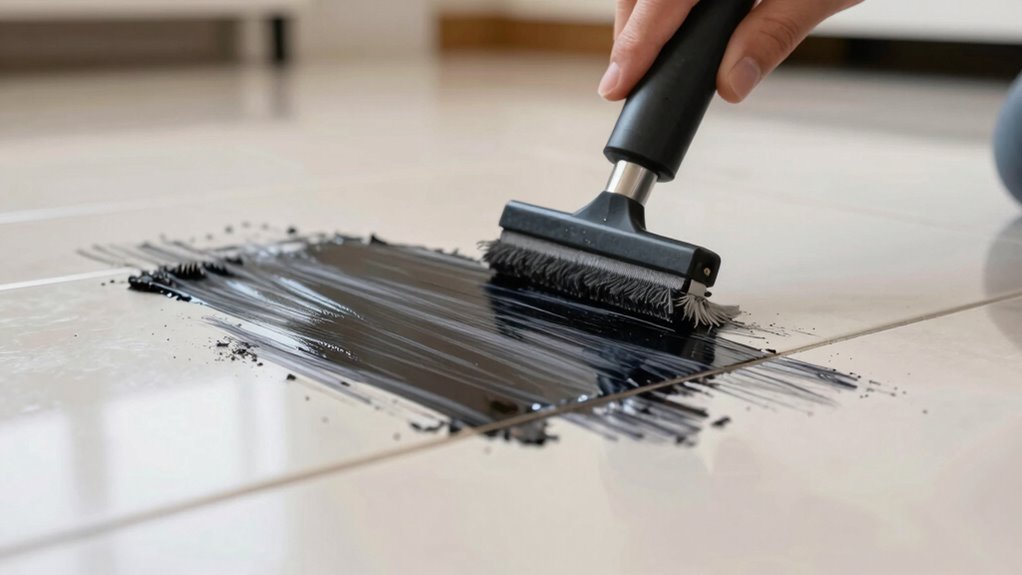
To safely remove permanent marker from hard floors, start gently with dish soap mixed with warm water and a soft cloth to lift the stain. If that doesn’t work, try rubbing alcohol applied carefully with a cloth or cotton ball. Always test a small, hidden area first to prevent damage. Using gentle methods protects your floor, and if you keep reading, you’ll discover more effective techniques to restore your surface safely.

Get cleaning gear delivered free — and shop member deals
- Fast, free delivery on millions of items
- Access to Prime Big Deal Days deals on October 6–7
- Prime Video, Amazon Music and more included
Key Takeaways
- Start with a gentle cleaning using a damp cloth and mild soap to test surface reaction before stronger solvents.
- Use 70% or higher isopropyl alcohol carefully applied with a soft cloth, avoiding excessive rubbing to prevent damage.
- Conduct a patch test in a hidden area to ensure the floor material isn’t harmed by alcohol or cleaning agents.
- Protect surrounding areas with plastic sheeting or painter’s tape to contain any spills or splashes during removal.
- Ensure proper ventilation and wear gloves to safely handle chemicals and prevent inhalation of fumes.
permanent marker removal from hard floors
As an affiliate, we earn on qualifying purchases.
As an affiliate, we earn on qualifying purchases.
How to Identify Your Floor Surface and Marker Type
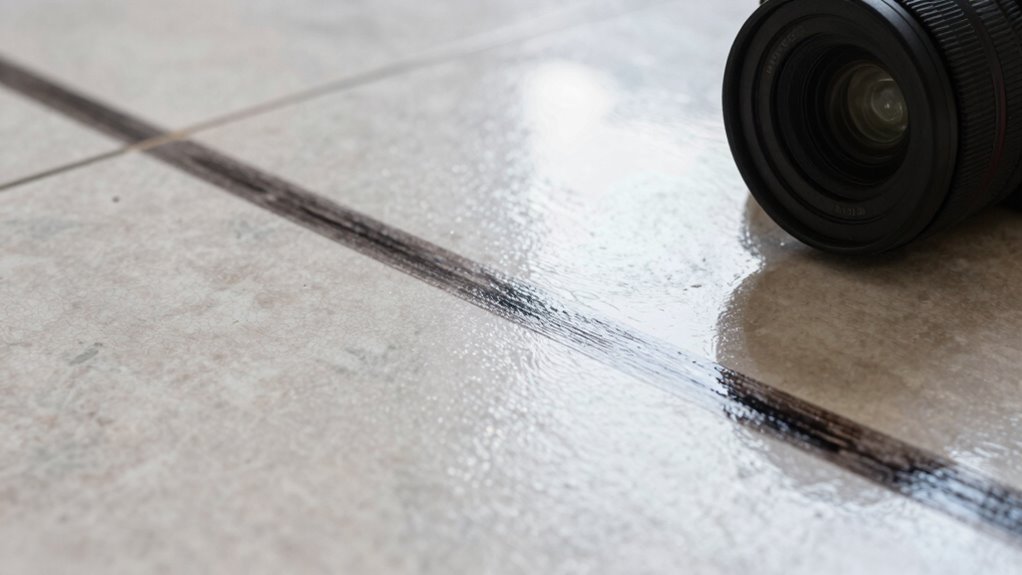
How can you determine whether your floor is suitable for permanent marker and identify the type of surface you’re working with? First, examine your floor material—whether it’s tile, hardwood, laminate, or vinyl—as each reacts differently to markers. Some surfaces, like glossy tiles, resist staining, while porous materials like hardwood or laminate may absorb ink easily. You might also consider the porosity of the material, which influences how ink penetrates the surface. Next, identify the marker type—permanent markers typically have oil-based ink, making them more challenging to remove, whereas dry-erase or water-based markers are easier to erase. Check the marker’s packaging or test a small, hidden area to see how it reacts. Being aware of your surface compatibility can help you choose the safest removal method, preventing damage and ensuring effective stain removal. Additionally, understanding the vulnerabilities of various surfaces can aid in selecting the most appropriate cleaning techniques to avoid unintended damage. Recognizing the differences in surface textures can also guide you toward suitable cleaning solutions that won’t cause scratches or other harm. Consulting technological tools or resources may also provide additional guidance for specific surfaces and stain types.
isopropyl alcohol for cleaning floors
As an affiliate, we earn on qualifying purchases.
As an affiliate, we earn on qualifying purchases.
Why Start With Gentle Methods to Remove Marker Stains
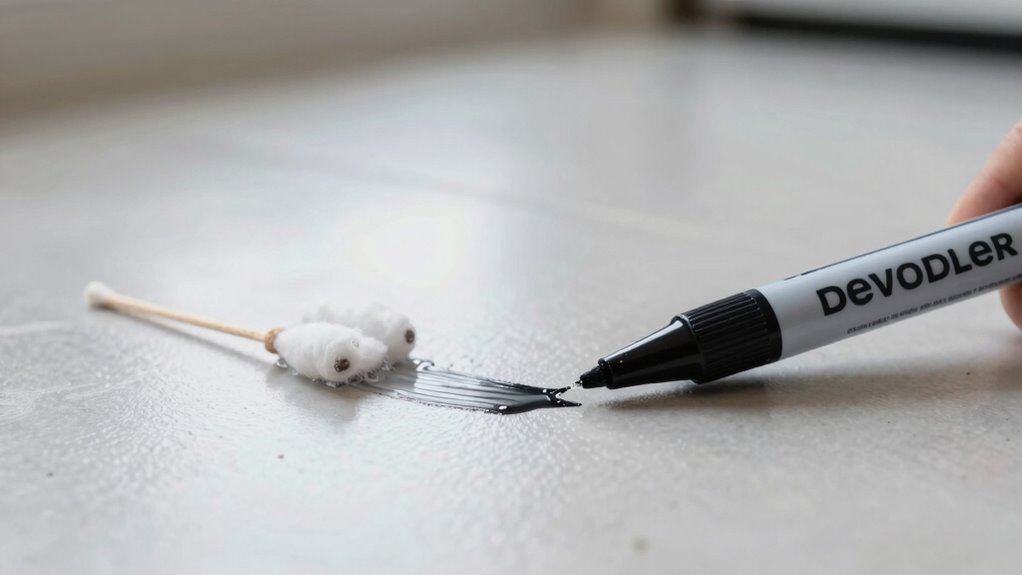
Starting with gentle removal methods is essential because harsh chemicals or vigorous scrubbing can damage your floor’s surface or cause discoloration. Different marker types, like permanent or water-based markers, react uniquely with various floor surfaces. Using strong solvents or abrasive tools might worsen the stain or harm the finish. It’s best to start with milder techniques, such as a soft cloth dampened with water or mild soap, to test how your floor reacts. Gentle methods reduce the risk of surface damage and give you a safer way to evaluate whether the stain can be lifted without aggressive chemicals. Additionally, understanding the specific floor material can help you select the most appropriate cleaning approach. Recognizing the type of marker involved can further refine your removal strategy. By prioritizing these gentle approaches, you protect your floor’s surface integrity while increasing the chances of a successful, damage-free removal. Being aware of cleaning appliance options can also guide you toward effective yet safe cleaning methods. Consulting professional services when in doubt can provide expert advice tailored to your specific flooring needs.
As an affiliate, we earn on qualifying purchases.
Gather Your Supplies and Prepare Your Space for Safe Cleaning
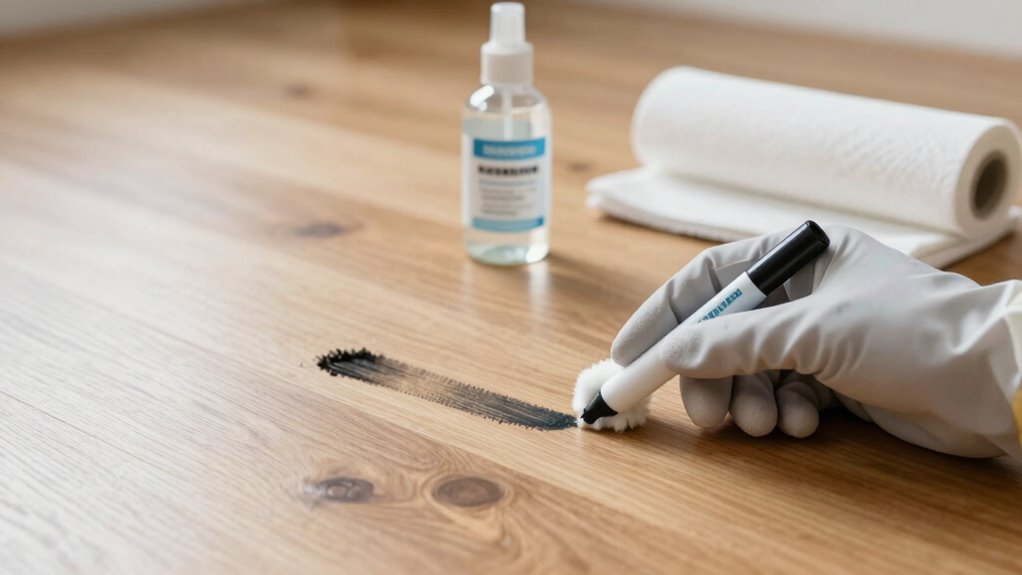
Before you start cleaning, gather all the supplies you’ll need, like cloths, cleaning solutions, and gloves. Make sure to clear the area around the stain to prevent accidents or damage. Then, open windows or turn on a fan to ventilate the space and keep fumes at bay. For added safety, consider proper ventilation techniques to ensure fresh air circulation during cleaning. Additionally, assessing the ventilation system in your space can help optimize airflow and reduce exposure to fumes, especially considering cloud computing environments often require careful attention to operational resilience and data security during maintenance. Proper ventilation is essential to safely remove fumes and maintain a healthy environment while cleaning.
Gather Necessary Cleaning Supplies
Gather all the cleaning supplies you’ll need before you begin. To effectively remove permanent marker and prevent damaging your floors, have cleaning stains remover, such as rubbing alcohol or a gentle solvent, ready. You’ll also want soft cloths or sponges to avoid scratching the surface. Protect your floors by laying down old towels or plastic sheets around the area, ensuring floor protection from spills or excess liquid. Keep gloves nearby to prevent skin irritation. If using a cleaning solution, have a small bowl of water for rinsing. Having everything prepared minimizes the need to search during the process and ensures you work efficiently. Gathering your supplies ahead of time creates a safer, more controlled environment for cleaning stains without risking damage to your hard floors. Additionally, understanding Free Floating concepts can help you choose the safest and most effective cleaning methods. Being aware of waterpark safety principles can also guide you in choosing appropriate cleaning techniques that avoid slippery surfaces or hazardous chemicals. It’s also helpful to familiarize yourself with indoor air quality considerations when using cleaning products to reduce potential fumes and ensure a healthier environment. Considering slip prevention strategies can further help in maintaining a safe cleaning space. Moreover, selecting non-toxic cleaning agents can contribute significantly to maintaining good indoor air quality and safety.
Clear Surrounding Area Carefully
To guarantee a safe and efficient cleaning process, it’s essential to clear the area around the stain thoroughly. Start by removing any objects that could get in the way or be damaged during cleaning. Use childproofing tips to keep young children away, such as locking cabinets or moving sharp items. Ensure marker storage solutions are secure, so no additional markers are within reach. Clear the surrounding space of rugs, furniture, or decorations that might hinder your movement or cause accidents. This preparation minimizes risks and keeps your workspace safe. Taking these steps helps you focus solely on removing the marker without distractions or hazards. Additionally, understanding the materials and surfaces involved can help you choose the safest cleaning method. Knowing the thermal behavior of the floor material can also inform the best approach for removal without damage. Considering the proper cleaning techniques can further prevent unintended damage to your flooring. Being aware of the surface composition can guide you in selecting the appropriate cleaning agents and methods. Recognizing the material’s durability can help you avoid using overly aggressive solutions that might harm the finish or surface. Once the area is cleared, you’re ready to proceed with the cleaning process confidently and safely.
Ventilate Space Properly
Have you prepared your workspace to guarantee safe and effective cleaning? Proper ventilation is essential during this process because ventilation importance cannot be overstated. Good air circulation helps disperse fumes from cleaning agents, reducing inhalation risks. Before you start, open windows and doors to create a steady airflow, ensuring fresh air replaces contaminated air. Use fans if available to boost air circulation, especially in enclosed spaces. This not only enhances safety but also helps chemicals evaporate faster, making cleanup more efficient. Avoid working in poorly ventilated areas, as inhaling fumes can be harmful. Taking these steps safeguards your health and ensures the cleaning process remains safe and effective. Proper ventilation is a simple yet critical part of preparing your space.
As an affiliate, we earn on qualifying purchases.
Test a Small Area First to Ensure No Damage
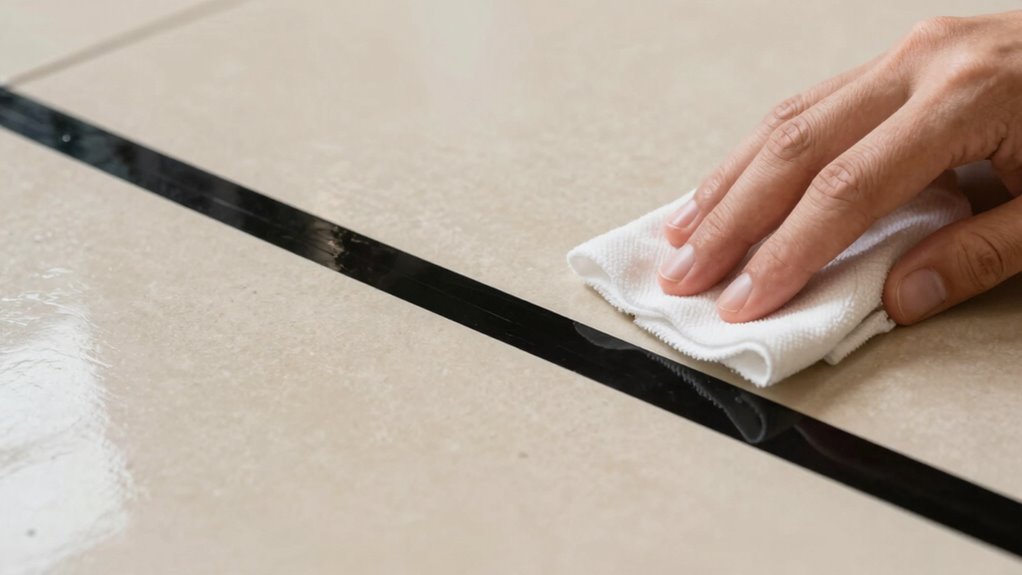
Before applying any cleaning solution or marker remover to your hard floors, conducting a patch test on a small, inconspicuous area first is vital. Different marker types and floor surfaces can react uniquely, so testing helps prevent damage. Select a hidden spot and apply a small amount of your chosen remover. Wait a few minutes and observe for any discoloration or surface changes. Use the table below to help decide which method suits your floor:
| Floor Surface | Marker Type | Test Result |
|---|---|---|
| Sealed wood | Permanent marker | No damage, safe to proceed |
| Tile | Dry erase marker | No damage, safe to proceed |
| Vinyl | Sharpie marker | No damage, safe to proceed |
Always test first to safeguard your floors and ensure effective removal.
How to Use Dish Soap and Warm Water to Lift Permanent Marker
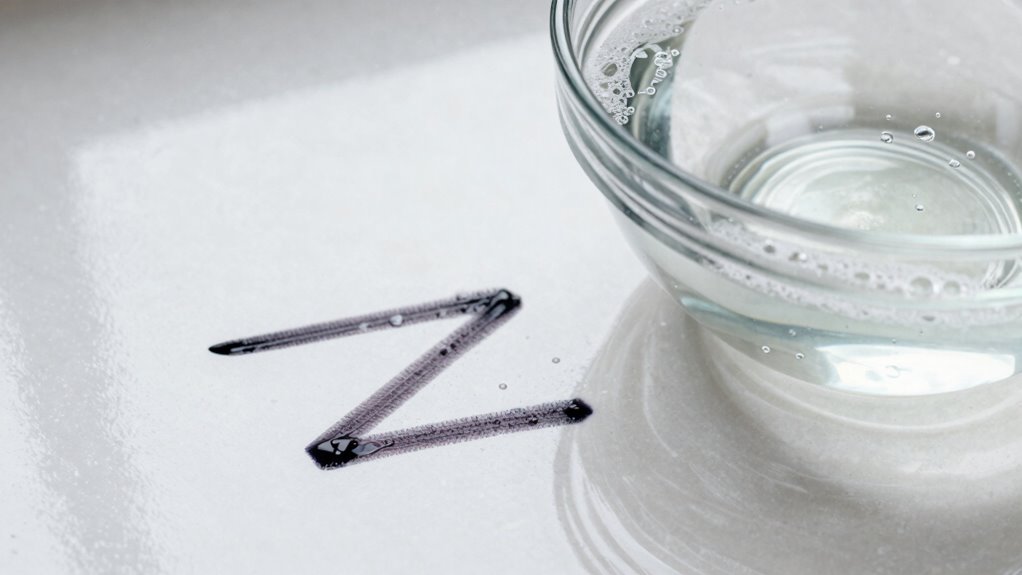
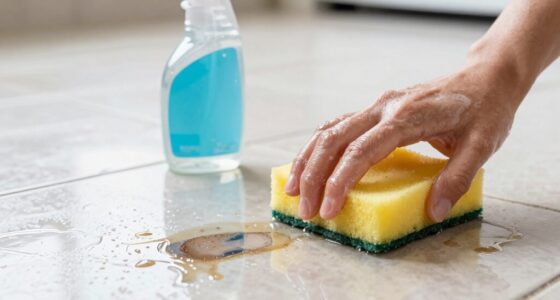
Using dish soap and warm water is a simple yet effective way to lift permanent marker from hard floors. Start by mixing a few drops of dish soap with warm water in a bowl. Dip a soft cloth or sponge into the solution and gently dab the stained area. This method works well on various artificial floor finishes, especially when dealing with different marker color types. Lightly scrub the area in circular motions, focusing on the stain, but avoid excessive pressure to prevent damage. Rinse the cloth frequently to remove residue and continue until the marker begins to lift. For stubborn marks, repeat the process. This approach is gentle, safe for most finishes, and avoids harsh chemicals, making it a good first step in removing permanent marker.
Using Rubbing Alcohol to Remove Stubborn Marker Marks

To remove stubborn marker marks with rubbing alcohol, you need to choose the right type—opt for 70% or higher isopropyl alcohol. Apply it carefully using a cloth or cotton ball, ensuring you target the stain directly. Remember to wear gloves and ventilate the area to stay safe during the process.
Selecting Rubbing Alcohol
Rubbing alcohol is an effective option for removing stubborn marker marks from hard floors, thanks to its ability to break down ink pigments quickly. When selecting rubbing alcohol, choose a high-purity, isopropyl alcohol with at least 70% concentration for ideal marker removal. Avoid lower-grade solutions that may contain additives or impurities, which can be less effective or damage your flooring. Check labels to ensure it’s intended for cleaning purposes and safe for use on your specific floor type. Keep in mind that using the right rubbing alcohol ensures effective cleaning solutions while minimizing risk. If you have sensitive flooring, test a small, hidden area first. Proper selection of rubbing alcohol guarantees safer, more efficient marker removal without harming your hard floors.
Application Techniques
When removing stubborn marker marks from hard floors, applying rubbing alcohol correctly is essential for effective results. Start by pouring a small amount of rubbing alcohol onto a clean cloth or directly onto the marker stain. Gently dab the area, ensuring the alcohol penetrates the marker ink. Be mindful of your floor’s sealants, as some may react differently; test on a small, inconspicuous spot first. Different marker types, like permanent or alcohol-based markers, require slightly varied approaches, but alcohol generally works well on most. Avoid excessive rubbing, which can damage the floor’s surface or sealant layer. Once the mark begins to lift, use a clean cloth to wipe away the residue. Repeat as needed until the stain disappears, then clean the area with water to remove any leftover alcohol.
Safety Precautions
Before using rubbing alcohol on your hard floors, it’s important to prioritize safety to prevent accidents or damage. Always ensure good ventilation, as fumes can be strong and irritating. Keep the rubbing alcohol out of reach of children and pets to maintain marker safety. Wear gloves to protect your skin from chemical exposure and avoid direct contact. Follow the manufacturer’s instructions carefully, respecting dosage and application guidelines. Be mindful of the type of flooring; some surfaces may be sensitive to alcohol, so test in a small, inconspicuous area first. Remember, chemical precautions are essential to prevent damage or accidents. Use rubbing alcohol responsibly, and always prioritize safety to make the removal process effective and risk-free.
How Baking Soda Paste Can Gently Remove Marker Stains
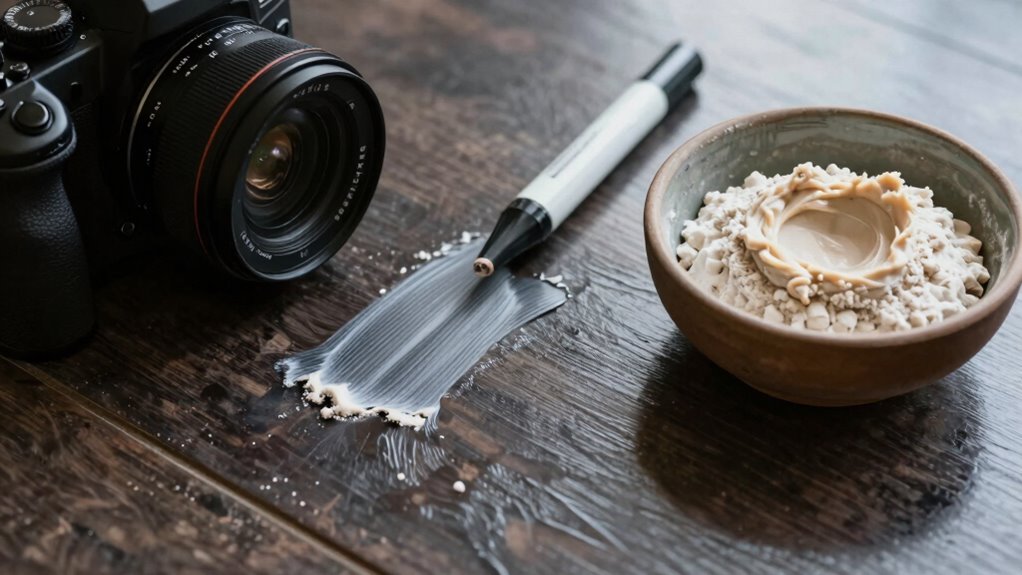
Baking soda paste offers a gentle and effective way to lift marker stains from hard floors. It works well across various marker types, including permanent and washable markers, making it versatile for different situations. When applied to floor surfaces like tile, vinyl, or sealed hardwood, the paste helps loosen the stain without damaging the finish. To use, mix baking soda with a small amount of water until it forms a thick paste. Apply it directly to the stain, gently scrub with a soft cloth or sponge, and let it sit for a few minutes. Then, wipe away the residue with a damp cloth. This method is safe, non-abrasive, and minimizes the risk of damaging delicate floor surfaces while effectively lifting marker stains.
Natural Alternatives: Vinegar and Lemon Juice for Removing Marker
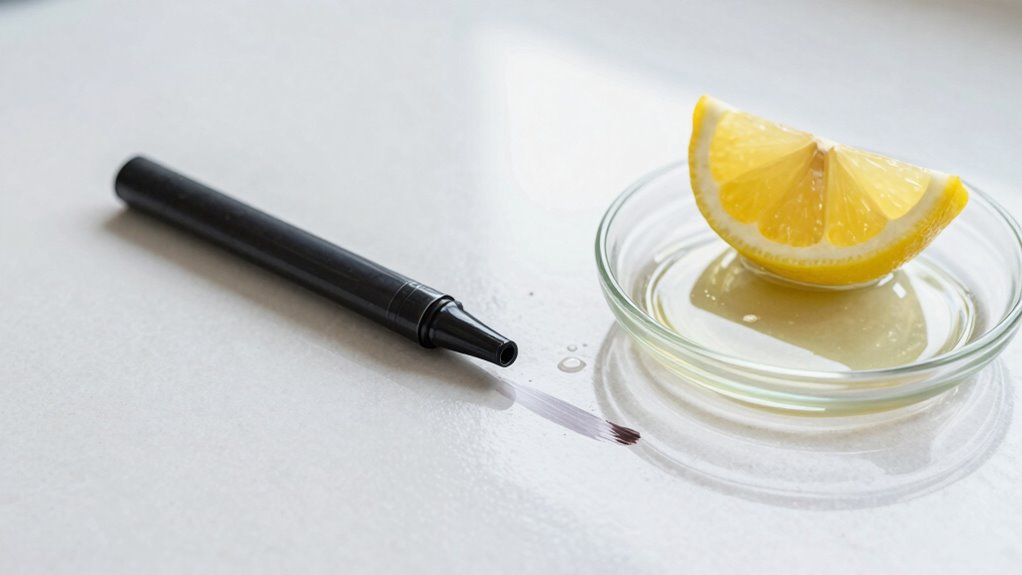
Vinegar and lemon juice are natural, effective options for removing marker stains from hard floors. These acids break down the pigments in various marker colors without harsh chemicals. When dealing with different floor textures, such as smooth vinyl or textured tile, both solutions work well because they can penetrate surface irregularities. For best results, apply a small amount of vinegar or lemon juice directly onto the stain and let it sit for a few minutes. Gently scrub with a soft cloth or sponge, then wipe clean with water. Natural alternatives are gentle yet effective, making them safe choices for homes with children or pets. Keep in mind, tougher stains may require repeated applications, but these methods are a safer first step before harsher chemicals.
What to Do If Marker Won’t Come Off : Troubleshooting Tips
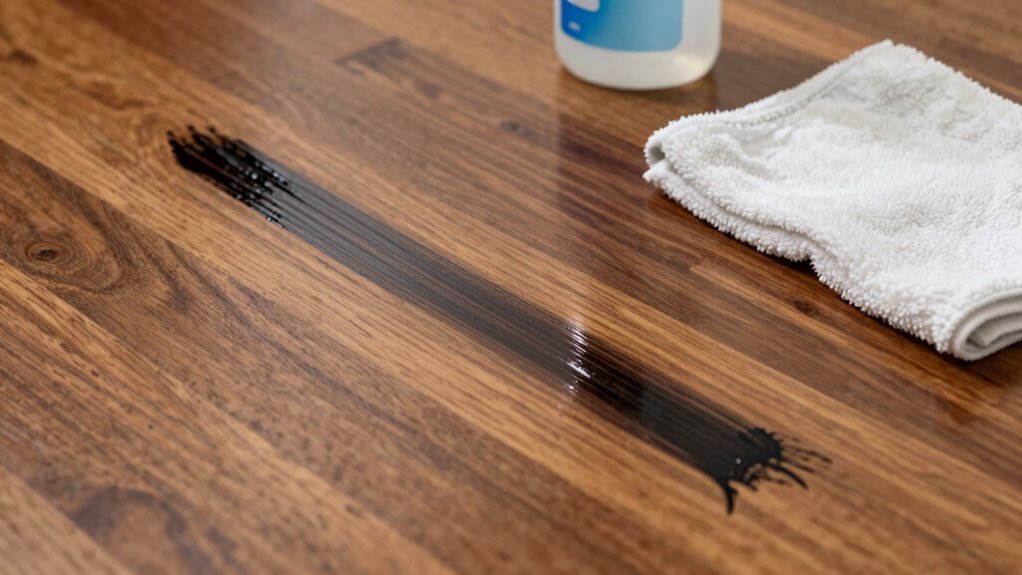
Sometimes, marker stains stubbornly resist natural removal methods, making it frustrating to get them completely off your floors. When this happens, it’s essential to prioritize marker safety and avoid harsh chemicals that could damage your floor surface. First, double-check your floor surface identification to ensure you’re using the right cleaning approach. For example, some surfaces can handle rubbing alcohol, while others might require a gentler solution like a baking soda paste. If initial attempts fail, consider gently scrubbing with a soft cloth or sponge, always testing a small area first. If stubborn stains persist, consulting manufacturer guidelines or professional cleaning services can prevent accidental damage. Being cautious and patient is key to successfully removing marker stains without harming your flooring.
Tips to Prevent Permanent Marker Damage on Your Floors
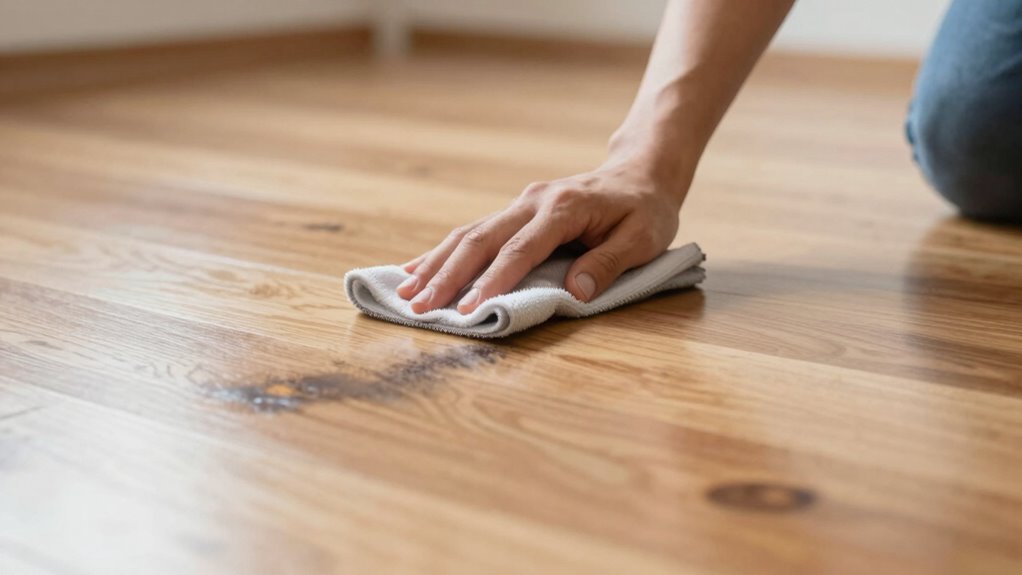
To protect your floors from permanent marker damage, you should store markers out of reach of children and pets. Using protective barriers, like mats or covers, can also prevent accidental marks. Taking these simple steps helps keep your floors clean and free from permanent stains.
Store Markers Safely
Storing permanent markers properly is key to preventing accidental damage on your floors. Always keep markers in a designated container or drawer, away from edges where they can fall or be knocked over. Using proper marker storage reduces the risk of leaks or spills that might cause permanent stains. Prioritize marker safety by ensuring caps are tightly secured after each use, preventing ink from drying out or leaking. Avoid leaving markers in places where children or pets can access them easily. Consider using a storage box with compartments to organize different colors, making it less likely someone will grab the wrong marker and cause damage. By practicing good marker storage habits, you minimize risks and keep your floors safe from unintended permanent marker marks.
Use Protective Barriers
Applying protective barriers is one of the most effective ways to prevent permanent marker damage on your floors. By adding these barriers, you create a shield that safeguards your floor surface from accidental marks. Here are four simple ways to implement protective barriers:
- Cover high-traffic areas with plastic sheeting or drop cloths.
- Use painter’s tape along edges to prevent accidental staining.
- Place mats or rugs in areas prone to marker use.
- Shield delicate surfaces with furniture or protective pads.
These barriers help contain any potential damage, especially in busy spaces. They’re easy to set up and remove, making them a practical solution for maintaining your floor’s appearance long-term. Protecting your floor surface with these barriers minimizes cleanup and preserves its original condition.
Frequently Asked Questions
Can Permanent Marker Stains Be Permanent on All Floor Types?
Permanent marker stains aren’t necessarily permanent on all floor types. With proper marker removal techniques, you can often eliminate the stain effectively. To prevent lasting damage, act quickly and avoid harsh chemicals that might harm your floors. Stain prevention is key, so always test cleaning solutions in small areas first. By using safe removal methods, you increase the chances of fully removing the marker and protecting your floors’ appearance.
Are There Any Safety Precautions When Using Alcohol or Chemicals?
Think of using alcohol or chemicals like walking a tightrope—you need balance and caution. Always prioritize chemical safety by reading labels carefully, ensuring proper ventilation, and wearing protective gear like gloves and goggles. This prevents harmful exposure or accidents. Remember, even small spills can cause slips or skin irritation, so take safety precautions seriously. Your careful approach keeps you safe while effectively removing stubborn permanent marker stains.
How Long Should Cleaning Solutions Sit Before Wiping?
You should let cleaning solutions sit for about 5 to 10 minutes before wiping, allowing the chemicals to break down the permanent marker effectively. Keep in mind the drying time, as longer sits might lead to residue. For best results, clean the area regularly, adjusting the cleaning frequency based on how quickly the marker stain responds. This approach ensures safe, effective removal without damaging your hard floors.
Is It Safe to Use Bleach on Hard Floors?
Imagine walking a tightrope—balancing safety and risks. Using bleach on hard floors can be safe if you follow proper bleach safety guidelines, but beware of chemical risks. Always dilute bleach properly, ventilate the area, and avoid mixing it with other cleaners. If misused, bleach can damage your floors and harm your health. When in doubt, opt for gentler, non-toxic cleaners to keep your space safe and spotless.
What Are the Signs of Floor Damage From Cleaning Attempts?
You’ll notice signs of floor damage from cleaning attempts if you see ink penetration that won’t wipe away or surface etching, which appears as dull or scratched areas. These signs indicate that harsh cleaners or scrubbing have compromised the finish or surface integrity. If you spot these issues, stop cleaning immediately to prevent further damage, and consider consulting a flooring professional for proper assessment and repair.
Conclusion
With patience and gentle care, you can restore the pristine look of your floors, imagining each swipe as a soothing brushstroke rather than a battle. By choosing natural solutions and proceeding carefully, you keep your space safe and inviting. Think of your floor as a canvas, where careful removal transforms accidental marks into a story of mindful maintenance. Soon, your hard floors will shine anew, reflecting your thoughtful approach and commitment to a beautiful, damage-free home.
Fall Picks
fall essentials
As an affiliate, we earn on qualifying purchases.