To remove adhesive residue from floors without scraping, start by testing a gentle solution like warm water mixed with dish soap on a small area. Use a soft cloth or sponge to gently work the residue in circular motions. For tougher spots, consider natural options like vinegar or citrus-based cleaners, applying them with a cloth. If these methods don’t fully work, there are eco-friendly and professional options worth exploring—continue for more tips.
Key Takeaways
- Start with gentle cleaning using warm water and mild dish soap, testing first on a small area.
- Apply natural solvents like vinegar or citrus-based cleaners to loosen adhesive without scraping.
- Use soft cloths or sponges for circular scrubbing to avoid damaging the surface.
- For stubborn residue, consider commercial adhesive removers designed for your floor type, following instructions carefully.
- When DIY methods fail or floor is delicate, consult professionals to safely remove adhesive without scratching.
Removing adhesive residue from floors can be a straightforward process if you choose the right methods. When dealing with stubborn glue left behind after removing stickers, tiles, or carpet adhesives, you don’t have to resort to harsh scrapers that might damage your flooring. Instead, you can explore effective DIY solutions that make the job easier and safer. Knowing when to try these methods at home or when to seek professional services is key to achieving the best results without risking surface damage.
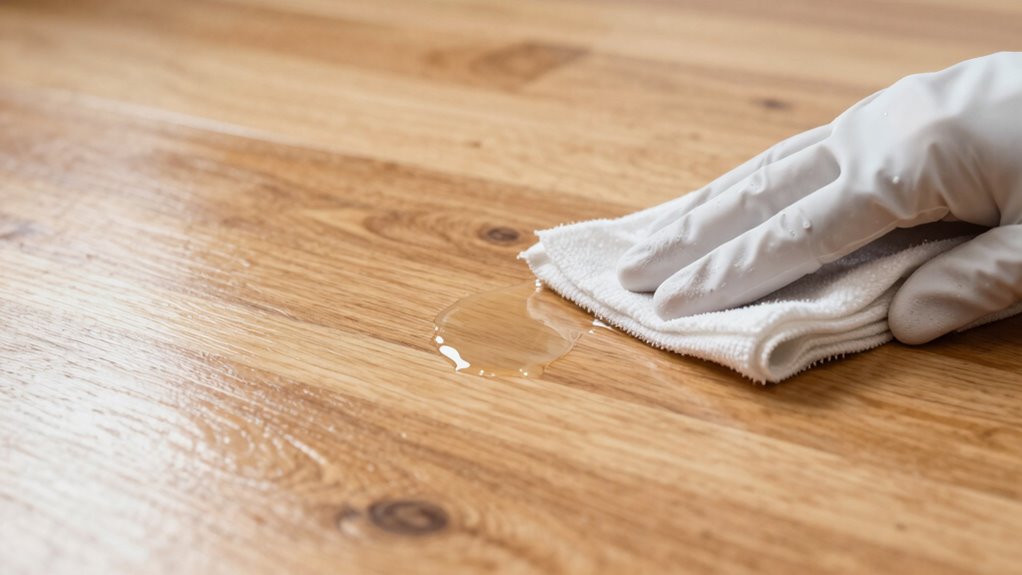
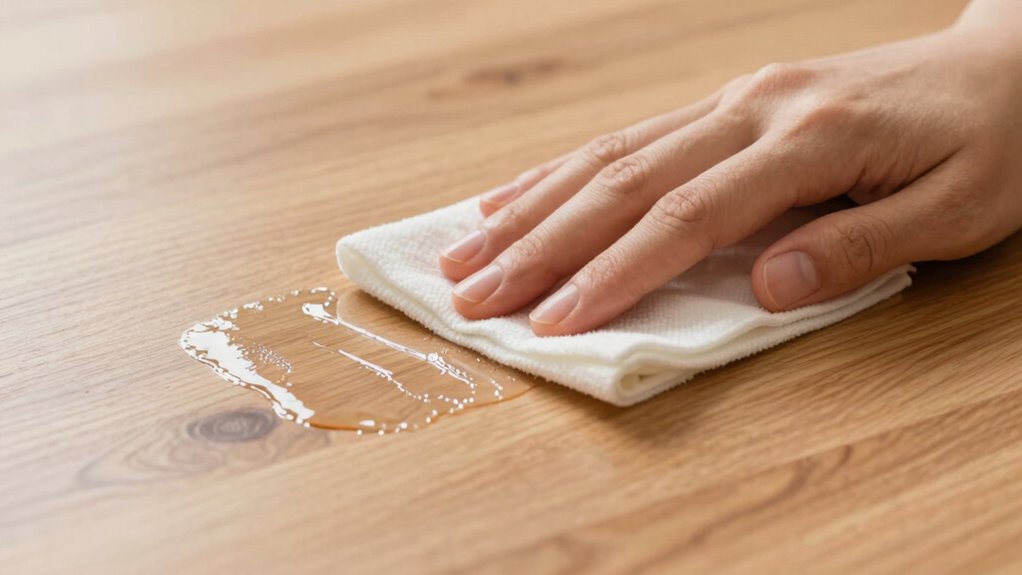
Start by testing a small, inconspicuous area of your floor with warm water and a mild dish soap. This simple solution can loosen water-based adhesives without any harsh chemicals. Use a soft cloth or sponge to gently scrub the area, working in circular motions. If the residue persists, consider applying a commercial adhesive remover designed specifically for your floor type—whether tile, vinyl, or hardwood. Always follow the manufacturer’s instructions carefully, and test on a small patch first to ensure it won’t harm your flooring. These products are formulated to break down adhesive bonds, making removal much easier without scraping.
Test a small area with warm water and mild soap before using stronger adhesive removers.
For tougher residues, natural solvents like vinegar or citrus-based cleaners can be effective DIY options. Vinegar contains acetic acid, which helps dissolve adhesive glue. Mix equal parts vinegar and warm water, then soak a cloth in the solution and lay it over the sticky area for several minutes. Afterward, wipe away the softened adhesive with a clean cloth. Citrus-based cleaners work similarly, breaking down adhesives with natural oils, and are a good alternative if you prefer eco-friendly solutions. These methods are gentle and usually safe for most floors, but always check your flooring’s care instructions first. Additionally, understanding the types of adhesives common in flooring can help you select the most appropriate removal method.
If these DIY solutions don’t do the trick or if you’re concerned about damaging your floors, it’s wise to consult professional services. Experts have access to industrial-strength solvents and specialized tools that can remove adhesive residues efficiently without harming the surface. They also know how to handle delicate flooring materials and can prevent accidental damage. Hiring professionals might cost more upfront, but it guarantees a thorough job, especially for large or stubborn adhesive patches.
Frequently Asked Questions
Can I Use Vinegar to Remove Adhesive Residue Safely?
Yes, you can use vinegar for residue removal, but you should consider vinegar safety first. Mix equal parts vinegar and warm water, then apply it to the adhesive residue. Let it sit for a few minutes to loosen the glue. Use a soft cloth or sponge to gently wipe away the residue. Vinegar is safe for most floors when used properly, but always test a small area first to avoid damage.
Are There Eco-Friendly Methods for Adhesive Removal?
Yes, you can use eco-friendly methods for adhesive removal. Biodegradable solvents are a great option, as they break down naturally and are gentle on your floors. Natural remedies like a mixture of baking soda and warm water or a paste of citrus peels and vinegar can also work effectively. These methods avoid harsh chemicals, making your cleaning process safer for the environment and your home.
Will Heat Guns Damage My Flooring Surface?
Think of a heat gun as a gentle breeze, not a wildfire. When used with proper heat gun safety, it won’t damage your flooring surface. Keep the heat low and hold the gun at a safe distance to prevent flooring damage prevention. If you’re cautious and attentive, you can soften adhesive safely without harming your floors, like a breeze that lifts away stubborn residue without scorching the landscape beneath.
How Long Should I Wait Before Reapplying Finish?
You should wait at least 24 to 48 hours before reapplying finish, allowing proper floor prep and ensuring the finish cures fully. Rushing this step can cause peeling or uneven application. During this time, keep the floor free of dust and debris. Proper curing time guarantees the finish adheres well and lasts longer. Always follow the manufacturer’s instructions for specific drying and curing times for best results.
Is Professional Help Necessary for Large Adhesive Areas?
Think of large adhesive areas like a massive puzzle—you might handle small pieces yourself, but big sections can be tricky. You can try DIY techniques like heat guns or solvent applications, but for extensive, stubborn residue, professional services are your best bet. They have the right tools and expertise to guarantee thorough removal without damaging your floor. When in doubt, investing in pros saves time and prevents costly mistakes.
Conclusion
So, congratulations—you’ve successfully banished that stubborn adhesive residue without turning your floor into a scraped mess. Who knew that a little patience and the right tricks could outsmart sticky situations? Now, you can confidently walk across your spotless floor, feeling like a DIY hero. Just remember, next time you need to remove glue, you’ve already got the perfect method—no scraping required. Who knew cleaning could be so satisfying?