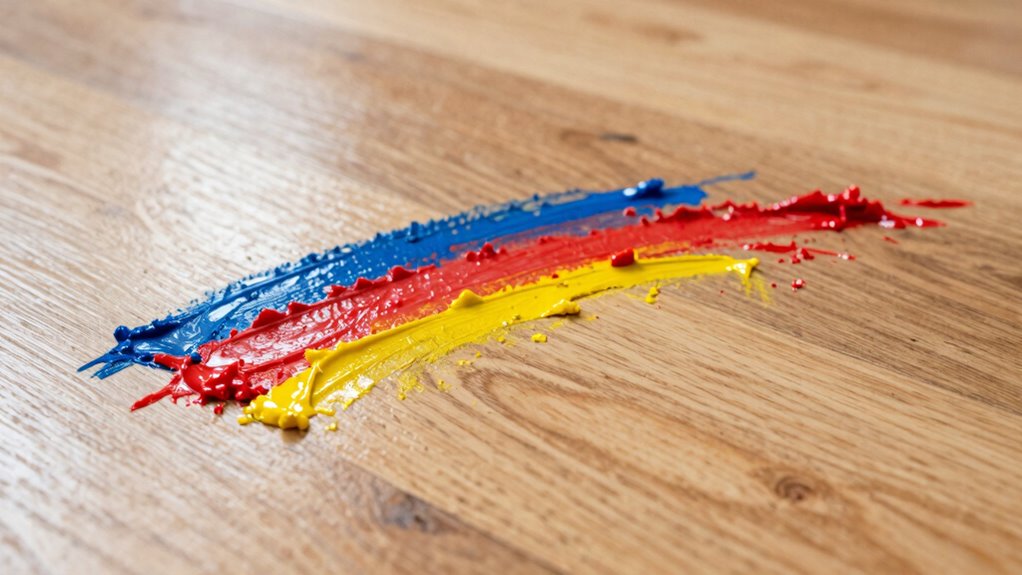
To remove crayon wax from hard floors without scratches, gently soften the wax with warm, damp cloths or a hairdryer kept on low heat. Carefully lift the softened wax with a plastic scraper or credit card, working slowly and following the wax’s shape. Use natural solutions like vinegar and water or mild soap to clean residual residue. For more effective tips, explore how gentle techniques can protect your floor’s surface while cleaning.
Key Takeaways
- Use a soft, damp cloth or microfiber towel to gently soften and lift the wax without scratching the floor.
- Carefully scrape the wax with a plastic scraper or credit card, applying light pressure and working slowly.
- Avoid hot water, harsh chemicals, or aggressive scrubbing to prevent damage and scratches on the hard surface.
- Test a small, hidden area first with natural solutions like vinegar or mild soap to ensure floor safety.
- Rinse the area with clean water and dry thoroughly to remove residue and prevent streaks or surface damage.
Why Crayon Wax Is So Hard to Remove From Floors
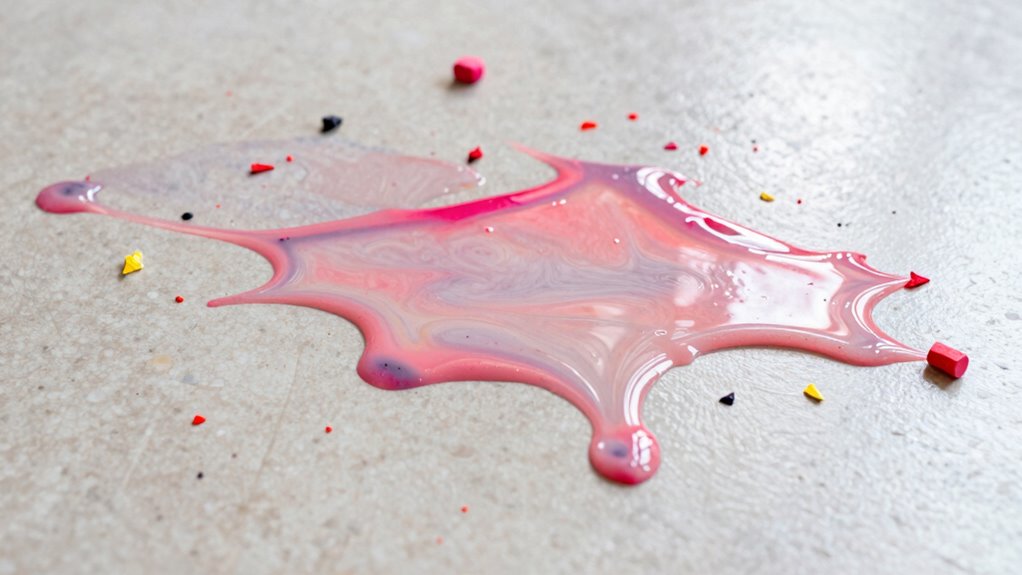
Crayon wax is especially difficult to remove from floors because it tends to melt and spread when exposed to heat or friction. When you try to clean it, the wax often melts into a liquid, making color removal more challenging. The melting process causes the wax to seep into tiny cracks and grout lines, which complicates cleaning. Additionally, as the wax melts, it can smear across the surface, creating larger stained areas that are harder to treat. This melting behavior is why crayon wax resists simple wiping and requires specific techniques to lift it effectively without damaging your floor. Understanding that wax melting causes spreading and staining helps you choose the right removal methods to keep your floors scratch-free and clean. Proper ventilation considerations during cleaning can also help disperse any fumes or odors emitted by melted wax, especially since heat application can accelerate melting and spreading. Using the right cleaning products and techniques can prevent damage to the floor surface, and being aware of wax melting behavior can guide you in selecting the most effective removal strategies. Recognizing these factors enables you to prevent further damage and achieve a cleaner, scratch-free floor.
Gather Your Supplies for Safe Crayon Wax Cleanup
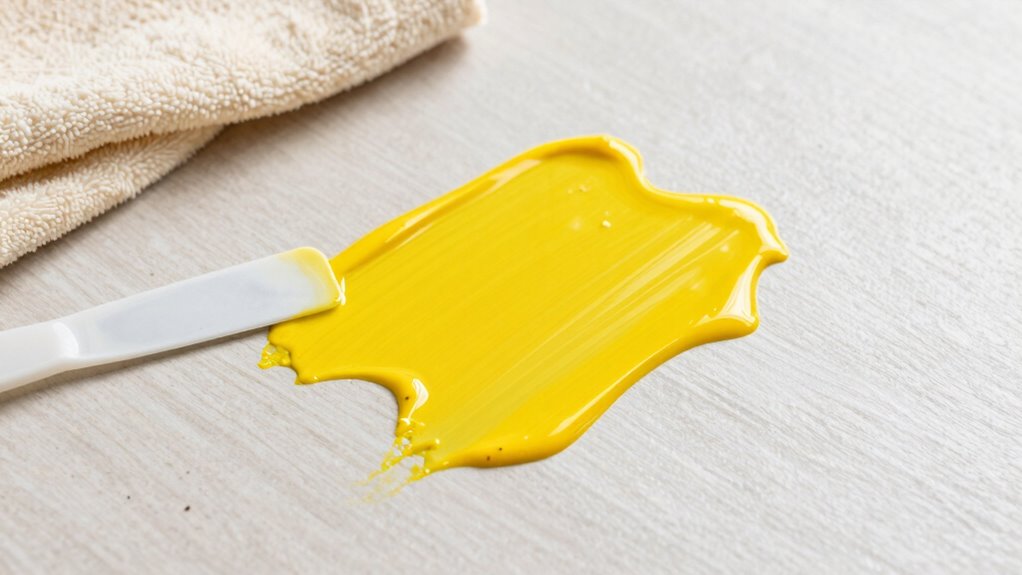
Before you start cleaning crayon wax from your floors, gather all the necessary supplies to guarantee a safe and effective removal process. Prioritize child safety by choosing non-toxic, gentle cleaning products that won’t harm little ones. Protect your furniture and flooring by having soft cloths, sponges, or microfiber towels ready. You’ll also want a plastic scraper or a dull knife to lift wax without scratching the surface. Keep a spray bottle of mild cleaning solution on hand, and consider using gloves to prevent skin irritation. Make sure the area is well-ventilated to avoid inhaling fumes. Having everything prepared beforehand minimizes risks and makes sure you can focus on safely removing the wax while safeguarding your child’s health and your furniture. Additionally, using proper cleaning techniques can prevent potential damage to your floors, similar to the importance of proper air purifier maintenance to ensure optimal air quality. Incorporating gentle yet effective cleaning methods can also boost your mental wellbeing index by reducing stress associated with cleaning mishaps. Understanding the cleaning science behind wax removal can help you choose the most effective methods and avoid accidental damage. Being aware of safety precautions when handling cleaning tools and chemicals further enhances your safety during the process.
Quick and Gentle Ways to Remove Crayon Wax From Floors
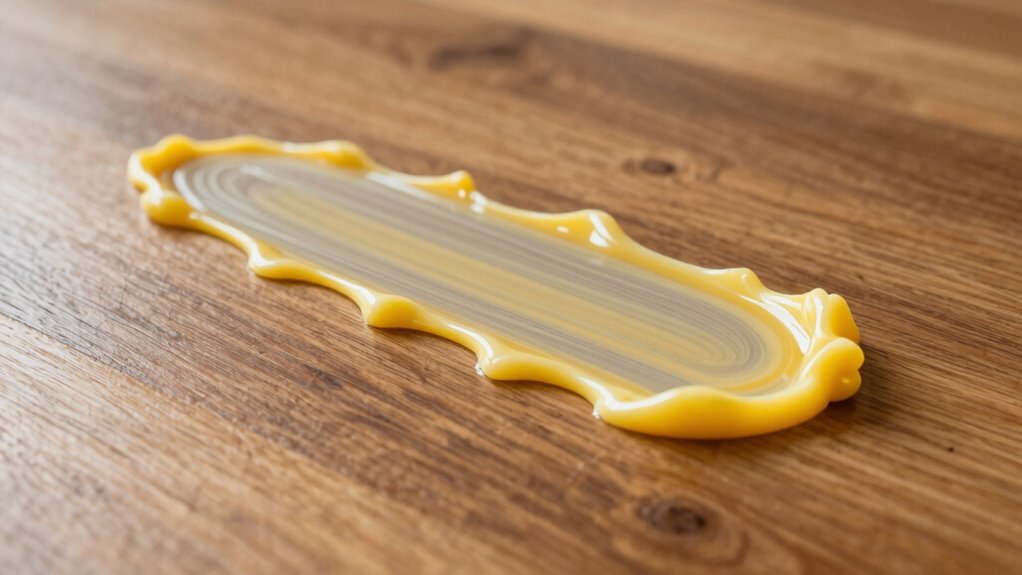
To remove crayon wax quickly and gently, start by softening the wax with warm, damp cloths or a gentle heat source. Use careful scraping techniques to lift the softened wax without damaging your floor’s surface. Additionally, applying creative problem-solving can help identify the most effective method for your specific floor type. Finally, clean any leftover residue safely with natural cleaning solutions to keep your floor looking its best. Remember, understanding the floor’s material type can help you choose the safest cleaning methods and prevent damage. Knowing how different surfaces respond to heat and cleaning agents can also help you avoid damage or discoloration, ensuring your floors remain pristine.
Softening the Wax
Softening the wax makes the removal process easier and less damaging to your floors. To do this, gently heat the crayon wax using a warm, damp cloth or a hairdryer set on low. The heat softens the wax, making it more pliable and reducing the risk of scratching. Be mindful of the crayon’s composition; some waxes contain color transfer pigments that can stain or discolor your flooring if not softened properly. Avoid applying excessive heat, as it can damage delicate surfaces. Once the wax softens, it becomes easier to lift without spreading or pressing it deeper into the floor. Softening is a vital step in preventing scratches and ensuring a gentle, effective removal process. Additionally, being aware of the application methods for different wax types can help tailor your removal approach for optimal results, especially considering the water resistance of your flooring materials. Knowing the types of wax used in crayons can also inform your technique, as some formulations require specific removal methods to prevent damage. Understanding the composition of waxes can further assist in choosing appropriate cleaning agents and tools.
Gentle Scraping Techniques
Once the wax is softened, gently scraping it away is the safest way to remove it from your floors. Use a plastic scraper or an old credit card to lift the crayon wax without scratching the surface. Apply light pressure and work slowly to prevent damage. During crayon stain removal, avoid metal tools that can cause scratches or dull the finish. Keep the scraper flat against the floor and follow the wax’s contours. For extra protection, place a soft cloth or painter’s tape around the area to shield surrounding surfaces. Proper floor protection techniques like these help prevent unintended scratches while effectively removing wax. Additionally, using gentle cleaning methods tailored for delicate surfaces ensures your floors remain pristine. Remember, patience is key—taking your time ensures a smooth, scratch-free clean. Proper floor care helps maintain your surface’s appearance and longevity. Being mindful of surface sensitivity during cleaning ensures you avoid damage and preserve your flooring’s finish. Incorporating preventive measures can further safeguard your floors during routine cleaning.
Cleaning Residue Safely
When removing crayon wax residue from your floors, it’s important to act quickly and gently to prevent damage. To guarantee safe cleaning safety and effective residue removal, follow these steps:
- Apply a mild soap solution or vinegar mix to the affected area, avoiding harsh chemicals.
- Use a soft cloth or sponge to dab gently, loosening the wax without scratching the surface. Gentle cleaning methods are essential to protect your flooring.
- Rinse the area with clean water to remove any soap or vinegar residue.
- Dry thoroughly with a clean towel to prevent slipping and further residue buildup.
- When choosing cleaning methods, consider safer riding habits that minimize accidental spills and stains on your flooring.
- Using proper cleaning techniques can help maintain your floor’s finish and prolong its lifespan, especially when you follow sound fundamental cleaning principles. Additionally, regular inspection and maintenance can prevent the buildup of stubborn residues over time.
Staying gentle and avoiding abrasive tools protects your floor’s finish. This careful approach ensures residue removal is both safe and effective, preserving your flooring’s integrity while keeping it clean.
How to Use Heat or Warm Water to Loosen Wax
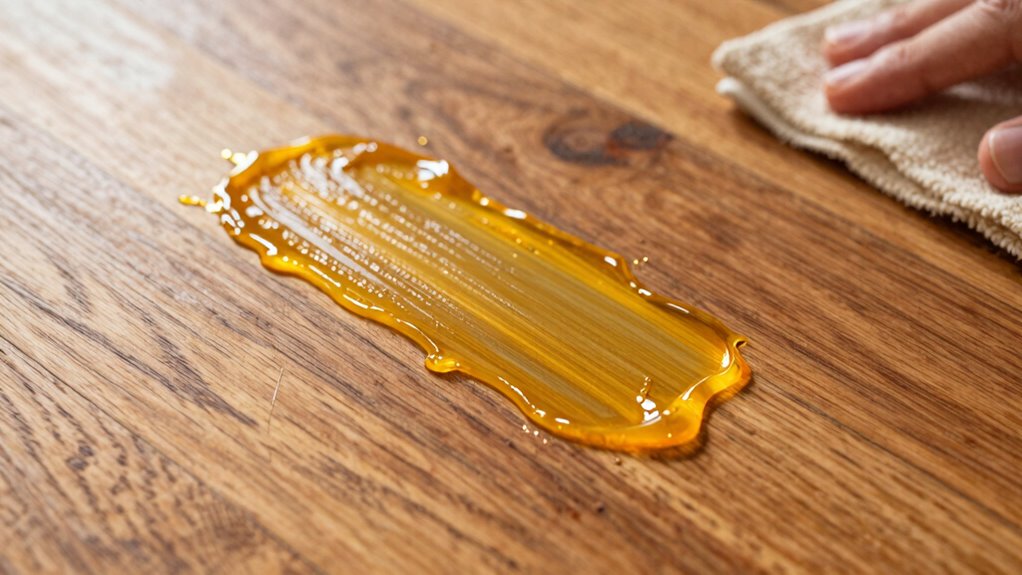
Applying heat or warm water is an effective way to loosen wax stuck on hard floors. Heat application softens the wax, making it easier to remove without scratching the surface. You can start by using a hairdryer set to a low or medium heat, holding it a few inches above the wax. Keep moving the dryer to avoid overheating any area. Alternatively, warm water can help loosen the wax when applied directly to the spot. Dip a clean cloth into warm water, wring out excess moisture, and place it on the wax for a few minutes. The warmth will soften the wax, making it easier to lift with a plastic scraper or cloth. Always test a small area first to ensure your floor’s surface reacts well to heat or water.
Natural Solvents Safe for Different Floor Types
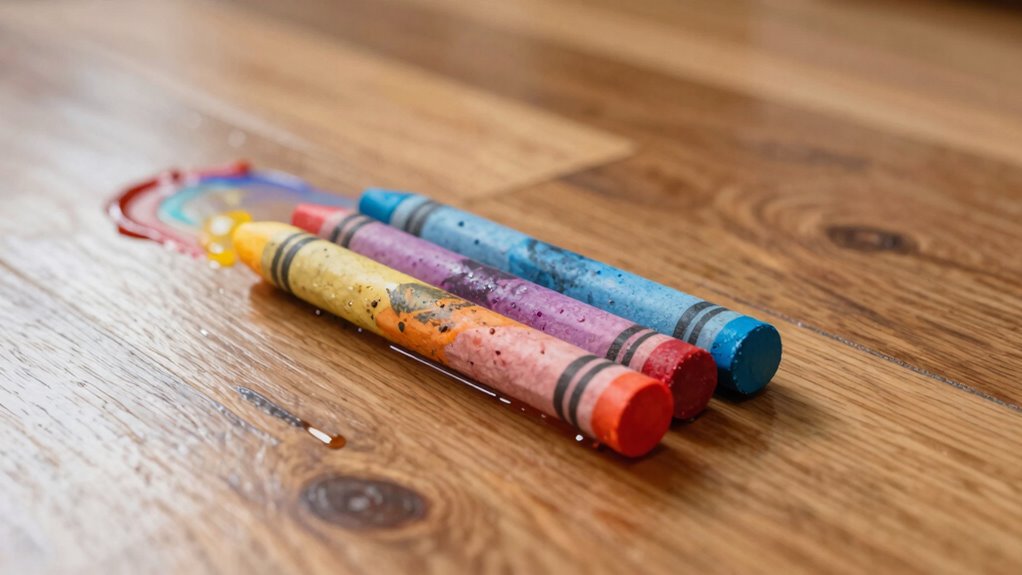
After softening wax with heat or warm water, choosing the right solvent can make removal safer and more effective. For different floor types, eco-friendly products and DIY solutions are your best options. Consider these safe options:
- Vinegar solution – Mix equal parts white vinegar and water for sealed hardwood or tile floors.
- Rubbing alcohol – Use sparingly on vinyl or laminate floors; test first.
- Baking soda paste – Combine baking soda and water for gentle scrubbing on ceramic or stone surfaces.
- Castile soap – Dilute for a mild, eco-friendly cleaner suitable for most floors.
These natural solvents are effective, gentle, and eco-conscious, helping you remove wax without risking damage or scratches. Always test in a small area first to ensure compatibility.
Prevent Crayon Stains: Tips to Keep Your Floors Clean
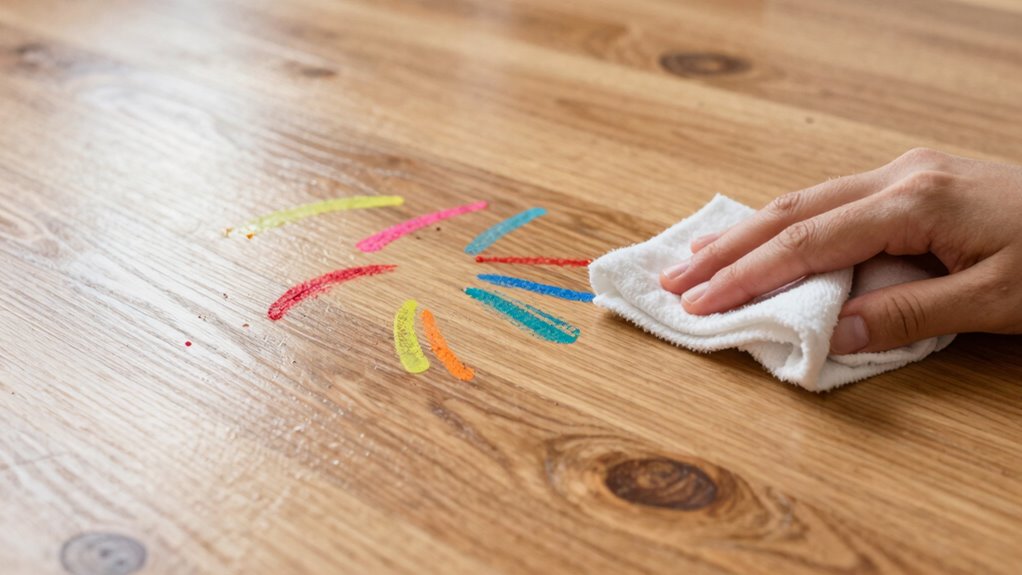
Crayon stains can quickly turn your clean floors into colorful messes, but taking proactive steps can considerably reduce the risk of permanent marks. Practicing crayon safety starts with teaching children to use crayons only in designated areas, away from floors. Keep crayons stored safely out of reach when not in use, and encourage clean-up habits immediately after drawing. Regular floor maintenance, like sweeping or vacuuming, removes loose wax and debris that could cause stains. Consider placing mats or rugs in high-traffic or play areas to catch any accidental markings. By staying vigilant and establishing clear boundaries, you minimize the chances of crayon mishaps, helping your floors stay clean and damage-free longer. Preventive measures are your best defense against stubborn stains and costly repairs.
Common Mistakes to Avoid When Cleaning Crayon Wax
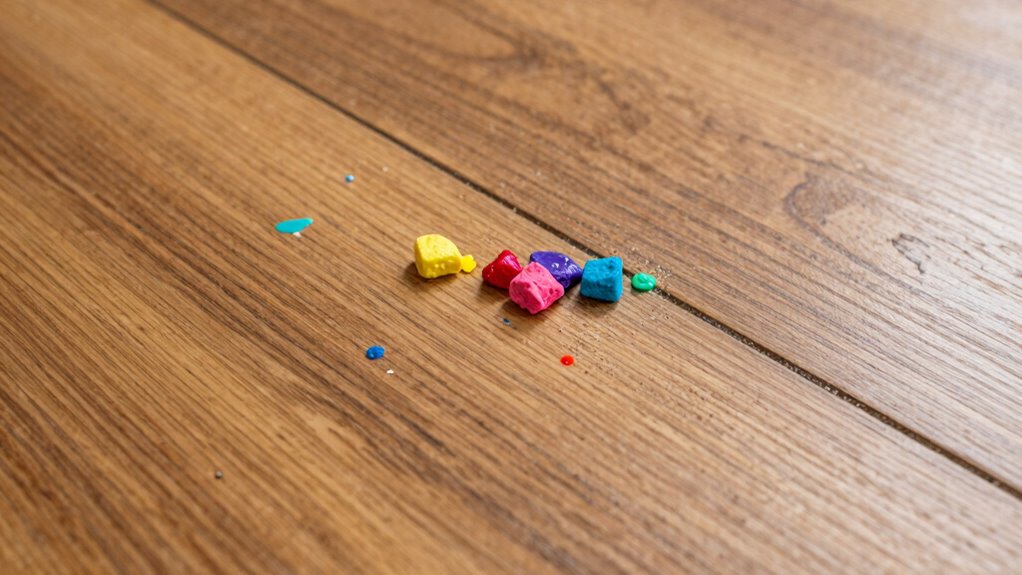
When cleaning crayon wax from hard floors, it’s easy to make mistakes that can worsen the stain or damage the surface. Many fall for crayon stain myths, like scrubbing aggressively or using hot water, which can spread the wax or harm the finish. Avoid these common pitfalls:
Avoid aggressive scrubbing and hot water to prevent worsening wax stains or floor damage.
- Rubbing the stain vigorously, risking scratches.
- Using harsh chemicals that can discolor or degrade the floor.
- Relying on heat, like hot irons, which can melt wax deeper into the surface.
- Believing wax removal myths, such as applying excessive solvent, which may leave residue or cause damage.
Sticking to gentle, appropriate methods is key. Don’t fall for quick fixes that seem effective but actually worsen the situation or cause irreversible harm.
When to Call a Professional for Tough Crayon Stains
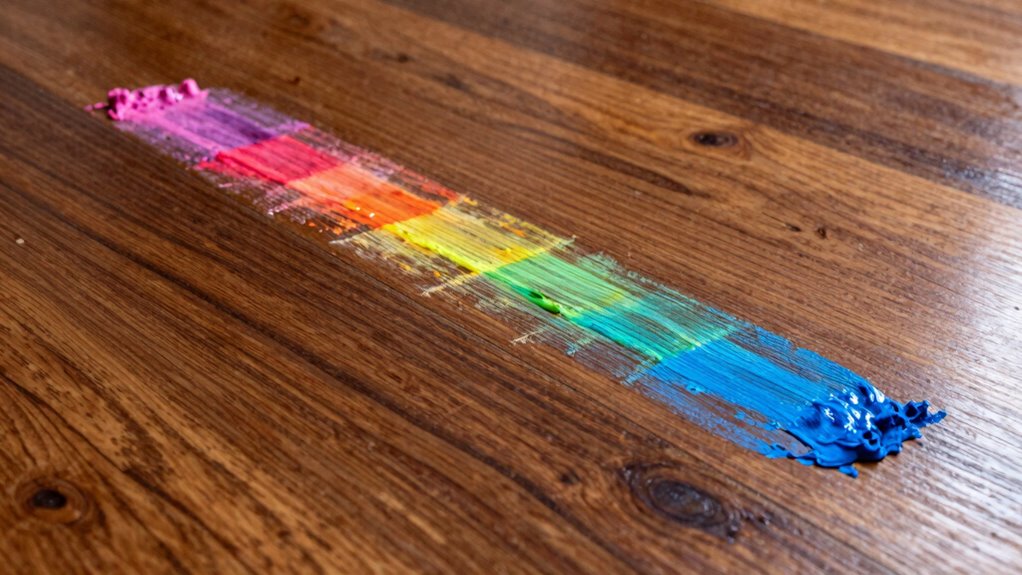
If a crayon stain is particularly stubborn or large, it might be time to call in a professional. Using harsh cleaners or scrubbing too hard can damage your floor, especially with severe stains. Knowing when to seek expert help can save your flooring from unnecessary harm.
Stubborn Stain Severity
Sometimes, despite your best efforts, crayon stains stubbornly refuse to come out with home remedies. When you notice the stubborn stain severity increases, it’s a sign that the wax adhesion is too strong for DIY methods. If the stain:
- Remains dark and vivid, even after multiple cleanings
- Spreads across the surface, creating a larger, more noticeable mark
- Feels embedded or hardened into the floor
- Resists removal despite gentle scrubbing and solvent attempts
it’s time to contemplate professional help. These signs indicate the stain’s stubbornness and the wax’s strong adhesion to the floor’s surface, making DIY solutions ineffective. Pushing further risks damaging your floor, so when in doubt, calling a pro preserves your flooring’s integrity.
Risk of Floor Damage
Persistent crayon stains that resist multiple cleaning attempts can pose a real risk to your flooring. If you’re using harsh or inappropriate cleaning tools, you might accidentally scratch or damage the surface, especially on delicate or polished floors. Pushing too hard or using abrasive materials can compromise your floor’s finish, leading to costly repairs. When the stain is stubborn and standard methods don’t work, it’s best to prioritize floor protection by stopping further scrubbing. In such cases, calling a professional ensures the stain is removed safely without risking scratches or other damage. Professionals have specialized cleaning tools and techniques that effectively tackle tough crayon marks while preserving your floor’s integrity. Don’t risk causing more harm—know when to seek expert help.
Frequently Asked Questions
Can I Use Bleach to Remove Crayon Wax From Floors?
No, you shouldn’t use bleach to remove crayon wax from floors. Bleach is a harsh chemical that can cause unwanted chemical reactions, damaging your flooring’s finish. Instead, stick to gentle cleaning agents like dish soap or a mixture of vinegar and water. These are safer and effective, breaking down wax without harming your floor’s surface. Always test in a small area first to avoid any damage.
Are There Eco-Friendly Options for Removing Crayon Wax?
Think of cleaning as tending a garden—using eco-friendly options keeps your space healthy. You can remove crayon wax with biodegradable solvents or natural cleaning agents, which act like gentle rain nourishing the soil without harm. These alternatives effectively lift wax without scratching your floors, making your cleaning routine safer for the environment. Embrace these plant-based solutions for a sparkling, eco-conscious home that’s kind to the planet and your floors.
How Long Should I Wait Before Walking on Cleaned Floors?
You should wait at least 1 to 2 hours before walking on your cleaned floors, allowing ample time for proper floor drying time. This delay in foot traffic helps prevent smudges or dirt from tracking onto the surface. To be safe, check if the floor feels dry to the touch before resuming foot traffic. Rushing too early might compromise the cleanliness and finish of your floor, so patience is key.
Will Using a Steam Cleaner Help Remove Crayon Wax?
Using a steam cleaner can help with wax removal, but it might not fully dissolve crayon wax on its own. The high heat and moisture can loosen the wax, making it easier to wipe away. However, for best results, combine steam cleaning with a gentle cleaning solution or a plastic scraper to avoid scratches. Always test a small area first to prevent damage and guarantee safe wax removal.
How Can I Prevent My Child From Coloring on Hard Floors?
To prevent your child from coloring on hard floors, implement child-proofing strategies like using corner protectors and organizing art supplies out of reach. Set clear educational boundaries by explaining that floors are for walking, not coloring, and reinforce this consistently. Engage your child with designated coloring areas, such as a table or an easel. These steps help minimize messes while encouraging appropriate creative expression.
Conclusion
Removing crayon wax from hard floors can be simple yet delicate, much like balancing between stubborn stains and pristine surfaces. With patience and the right approach, you protect your floors’ beauty instead of risking scratches or damage. Sometimes, the toughest stains remind you that gentle care and careful techniques are your best allies—proving that even the most stubborn wax can vanish without a trace, leaving your floors spotless and your confidence intact.