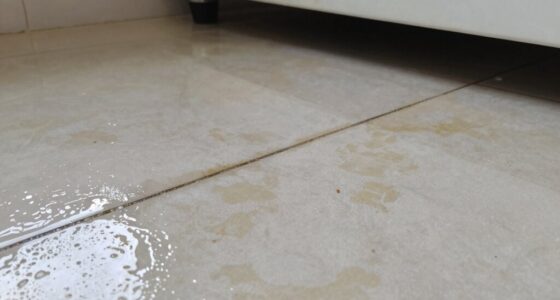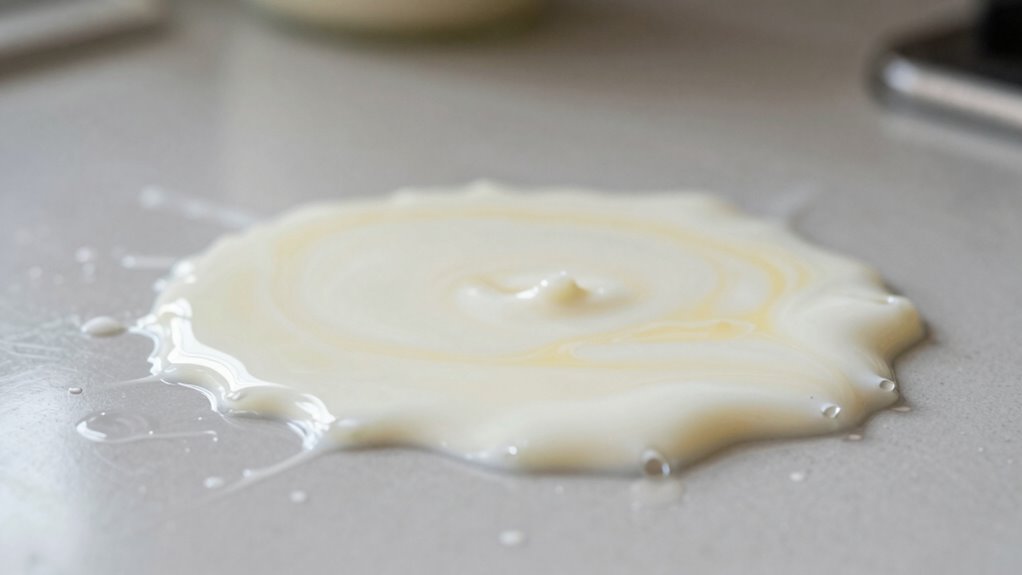

When spilled milk sits uncleaned or stored improperly, bacteria quickly grow and produce acids that cause sourness and foul odors. Warm temperatures and exposure to air accelerate spoilage, making the smell worse fast. To fix it, clean the area thoroughly with warm water and mild detergent, then neutralize odors with vinegar or baking soda. Keeping your space dry and well-ventilated helps prevent future issues. Learn more tips to keep your environment fresh after spills.
Key Takeaways
- Bacterial growth from milk spills produces lactic acid, causing sour smell and spoilage.
- Proper refrigeration and airtight containers slow bacterial activity and delay souring.
- Immediate cleaning with warm water and mild detergent prevents odor-causing bacteria from thriving.
- Applying vinegar or baking soda neutralizes residual odors after cleaning.
- Regularly inspecting and discarding spoiled milk prevents persistent sour smells.
Why Does Spilled Milk Smell Sour and Unpleasant?
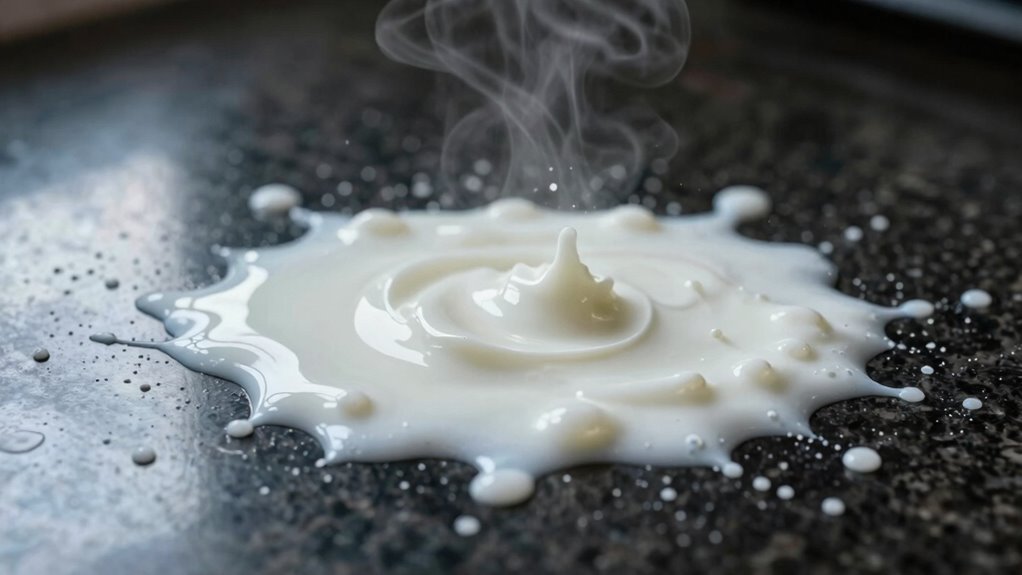
When milk spills and sits out, it quickly begins to smell sour and unpleasant because bacteria start breaking down the milk’s sugars and proteins. This process begins right after the spill, especially if the milk isn’t properly stored. Dairy farming practices influence the freshness of milk at the source, but once in your home, milk packaging plays a vital role in preventing spoilage. If the packaging is compromised, bacteria can enter and accelerate fermentation, leading to that sour odor. As bacteria break down the milk components, they produce lactic acid, which causes the sour smell. The longer milk remains exposed at room temperature, the more bacteria multiply, making the smell more intense. Proper handling and timely cleanup can help minimize this unpleasant odor.
How Bacterial Growth Causes Milk to Sour
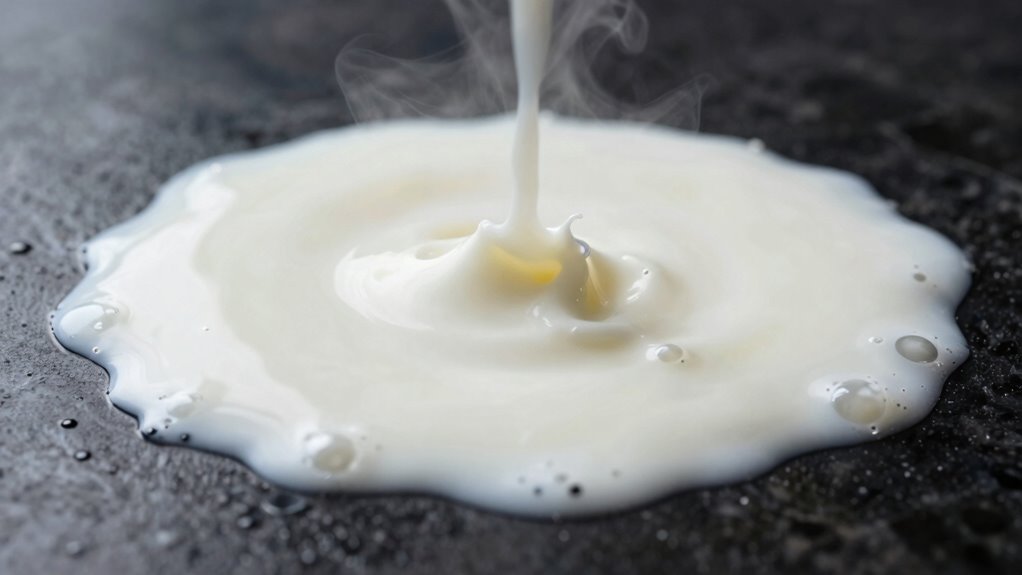
When bacteria grow on spilled milk, they start breaking down the milk’s sugars through a process called lactose fermentation. This activity produces acids that cause the milk to turn sour and develop that unpleasant smell. Understanding this process helps explain why milk quickly spoils once bacteria are present. The buildup of these acids can also lead to material breakdown, further degrading the milk’s quality. The presence of bacteria accelerates spoilage by accelerating decomposition, which intensifies the sour odor and alters the milk’s texture. Additionally, the rapid growth of bacteria is facilitated by temperature control, which can either slow down or speed up spoilage depending on storage conditions. Proper storage techniques are essential to prevent bacterial proliferation and extend the milk’s freshness. Maintaining optimal storage temperatures can significantly inhibit bacterial growth, helping to keep milk fresh for longer periods.
Bacteria Break Down Milk
Bacteria play a crucial role in turning fresh milk sour by breaking down its sugars. When bacteria consume lactose, they produce lactic acid, which causes the milk to develop that sour smell. This process is natural but can be problematic for those with milk allergies or sensitivities. If you’re avoiding dairy, dairy alternatives like almond or soy milk contain different sugars that bacteria can’t ferment the same way. Here’s a quick look at how bacteria work:
| Bacteria Type | Sugar Used | Byproduct |
|---|---|---|
| Lactobacillus | Lactose | Lactic acid |
| Streptococcus | Lactose | Lactic acid |
| Others | Various sugars | Varies |
| Impacts | Sour smell | Changes flavor |
Understanding this helps explain why milk spoils and how bacteria influence its smell and taste. Additionally, the fermentation process of bacteria is influenced by storage conditions, which can accelerate or slow down spoilage. Proper storage can help control bacterial growth and extend the freshness of milk. Proper temperature regulation is essential because bacterial activity increases significantly at warmer temperatures, leading to faster spoilage.
Lactose Fermentation Process
Lactose fermentation is the process where bacteria consume the sugar lactose present in milk, producing lactic acid as a byproduct. Milk composition includes water, fats, proteins, and lactose—the primary carbohydrate. When bacteria initiate lactose fermentation, they break down lactose into lactic acid, which accumulates and lowers the milk’s pH. This increase in acidity causes the milk to sour and develop that familiar tangy flavor. As the bacteria multiply during fermentation, they rapidly convert lactose into lactic acid, accelerating the souring process. Your milk’s overall freshness depends on how quickly this fermentation occurs. Fundamentally, lactose fermentation is the bacterial activity that transforms fresh milk into a sour, often unpleasant, product, setting the stage for the development of that distinctive sour smell. Proper storage conditions can slow down bacterial growth and delay milk spoilage.
Sour Odor Formation
As bacteria break down lactose into lactic acid during fermentation, the increase in acidity alters the milk’s chemical environment. This process results in the characteristic sour odor you notice when milk spoils. The lactic acid accumulation not only causes the smell but also changes the milk’s taste and texture. If you have milk allergies, understanding this bacterial activity helps you recognize spoilage signs. Despite the souring, some dairy products still retain nutritional benefits, but consuming spoiled milk can cause digestive discomfort. Bacterial growth accelerates when milk is left at warm temperatures, intensifying the sour smell. To prevent this, keep milk refrigerated and consume it before the expiration date. Proper storage minimizes bacterial activity, preserving both the freshness and nutritional value of your milk. Additionally, utilizing technological solutions like digital monitoring can help track storage conditions and extend shelf life, especially when combined with proper handling practices.
How Temperature and Storage Speed Up Milk Spoilage
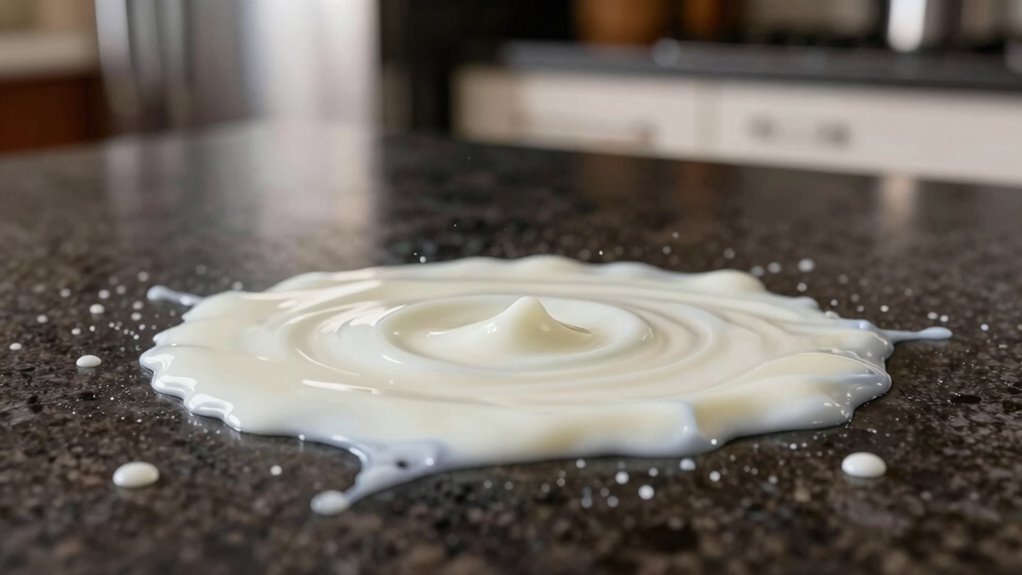
If you keep milk cold, it stays fresh longer because bacteria grow slowly at low temperatures. On the other hand, storing milk quickly at room temperature speeds up bacterial growth and spoilage. Understanding how temperature and storage speed affect milk helps you keep it fresh and avoid that sour smell. Maintaining proper storage methods can significantly extend milk’s freshness and prevent spoilage. Additionally, using reliable backup power during power outages ensures your refrigeration stays consistent, preserving milk quality. Proper ventilation can also help reduce excess moisture and minimize mold growth around storage areas. Being aware of storage conditions can further enhance your efforts to keep milk fresh for longer periods.
Cold Temperatures Delay Spoilage
Cold temperatures slow down the natural bacteria growth that causes milk to spoil, helping it stay fresh longer. Proper milk storage relies heavily on temperature control to extend its shelf life. When you keep milk at cold temperatures, it reduces the rate at which bacteria multiply, delaying souring and spoilage. Using a refrigerator set to the right temperature ensures that bacteria remain inactive enough to preserve milk’s freshness. Avoid leaving milk out at room temperature, as warmer conditions accelerate bacterial growth. By maintaining consistent cold storage, you help prevent the development of that sour smell and off-flavor. Temperature regulation is an important consideration for protecting your home and valuables, just as proper temperature control is crucial for keeping milk fresh. Proper storage techniques and understanding bacterial growth can further help you maintain milk quality and safety. Additionally, monitoring the storage environment ensures that conditions remain optimal, preventing premature spoilage. Keeping your refrigerator organized and away from heat sources can also help maintain a stable temperature, further prolonging milk’s freshness. Remember, proper temperature control isn’t just about keeping milk cold—it’s about slowing the processes that cause spoilage, ensuring your milk stays safe and fresh for as long as possible.
Rapid Storage Accelerates Decay
When milk is stored at higher temperatures or rushed into warmer environments, it speeds up the decay process markedly. Warm conditions promote bacterial growth, causing milk to spoil faster and lose its freshness. Using improper storage containers can also hasten this process by allowing air and contaminants in. To prolong milk’s freshness, keep it in airtight, cold storage containers. Remember these key points:
- Store milk promptly in the refrigerator after purchase.
- Use clean, airtight containers to prevent contamination.
- Avoid leaving milk at room temperature for extended periods.
- Keep your fridge at the best cold temperature to slow decay. Additionally, ensuring your storage containers are dog-safe can help prevent accidental contamination or ingestion of harmful substances. Proper storage temperature and container quality are critical factors in milk spoilage prevention, helping extend the freshness and safety of your milk.
Maintaining the correct storage conditions is essential for keeping milk fresh longer and reducing spoilage.
Furthermore, understanding how temperature impacts bacterial activity can guide better storage practices.
How Quickly Does Milk Turn Sour Under Different Conditions?

Milk can turn sour surprisingly quickly or slowly depending on the conditions it’s stored in. Proper milk storage is key to maintaining dairy freshness and preventing spoilage. When kept at ideal refrigeration temperatures (around 37°F or 3°C), milk can stay fresh for about a week. However, if exposed to higher temperatures or fluctuates frequently, it can sour within a day or two. The presence of bacteria accelerates the souring process, especially if the milk is left out for too long. Pasteurization slows bacterial growth, but once opened, milk is more vulnerable. So, your storage habits directly influence how quickly milk turns sour. Keeping milk cold and sealed helps preserve its freshness longer and delays the development of that unpleasant sour smell.
Effective Ways to Clean Up Spilled Milk and Remove Odor

Spilled milk can quickly create a mess and an unpleasant odor if not cleaned up promptly. To maintain dairy freshness and prevent lasting smells, act fast. Here are effective ways to clean up spilled milk:
- Blot the spill immediately with paper towels or a clean cloth to absorb excess liquid.
- Use a mixture of warm water and mild detergent to thoroughly clean the area, preventing bacteria growth.
- Rinse with plain water and dry completely to eliminate residual moisture, which can cause sour odors.
- Apply a vinegar or baking soda solution to neutralize odors and inhibit microbial activity, ensuring spill prevention and fresh surroundings.
- For optimal vehicle performance, consider how proper cleaning techniques can help maintain a clean environment and prevent lingering odors from spills.
Natural and Commercial Methods to Eliminate Sour Milk Smell
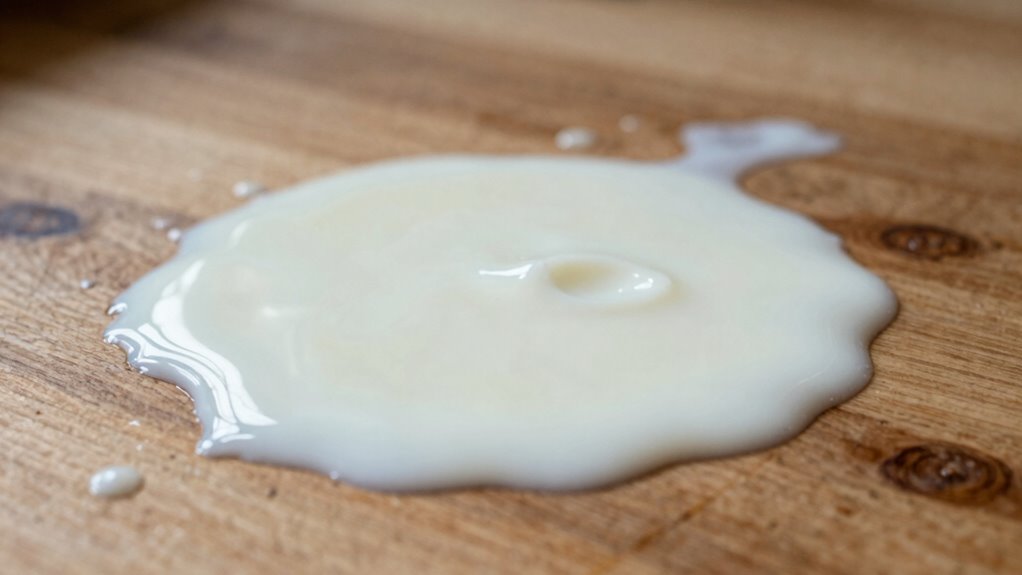
You can try natural deodorizing solutions like vinegar or baking soda to neutralize sour milk odors. Commercial odor eliminators are also effective and easy to use for quick results. Exploring both options helps you find the best method to eliminate the smell efficiently.
Natural Deodorizing Solutions
When dealing with the sour smell from spilled milk, natural deodorizing solutions can be highly effective. These methods work by disrupting the fermentation process and bacterial activity that cause the odor. Here are four options to contemplate:
- Vinegar and Water Solution: Vinegar’s acetic acid neutralizes sour smells and inhibits bacteria.
- Baking Soda Paste: Absorbs odors and neutralizes acids produced during fermentation.
- Lemon Juice: Its natural acidity breaks down odor-causing compounds.
- Activated Charcoal: Adsorbs odor molecules, reducing bacterial activity.
Using these natural remedies can restore freshness without harsh chemicals, making them ideal for sensitive environments. Proper application and patience help eliminate the sour milk smell effectively by targeting the bacterial activity responsible for the odor.
Commercial Odor Eliminators
Commercial odor eliminators offer a quick and effective way to tackle sour milk smells, especially when natural remedies don’t do the trick. These products are designed to neutralize odors at the source, making them ideal for stubborn spills. If you or someone in your household has dairy allergies, or if you prefer milk alternatives like almond or soy milk, using commercial deodorants can help keep your space fresh without lingering dairy scents. Be sure to choose an odor eliminator suitable for your surfaces—some are safe for fabrics, while others work best on hard surfaces. Always follow the instructions for best results and consider testing a small area first. With the right product, you can eliminate sour milk smells quickly and restore freshness to your home.
Preventing Milk Spills and Reducing Odor Development

Ever wonder how to keep milk from spilling and causing unpleasant odors? Proper milk storage and spill prevention are key. To minimize spills and odor issues, consider these steps:
- Use secure, airtight containers to prevent leaks.
- Store milk on stable shelves, avoiding overfilling to reduce accidental spills.
- Keep milk at consistent, cold temperatures to slow spoilage and odor development.
- Clean your storage area regularly to eliminate residual odors and prevent cross-contamination.
When Should You Discard Sour Milk to Keep Your Space Fresh?

Knowing when to discard sour milk is essential for maintaining a fresh and odor-free space. Usually, milk stored in the fridge should be discarded after 7-10 days, even if it smells fine. If you notice a strong sour smell or visible curdling, it’s time to get rid of it. Proper milk storage can prevent odors from lingering; always keep milk sealed and at the back of the fridge. To prevent odor buildup, check your milk regularly and discard it promptly. Here’s a quick guide:
| Milk Condition | Storage Duration | Odor Prevention Tip |
|---|---|---|
| Slight sour smell | 7-10 days | Keep sealed, cold |
| Visible curdling | Discard immediately | Clean storage area |
| No smell, fresh | Up to expiry date | Store away from strong odors |
| Unusual color or texture | Discard immediately | Maintain proper temperature |
Signs That Persistent Odors Need Professional Cleaning
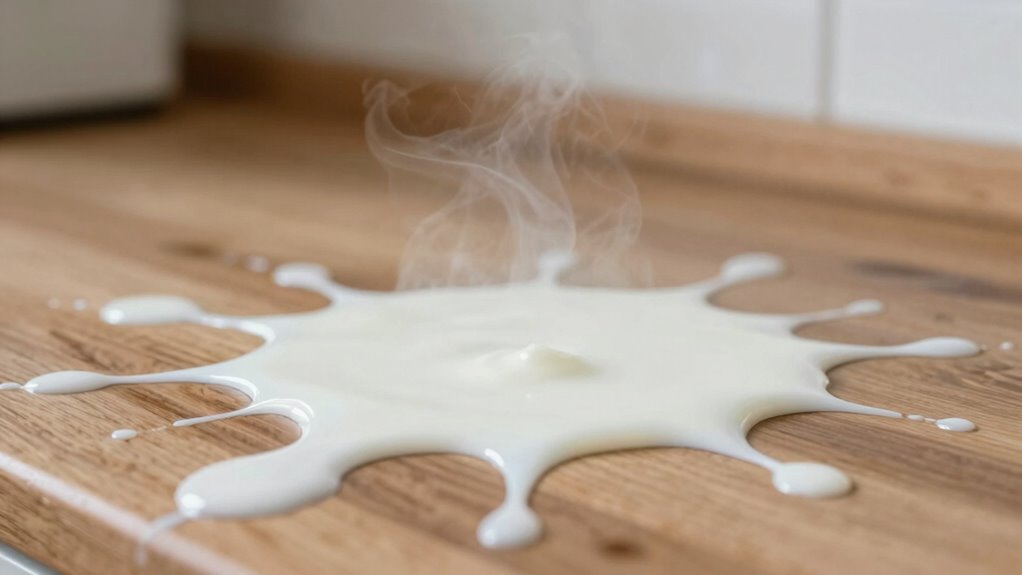
Persistent odors that refuse to dissipate despite regular cleaning often indicate the need for professional intervention. If your efforts with household detergent effectiveness and stain removal techniques aren’t eliminating the smell, it’s a clear sign. Here are four indicators:
Persistent odors despite cleaning signal the need for professional help to fully eliminate hidden sources.
- The odor lingers despite multiple cleanings, suggesting deep-seated residue.
- You notice a sour or sour-milk smell that worsens over time.
- Stains resist removal, and cleaning doesn’t improve the odor.
- Regular cleaning methods no longer mask or diminish the smell, hinting at hidden bacteria or mold.
When these signs appear, professional cleaning is essential to thoroughly eradicate the source of the odor and restore freshness. Don’t rely solely on DIY solutions when the smell persists beyond your control.
Tips to Keep Your Space Odor-Free After Milk Spills
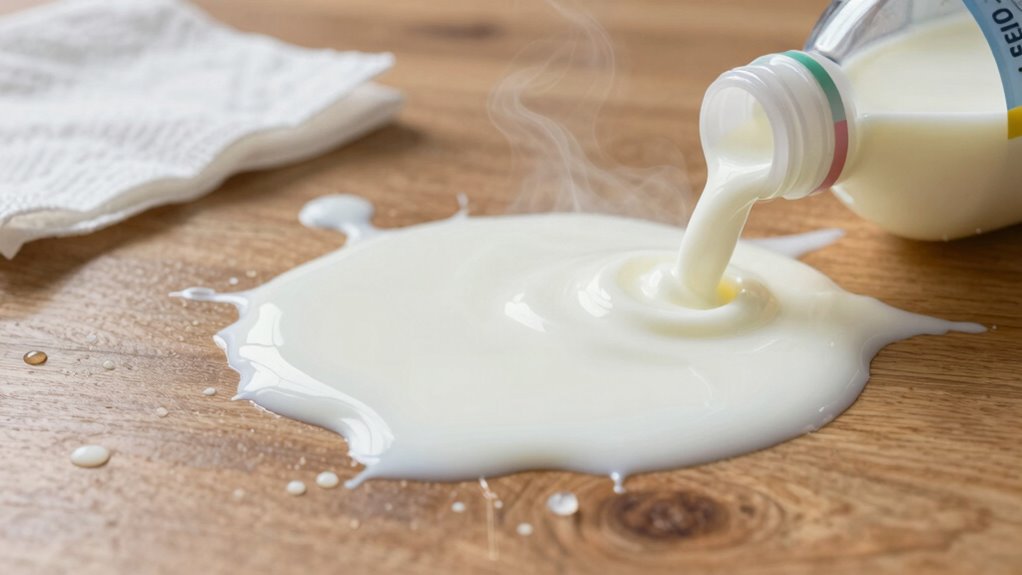
After a milk spill, acting quickly is key to preventing lingering odors. First, grab some cleaning supplies like a mixture of warm water and mild detergent or a specialized cleaner for dairy products. Immediately blot the spill with a clean cloth or paper towels to absorb excess milk. Avoid rubbing, which can spread the odor further. Once the area is dry, apply a vinegar and water solution to neutralize sour smells. Baking soda sprinkled on the spot can also absorb residual odors; let it sit for 15-30 minutes before vacuuming. Keep the space well-ventilated to speed up odor dissipation. Regular cleaning with appropriate supplies ensures no lingering dairy product smells remain, maintaining a fresh, odor-free environment after any milk spill.
Frequently Asked Questions
Can Spoiled Milk Cause Health Issues if Touched or Inhaled?
Touching or inhaling spoiled milk can pose health risks, especially if you’re sensitive or have allergies, as it may cause respiratory irritation or skin reactions. There’s also a contamination concern since bacteria from spoiled milk can spread, potentially leading to infections. To stay safe, wash your hands thoroughly after contact and ventilate the area. Avoid inhaling fumes directly, and clean any spills promptly to prevent bacteria buildup.
Do Different Types of Milk Spoil and Smell Differently?
Imagine you’re in a Victorian kitchen, wondering if milk varieties spoil differently. Yes, they do. Different types, like whole, skim, or plant-based milk, have unique spoilage indicators—sour smell, curdling, or a slimy texture. Some may develop a stronger odor faster. You can spot spoilage by these indicators, but always trust your nose. Proper storage and checking expiration dates help prevent consuming spoiled milk, no matter the type.
How Long Can Milk Sit Out Before It Smells Sour?
You shouldn’t leave milk out for more than two hours, as it quickly loses freshness and develops that sour smell. Bacteria grow rapidly at room temperature, making it unsafe and causing spoilage. Always follow refrigeration guidelines to keep your milk fresh longer. If it’s been sitting out longer than two hours, it’s best to discard it to avoid any health risks. Proper storage guarantees your milk stays fresh and smells good.
Are There Eco-Friendly Ways to Neutralize Milk Odor?
Like a gentle breeze clearing a fog, eco-friendly ways to neutralize milk odor exist. You can try natural deodorization using baking soda or vinegar, which absorb and break down odors effectively. Enzymatic solutions are also eco-friendly options—they target the milk’s proteins and fats, eliminating smell at its source. These methods are safe, sustainable, and work well to freshen up your space without harsh chemicals.
Does the Smell of Spoiled Milk Linger on Clothing or Furniture?
Yes, the smell of spoiled milk can linger on clothing and furniture if not cleaned properly. You might notice a persistent clothing odor or furniture smell even after initial washing. To eliminate this, wash clothes with odor-neutralizing detergent and vinegar, and clean furniture with a mixture of water and baking soda. Air out the space thoroughly, and consider using odor absorbers like activated charcoal to prevent lingering smells.
Conclusion
When milk spills and turns sour, it’s like a stubborn shadow lingering in your space, dulling the freshness you crave. Act quickly to clean and neutralize the odor before it settles deep into your surfaces, turning your home into a place of comfort again. With prompt action and the right methods, you can banish that sour scent, restoring the clean, inviting atmosphere you deserve. Don’t let spilled milk steal the freshness from your space—take control today.