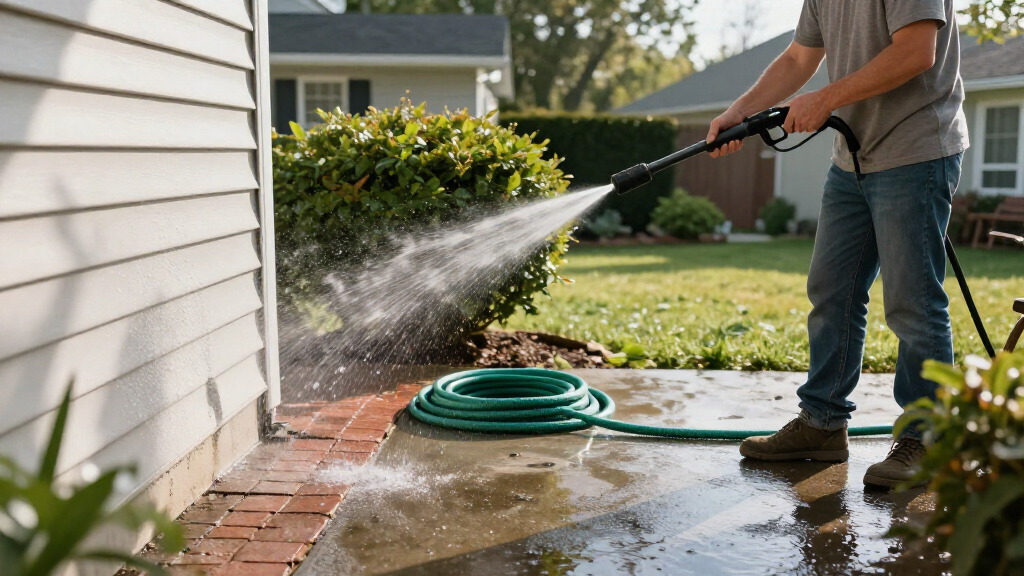
Finding the right pressure washer for home exteriors comes down to one central tradeoff: cleaning power versus convenience. Gas-class machines like the Baococo 4500 PSI strip grime off driveways fastest, while cordless models such as the SEESII 1500 PSI trade raw power for total portability. For most homeowners, the Sun Joe SPX3000 hits the sweet spot with 2500 PSI, dual detergent tanks, and enough muscle for siding, fences, and patios without overwhelming a beginner. If your budget is tighter, the Greenworks 2100 PSI covers the basics well, and the Westinghouse ePX3500 is the step-up pick when you need more pressure for stubborn concrete. Keep reading for the full breakdown of all 14 models.

Get cleaning gear delivered free — and shop member deals
- Fast, free delivery on millions of items
- Access to Prime Big Deal Days deals on October 6–7
- Prime Video, Amazon Music and more included
Complete the kit


Key Takeaways
- The Westinghouse lineup dominates the mid-range, with four models spanning 2100 to 3000 PSI — the ePX3500 stood out as the best balance of power and price within the family, while the ePX3100 variants felt like marginal reshuffles of the same core machine.
- Cordless models (SEESII, KEEPEAK, ZestZenith, MZK) all cluster between roughly 1300–1520 PSI, which is enough for windows, cars, and light siding but struggles on concrete and heavily stained decks — battery runtime, not pressure, was the real differentiator among them.
- The Baococo 4500 PSI is the only machine here approaching gas-class cleaning, making it the clear pick for large driveways, but its extra power demands more care on painted siding and wood.
- The Sun Joe SPX3000’s dual detergent tanks and five quick-connect nozzles gave it the best out-of-the-box versatility for mixed exterior jobs, which is why it earns best overall.
- At 2100–2500 PSI, electric models like the Greenworks, Westinghouse ePX3050, and Sun Joe SPX100-GO handle 80% of typical home exterior tasks — paying for more pressure only matters if you have long stretches of concrete or heavy mildew.


| pressure washers for home exterior | Hose length | Weight |
|---|---|---|
| SEESII Cordless Pressure Washe | 27 ft | 3 lbs |
| Greenworks 2100 PSI Electric P | 20 ft | — |
| Westinghouse ePX3050 Electric | 20 ft | — |
| Westinghouse ePX3100v Electric | 20 ft | 17.6 lbs |
| KEEPEAK Cordless Pressure Wash | 16.4 ft | 2.18 lbs |
| Sun Joe SPX100-GO Electric Pre | 20 ft | 14.33 lbs |
| ZestZenith Cordless Pressure W | 23 ft with weighted filter head | — |
| Westinghouse ePX3100 Electric | 25 ft | 19 lbs |
| Westinghouse ePX3100s Electric | — | 10 lbs |
| Westinghouse WPX3000e Electric | — | — |
| MZK Lightweight Portable Press | 21 ft | 9.9 lbs |
| Westinghouse ePX3500 Electric | — | 19 lbs |
| Baococo Electric Pressure Wash | — | — |
| Sun Joe SPX3000 Electric Press | — | — |
More Details on Our Top Picks
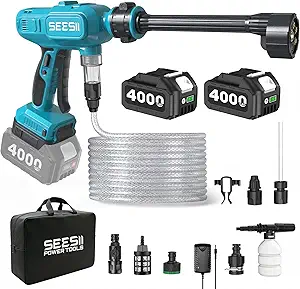
SEESII Cordless Pressure Washer 1500PSI, Portable Power Washer
The SEESII S005 suits exterior touch-ups where a power outlet is out of reach: think a short stretch of fence, patio furniture, or rinsing dirt from outdoor equipment. Its 3-pound body and 27-foot hose are easier to carry and position than the corded Greenworks 2100 PSI, though its 1500 PSI rating gives up pressure for that freedom. The six-in-one nozzle adds flexibility for switching between spray patterns, while the dual batteries are listed for up to 60 minutes of runtime. That figure makes it the more appealing cordless choice here for longer sessions than the KEEPEAK, which lists up to 30 minutes. Still, battery power sets a firm limit on continuous work, and this is a light-duty option rather than a substitute for a stronger corded washer on broad, heavily soiled siding.
Pros:- Cordless operation reaches areas away from outlets
- Three-pound weight makes one-handed positioning easier
- Twenty-seven-foot hose gives room to work around an exterior
- Dual batteries are listed for up to 60 minutes of runtime
Cons:- 1500 PSI is below the listed maximum pressure of the corded Greenworks and Westinghouse options
- Battery charge limits long cleaning sessions
- Best suited to lighter tasks rather than broad, heavily soiled surfaces
Best for: Homeowners who need to clean scattered patio furniture, fencing, or equipment where outlets are inconvenient.
Not ideal for: Anyone tackling large areas of stubborn exterior grime who needs sustained pressure and does not want to manage battery charge.
- Model:S005
- Pressure:1500 PSI
- Flow rate:3 GPM
- Motor:300W brushless, 20000 RPM
- Batteries:2 x 4000mAh
- Listed runtime:Up to 60 minutes
- Hose length:27 ft
- Weight:3 lbs
Our verdict“Choose the SEESII for portable exterior touch-ups where cordless reach matters more than sustained cleaning power.”
Greenworks 2100 PSI Electric Pressure Washer
For regular exterior jobs near an outlet, the Greenworks 2100 PSI offers a useful mix of spray options without gas-engine upkeep. The included turbo nozzle, 25° and 40° nozzles, and soap applicator let buyers match the spray to surfaces such as sidewalks, decks, and siding rather than relying on one pattern. Compared with the Westinghouse ePX3050, it has a shorter 20-foot hose, so its 35-foot GFCI power cord helps with placement but does not remove the need to move the washer as work progresses. Its 2100 PSI rating is a listed maximum, and the 1.2 GPM flow rate is modest for broad exterior cleaning. The telescoping handle helps with transport and storage, but buyers with distant outlets or large façades may prefer a cordless model for reach or a higher-flow unit for coverage.
Pros:- Includes turbo, 25°, and 40° nozzles for different cleaning tasks
- Soap applicator supports detergent use on exterior surfaces
- GFCI-equipped 35-foot power cord
- Telescoping handle aids transport and storage
Cons:- Requires access to an electrical outlet
- Twenty-foot hose can restrict reach around a home
- Listed flow rate is 1.2 GPM
Best for: Homeowners with accessible outdoor outlets who want several nozzle choices for mixed patio, sidewalk, and siding tasks.
Not ideal for: People cleaning far from outlets or covering a large exterior who need longer hose reach or higher water flow.
- Model:GPW2101A
- Pressure:2100 PSI
- Flow rate:1.2 GPM
- Power source:Corded electric
- Power cord length:35 ft, GFCI
- Hose length:20 ft
- Included nozzles:25°, 40°, and turbo
- Warranty:3-year limited warranty
Our verdict“Pick the Greenworks for varied exterior tasks near an outlet when included nozzle options matter more than hose reach.”
Westinghouse ePX3050 Electric Pressure Washer, 2100 Max PSI, 1.76 Max GPM
The Westinghouse ePX3050 is a practical match for homeowners who want a corded washer that is easier to store and move between exterior jobs. Its 26-inch profile, 14-pound weight, and never-flat wheels give it a mobility advantage over the Greenworks, whose listed details emphasize a telescoping handle rather than wheels. A 35-foot GFCI cord helps place it around the work area, while the 20-foot hose still means the machine may need repositioning during a larger clean. The stated 2100 PSI and 1.76 GPM are maximum figures; rated output is lower at 1800 PSI and 1.2 GPM. That makes it a more modest choice for sustained coverage than a heavier-duty model. The foam cannon and quick-connect nozzles help with routine siding, walkway, and furniture cleaning, but the cord limits where it can operate.
Pros:- Compact 26-inch profile takes less storage space
- Fourteen-pound weight and never-flat wheels aid movement
- Includes foam cannon and three quick-connect nozzles
- Thirty-five-foot GFCI cord helps with placement
Cons:- Rated output is 1800 PSI and 1.2 GPM, below the listed maximum figures
- Twenty-foot hose may require frequent repositioning
- Corded power limits use to areas within outlet reach
Best for: Homeowners with limited storage who want a wheeled electric washer for occasional siding, walkway, and patio cleaning.
Not ideal for: Buyers who need cordless access, a long hose, or higher sustained output for large or heavily soiled exterior areas.
- Model:ePX3050
- Maximum pressure:2100 PSI
- Maximum flow:1.76 GPM
- Hose length:20 ft
- Power cord:35 ft, GFCI
- Net weight:14 lbs
Our verdict“Choose the ePX3050 if compact storage and easy movement matter for routine exterior cleaning near an outlet.”
Westinghouse ePX3100v Electric Pressure Washer
When exterior cleaning means carrying equipment up steps or moving it between a driveway and backyard, the ePX3100v’s built-in carry handle is its clearest distinction. At 17.6 pounds, it is still heavier than the cordless SEESII, but it offers the corded power and accessories that make more sense for outlet-adjacent jobs around decks, siding, and patios. Its steel wand, three quick-connect tips, and detachable foam cannon give buyers a ready setup for changing tasks. Like the ePX3050, it lists a maximum of 2100 PSI and 1.76 GPM, with rated output at 1800 PSI and 1.2 GPM; neither should be confused with a high-flow washer for extensive buildup. The 20-foot hose can also constrain movement around a home. Its Total Stop System and three-year service, labor, and parts warranty add reassurance, but access to an outlet remains necessary.
Pros:- Built-in handle and 17.6-pound weight ease carrying
- Includes a steel wand, three quick-connect tips, and foam cannon
- Total Stop System conserves energy when the trigger is released
- Three-year limited service, labor, and parts warranty
Cons:- Rated pressure is 1800 PSI, below the 2100 PSI maximum
- Twenty-foot hose limits working reach
- Requires an electrical outlet
Best for: Homeowners who carry a washer between nearby outdoor areas and want a compact corded kit with detergent and nozzle options.
Not ideal for: People cleaning far from outlets or needing a long hose and higher rated output for large exterior surfaces.
- Model:ePX3100v
- Maximum pressure:2100 PSI
- Maximum flow:1.76 GPM
- Weight:17.6 lbs
- Hose length:20 ft
- Warranty:3-year limited service, labor, and parts
Our verdict“The ePX3100v fits homeowners who value carrying convenience and a ready accessory kit for moderate, outlet-accessible exterior jobs.”
KEEPEAK Cordless Pressure Washer, 1450 PSI, with 6-in-1 Nozzle and Two 4.0Ah Batteries
The KEEPEAK XCSQ-02-55 is a lightweight cordless kit for smaller jobs where the water source may be a bucket or another accessible supply. Its water-source adapters, foam cannon, and storage case make it more self-contained than the SEESII, which has a longer 27-foot hose and lists twice the maximum runtime. At 2.18 pounds, the KEEPEAK is easy to carry, and its six-in-one nozzle provides several spray settings without swapping separate tips. The tradeoff is session length: the listed runtime is up to 30 minutes per full charge, so it suits patio furniture, a short fence section, or a quick rinse better than cleaning an entire home’s exterior. Its 1450 PSI maximum also puts it in the light-duty group alongside the SEESII rather than the corded Greenworks.
Pros:- Cordless design works away from electrical outlets
- Water-source adapters support different accessible supplies
- Six-in-one nozzle provides several spray settings
- Includes foam cannon and waterproof storage case
Cons:- Listed runtime is up to 30 minutes per full charge
- 1450 PSI maximum is intended for lighter tasks than the corded Greenworks
- Sixteen-point-four-foot hose is shorter than the SEESII’s 27-foot hose
Best for: Homeowners seeking a light cordless kit for short exterior touch-ups and who may draw water from different accessible sources.
Not ideal for: People planning extended siding or patio sessions who need longer runtime, greater hose reach, or higher pressure.
- Model:XCSQ-02-55
- Maximum pressure:1450 PSI
- Flow rate:3.0 GPM
- Motor:Brushless
- Batteries:Two 4.0Ah batteries
- Listed runtime:Up to 30 minutes per full charge
- Hose length:16.4 ft
- Weight:2.18 lbs
Our verdict“Choose the KEEPEAK for brief, light-duty exterior cleaning when a compact kit and flexible water-source options are priorities.”
Sun Joe SPX100-GO Electric Pressure Washer, 13-Amp, with 4 Nozzles and Foam Cannon
This Sun Joe earns its place as the most complete starter package under the roundup’s budget tier. The 13-amp motor won’t match the raw cleaning force of the Westinghouse WPX3000e, but the inclusion of four quick-connect nozzles plus a dedicated foam cannon means it handles siding, fences, patio furniture, and vehicles without extra purchases. The combined 55 feet of hose and GFCI cord reach is generous for the price and lets you work around a typical one-story home without re-plugging. The Total Stop System shuts the pump between trigger pulls, which reduces wear during long exterior sessions. The tradeoff is modest pressure output — heavily stained concrete or second-story surfaces will need patience or a stronger unit like the ePX3500. At just over 14 pounds, it’s also one of the easiest corded models here to carry between jobs.
Pros:- Four nozzle tips cover a full range of exterior cleaning tasks
- Foam cannon and onboard detergent system included out of the box
- 20-ft hose plus 35-ft GFCI cord gives long working radius
- Light 14.33-lb build with wheels and onboard storage
Cons:- Cleaning power trails the Westinghouse models noticeably on tough grime
- Plastic construction feels less durable than steel-framed rivals like the WPX3000e
Best for: First-time buyers who want a full accessory kit for light-duty siding, fence, and patio cleaning at a low entry cost
Not ideal for: Homeowners with large stained driveways or two-story exteriors — the 13-amp output will feel underpowered
- Motor:13 amps
- Nozzle tips:4 (0°, 15°, 25°, 40°)
- Foam bottle capacity:13.53 oz
- Hose length:20 ft
- Power cord:35 ft GFCI-protected
- Automatic shutoff:Total Stop System
- Weight:14.33 lbs
- Warranty:2 years plus 90 days with registration
Our verdict“A well-equipped, affordable pick for light exterior maintenance where value matters more than raw pressure.”
ZestZenith Cordless Pressure Washer, 1520 PSI Battery Powered Handheld Power Washer
Where every corded model in this roundup anchors you to an outlet, the ZestZenith trades peak power for true go-anywhere portability. Draw water from a bucket, pool, or faucet via the 23-ft hose, and clean fence lines, garden walls, or a car parked far from the house — something the Westinghouse ePX3100 simply cannot do. The 6-in-1 nozzle and foam pot cover the common exterior tasks, and the waterproof storage box keeps the whole kit organized in a trunk or shed. The compromises are real: 1520 PSI trails even budget corded units, and the 21V battery delivers roughly 20 minutes of continuous cleaning — enough for spot-cleaning, not for washing an entire driveway. Compared with the similarly portable KEEPEAK 1450 PSI model, its slightly higher pressure and multiple intake options give it the edge for flexible outdoor use.
Pros:- Fully cordless with 21V battery for outlet-free cleaning
- Multiple water sources: hose, faucet, bucket, or pool
- 6-in-1 nozzle plus foam pot handles varied tasks
- Waterproof storage box keeps the kit portable and organized
Cons:- 1520 PSI is well below corded electric and gas alternatives
- Battery limits continuous runtime to about 20 minutes
Best for: Homeowners who need spot-cleaning freedom away from outlets — sheds, fence lines, garden furniture, and vehicles at the curb
Not ideal for: Anyone tackling a full driveway or large deck — battery runtime and pressure fall short of whole-surface jobs
- Pressure:1520 PSI
- Flow rate:3.4 GPM
- Battery:21V
- Runtime:Up to 45 min intermittent / ~20 min continuous
- Hose length:23 ft with weighted filter head
- Nozzle:6-in-1 multi-pattern
- Motor:775 motor
Our verdict“The right choice for portable touch-up cleaning where a cord and faucet can’t reach.”
Westinghouse ePX3100 Electric Pressure Washer
The ePX3100 occupies a sweet spot between the weaker Sun Joe SPX100-GO and the heavier WPX3000e — 2300 PSI from a body just 16.5 inches tall and 19 pounds. That balance makes it the easiest corded model here to store in a closet or carry up porch steps while still delivering enough force for siding, walkways, and vehicles. The four-wheel 360-degree steering with anti-tipping design is a genuine usability win on uneven patio surfaces, where two-wheeled units like the WPX3000e can feel clumsy. Five nozzles, including a turbo tip, plus a 20-oz onboard soap tank round out a versatile package. The tradeoff is flow rate: at 1.76 GPM max, rinsing large surfaces takes longer than with a gas model, and the 25-foot hose means you’ll be moving the unit more often on bigger exteriors.
Pros:- 2300 PSI balances power with a compact 19-lb frame
- Four-wheel 360° steering with anti-tipping stability
- Five nozzles including turbo plus onboard soap tank
- Trigger-release pump shutoff conserves energy and pump life
Cons:- 1.76 GPM max flow makes large-surface rinsing slower
- 25-ft hose is shorter than the WPX3000e’s reach on bigger exteriors
Best for: Suburban homeowners with moderate exterior jobs who value compact storage and easy maneuverability
Not ideal for: Large properties or long driveways — the 25-ft hose and moderate flow rate slow down big jobs
- Max pressure:2300 PSI
- Max flow rate:1.76 GPM
- Height:16.5 inches
- Weight:19 lbs
- Hose length:25 ft
- Soap tank:20 oz onboard
- Nozzles:5 (0°, 15°, 25°, turbo, soap)
- Warranty:3-year limited service, labor, and parts
Our verdict“A maneuverable, stowable mid-power choice that fits small garages and everyday exterior cleaning.”
Westinghouse ePX3100s Electric Pressure Washer, 2100 Max PSI
At just 10 pounds, the ePX3100s is the lightest corded machine in this lineup — nearly half the weight of its sibling, the Westinghouse ePX3100. That difference matters if you’re carrying it up stairs, stashing it on a shelf, or moving between the front and back of the house repeatedly. The adjustable foam cannon is a nicer solution than the ePX3100’s fixed soap tank for pre-treating dirty siding, letting you dial the foam mix. Reach is generous for the class, with a 35-ft GFCI cord and 20-ft hose. The honest caveat: rated output is 1800 PSI and 1.2 GPM, noticeably below the advertised maximums and below what the ePX3100 delivers in practice. For delicate painted surfaces and vinyl siding, that softer output is actually an advantage; for ground-in driveway grime, it isn’t.
Pros:- Featherweight 10-lb body is the easiest corded model to carry and store
- Adjustable foam cannon dials in pre-treatment for siding
- Built-in holders keep nozzles and lance organized
- 35-ft cord and 20-ft hose give good reach for a compact unit
Cons:- Rated output (1800 PSI / 1.2 GPM) falls well short of the advertised max
- Less powerful in practice than the similarly compact ePX3100
Best for: Anyone prioritizing easy carrying and gentle, controlled cleaning for vinyl siding, windows, and painted surfaces
Not ideal for: Driveway or concrete deep-cleaning — the rated 1800 PSI output lacks the muscle for stubborn stains
- Max pressure:2100 PSI
- Max flow rate:1.76 GPM
- Weight:10 lbs
- Power cord:35 ft GFCI
- High-pressure hose:20 ft
- Included accessories:Foam cannon, spray gun, lance, standard nozzles
Our verdict“The pick for light, ladder-free exterior upkeep where a gentle touch and easy handling beat brute force.”
Westinghouse WPX3000e Electric Pressure Washer, 3000 Max PSI, 1.76 Max GPM
For buyers who want gas-rivaling cleaning force without fumes or engine maintenance, the WPX3000e is the strongest electric option in this batch. Its induction motor and axial cam pump deliver a rated 2600 PSI that clearly out-cleans the Westinghouse ePX3100 on weathered decks, stained sidewalks, and grimy fences. The build reflects the mission: rugged steel framing and 10-inch never-flat wheels built for rolling across lawns and gravel, plus a large 0.45-gallon soap tank for long pre-soak sessions. A 35-ft GFCI cord and 25-ft abrasion-resistant hose cover a wide work zone. Two realities temper the appeal — the rated 1.1 GPM flow means rinsing is slower than gas machines, and the steel chassis makes it heavier and harder to store than the 10-lb ePX3100s. This is a tool for serious exterior projects, not quick touch-ups.
Pros:- Highest electric cleaning power in this batch at 3000 max PSI
- Maintenance-free induction motor and auto-stop axial cam pump
- 0.45-gallon onboard soap tank for extended pre-soaking
- Steel frame and 10-inch never-flat wheels handle rough terrain
Cons:- Rated flow (1.1 GPM) makes rinsing large areas slower than gas models
- Heavy steel build takes up more storage and is harder to lift than compact picks
Best for: Homeowners with large decks, fences, and stained concrete who need maximum electric cleaning power
Not ideal for: Apartment dwellers or occasional light-duty users — it’s heavy, bulky, and more machine than small jobs require
- Max pressure:3000 PSI
- Max flow:1.76 GPM (1.1 GPM rated)
- Motor:Heavy-duty 120V induction
- Pump:Maintenance-free axial 3-piston auto-stop
- Soap tank:0.45 gallons onboard
- Hose:25 ft abrasion-resistant super-flex
- Nozzles:5 quick-connect (0°, 15°, 25°, soap, turbo)
- Warranty:3-year limited service, labor, and parts
Our verdict“The electric choice for big, grime-heavy exterior projects where power and durability outweigh portability.”
MZK Lightweight Portable Pressure Washer with Foam Cannon
This option stands out for sheer portability — at 9.9 lbs, it is lighter than everything else in this roundup, including the cordless SEESII and ZestZenith units. That makes it a natural fit for quick exterior touch-ups like rinsing patio furniture, spot-cleaning siding, or washing the car between deep cleans. The 4-gear adjustable nozzle covering 0° to 120° gives it more spray flexibility than most budget models, and the included foam cannon means you get soap application without buying attachments. The tradeoff is raw cleaning muscle: with a moderate 2.0 GPM flow and no outlet-free operation, this model is better suited to maintenance cleaning than stripping years of grime off a driveway. Compared with the Greenworks 2100 PSI, it gives up pressure in exchange for a form factor you can carry one-handed.
Pros:- Featherweight 9.9 lb body that stores anywhere and carries easily
- 4-gear nozzle spans 0° to 120° for everything from tight jets to wide rinses
- Foam cannon included for soap-first car washing
- 38 feet of combined hose and cord reach covers a decent work radius
Cons:- Moderate flow rate struggles with heavily soiled or stained surfaces
- Corded design ties you to outlets, unlike battery rivals such as the KEEPEAK
Best for: Homeowners and apartment dwellers who want a grab-and-go washer for cars, furniture, and small exterior surfaces
Not ideal for: Anyone tackling heavy mildew on a full driveway or two-story siding — the flow rate will make those jobs painfully slow
- Flow Rate:2.0 GPM
- Weight:9.9 lbs
- Hose Length:21 ft
- Power Cord Length:17 ft
- Nozzle Spray Ranges:0°, 15-25°, 25-60°, 60-120°
- Start Type:One-button start
- Included Accessories:Foam cannon
Our verdict“Buy this if your exterior cleaning is mostly light maintenance and portability matters more than power.”
Westinghouse ePX3500 Electric Pressure Washer, 2500 Max PSI, 1.76 Max GPM
The ePX3500 hits a sweet spot that few models in this lineup manage: real cleaning capability in a 16.5-inch frame. Its pro-style extendable steel wand and five quick-connect nozzles give it broader tool coverage than the Sun Joe SPX3000, while the anti-tipping 360° steering wheels make it noticeably easier to maneuver around a house than flat-slide models like the Baococo. The auto-stop pump shuts the motor down between trigger pulls, which reduces wear during long siding sessions. Be realistic about the numbers, though: rated working pressure lands around 2000 PSI, and the full 1.76 GPM only arrives at the lowest pressure setting — so this is a confident mid-duty machine, not a strip-everything powerhouse. For most home exterior jobs — fences, patios, driveways, vinyl — that balance is exactly right.
Pros:- Compact 16.5-inch body stores easily yet delivers mid-tier cleaning power
- Anti-tipping 360° steering wheels roll smoothly around obstacles
- Five-nozzle set plus 20 oz onboard soap tank covers most exterior tasks
- Auto-stop pump extends pump life; 3-year limited warranty adds peace of mind
Cons:- Rated pressure of roughly 2000 PSI is well below the 2500 max headline figure
- Max flow rate only achievable at the lowest pressure setting
Best for: Suburban homeowners who want one washer that handles siding, driveways, decks, and cars without dominating the garage
Not ideal for: Buyers chasing maximum stripping power for neglected concrete — the working pressure falls well short of the advertised max
- Max PSI:2500
- Max GPM:1.76
- Wand:Pro-style steel extendable 17.5″
- Nozzles:0°, 15°, 25°, turbo, soap applicator
- Hose:25 ft nylon braided easy-coil
- Soap Tank:20 oz onboard
- Weight:19 lbs
- Warranty:3-year limited service, labor and parts
Our verdict“This is the balanced pick for someone who wants capable, storable, maneuverable cleaning for typical home exteriors.”
Baococo Electric Pressure Washer, 4500 PSI, 2.8 GPM
When the job is a decade of driveway oil stains or green-stained concrete, this is the machine in the batch built for it. With 4500 PSI and 2.8 GPM, it outmuscles everything else here — the Westinghouse WPX3000e is the closest rival and still trails by a wide margin on paper. The 33-foot high-pressure hose is the longest in this group, cutting down repositioning on wide surfaces, and four lockable swivel wheels keep the unit planted while you work. That power comes with responsibility: a 0° nozzle at this pressure can etch concrete, gouge wood, and damage paint, so the four-nozzle set needs to be used deliberately — start wide, then tighten. It is also a heavier, less portable machine than the MZK or ePX3500, and its bulk makes quick car washes feel like overkill.
Pros:- Class-leading pressure and flow in this lineup for stubborn exterior grime
- 33 ft hose is the longest here, ideal for driveways and long fence lines
- Four lockable swivel wheels provide stability on uneven pavement
- Includes 500 ml foam bottle and four quick-connect nozzles
Cons:- Maximum pressure demands care — misuse can damage softer exterior surfaces
- Bulkier and less convenient than compact picks for small, frequent jobs
Best for: Homeowners with large hardscapes, neglected concrete, or heavy mildew who need maximum cleaning force from an electric machine
Not ideal for: Casual users or anyone washing delicate surfaces — full pressure is overkill and risky for cars, painted trim, and soft wood
- Type:Electric pressure washer
- Pressure:4500 PSI
- Flow Rate:2.8 GPM
- Nozzles:4 quick-connect (0°, 15°, 25°, 40°)
- Foam Bottle:500 ml
- Power Cord:20 ft
- High-Pressure Hose:33 ft
- Wheels:4 lockable 360° swivel wheels
Our verdict“Choose this only if your exterior projects are genuinely tough; for routine washing, a mid-tier model is safer and easier.”
Sun Joe SPX3000 Electric Pressure Washer, 2500 Max PSI
What sets the SPX3000 apart in this roundup is its dual onboard detergent tank system — two 0.9 L reservoirs let you run, say, a siding brightener and a degreaser simultaneously and switch between them at the wand. No other model here, including the Westinghouse ePX3500 with its single 20 oz tank, offers that flexibility, and for exterior work where different surfaces need different chemistry, it genuinely speeds things up. The 34-inch stainless lance with brass fittings feels sturdier than typical budget wands. The honest caveat: working pressure is 2030 PSI at 1.2 GPM, so rinse speed is slower than the ePX3500 or the Greenworks 2100 PSI, and long driveways will take patience. Think of this as the chemist’s pick — soap strategy over brute force.
Pros:- Two onboard 0.9 L detergent tanks allow switching solutions instantly
- Five quick-connect spray tips plus dedicated soap tip cover most tasks
- 34-inch stainless steel lance with brass fittings is durable and corrosion-resistant
Cons:- 1.2 GPM flow rate is among the slowest in this lineup for rinsing
- 20 ft hose is shorter than the ePX3500’s 25 ft, limiting reach per move
Best for: Homeowners who clean mixed surfaces and want to switch cleaning solutions without swapping bottles mid-job
Not ideal for: Buyers focused on speed — the modest 1.2 GPM flow makes large flat areas like long driveways slow going
- Model:SPX3000
- Maximum Pressure:2500 PSI
- Working Pressure:2030 PSI
- Water Flow:1.2 GPM
- Spray Tips:Five: 0°, 15°, 25°, 40°, soap
- Spray Lance:34-inch stainless steel with brass fittings
- High-Pressure Hose:20 ft
- Detergent Tanks:Two onboard 0.9 L tanks
Our verdict“This pick makes the most sense for detergent-driven cleaning across varied exterior surfaces rather than fast, high-volume rinsing.”
How We Picked
I evaluated every model against the demands of home exterior work specifically — siding, driveways, decks, fences, and gutters — rather than general cleaning ability. The criteria: pressure and flow matched to the surfaces buyers actually wash, nozzle and detergent versatility, hose length and reach (short hoses kill productivity on a two-story home), storage and portability, and usability details like cord management and onboard accessory storage.
Ranking favored machines that solve the whole exterior-cleaning job, not just one task. That’s why a versatile mid-power electric like the Sun Joe SPX3000 outranks higher-PSI units with fewer practical features, and why nearly identical models within the Westinghouse family were separated by the details — included accessories, pressure ceiling, and value relative to siblings rather than against the whole field.
Factors to Consider When Choosing Pressure Washers For Home Exteriors
Before locking in a purchase, it helps to understand what actually drives performance on home exteriors — and where buyers most often overspend or underbuy.PSI vs. GPM: Why Pressure Alone Is Misleading
Shoppers fixate on PSI, but cleaning power is pressure multiplied by flow. A 1500 PSI machine with weak flow takes twice as long to clean the same siding as a lower-PSI unit with strong GPM. For home exteriors, 2000–3000 PSI with at least 1.6 GPM is the productive zone for siding and decks, while concrete and pavers reward 3000 PSI or more. Be skeptical of inflated ‘max PSI’ claims — real operating pressure is often 30–50% lower. The common mistake is buying an underpowered cordless unit for a whole-house job, then spending an entire Saturday on one driveway.
Matching Pressure to Your Siding Material
Vinyl and painted siding are damage-prone above about 2000 PSI with a zero-degree nozzle, while brick, stucco, and concrete tolerate far more aggression. This is why nozzle selection matters as much as the machine: a 40-degree fan tip at high PSI is gentler than a pinpoint jet at low PSI. Wood decks and fences need low pressure and consistent, overlapping passes to avoid striping. If your home has mixed surfaces — vinyl upstairs, concrete below — prioritize models with quick-swapping multi-nozzles and adjustable pressure rather than raw power.
Corded Electric vs. Cordless: The Real Tradeoff
Cordless washers look appealing for their freedom, but they exist for spot jobs, second-story windows, and vehicles — not whole exteriors. Battery runtime typically limits continuous cleaning to 20–40 minutes per charge, and recharge cycles turn a two-hour job into an all-day affair. Corded electrics deliver unlimited runtime and consistent pressure for about the same money as a good cordless kit. The smart play for many homeowners is a corded primary machine plus a cheap cordless for touch-ups, rather than expecting one cordless to do everything.
Detergent Systems and Foam Capability
Cleaning siding without detergent means relying on pressure alone, which requires more force and increases damage risk. Built-in detergent tanks with siphon systems let the soap do the work — this is a genuine advantage of models like the Sun Joe SPX3000’s dual-tank setup, letting you switch between deck cleaner and house wash without rinsing a container. Foam cannons matter for pre-treating vertical surfaces, where dwell time loosens grime before rinsing. If a model lacks any detergent path, you’ll be bucket-mixing and hand-spraying, which negates much of the machine’s convenience.
Hose Length, Cord Reach, and Real-World Mobility
Nothing frustrates faster than a 20-foot hose on a 40-foot driveway. Look for 25–35 foot hoses for exterior work, and remember extension cords for electric models must be rated for the amperage draw — a thin cord causes voltage drop and motor strain. Wheels and handle design matter more than they seem: machines you’ll move around the house should roll easily over grass and gravel. Onboard storage for nozzles, wand, and cord isn’t a luxury; loose accessories get lost within a season.
When to Pay More — and When Not To
Paying up makes sense when you’re cleaning large hardscapes, second-story surfaces, or prepping for paint — the Baococo 4500 PSI earns its premium there. It doesn’t make sense for a townhouse patio or quarterly vinyl rinse, where a 2100 PSI electric does identical work for less. Also weigh longevity: axial pumps and universal motors in budget machines rarely survive heavy seasonal use, while mid-tier units with better pumps often cost only slightly more. A reasonable rule: match the machine to your worst annual job, not your easiest weekly one.
Frequently Asked Questions
Is 1500 PSI enough to clean the outside of my house?
For vinyl siding, windows, and gutters, 1500 PSI is generally adequate when paired with detergent and a wide fan nozzle — that’s why cordless models like the SEESII and ZestZenith can handle routine seasonal rinses. Where 1500 PSI falls short is horizontal hard surfaces: driveways, pavers, and concrete with embedded oil or mildew usually need 2500 PSI or more to clean efficiently. The other limiting factor with cordless units is runtime, since covering a full two-story house on batteries means multiple recharge cycles. If your exterior work is mostly vertical siding and light duty, 1500 PSI works; if concrete is on the list, size up.
The Westinghouse ePX3100, ePX3100v, and ePX3100s look nearly identical — does the difference matter?
The core machine is shared, so pressure and flow are effectively the same; the differences come down to included accessories, nozzle sets, and minor cosmetic variations between variants. For a buyer, that means you should compare the bundles, not the model numbers — one variant’s extra nozzle or longer hose can matter more than the letter in the name. If you find two variants at similar cost, pick the one with the accessories you’d otherwise buy separately. The practical takeaway: don’t pay a meaningful premium for a suffix, but do check what’s in the box.
Can a pressure washer damage my siding or deck?
Yes — and it’s the most common expensive mistake in this category. Painted siding, wood, and older mortar can be etched, striped, or blasted loose by narrow nozzles at high pressure, especially anything above 2500 PSI held close to the surface. The safe approach is to start with the widest fan nozzle, keep the wand at least a foot from the surface, and work in overlapping, consistent passes so you don’t leave zebra stripes. Detergent and dwell time remove most grime so pressure doesn’t have to. Also avoid spraying upward under lap siding, which forces water behind the panels.
Do I really need 4500 PSI for a home exterior?
Most homeowners don’t. That class of pressure exists for large concrete driveways, paver restoration, and paint prep, where lower-pressure machines would take hours longer. If your exterior chores are siding, fencing, decks, and a modest patio, 2500 PSI handles nearly everything with less risk and less fatigue from wrestling a heavier machine. The extra power also demands more discipline — a narrow nozzle at 4500 PSI can gouge wood and strip paint in a second. Buy the big machine only if hardscape square footage justifies it; otherwise the mid-range electrics are the smarter fit.
Are dual detergent tanks actually useful or just a gimmick?
They’re genuinely useful for mixed exterior days. With two tanks, you can run a house wash on siding and a degreaser for the driveway without draining and rinsing a single reservoir between surfaces — that saves real time during a full exterior session. It also means you can leave a dedicated vehicle soap loaded while swapping in whatever the day’s job needs. Single-tank or siphon-tube systems work fine, but they punish you with pause-and-pour cycles every time the surface changes. If your typical cleaning day spans multiple surfaces, dual tanks rank among the most practical features, not a marketing flourish.
Conclusion
Matching the machine to the job is what separates a satisfying purchase from a returned one. For best overall, the Sun Joe SPX3000 covers the widest range of exterior tasks with its 2500 PSI output, dual detergent tanks, and five nozzles. For best value, the Greenworks 2100 PSI delivers dependable siding-and-patio performance at an entry price, with the Westinghouse ePX3050 as a close alternative if you prefer its accessory bundle. For best premium, the Baococo 4500 PSI is the only pick here with true heavy-hardscape muscle. For beginners, the Westinghouse ePX3100 family offers simple operation with enough power to grow into, while the KEEPEAK cordless is the friendliest possible introduction for small touch-up jobs. For specific needs: the SEESII and ZestZenith cordless units suit second-story and off-grid cleaning, the Westinghouse ePX3500 is the step-up when concrete enters the picture, the WPX3000e targets maximum electric pressure, and the Sun Joe SPX100-GO and MZK fill the ultra-portable niche. Whatever you choose, size the machine to your worst annual job — not your easiest one — and the rest falls into place.
Fall Picks
fall essentials
As an affiliate, we earn on qualifying purchases.