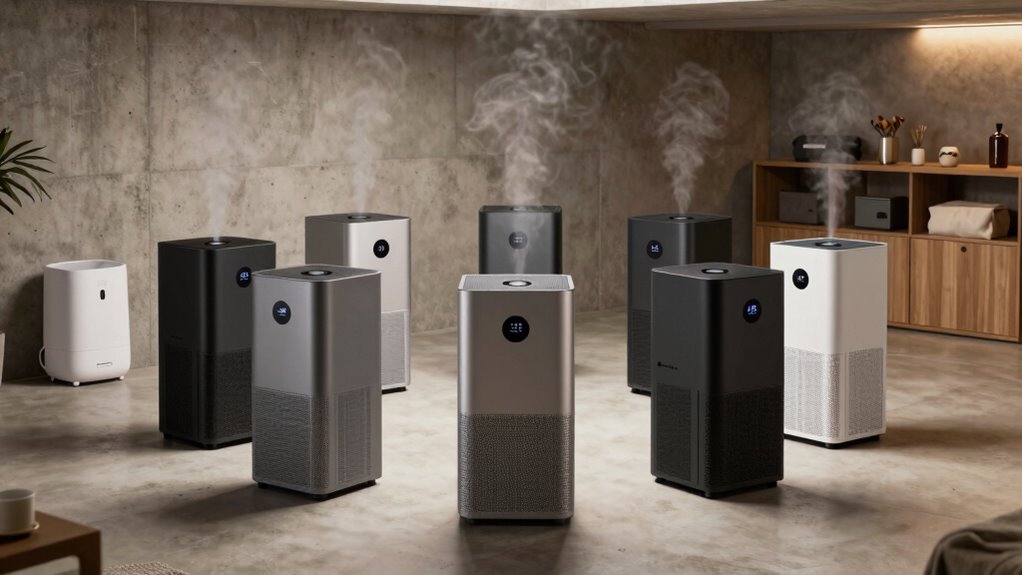

A basement odor can linger even after dust and airborne particles are filtered, because an air purifier does not remove moisture or fix the source of dampness. For air cleaning alongside humidity control, I would start with the GermGuardian AC4880B for its HEPA and activated-carbon filtration, the MOOKA PR1 for washable pre-filter convenience, or the Jafanda JF260 for a more modestly sized basement area and quiet operation. Each has a different balance of coverage, controls, and upkeep.

Get cleaning gear delivered free with Prime
- Fast, free delivery on millions of items
- Prime Video, Amazon Music and more included
- Member-only deals all year
My ranking favors the match between stated room coverage and basement use, odor-relevant carbon filtration, and practical maintenance details—not the largest coverage number alone. The main tradeoff is that broad coverage can sound compelling, but actual odor control also depends on the amount of carbon, airflow, and how damp the room is. If the basement smells musty because of a leak, standing water, or persistently high humidity, I would address that cause first and treat an air purifier as a supporting tool.
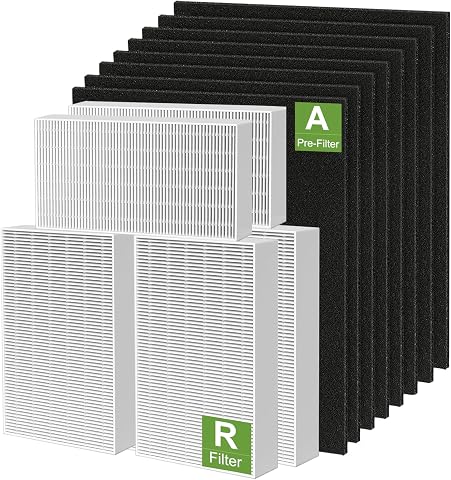
Complete the kit


Key Takeaways
- MOOKA PR1 is my best overall fit for a basement needing large stated coverage, a washable pre-filter, and an air-quality sensor, though its main filter still needs regular replacement.
- GermGuardian AC4880B is the clearest choice for a more established filtration setup, with HEPA, activated carbon, and optional UV-C, but its stated large-room area is smaller than several competitors here.
- The 235-CADR purifier claims the broadest coverage at up to 3,500 sq. ft.; its 235 CFM CADR is a useful airflow figure to compare against a real basement layout.
- FreAire HAP605 suits pet-related airborne debris with Turbo Pet Mode and a washable pre-filter, while its smart display and auto features may be more than a simple odor problem calls for.
- None of these models controls basement humidity; I would pair an air purifier with moisture-source repair and, when needed, a properly sized dehumidifier.
| MOOKA PR1 Air Purifier for Large Rooms with Washable Pre-Filter, Pet Mode, and PM2.5 Display |  | Best Overall — the most balanced feature set for a large, lived-in basement | Recommended coverage: Up to 2,200 sq. ft. | Filtration: Four-stage filtration | Pre-filter: Washable | VIEW ON AMAZON | See Our Full Breakdown |
| GermGuardian HEPA Large Room Air Purifier for Bedroom, Office, Dorm, and Home – AC4880B – 22″ Tower – Black |  | Best Established Filtration Mix — HEPA, carbon, and optional UV-C in a compact-height tower | Small-room coverage: 153 sq. ft. | Large-room coverage: 743 sq. ft. | Filter type: HEPA, activated carbon, optional UV-C | VIEW ON AMAZON | See Our Full Breakdown |
| HEPA Air Purifier for Home up to 3500 sq ft, 235 CADR, Quiet Operation |  | Best for a Large Open Basement — broad coverage claim with a stated CADR | Coverage claim: Up to 3,500 sq. ft. | CADR: 235 CFM | Filtration: H13 True HEPA plus activated carbon | VIEW ON AMAZON | See Our Full Breakdown |
| FreAire Air Purifier for Large Rooms up to 2600 sq. ft., HAP605, White |  | Best for Pet-Related Airborne Debris — washable pre-filter and quiet sleep setting | Coverage: Up to 2,600 sq. ft. | Air intake: Triple intake | Filter: HEPA with washable pre-filter | VIEW ON AMAZON | See Our Full Breakdown |
| Air Purifier for Home and Bedroom with True HEPA Filter, Covers Up to 1,190 sq ft |  | Best Compact-Scale Choice — quieter operation and a clearly listed carbon filter | Coverage: Up to 1,190 sq. ft. | Filtration: True HEPA plus activated carbon | CADR: 153 CFM / 260 m³/h | VIEW ON AMAZON | See Our Full Breakdown |
| air purifier for basement humidity odor | Filtration | Sleep noise | Sensor |
|---|---|---|---|
| MOOKA PR1 Air Purifier for Lar | Four-stage filtration | As low as 26 dB | PM2.5 |
| GermGuardian HEPA Large Room A | — | — | — |
| HEPA Air Purifier for Home up | H13 True HEPA plus activated carbon | — | — |
| FreAire Air Purifier for Large | — | 20 dB | PM2.5 with auto-adjustment |
| Air Purifier for Home and Bedr | True HEPA plus activated carbon | As low as 23 dB | PM2.5 display |
More Details on Our Top Picks
MOOKA PR1 Air Purifier for Large Rooms with Washable Pre-Filter, Pet Mode, and PM2.5 Display
The MOOKA PR1 earns my top position by combining up to 2,200 sq. ft. of stated coverage with a washable pre-filter, multiple operating modes, and a PM2.5 display. In a basement used for storage, hobbies, or laundry, that mix offers more day-to-day flexibility than the simpler tower-style GermGuardian. Its pet mode and six fan settings also let buyers raise airflow when the room needs it and lower it when quiet operation matters.
Its four-stage filtration is described as handling pet hair, smoke, odors, and fine particles, but the listing does not specify carbon quantity or provide a directly comparable odor test. I would not read the large coverage claim as a guarantee that one unit will clear mustiness throughout a basement divided by walls or doors. The PM2.5 sensor tracks particles, not moisture, so a favorable display cannot confirm that a humidity problem has been resolved.
Compared with the FreAire HAP605, the MOOKA offers a similar washable-pre-filter approach and pet-friendly settings, while adding a stated coverage figure 400 sq. ft. higher. The FreAire lists a quieter 20 dB sleep mode versus MOOKA’s 26 dB, making it a better match for noise-sensitive sleepers. MOOKA’s main filter still needs replacement every three to six months, and the sensor needs regular cleaning. I would choose it for flexible whole-room air cleaning, not as a fix for damp concrete, leaks, or mold growth.
Pros:- Up to 2,200 sq. ft. stated coverage
- Washable pre-filter can catch larger debris before it reaches the main filter
- Pet, auto, and sleep modes provide flexible operation
- PM2.5 display and filter reminder support routine use
Cons:- Main filter replacement is recommended every three to six months
- PM2.5 sensor needs regular cleaning and does not measure humidity
- Odor performance cannot be compared by carbon quantity from the supplied details
Best for: Basement owners wanting broad stated coverage, several fan modes, a washable pre-filter, and particle monitoring in one unit.
Not ideal for: Anyone expecting an air purifier to lower humidity, diagnose mold, or remove a musty smell caused by active water intrusion.
- Recommended coverage:Up to 2,200 sq. ft.
- Filtration:Four-stage filtration
- Pre-filter:Washable
- Fan modes:Sleep, I, II, III, Auto, Pet
- Sleep noise:As low as 26 dB
- Sensor:PM2.5
- Maintenance:Main filter every 3–6 months; clean sensor regularly
- Certifications:CARB, ETL, DOE, FCC
Our verdict“I rank the MOOKA PR1 first for its useful balance of coverage, washable pre-filter, and controls, provided the basement’s moisture source is handled separately.”
GermGuardian HEPA Large Room Air Purifier for Bedroom, Office, Dorm, and Home – AC4880B – 22″ Tower – Black
Best Established Filtration Mix — HEPA, carbon, and optional UV-C in a compact-height tower
View on AmazonThe GermGuardian AC4880B stands out for specifying HEPA, activated carbon, and optional UV-C in one 22-inch tower. For a basement with everyday airborne dust alongside mild household odors, that combination is easier to evaluate than a product description that says only “four-stage” filtration. The supplied description states that its HEPA filter captures 99.97% of particles as small as 0.1 microns, and its smart air-quality monitoring can adjust fan speed automatically.
I place it just below the MOOKA because its stated large-room coverage is 743 sq. ft., far below the MOOKA’s 2,200 sq. ft. and the broad claims from the FreAire and 235-CADR models. That can be an advantage in a smaller, enclosed basement room: its coverage claim is more restrained, and the unit’s tower form may suit a corner. But a large, open basement may call for more than one unit or a higher-airflow option. Its carbon filtration is relevant to odors, though the supplied details do not say how much carbon it contains or quantify odor removal.
Unlike the Jafanda JF260, GermGuardian includes optional UV-C, but that feature is not required for the basic task of filtering airborne particles and odors. The UV-C can be left unused, and the model’s filter costs may add up over time. I would favor this pick when its stated room size fits the room and the buyer values named filtration components over a very large coverage headline.
Pros:- HEPA and activated-carbon filtration are both specified
- Smart air-quality monitoring can adjust fan speed
- Optional UV-C can be left off if not wanted
- 22-inch tower format is a defined, relatively compact-height design
Cons:- Stated large-room coverage is lower than several other picks
- Replacement filters can add ongoing maintenance expense
- UV-C is optional and may not matter to buyers focused on particle filtration
Best for: Buyers with a modest basement room who want named HEPA and activated-carbon filtration plus automatic fan adjustment.
Not ideal for: Owners of large, open basements who need one unit to cover substantially more than the stated 743 sq. ft. large-room area.
- Small-room coverage:153 sq. ft.
- Large-room coverage:743 sq. ft.
- Filter type:HEPA, activated carbon, optional UV-C
- Height:22 inches
- Air-quality control:Smart monitoring with automatic fan adjustment
- Color:Black
- Certifications:CARB, ETL, Zero Ozone Verified
Our verdict“I recommend the AC4880B for a smaller basement zone where clearly named HEPA and carbon filtration matter more than maximum stated coverage.”
HEPA Air Purifier for Home up to 3500 sq ft, 235 CADR, Quiet Operation
This model is the most compelling option for a large, open basement layout on paper: it claims coverage up to 3,500 sq. ft. and lists a 235 CFM CADR. The CADR gives buyers a more concrete airflow figure to compare with the room and desired cleaning pace than coverage alone. Its H13 True HEPA and activated-carbon filters are described as addressing particles and odors, while auto mode and an air-quality display make routine operation less hands-on.
I rank it below the MOOKA and GermGuardian because the very large coverage claim does not, by itself, establish strong odor control across a basement. The supplied description does not identify carbon quantity, and it is not clear that the stated area uses a test basis comparable with other products here. For a basement split into closed rooms, one central purifier may not circulate effectively into each space. The 235 CFM CADR is the more useful comparison point, but buyers should still match placement and airflow to the actual layout.
Compared with FreAire’s 2,600 sq. ft. claim, this model advertises broader coverage and provides a CADR figure; FreAire, by contrast, offers a washable pre-filter and a 20 dB sleep mode. This unit lists 30 dB operation and filter changes every three to four months. That maintenance schedule may be demanding for continuous use, and the large body may be awkward in a finished basement or narrow utility area. I would shortlist it when the room is genuinely open and the owner is willing to maintain the filter schedule.
Pros:- 235 CFM CADR provides a useful airflow comparison figure
- H13 True HEPA and activated carbon are specified
- Auto mode, air-quality display, and child lock are included
- Quiet-operation claim is listed at 30 dB
Cons:- Up to 3,500 sq. ft. coverage claim should not be treated as proof of odor removal
- Filter replacement is listed every three to four months
- Large size may not suit compact basement areas
Best for: Owners of a large, relatively open basement who want a stated CADR, auto mode, and HEPA-plus-carbon filtration.
Not ideal for: Buyers with several separated basement rooms, limited floor space, or a preference for a washable pre-filter and less frequent maintenance.
- Coverage claim:Up to 3,500 sq. ft.
- CADR:235 CFM
- Filtration:H13 True HEPA plus activated carbon
- Noise:30 dB
- Modes and controls:Auto mode, air-quality display, child safety lock
- Filter interval:Every 3–4 months
- Intended use:Large rooms and open spaces
Our verdict“I would choose this model for a genuinely open basement where its 235 CFM CADR and broad stated coverage are more useful than washable-filter convenience.”
FreAire Air Purifier for Large Rooms up to 2600 sq. ft., HAP605, White
The FreAire HAP605 is the most tailored pick here for a basement that doubles as a pet area. Its Turbo Pet Mode is designed for heavier airborne debris, and a washable pre-filter gives owners a convenient way to catch larger particles before they reach the main filter. Up to 2,600 sq. ft. of stated coverage puts it between the MOOKA and the broad-claim 235-CADR unit, while triple air intake is intended to support circulation.
For a basement used at night or beside a sleeping area, FreAire’s stated 20 dB Sleep Mode is lower than MOOKA’s 26 dB and the 30 dB figure supplied for the 235-CADR purifier. Those noise figures are product claims and operating conditions can affect what a buyer hears, but the relative feature makes FreAire the quiet-mode specialist in this lineup. Its PM2.5 sensor can adjust operation automatically; like the other particle sensors, it does not measure humidity or prove that mold is absent.
The tradeoff is that the description identifies HEPA filtration but does not specifically name activated carbon or quantify odor capacity. That makes it less straightforward than the GermGuardian or Jafanda for a buyer whose main concern is odor adsorption rather than pet particles. The main filter still needs replacement every three to six months, and the one-year warranty is shorter than a longer coverage plan might offer. I would rank it below the MOOKA because MOOKA states a four-stage filtration system and comparable washable-pre-filter convenience, while FreAire’s strongest distinction is quiet pet-focused operation.
Pros:- Turbo Pet Mode targets pet-related airborne debris
- Washable pre-filter eases removal of larger particles
- Sleep Mode is listed at 20 dB
- PM2.5 sensor supports automatic adjustment
Cons:- Activated-carbon filtration is not specified in the supplied details
- Main filter replacement is listed every three to six months
- Display and auto features may be unnecessary for buyers wanting simple controls
Best for: Pet owners who use their basement regularly and want a washable pre-filter, pet mode, and a quiet sleep setting.
Not ideal for: Buyers focused mainly on musty odors who want clearly specified activated-carbon filtration or a humidity-control function.
- Coverage:Up to 2,600 sq. ft.
- Air intake:Triple intake
- Filter:HEPA with washable pre-filter
- Modes:Turbo Pet, Sleep, Auto
- Sleep noise:20 dB
- Sensor:PM2.5 with auto-adjustment
- Filter interval:Every 3–6 months
- Warranty:1 year
Our verdict“I would pick the FreAire HAP605 over the MOOKA when pet debris and a quiet sleep mode matter more than clearly specified carbon filtration.”
Air Purifier for Home and Bedroom with True HEPA Filter, Covers Up to 1,190 sq ft
The Jafanda JF260 makes sense for a smaller basement room or a finished basement where quiet operation matters. It lists up to 1,190 sq. ft. of coverage, a 153 CFM CADR, and a True HEPA plus activated-carbon system. That combination gives it a clearer odor-relevant filter description than the FreAire, whose supplied details do not name carbon, while keeping the coverage claim more restrained than the 2,200–3,500 sq. ft. models.
Its PM2.5 sensor display and five fan levels provide basic control without making the product’s role depend on a pet mode or optional UV-C. Sleep mode is listed as low as 23 dB, quieter on paper than MOOKA’s 26 dB and the 235-CADR purifier’s 30 dB. That can suit a basement bedroom, office, or media room. Still, a low noise figure does not tell me how much odor-adsorbing carbon is inside; the supplied description gives no carbon weight or odor test, so I would not assume it will eliminate stubborn mustiness.
Compared with GermGuardian, Jafanda has a lower stated large-area reach than the 743 sq. ft. figure listed for GermGuardian’s large-room rating is not a directly matched comparison with Jafanda’s 1,190 sq. ft. claim; test conditions are not provided for either. Jafanda’s CADR of 153 CFM offers another point of reference, while GermGuardian adds optional UV-C and automatic fan adjustment. The JF260 includes a one-year warranty, with an additional year available through registration. Its main limitation in this roundup is that the supplied details do not describe filter-change frequency, and registration is required for extended coverage.
Pros:- True HEPA and activated carbon are specified
- 153 CFM CADR provides an airflow figure
- Sleep mode is listed as low as 23 dB
- PM2.5 display and five fan speeds offer basic operating flexibility
Cons:- Coverage and CADR are lower than the broadest-coverage option in this group
- Extended warranty requires registration
- Filter replacement interval is not specified in the supplied details
Best for: Buyers seeking a quieter purifier for a modest basement room who want stated True HEPA and activated-carbon filtration.
Not ideal for: Owners of a very large or divided basement who need a high stated CADR, or buyers who do not want warranty registration requirements.
- Coverage:Up to 1,190 sq. ft.
- Filtration:True HEPA plus activated carbon
- CADR:153 CFM / 260 m³/h
- Sleep noise:As low as 23 dB
- Sensor:PM2.5 display
- Fan speeds:5 levels
- Warranty:1 year plus optional 1-year extension with registration
Our verdict“I recommend the JF260 for a quieter, moderate-size basement zone where named carbon filtration matters more than maximum stated coverage.”

How We Picked
I ranked these five around the problem in the title: managing airborne particles and odors in a basement, where stale air, limited circulation, and moisture can complicate ordinary room-air cleaning. I looked for filtration details relevant to particles and odors, stated coverage, airflow or operating modes, and maintenance features that matter when a unit runs regularly. Carbon filtration earns attention because it can adsorb some odor compounds, while HEPA filtration targets airborne particles; neither is a substitute for removing damp materials or correcting water intrusion.
I also weighed the usefulness of each model’s controls against its drawbacks. A washable pre-filter can catch larger debris and reduce the frequency of main-filter changes, but it does not make the main filter maintenance-free. Sensors and auto modes can adjust operation, yet a PM2.5 reading is not a humidity reading and does not identify mold or the source of a smell. Stated coverage figures are not directly comparable without matching test conditions, and they should not be read as a guarantee of strong odor removal across an entire basement. The supplied descriptions do not give carbon quantity or a directly comparable odor-removal test, so I avoid treating any coverage claim as proof of superior musty-smell control.
That is why the MOOKA takes the overall spot for a practical mix of coverage, washable pre-filter, and operating modes, while GermGuardian ranks close behind for its named HEPA-and-carbon combination and more clearly bounded large-room figure. The high-coverage 235-CADR unit is a sensible candidate for a large open layout, but its broad area claim needs careful interpretation. FreAire and Jafanda serve more specific needs: pet debris and quieter, moderate-size basement use, respectively. In every case, I would first address persistent dampness rather than expecting filtration alone to solve it.
| air purifier for basement humidity odor | Filtration | Sensor |
|---|---|---|
| MOOKA PR1 Air Purifier for Lar | Four-stage filtration | PM2.5 |
| GermGuardian HEPA Large Room A | — | — |
| HEPA Air Purifier for Home up | H13 True HEPA plus activated carbon | — |
| FreAire Air Purifier for Large | — | PM2.5 with auto-adjustment |
| Air Purifier for Home and Bedr | True HEPA plus activated carbon | PM2.5 display |
Factors to Consider When Choosing Air Purifier For Basement Humidity Odors
For a basement, I would choose an air purifier only after separating airborne particles and odors from the moisture problem itself. Use the purifier to support cleaner air; use repairs, ventilation, and humidity control to address why the room smells damp.
Start with the source of the smell
A musty odor can come from damp carpet, stored cardboard, wet wood, a drain, a leak, or mold growth. A purifier may reduce some airborne particles and, when it has enough activated carbon, adsorb some odor compounds, but it will not dry a wall or remove contaminated material. I would check for visible moisture, leaks, seepage, and damp items before choosing a unit. Persistent or extensive mold, sewage odors, or recurring water intrusion may call for a qualified building or remediation professional rather than a larger purifier.
Treat humidity as a separate job
An air purifier does not dehumidify. If basement humidity is high, use a hygrometer to track conditions and consider a dehumidifier sized for the space, along with fixing the source of water and improving drainage or ventilation where appropriate. Avoid placing either appliance where water can splash into it, and follow the manufacturer’s clearance and electrical guidance. The PM2.5 sensors on MOOKA, FreAire, and Jafanda report particle-related air quality; they do not show relative humidity, detect hidden mold, or confirm that the basement is dry.
Match coverage to the actual layout
Measure the room or rooms where the purifier will operate, then compare the unit’s CADR and coverage information with the maker’s assumptions. A large coverage claim may describe an open space under particular conditions, not several basement rooms separated by doors and walls. The 235-CADR model is the only one here with a listed CADR of 235 CFM, while Jafanda lists 153 CFM. MOOKA, FreAire, and the 235-CADR model provide large stated coverage figures, but I would not rank odor performance from square footage alone. For divided basements, placing a purifier in the room that needs it most—or using more than one unit—may be more practical than expecting one appliance to serve every closed area.
Look for both particle and odor filtration
HEPA filtration is aimed at airborne particles such as dust and pollen. Activated carbon can help adsorb some gases and odors, but effectiveness depends on the carbon material, amount, airflow, and the odor source. GermGuardian and Jafanda explicitly list activated carbon; the 235-CADR product lists a carbon filter too. MOOKA describes four-stage filtration and odor handling without giving carbon quantity, while FreAire’s supplied details specify HEPA and a washable pre-filter but not activated carbon. If odor control is your leading concern, those differences are worth weighing—and none of the descriptions provides a directly comparable odor-removal test.
Plan for filter upkeep and operating noise
Regular filter changes keep airflow and filtration closer to the intended operation, but the cost and schedule can vary. The 235-CADR purifier lists a three-to-four-month replacement interval; MOOKA and FreAire list three-to-six months. Jafanda’s supplied details do not state an interval, so check the manufacturer’s guidance before buying. A washable pre-filter, offered by MOOKA and FreAire, can be rinsed or cleaned according to instructions, but it does not replace the main filter. For a basement used as a bedroom or workspace, compare the stated sleep-mode figures too: FreAire lists 20 dB, Jafanda 23 dB, and MOOKA 26 dB. Actual sound depends on fan speed, placement, and the room.
Choose controls that match how you will use it
Auto mode can change fan speed based on a sensor, which may reduce manual adjustments, but it is not a substitute for checking filter condition or tracking moisture. Pet mode is relevant when pet hair and dander enter the basement; a child lock can be useful in a shared family space. GermGuardian’s UV-C is optional, and buyers focused on HEPA and carbon filtration can treat it as an extra rather than the central reason to choose the unit. I would favor a simpler setup if the purifier will run at a fixed speed in a utility room, and pay more attention to sensor cleaning, filter access, and replacement availability if it will operate every day.
Frequently Asked Questions
Will an air purifier remove a musty basement smell?
It may reduce some airborne particles and some odors if it has suitable activated-carbon filtration, but results depend on the odor source, airflow, and carbon capacity. A purifier will not remove the moisture causing a damp smell or clean mold-contaminated materials. I would first look for leaks, seepage, wet carpet, or other damp items, then pair source control with filtration if airborne odors remain.
Can an air purifier lower basement humidity?
No. These air purifiers filter air; they do not remove enough water vapor to serve as dehumidifiers. Use a hygrometer to check relative humidity and select a separate dehumidifier if conditions call for one. Fixing leaks and addressing water entry remain important, since running an air purifier beside an unresolved moisture source will not solve the cause of the odor.
Which product in this roundup has the strongest stated coverage?
The HEPA purifier with a 235 CFM CADR claims coverage up to 3,500 sq. ft., the largest stated area among these five. That figure is not proof that it will clean a divided basement or control odors throughout that space. I would compare its CADR, placement, and the room layout rather than choosing by coverage alone; closed rooms may need separate air cleaning.
Is a PM2.5 sensor useful for a damp basement?
It can show changes in fine airborne particles and may help an auto mode adjust fan speed. It does not measure humidity, identify a leak, confirm mold is absent, or report odor compounds. MOOKA, FreAire, and Jafanda list PM2.5 sensing, so I would view those displays as particle information—not as a diagnosis of the basement’s dampness or overall air quality.
How often should I replace an air purifier filter in a basement?
Follow the specific model’s instructions and check its filter indicator, since replacement timing depends on use and the amount of dust or debris in the room. The 235-CADR model lists every three to four months, while MOOKA and FreAire list every three to six months. A washable pre-filter can reduce larger debris reaching the main filter, but it does not eliminate the need to replace that filter.
Conclusion
For most buyers who want one flexible unit for a regularly used basement, I would start with the MOOKA PR1 for its coverage claim, washable pre-filter, and range of modes. Choose the GermGuardian AC4880B for a smaller room when clearly named HEPA and carbon filtration matter more than broad coverage. For an open basement, the 235-CADR purifier has the largest stated area and a useful CADR figure; for pet debris and a quiet sleep setting, I would look at the FreAire HAP605. The Jafanda JF260 fits a quieter, moderate-size space with specified True HEPA and activated carbon. Whichever model fits your room, I would handle leaks and damp materials and add a dehumidifier when needed: an air purifier cleans air, not basement humidity.