
TL;DR

Get cleaning gear delivered free with Prime
- Fast, free delivery on millions of items
- Prime Video, Amazon Music and more included
- Member-only deals all year
A Family Handyman report featuring physical therapist Dr. Ron Miller and manual therapist Doug Bertram says there is no single age at which someone must stop using a chainsaw. They point instead to functional abilities such as grip strength, balance, coordination and mental alertness, and recommend hiring a professional when those abilities or the job’s demands make cutting unsafe.
There is no set age at which a person becomes too old to use a chainsaw, according to a Family Handyman report featuring physical therapist Dr. Ron Miller and manual therapist Doug Bertram. They say the decision should turn on a user’s grip strength, balance, coordination, stamina and mental alertness—factors that can affect control of a tool capable of causing severe injury.
The report describes chainsaw operation as risky at any age because an injury can occur quickly if the operator loses control. It cites the Centers for Disease Control and Prevention as reporting roughly 36,000 chainsaw injuries each year. The supplied material does not specify the period or method behind that annual estimate. Injuries can include deep cuts, traumatic brain injuries, loss of a limb or death.
Miller says abilities relevant to safe operation can decline with age, including balance, grip strength, reflexes, eyesight and physical stamina. The report does not say that age alone proves a person cannot safely use a saw. Instead, it recommends considering whether the operator can maintain control throughout the task and stop before fatigue affects attention or judgment.
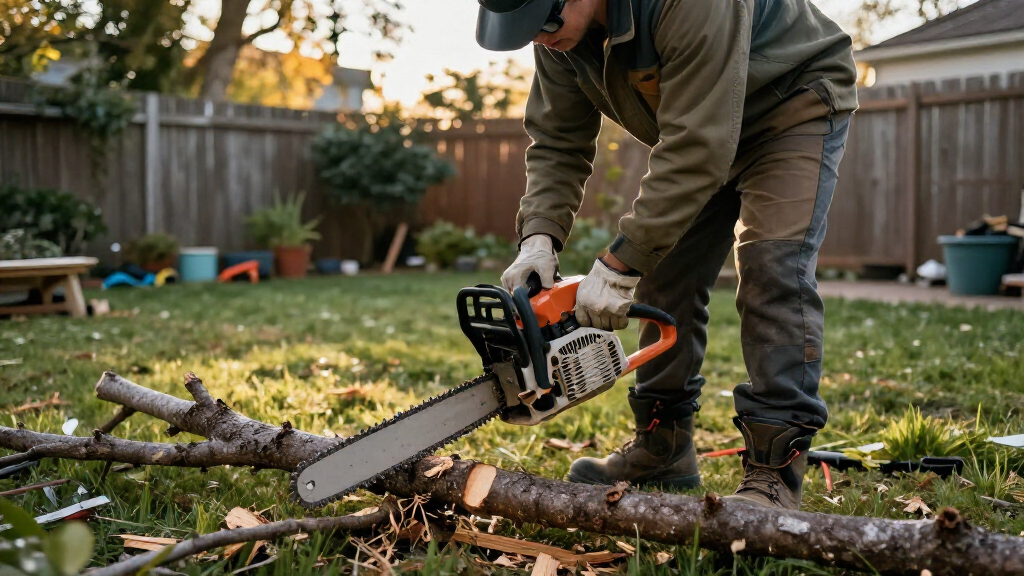
For people who continue to use a saw, the report recommends limiting work to small branches and logs already on the ground, avoiding ladders and tree-felling, and hiring out larger jobs. It also advises considering a lighter electric saw, checking that the chain is sharp and properly tightened, wearing eye and hearing protection, gloves, sturdy footwear and chainsaw chaps, and keeping another person nearby. Users should take breaks, stay hydrated and stop when tired.
Ability Matters More Than Age
The guidance frames chainsaw safety as a practical assessment rather than a birthday threshold. That matters to older homeowners who may be deciding whether to keep doing yard work themselves: declining strength, vision, balance or reaction time can affect control, but a person’s age by itself does not settle the question.
The stakes are substantial because mistakes can cause serious injury, and the report says chainsaw accidents may happen in a fraction of a second. Its advice to limit work to ground-level material and hire a professional for demanding jobs offers a way to reduce exposure without treating every older user as incapable. The source does not establish that these precautions eliminate risk.
As an affiliate, we earn on qualifying purchases.
The Report’s Safety Guidance
Family Handyman’s report draws on comments from Dr. Ron Miller, a physical therapist and owner of Pursuit Physical Therapy in Orlando, and Doug Bertram, a manual therapist, licensed acupuncturist and CEO of Structural Elements. Bertram’s central point is that there is no universal age cutoff; the report says adequate grip, balance and mental acuity are needed.
The report also distinguishes private residential use from workplace rules. It says federal law bars people under 18 from operating a chainsaw in a work setting, while stating there is no age limit for private chainsaw use on residential property. That is the source’s summary; the supplied material does not provide legal citations or discuss other rules that may apply to particular jobs or locations.
“There’s no age that makes you too old to use a chainsaw.”
— Doug Bertram, manual therapist, as quoted by Family Handyman
lightweight chainsaw for yard work
As an affiliate, we earn on qualifying purchases.
As an affiliate, we earn on qualifying purchases.
No Standard Fitness Cutoff
The report does not provide a validated test score or medical threshold for deciding whether an individual can safely operate a chainsaw. It suggests home fitness tests covering grip, balance, leg and back strength, coordination and endurance, but the supplied material does not name the tests, establish pass marks or explain how results predict chainsaw safety.
The cited figure of roughly 36,000 injuries annually is not accompanied in the source material by a year, detailed methodology or comparison baseline. It is therefore presented here as the report’s cited estimate, not as a newly calculated trend. The advice also does not assess an individual reader’s health or account for the specific saw, terrain, wood or cutting conditions.
As an affiliate, we earn on qualifying purchases.
Assess the Task Before Cutting
The report’s practical recommendation is to evaluate both the person and the job before starting. Users should consider whether they can hold and control the saw, remain balanced, see the cutting area clearly and stay alert, while keeping work to manageable material on the ground. A second person should remain nearby, and protective equipment should be worn.
If physical ability is uncertain, fatigue sets in, or the work involves a ladder, tree felling or larger material, the report advises stopping and hiring a professional. It provides no follow-up date or formal assessment process; the decision remains specific to the individual and the conditions of the work.
As an affiliate, we earn on qualifying purchases.
Key Questions
Is there a specific age when someone should stop using a chainsaw?
No fixed age cutoff is given in the Family Handyman report. It says the decision depends on functional abilities such as grip, balance and mental alertness.
What abilities matter most for safe chainsaw use?
The report names grip strength, balance, coordination, eyesight, reflexes, stamina and alertness as relevant to controlling a saw. It does not provide a formal medical test or pass score.
What precautions does the report recommend?
It advises limiting work to small, ground-level branches and logs, wearing eye and hearing protection, gloves, sturdy footwear and chainsaw chaps, and keeping a partner nearby. It also recommends breaks and stopping when tired.
When should someone hire a professional?
The report recommends hiring out larger jobs and avoiding ladder work and tree-felling. It also advises choosing a professional when a person is unsure they can safely control the saw or when fatigue affects alertness.
Are there age limits for chainsaw use?
The source says federal law prohibits anyone under 18 from using a chainsaw in a work setting and says there is no age limit for private residential use. It does not provide legal citations or discuss rules that may vary by setting.
Source: rss
Halloween Picks
halloween
As an affiliate, we earn on qualifying purchases.