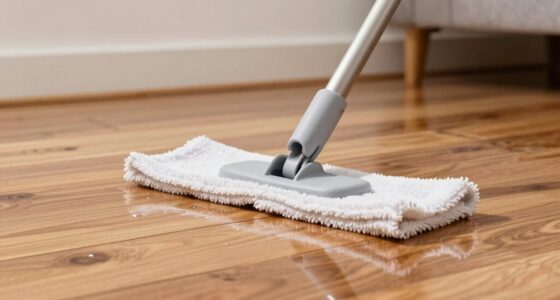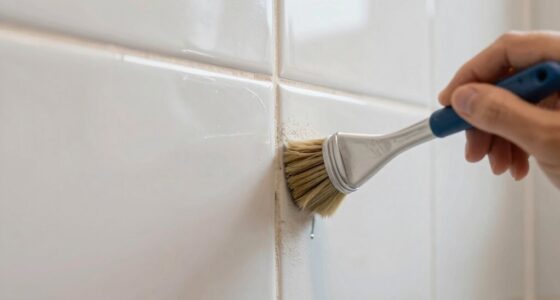
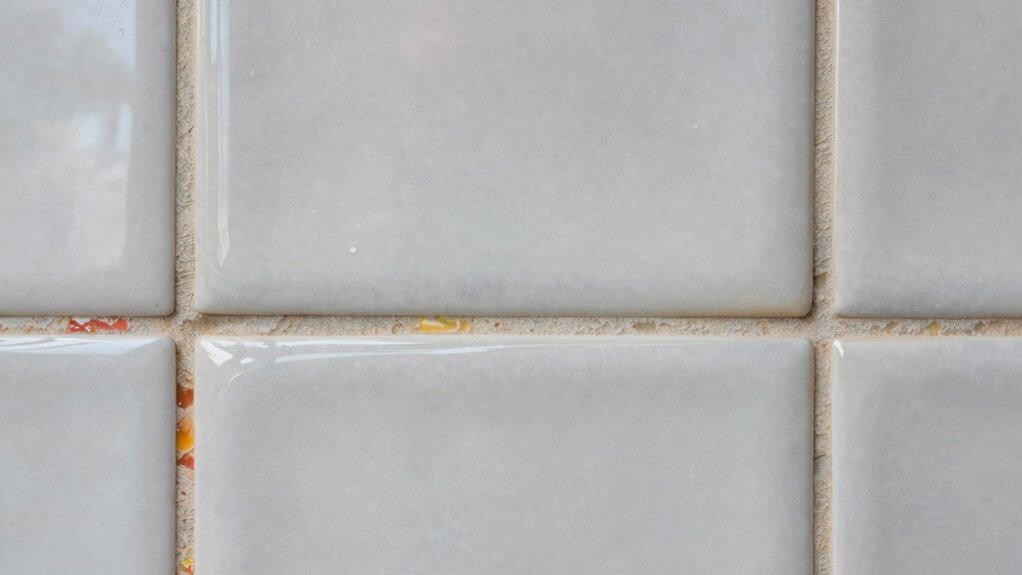

When you notice a cloudy haze on your tile after mopping, it’s often caused by mineral deposits from hard water that leave a thin film on the surface. These minerals, like calcium and magnesium, stick around as water evaporates, dulling your tile’s shine. Using proper cleaning solutions and drying with a microfiber cloth can prevent and remove this buildup. Keep going, and you’ll discover simple ways to keep your tiles spotless and clear of that mineral film.

Get cleaning gear delivered free — and shop member deals
- Fast, free delivery on millions of items
- Access to Prime Big Deal Days deals on October 6–7
- Prime Video, Amazon Music and more included
Key Takeaways
- Mineral deposits from hard water evaporate after mopping, leaving a dull, cloudy film on tiles.
- Using inappropriate cleaning solutions can leave tiny mineral particles that contribute to haze.
- Regularly rinsing and drying tiles with a microfiber cloth helps prevent mineral film buildup.
- Vinegar solutions effectively dissolve existing mineral films, restoring tile clarity.
- Choosing water-resistant, tile-specific cleaners minimizes mineral film formation and maintains shine.

After mopping your tile floor, you might notice a cloudy haze that seems to linger, making the surface look dull rather than spotless. This haze is often caused by water residue and mineral deposits left behind after cleaning. When you use a cleaning solution, especially one that’s not formulated for tile or hard water, it can leave behind tiny particles that settle into the grout and on the surface. These residues form a thin film that reflects light poorly, giving your floor that cloudy appearance. It’s a frustrating sight because you put effort into cleaning, only to end up with a surface that looks dirtier than before.
Understanding the role of water residue is essential. When water evaporates during mopping, minerals like calcium and magnesium can settle onto the tile’s surface. These minerals are common in hard water, which many households use without realizing the impact on their floors. If the cleaning solution you use isn’t designed to prevent mineral buildup or doesn’t rinse thoroughly, those mineral films accumulate over time. The result is a persistent haze that resists simple wiping away. It’s not dirt or grime but a mineral film that needs a specific approach to remove effectively.
Mineral buildup from hard water causes persistent haze on tile surfaces after mopping.
The key to avoiding or eliminating this haze is choosing the right cleaning solution. Look for products that are formulated for tile and hard water resistance. These solutions often contain chelating agents that bind with minerals, preventing them from depositing onto the surface. Additionally, use less water when mopping—damp mop rather than soaking the floor—so there’s less water residue left behind. After mopping, go over the tile with a clean, dry microfiber cloth to remove any remaining moisture and mineral deposits. This extra step helps prevent water residue from settling and forming that dull film.
If you’ve already got a haze, don’t worry. You can remove it with a vinegar solution—mix equal parts white vinegar and water—and gently scrub the surface. Vinegar reacts with mineral deposits, breaking them down so they can be wiped away easily. Follow up with a clean water rinse to remove any vinegar residue, then dry thoroughly with a microfiber cloth. Regular maintenance with a suitable cleaning solution and proper rinsing can prevent the mineral film from building up again.
In the end, tackling tile haze after mopping involves understanding water residue and choosing the right cleaning solution. By preventing mineral deposits from accumulating, you keep your tiles looking bright and spotless without the cloudy film that nobody talks about but everyone notices.
tile cleaning solution for mineral deposits
As an affiliate, we earn on qualifying purchases.
As an affiliate, we earn on qualifying purchases.
Frequently Asked Questions
Can Specific Cleaning Products Cause Tile Haze?
Yes, certain cleaning products can cause tile haze by leaving behind cleaning residue, especially if they’re not rinsed properly. Some products react with your tile’s surface porosity, forming a mineral film that creates a cloudy haze. To avoid this, use pH-neutral cleaners and rinse thoroughly. Regularly inspect your tiles, and if haze appears, try a vinegar solution to break down mineral deposits and restore their shine.
How Long Does Mineral Film Typically Last?
Mineral film can linger for weeks or even months if neglected. Your cleaning techniques and maintenance routines play a big role in its duration. To minimize it, use proper mopping methods and avoid harsh chemicals. Regularly deep clean with gentle, mineral-removing solutions, and dry your tiles thoroughly. By staying consistent with your maintenance, you can keep your tiles sparkling and prevent mineral film from becoming an unwelcome guest for too long.
Does Water Hardness Affect Haze Formation?
Yes, water hardness affects haze formation because hard water contains more mineral deposits, like calcium and magnesium. When you mop with hard water, these minerals can leave a film or haze on your tile surface. Poor water quality increases the likelihood of mineral buildup, making your tiles look dull or cloudy over time. To prevent this, consider using softened or distilled water to minimize mineral deposits and keep your tiles shiny.
Are Certain Tile Types More Prone to Mineral Film?
Did you know that porous tiles are 30% more likely to develop mineral film compared to glazed ceramics? Porous tiles absorb water, making mineral deposits more visible after mopping. Glazed ceramics, with their sealed surface, resist mineral buildup better. So, if you’re dealing with mineral film issues, you might want to opt for glazed ceramics or make sure your porous tiles are properly sealed to prevent haze formation.
Can Sealing Tiles Prevent Haze Buildup?
Sealing tiles can considerably reduce haze buildup by enhancing the sealant effectiveness, making it harder for mineral deposits to form. Regular cleaning frequency is still important to prevent mineral film accumulation, but sealing acts as a barrier that helps maintain a cleaner appearance longer. Keep in mind, proper sealing and consistent cleaning work together to prevent haze, especially on porous or mineral-rich tiles.
hard water stain remover for tiles
As an affiliate, we earn on qualifying purchases.
As an affiliate, we earn on qualifying purchases.
Conclusion
Next time you mop, keep in mind that nearly 60% of homeowners notice a dull haze on their tiles afterward, often from mineral buildup. This invisible film can make your floors look less vibrant and clean. By using a vinegar solution or water softener, you can prevent this mineral film from forming. Don’t let tile haze dampen your cleaning efforts—understanding this secret mineral film helps you achieve truly spotless, sparkling floors every time.
microfiber cleaning cloth for tiles
As an affiliate, we earn on qualifying purchases.
As an affiliate, we earn on qualifying purchases.
As an affiliate, we earn on qualifying purchases.
Fall Picks
fall essentials
As an affiliate, we earn on qualifying purchases.