
Vinyl plank haze happens when dirt, dust, or residue buildup creates a cloudy film on your floor, often worsened by improper cleaning or excess moisture. Using harsh chemicals or abrasive tools can scratch and deepen the haze. To remove it safely, start with gentle methods like white vinegar or baking soda solutions, and avoid aggressive scrubbing. Proper care can prevent haze, and if you keep experiencing issues, there’s more you should know to restore your floor.
Key Takeaways
- Haze on vinyl planks often results from dust, dirt, or residue buildup due to environmental factors or improper cleaning.
- Use gentle cleaning methods like warm water with dish soap or vinegar, avoiding harsh chemicals or abrasive tools.
- Common mistakes include using abrasive scrubbers, ammonia-based cleaners, or excessive rubbing, which worsen haze.
- Prevent haze by regular sweeping, using pH-neutral cleaners, and placing mats and furniture pads to reduce residue and scratches.
- Seek professional help if haze persists despite proper cleaning or if there are signs of deep damage or material deterioration.

Rejuvenate Luxury Vinyl Floor Cleaner Refill, 1 Gallon, Gently Cleans and Revitalizes Luxury Vinyl Floors
- Type: Luxury Vinyl Floor Cleaner Refill
- Size: 1 Gallon
- Cleaning Power: Gently Cleans and Revitalizes
As an affiliate, we earn on qualifying purchases.
As an affiliate, we earn on qualifying purchases.
What Causes Vinyl Plank Haze?
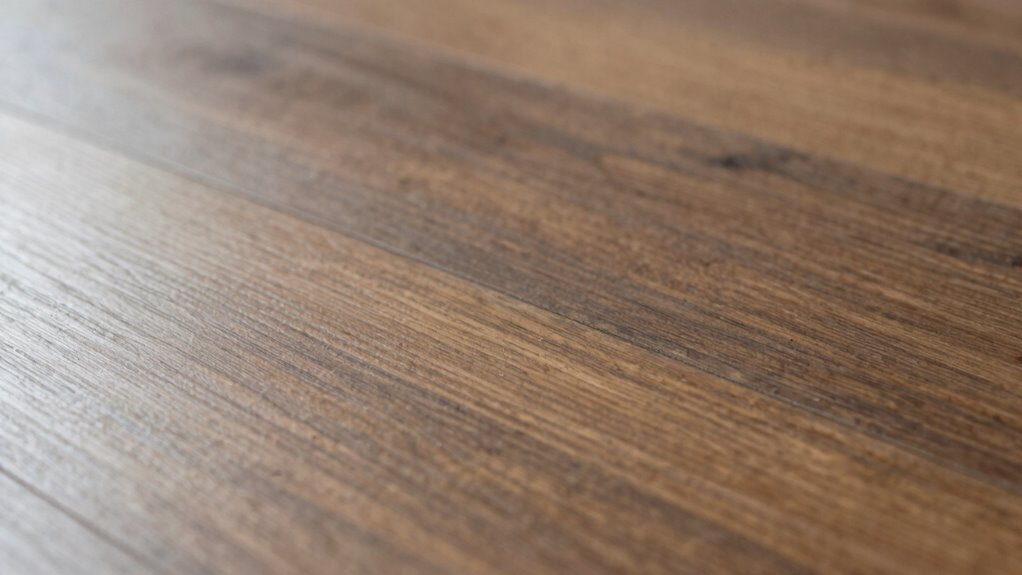
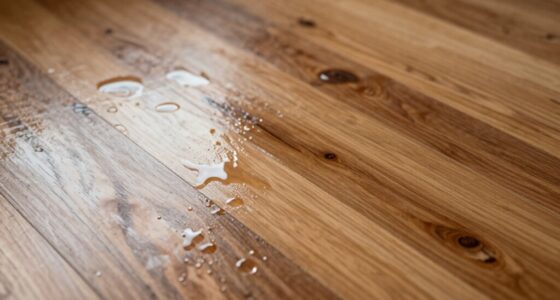
Vinyl plank haze often appears when environmental factors or cleaning practices cause a cloudy film to develop on the surface. This haze results from surface contamination, where dust, dirt, or residue build up over time. Improper cleaning can also contribute, especially if you use harsh chemicals or abrasive tools that leave streaks or residues. These substances settle into the vinyl’s surface, creating a cloudy or dull appearance. Additionally, exposure to moisture or humidity can cause the haze to form by encouraging dirt and grime to cling more stubbornly. Regular cleaning with appropriate products and gentle methods is essential to prevent haze from forming and to maintain the flooring’s clarity and shine. Understanding that surface contamination and Improper cleaning are key causes helps you prevent haze from developing. Proper ventilation and humidity control are also important for maintaining vinyl quality, especially in areas prone to moisture buildup, since humidity management can significantly influence the appearance of your flooring.

Naeterra Luxury Vinyl Floor Cleaner Concentrate – Removes Haze, 64 oz
- High-Performance Concentrate: Makes up to 30 gallons per 64 oz bottle
- Pet & Family Safe: Contains green-rated, non-toxic ingredients
- pH-Neutral Formula: Neutralizes haze and mineral deposits
As an affiliate, we earn on qualifying purchases.
As an affiliate, we earn on qualifying purchases.
How to Safely Remove Vinyl Haze at Home

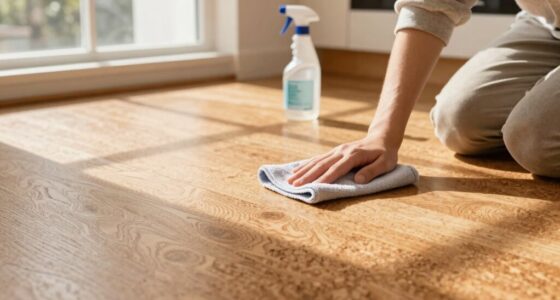
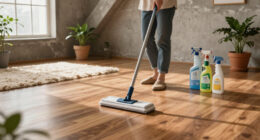
To effectively restore the clarity of your vinyl plank flooring, start by identifying the cause of the haze and choosing gentle cleaning methods. Use mild cleaning solutions or DIY remedies to avoid damaging the surface. First, sweep or vacuum to remove loose dirt. Then, mix a solution of warm water with a few drops of gentle dish soap or white vinegar. Apply it with a soft cloth or mop, avoiding harsh abrasives. For stubborn haze, you can try a mixture of baking soda and water as a gentle scrub. Always test any cleaning solution on a small, hidden area first. Remember, the key is to use non-abrasive, mild solutions to protect your flooring’s finish. Regular, gentle cleaning helps maintain its clarity and shine. Additionally, understanding the causes of vinyl haze can help in preventing future buildup and damage, and implementing a proper maintenance routine can extend the life of your flooring. Incorporating proper cleaning techniques and ensuring proper sealant application can further prevent the formation of haze and keep your floors looking their best. Being aware of proper cleaning methods can also help avoid common mistakes that cause the haze to develop over time.

ProCare Floor Cleaner (Made in USA) | Streak-free Cleaner for Tile, Stone, Laminate, Vinyl & Natural Wood Floor Cleaner for Mopping, Household Supplies, Cleaning Solution with Citrus Aroma – 1 Gallon
- Natural, Chemical-Free Formula: Safe for all floor types and long-term use
- Citrus Scented Freshness: Leaves floors smelling clean and natural
- Versatile for All Surfaces: Suitable for wood, tile, vinyl, stone, and laminate
As an affiliate, we earn on qualifying purchases.
As an affiliate, we earn on qualifying purchases.
Common Mistakes That Worsen Vinyl Haze

Many homeowners unintentionally make vinyl haze worse by using harsh cleaning products or abrasive tools. Polishing mistakes, such as applying aggressive scrubbing pads or excessive rubbing, can scratch the surface and intensify the haze. Using strong or inappropriate cleaning products may leave residues or cause chemical reactions that worsen the appearance. Avoid ammonia-based cleaners or bleach, which can damage the finish. Instead, opt for gentle, pH-balanced solutions designed for vinyl flooring. Also, steer clear of abrasive scrubbers or steel wool that can scratch the surface. Rushing through cleaning without proper rinsing can leave behind residues that attract dirt and make the haze more noticeable. Being mindful of your cleaning methods helps prevent worsening the haze and preserves your vinyl plank’s appearance. Additionally, regular maintenance and proper air purifier maintenance can help reduce airborne dust and allergens that contribute to surface haze. Incorporating proper ventilation during cleaning can also help dissipate chemical fumes and prevent buildup. Ensuring adequate air circulation is essential for maintaining a clean and haze-free surface. Furthermore, understanding the causes of vinyl haze can help you identify specific issues and address them effectively. Regularly checking the air quality inside your home can help detect factors that contribute to haze buildup and guide appropriate actions.

Laminate Floor Repair Kit, Wood Furniture Repair Kit with 11 Colors Hardwood Floor Wax and 8 Colors Furniture Markers, Vinyl Linoleum Floor Repair kit Covers Scratches, Stains, Hole, Cracks
- Professional Repair Kit: Suitable for laminate, vinyl, and wooden furniture
- Easy to Use: Includes heat pen for quick wax melting
- Simple Operation: Heat, fill, sand, and polish easily
As an affiliate, we earn on qualifying purchases.
As an affiliate, we earn on qualifying purchases.
How to Prevent Vinyl Haze With Proper Care
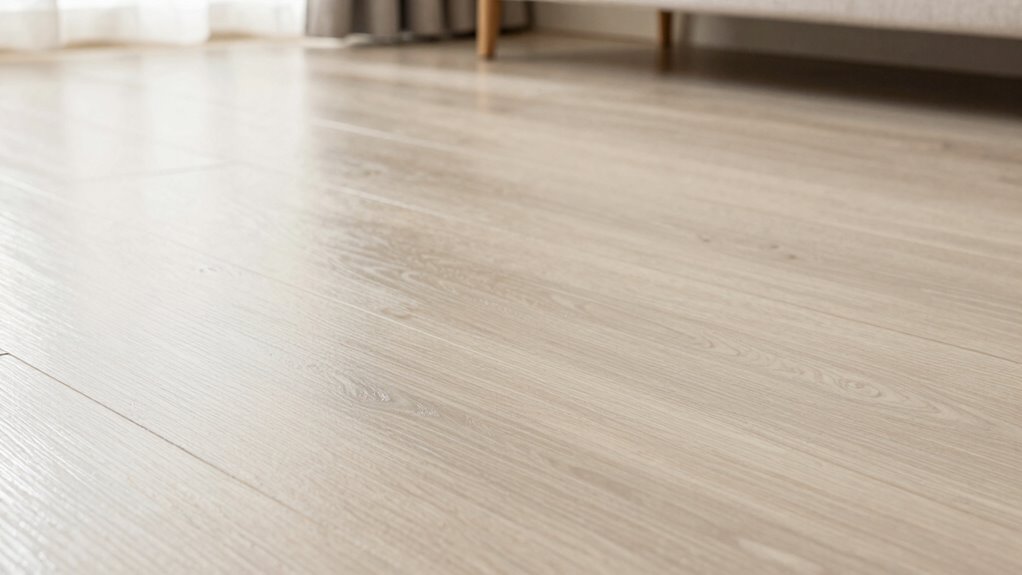
Proper care is essential for preventing vinyl haze from forming on your flooring. Maintaining good cleaning routines and protective measures helps keep your floor looking its best. Regularly sweep or vacuum to remove dirt and debris that can cause scratches or buildup. Use a damp mop with a mild, pH-neutral cleaner to avoid damaging the surface. To protect your vinyl plank flooring, place mats at entryways and felt pads on furniture legs. Avoid harsh chemicals, abrasive tools, or excessive moisture, which can contribute to haze formation. Additionally, understanding the causes of haze can help you take targeted steps to prevent it. Being aware of proper cleaning techniques ensures you use products that won’t damage the surface. Incorporating preventative measures into your routine is an effective way to preserve the appearance of your flooring over time. Consistent maintenance practices also help minimize the buildup of residues that cause haziness.
When to Call a Professional for Vinyl Floor Restoration

Sometimes, despite your best efforts, vinyl flooring develops persistent haze, discoloration, or damage that regular cleaning can’t fix. If you’ve tried DIY tips like deep cleaning, gentle scrubbing, or special vinyl cleaners and still see issues, it’s time to consider professional services. Professionals have the tools and expertise to assess whether the damage is repairable or if restoration is necessary. Call in a flooring specialist if the haze persists after cleaning, or if you notice bubbling, warping, or deep discoloration. Attempting to fix severe issues yourself can sometimes cause more harm, so recognizing when to seek professional help is key. Additionally, understanding proper maintenance techniques can also help prevent future issues and prolong the life of your flooring. Recognizing signs of material deterioration early on can save you from costly replacements down the line. Regular filter replacement and correct oil use are essential for maintaining equipment performance during repairs or cleaning processes. Professional restoration ensures your vinyl plank flooring is restored safely and effectively, saving you time and preventing further damage. Being aware of the evolving language of the internet can help you find reputable and qualified service providers. Moreover, staying informed about industry standards and certifications can guide you in choosing trustworthy professionals for your flooring needs.
Frequently Asked Questions
Can UV Light Cause Vinyl Plank Haze?
Yes, UV light can cause vinyl plank haze by exposing your flooring to UV exposure, which may lead to surface discoloration. When your vinyl is regularly exposed to sunlight or UV rays, it can weaken the material’s finish, resulting in a cloudy or hazy appearance. To prevent this, use window coverings or UV-protective films, and avoid prolonged direct sunlight. Regular cleaning also helps maintain your vinyl’s clarity and overall look.
Does Humidity Affect Vinyl Plank Haze Formation?
You might notice haze forming on your vinyl planks during humid days, and that’s because humidity effects can worsen moisture issues. High humidity causes trapped moisture beneath the surface, leading to haziness. To prevent this, keep indoor humidity levels balanced, use dehumidifiers if needed, and ensure proper ventilation. By controlling humidity, you reduce moisture issues and help keep your vinyl planks clear and beautiful.
Are There Eco-Friendly Products to Remove Vinyl Haze?
Yes, you can use eco-friendly cleaners and natural remedies to remove vinyl haze safely. Look for products labeled as non-toxic and biodegradable, or try simple solutions like a mixture of water and white vinegar or baking soda paste. These options are gentle on your flooring and the environment, helping you clean effectively without harsh chemicals. Always test a small area first to verify compatibility with your vinyl plank flooring.
Can Furniture Scratches Contribute to Haze Appearance?
Furniture scratches are like tiny wounds on your vinyl plank surface, and yes, they can contribute to haze appearance. When surface imperfections occur, they trap dust and grime, making the haze more noticeable. You should regularly inspect your flooring for scratches and damage, then use gentle cleaning methods or touch-up solutions designed for vinyl. Keeping your floor smooth and scratch-free helps reduce haze and maintains its shine.
How Long Does It Typically Take for Haze to Develop?
Haze on your vinyl plank floor can develop within a few weeks to several months, depending on your cleaning techniques and maintenance. If you use excessive floor polishing or harsh cleaning products, the haze may appear sooner. To prevent this, stick to gentle cleaning techniques, avoid over-polishing, and regularly remove dirt and grime. Proper care guarantees your floor stays clear and shiny longer, reducing the chances of haze formation.
Conclusion
Remember, an ounce of prevention is worth a pound of cure. By understanding what causes vinyl plank haze and taking proper care, you can keep your floors looking their best. Regular cleaning and avoiding harsh chemicals go a long way. If haze persists, don’t hesitate to seek professional help. Ultimately, staying proactive saves time and money—because a well-maintained floor reflects a well-maintained home. Keep that in mind, and your vinyl floors will shine for years to come.