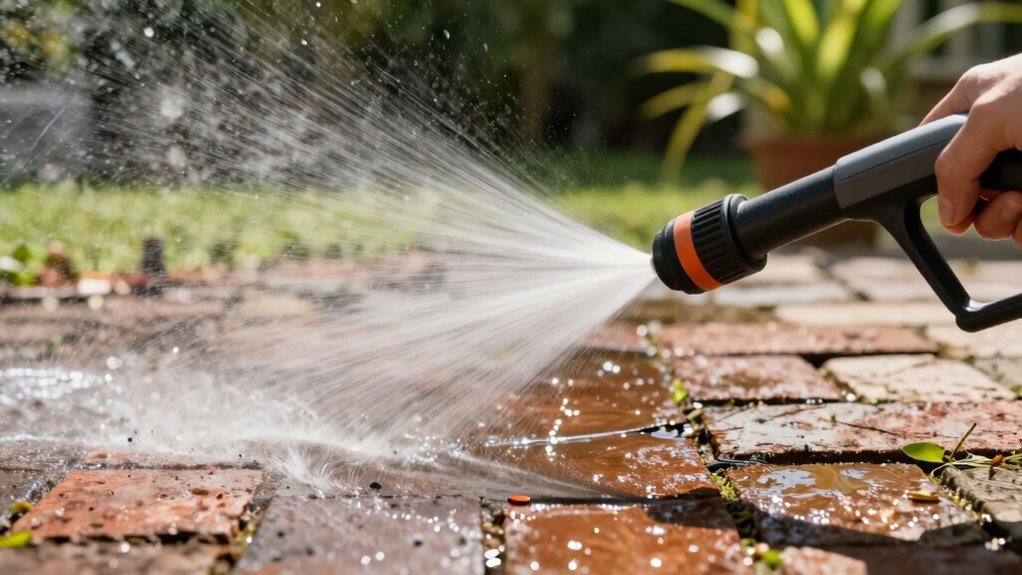
To avoid damaging your outdoor surfaces with a pressure washer, start with a wide spray angle and low pressure. Keep the nozzle 12-18 inches away from the surface, and use smooth, overlapping motions. Pre-wet surfaces and choose gentle cleaning agents suitable for each material. Always test in an inconspicuous area before full cleaning. Adjust the pressure gradually and avoid focusing on delicate areas. For detailed tips, you’ll discover more strategies to protect your surfaces while cleaning.
Key Takeaways
- Use wide-angle nozzles (25° or 40°) and the lowest pressure setting to prevent surface damage.
- Pre-wet surfaces with water to dilute chemicals and reduce cleaning force.
- Keep the nozzle at a safe distance (12-18 inches) and move continuously to avoid concentrated force.
- Adjust pressure and angle based on surface material, avoiding high-pressure on delicate surfaces like wood or vinyl.
- Follow manufacturer instructions for chemical cleaners and thoroughly rinse to prevent residue buildup.
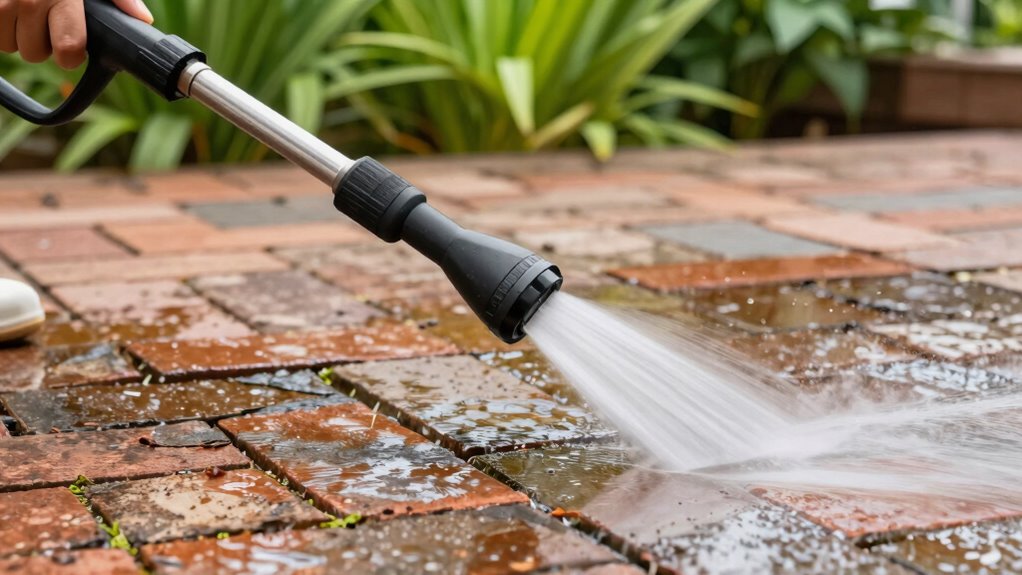
Using a pressure washer can be an effective way to clean outdoor surfaces, but if you’re not careful, it can also cause damage. The key to safe and effective cleaning lies in understanding how to use the right techniques, especially when it comes to chemical cleaners and nozzle selection. First, consider the surface you’re cleaning. Different materials, like wood, concrete, or siding, require different approaches to prevent erosion or cracking. Before starting, research which cleaning agents are suitable for your surface. Chemical cleaners can be helpful in loosening dirt, grime, and mold, but you should always choose products that are compatible with your outdoor surface and follow the manufacturer’s instructions carefully.
When applying chemical cleaners, make sure to pre-wet the area with water. This helps dilute the chemicals and reduces the risk of damage. After applying the cleaner, allow it to sit for the recommended time to break down stubborn grime. Then, rinse thoroughly with your pressure washer. Remember, chemicals alone won’t do the job; the pressure and nozzle choice are equally important. Using the correct nozzle selection is crucial because nozzles vary by orifice size and spray pattern, which directly impacts the pressure delivered. For most outdoor surfaces, a nozzle with a wide spray pattern, such as a 25 or 40-degree nozzle, is safer and less likely to cause damage. Avoid using a narrow, high-pressure nozzle like a 0-degree or 15-degree, which can easily gouge or etch softer surfaces like wood or vinyl.
Always start with the lowest pressure setting and a wider spray angle to test how the surface responds. As you gain confidence, you can gradually increase pressure if needed, but never point the nozzle directly at delicate areas. Keep the spray moving in smooth, overlapping strokes to distribute the force evenly. Maintain a safe distance from the surface—usually around 12 to 18 inches—and avoid holding the nozzle in one spot for too long. This prevents localized damage, such as gouges or stripping paint. Additionally, understanding the surface sensitivities and how different materials react to high pressure is essential for preventing unintended damage. Remember, the combination of proper chemical cleaners and thoughtful nozzle selection will help you clean efficiently without risking harm to your outdoor surfaces. Using the right pressure washer techniques and understanding surface sensitivities will help ensure your cleaning process remains safe, effective, and damage-free. An awareness of the material durability is also crucial for choosing the appropriate pressure and cleaning method.
As an affiliate, we earn on qualifying purchases.
Frequently Asked Questions
Can I Use a Pressure Washer on Painted Surfaces?
You can use a pressure washer on a painted surface, but you need to be cautious. Use a lower pressure setting and keep the nozzle at a safe distance to prevent surface damage. Too high pressure can strip paint or cause chipping, leading to surface damage. Always test on a small, hidden area first. Proper technique guarantees you clean effectively without harming the painted surface.
What Pressure Setting Is Safe for Wood Decks?
Set your pressure washer to a gentle 500 to 600 psi for wood decks. This guarantees effective cleaning while protecting the surface. Use a wide spray tip to distribute pressure evenly and prevent gouging. Remember, proper pressure settings are key to wood care and surface protection. Always keep the nozzle moving and maintain a safe distance to avoid damage. This approach keeps your deck looking fresh without risking harm.
Is It Okay to Use Hot Water With a Pressure Washer?
Yes, you can use hot water with a pressure washer, but it depends on surface compatibility. Hot water can be more effective at removing grease and grime, especially on concrete or heavily soiled surfaces. However, avoid using hot water on delicate surfaces like wood decks or siding, as it might cause damage. Always check the manufacturer’s guidelines and adjust the pressure and temperature accordingly to prevent any harm.
How Close Should the Nozzle Be to the Surface?
Think of the nozzle as a gentle brush, not a sword. Keep the nozzle at least 12 inches away from the surface to guarantee surface safety. The right nozzle distance prevents damage, much like a careful painter avoids splattering. Moving closer increases pressure risk, while too far reduces cleaning power. Maintain this distance to clean effectively without harm, respecting the surface’s delicate balance.
Can Pressure Washers Remove Stubborn Stains Effectively?
Yes, pressure washers can remove stubborn stains effectively when used correctly. To do so, choose eco-friendly cleaning solutions and use the appropriate pressure settings. Keep your equipment well-maintained to guarantee peak performance. Use a wider spray nozzle for stubborn stains and maintain a safe distance from the surface to prevent damage. Regularly inspect and clean your pressure washer to keep it functioning properly for tough cleaning jobs.
wide spray angle pressure washer
As an affiliate, we earn on qualifying purchases.
As an affiliate, we earn on qualifying purchases.
Conclusion
Using a pressure washer is like wielding a fine-tuned instrument—you need to handle it with care to avoid causing damage. By choosing the right pressure, maintaining proper distance, and testing on small areas first, you’re guiding your cleaning tool with the precision of a master musician. When used thoughtfully, your outdoor surfaces will shine without a scratch, turning your cleaning project into a symphony of spotless beauty. Just remember, gentle control creates the best harmony.
pressure washer chemical cleaners
As an affiliate, we earn on qualifying purchases.
As an affiliate, we earn on qualifying purchases.
pressure washer surface protection
As an affiliate, we earn on qualifying purchases.
As an affiliate, we earn on qualifying purchases.