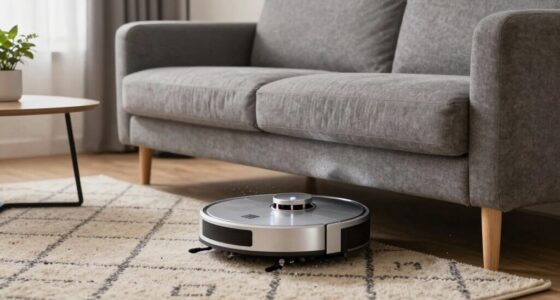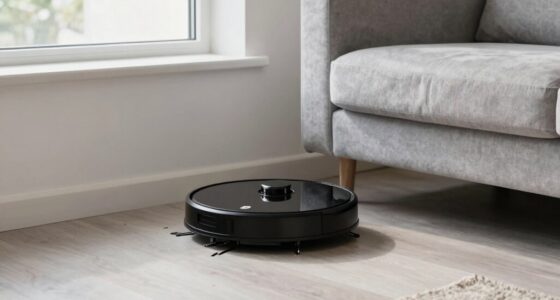
If your robot vacuum’s wheels are slipping, start by inspecting the wheels for dirt, hair, or debris buildup and clean them thoroughly, as this can reduce traction. Check for signs of damage or wear, and replace wheels if needed. Also, verify the contact area is free of obstructions and that the floor surface isn’t overly slippery or uneven. Fronting these issues can help regain proper movement—more tips to improve traction are just ahead.
Key Takeaways
- Inspect and clean wheels regularly to remove dirt, hair, and debris that can cause slipping.
- Check battery health and ensure it’s fully charged for adequate power and traction.
- Empty the dustbin frequently to prevent excess weight that may reduce wheel grip.
- Adjust cleaning settings for different surfaces like carpets or tiles to improve traction.
- Verify sensors and navigation software for proper environment interpretation and obstacle avoidance.
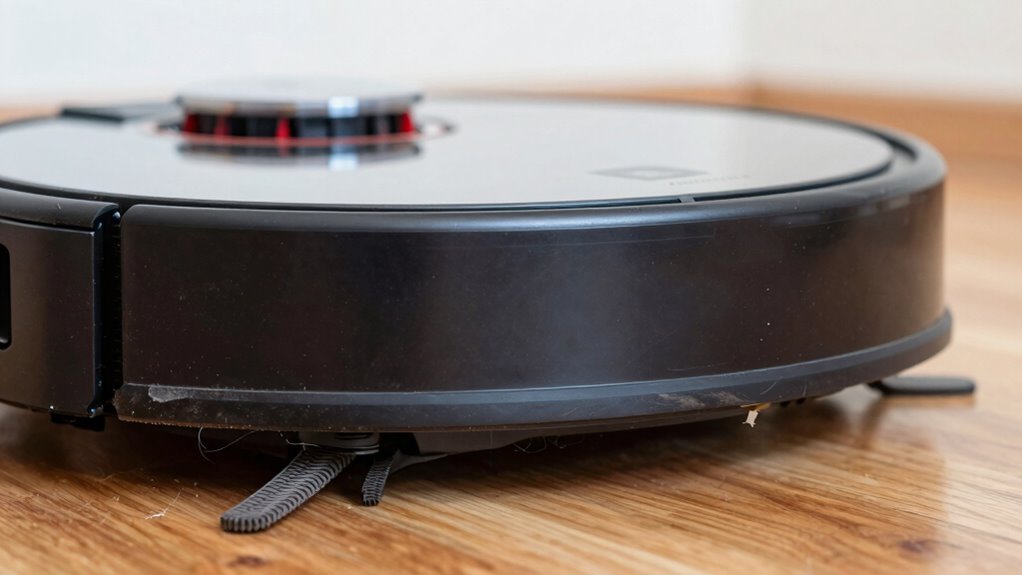
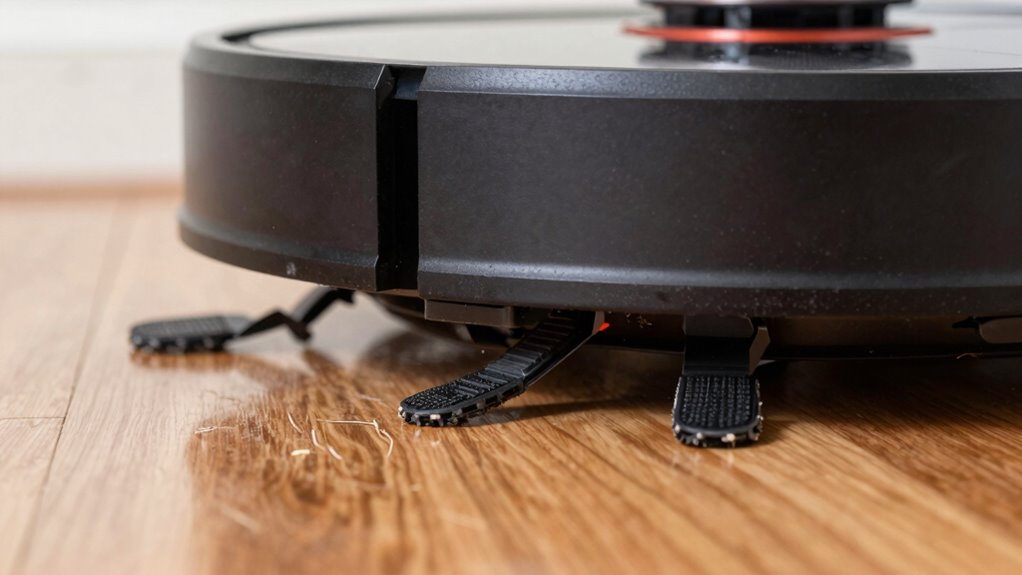
If your robot vacuum’s wheels are slipping, it can disrupt your cleaning routine and leave dirt behind. When this happens, the first thing to check is the condition of the wheels and the surfaces they contact. Slipping often occurs because the wheels can’t grip the floor properly, which might be due to dirt, debris, or worn-out wheels. Regularly inspect and clean the wheels to remove hair, dust, and other particles that can build up and reduce traction. If the wheels are damaged or worn down, replacing them can restore proper movement and prevent slipping.
Check and clean your robot vacuum’s wheels regularly to prevent slipping and ensure smooth cleaning.
Next, consider the battery life. A declining battery can cause the robot to lose power unexpectedly, especially when attempting to climb over obstacles or uneven surfaces. If your device’s battery isn’t holding a full charge, it might struggle to maintain enough torque to keep the wheels spinning effectively. Make sure to monitor the battery status and replace or recharge it as needed. A healthy, fully charged battery guarantees your vacuum has enough power to navigate smoothly and maintain traction without slipping.
Another vital aspect is the dustbin capacity. A full dustbin can add extra weight and imbalance, affecting the robot’s ability to grip surfaces properly. When the dustbin is overflowing, the added weight can cause the wheels to slip or spin without moving the vacuum forward. Make it a habit to empty the dustbin regularly, especially after each cleaning session, to guarantee the vacuum operates at peak efficiency. Keeping the dustbin empty also prevents the robot from overworking, which can strain the motor and lead to slipping issues.
Additionally, check the floor surface and the robot’s settings. Some surfaces, like thick carpets or slippery tiles, require different wheel traction or cleaning modes. Adjust the settings if your vacuum has options for different surfaces or traction modes. Sometimes, the problem isn’t with the robot but with the environment itself. Ensure there’s no loose rug or object that could interfere with the wheels’ grip.
Finally, understanding the navigation and mapping capabilities of your robot vacuum can help identify if the slipping occurs due to misinterpretation of the environment or obstacles that confuse its sensors.

eMagTech 2pcs Replacement Front Wheels Compatible with Shark Compatible with IQ R101AE RV1001AE UR1100SRUS AV1002AE AV1010AE RV100AE Robot Vacuum Cleaner
Wide Compatibility: Compatible with R101AE, RV1001AE, UR1100SRUS, AV1002AE, AV1010AE, RV100AE, and more.
As an affiliate, we earn on qualifying purchases.
As an affiliate, we earn on qualifying purchases.
Frequently Asked Questions
Can Slippery Floors Cause Robot Vacuum Wheels to Slip?
Yes, slippery floors can cause your robot vacuum wheels to slip. When the floor grip is low, the wheels struggle to maintain traction, leading to slipping. To prevent this, you should check your robot’s wheel maintenance regularly and make certain the wheels are clean and free of debris. Additionally, consider adding a non-slip mat or using a different cleaning mode for smoother floors to improve traction.
How Often Should I Replace Robot Vacuum Wheels?
You should replace your robot vacuum wheels when you notice persistent slipping, reduced traction, or visible wear. Check for dust buildup and debris that can hinder movement, and consider wheel replacement if the battery lifespan is decreasing, affecting overall performance. Regular maintenance, like cleaning the wheels and monitoring their condition, helps extend their life. Typically, replacing wheels every 6 to 12 months keeps your vacuum operating smoothly.
Do Different Floor Types Affect Wheel Traction?
Different floor types do affect your robot vacuum’s wheel traction. Hard floors like tile or hardwood offer good rug grip and allow smooth movement, while smooth surfaces can sometimes cause slipping. Rugs and carpets provide better traction, reducing wheel slipping. You should regularly check your vacuum’s wheels and clean them to maintain ideal floor grip, especially on slippery floors or when shifting between different surfaces.
Are There Specific Cleaning Products That Improve Wheel Grip?
Yes, you can boost your robot vacuum’s grip with specific cleaning solutions and traction enhancers. Think of these products as tiny anchors for your wheels, providing better contact with the floor. Just make certain you choose gentle, compatible cleaning solutions designed for your floor type, and consider traction enhancers that create a sticky, yet safe, surface. This combination transforms your vacuum into a steady ship steering even slippery terrains.
How Can I Prevent Wheels From Slipping in the Future?
To prevent your robot vacuum wheels from slipping, focus on regular tire maintenance and wheel lubrication. Check for debris or buildup around the wheels and clean them often. Apply a small amount of lubricant to the wheel axles to keep them moving smoothly. Also, make certain the wheels are properly aligned and free of damage. Regular upkeep will improve grip and keep your vacuum functioning efficiently on various surfaces.

Wheel Fits for J3 Robot Vacuum Cleaner Accessories Household Cleaning Tool Spare Parts Replacement
Description Report Item / Suspicious Activity
As an affiliate, we earn on qualifying purchases.
As an affiliate, we earn on qualifying purchases.
Conclusion
If your robot vacuum wheels keep slipping, don’t ignore the signs. Check the wheels, terrain, and debris—think of it as your modern-day Tinker Bell, ensuring everything runs smoothly. A little maintenance now prevents future headaches, much like how a well-oiled clock keeps perfect time. So, stay vigilant and troubleshoot promptly. After all, even Cinderella’s slipper needed the right fit—your vacuum’s wheels need proper care to keep cleaning like a charm!

BEIDUOYANG 10 Pack Vacuum Cleaner Brush Side Brushes Robotic Replacement Side Brush Spare Part For X30 Vacuum Cleaner Spare Parts Accessories
Made from plastic material, these side brush accessories are designed to fit perfectly on the bottom of robot…
As an affiliate, we earn on qualifying purchases.
As an affiliate, we earn on qualifying purchases.

Upgraded 4000mAh N79 14.4V Battery for Eufy RoboVac 11 11S 30 15C 25C 35C Robot Vacuum Cleaner for Ecovacs Deebot N79 N79S Deebot 500 600 DN622, Goovi F007C D380 Robot Vacuum Cleaner Battery
【Upgraded 4.0Ah Capacity】: The real-capacity 4000mAh lithium-ion deebot replacement battery provides an ultra-long running time of 120 to…
As an affiliate, we earn on qualifying purchases.
As an affiliate, we earn on qualifying purchases.