

To avoid scuffing your delicate hardwood, set your stick vacuum to a low or specialized hardwood setting and turn off or adjust the brush roll to prevent aggressive contact. Use gentle, slow passes while holding the vacuum at a slight angle, and select soft attachments like microfiber or soft brushes. Keep the vacuum moving steadily without pressing down hard, ensuring thorough cleaning without damage. Continue exploring for more tips to protect your floors effectively.

Get cleaning gear delivered free with Prime
- Fast, free delivery on millions of items
- Prime Video, Amazon Music and more included
- Member-only deals all year
Key Takeaways
- Set the vacuum’s brush roll or beater bar to the lowest or a soft-floor setting before cleaning.
- Use the bare-floor or soft brush attachment to prevent scratching delicate surfaces.
- Hold the vacuum at a gentle angle and move slowly with deliberate, overlapping passes.
- Remove loose dirt and debris beforehand to minimize friction and avoid unnecessary contact.
- Regularly inspect and maintain the vacuum to ensure gentle, effective cleaning without damage.

Cleaning delicate hardwood floors with a stick vacuum requires careful technique to prevent scuffs and scratches. Hardwood floors are beautiful but vulnerable, so you need to be mindful when vacuuming. Start by inspecting your vacuum’s vacuum brush. If it has a rotating beater bar or brush roll, turn it off or set it to the lowest setting. Many modern stick vacuums have adjustable brush heights—use the lowest or a specialized hardwood setting to avoid aggressive brushing that could scratch the surface. You want the vacuum to pick up debris without applying excessive pressure or friction that could damage the finish.
Inspect and adjust your vacuum’s brush to prevent scratches on delicate hardwood floors.
Next, before you begin vacuuming, consider applying a hardwood polish. A good hardwood polish not only enhances the shine but also creates a protective layer that reduces the risk of scuffs during cleaning. Make sure the floor is free of loose dirt and debris, as larger particles can cause scratches if dragged across the surface. Use a soft, microfiber cloth to gently wipe away dust and dirt in high-traffic areas or spots where debris tends to gather. This prep step minimizes the need for vigorous vacuuming, which could harm the wood. Additionally, choosing the right cleaning tools can prevent damage and prolong the lifespan of your floors. Proper maintenance practices are essential for sustainable cleaning that preserves the integrity of natural surfaces.
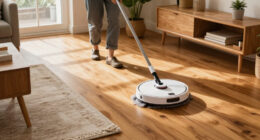
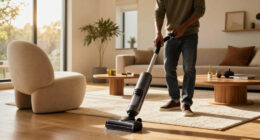
When you start vacuuming, hold the stick vacuum at a gentle angle and avoid pressing down hard on the floor. Use slow, deliberate motions, and don’t rush. Keep the vacuum moving steadily to prevent uneven pressure that might scratch or scuff the finish. Focus on overlapping passes to ensure you cover the entire area without applying unnecessary force in one spot. If your vacuum has different attachments, opt for a soft brush or a bare-floor setting to further protect the hardwood. Additionally, understanding the importance of biodiversity can motivate sustainable cleaning practices that preserve natural surfaces and ecosystems. Regularly inspecting your vacuum for proper maintenance can also ensure it functions optimally and prevents accidental damage during cleaning.
hardwood floor soft brush attachment for vacuum
As an affiliate, we earn on qualifying purchases.
As an affiliate, we earn on qualifying purchases.
Frequently Asked Questions
Can I Use a Stick Vacuum on Sealed Hardwood Floors?
Yes, you can use a stick vacuum on sealed hardwood floors. To avoid damage, set the vacuum to a low or bare floor suction setting. Keep the brush clean and well-maintained to prevent scratching. Regularly check and remove hair or debris from the brush roll, ensuring smooth vacuum suction. This approach helps protect your floors while effectively cleaning without scuffing or damaging the surface.
How Often Should I Clean the Vacuum’s Brush Roll?
You should clean your vacuum’s brush roll at least once a month—more if you have pets or lots of debris. Regular vacuum maintenance keeps it performing at peak, preventing dirt buildup that could scratch your delicate hardwood. Always perform a brush roll inspection to remove hair, lint, or tangled fibers. Neglecting this can lead to inefficient cleaning and potential damage, so stay vigilant and give your vacuum the TLC it deserves!
Are There Specific Attachments for Delicate Hardwood?
Yes, there are specific attachments for delicate hardwood. You should use soft brush attachments, which are gentle on your flooring. These attachments help prevent scratches and scuffs during cleaning. Always employ gentle cleaning techniques, such as moving the vacuum slowly and avoiding excessive pressure. Using the right tools and techniques guarantees your hardwood stays pristine while keeping your space clean.
What Vacuum Settings Are Best for Sensitive Flooring?
Set your vacuum to a gentle power adjustment to protect sensitive flooring. Use a lower setting to softly lift pet hair and dust without causing scratches. This gentle approach mimics a whisper, ensuring your delicate hardwood remains pristine. Adjust the suction to prevent excessive force, and focus on quick, light passes. This way, you keep your floors clean and safe, maintaining their natural beauty without risking any scuffs.
How Do I Prevent Static Buildup When Vacuuming Hardwood?
To prevent static buildup when vacuuming hardwood, start by using a vacuum with static prevention features or attach an anti-static spray to your brush. Always opt for a soft brush attachment to gently clean the surface without generating static electricity. Keep your humidity levels balanced, ideally between 40-60%, as dry air increases static. Regularly wipe your vacuum’s brush and filters to minimize static buildup and protect your hardwood floors.
vacuum with adjustable brush height for hardwood
As an affiliate, we earn on qualifying purchases.
As an affiliate, we earn on qualifying purchases.
Conclusion
Now that you know how to handle your stick vacuum carefully, you can keep your hardwood looking its best without any worries. Just remember, patience and gentle techniques go a long way in preserving your floor’s beauty. Don’t rush the job—take your time, stay cautious, and you’ll avoid any unnecessary scratches. When it comes to delicate surfaces, slow and steady truly wins the race. Keep these tips in mind, and your hardwood will thank you for it.
best stick vacuum for delicate hardwood floors
As an affiliate, we earn on qualifying purchases.
As an affiliate, we earn on qualifying purchases.
As an affiliate, we earn on qualifying purchases.
Halloween Picks
halloween
As an affiliate, we earn on qualifying purchases.