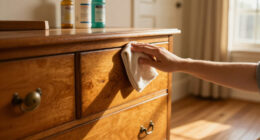


To avoid water rings when using a spot cleaner on upholstery, keep moisture levels minimal and use gentle motions. Test your cleaning solution on a hidden area first, then apply it lightly to a microfiber cloth rather than directly on the fabric. Work in small sections with circular motions, blot frequently with a dry cloth to lift excess moisture, and allow the fabric to dry completely before use. For more tips, you’ll find helpful techniques if you continue.

Get cleaning gear delivered free with Prime
- Fast, free delivery on millions of items
- Prime Video, Amazon Music and more included
- Member-only deals all year
Key Takeaways
- Test cleaning solution on a hidden, colorfast area before applying broadly.
- Use minimal cleaning solution and avoid over-wetting the fabric during cleaning.
- Work in small sections with light, circular motions to prevent excess moisture.
- Blot frequently with a dry microfiber cloth to lift moisture and prevent water rings.
- Allow the upholstery to dry completely before use, using fans if needed to speed up drying.

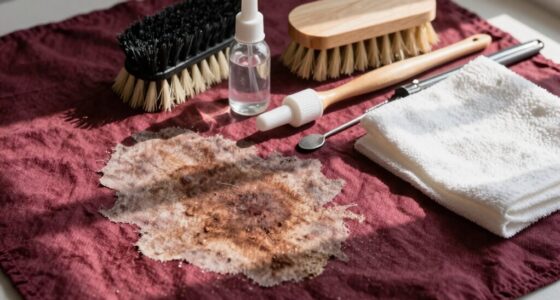
If you’ve ever faced stubborn stains on your furniture, you know how frustrating it can be to get them out. Using a spot cleaner on upholstery requires more than just spraying and wiping; it involves a strategic approach to avoid water rings and damage. Your first step is to gather the right cleaning tools. A high-quality spot cleaner with adjustable settings is ideal, along with clean, white microfiber cloths or sponges. You’ll also want a small brush for gentle agitation and possibly a spray bottle with distilled water. Having these tools prepared beforehand ensures you can work efficiently and avoid over-wetting the fabric.
Gather quality tools like adjustable spot cleaner, microfiber cloths, and a small brush for effective upholstery stain removal.
When it comes to stain removal techniques, the key is to treat the stain carefully and gradually. Always start by testing your cleaning solution on a hidden area of the upholstery to check for colorfastness. Once confirmed, apply the cleaner directly onto the stain or to your cloth, rather than pouring it directly onto the fabric. This helps you control the amount of moisture you introduce. Use the cleaning tools to gently work the solution into the fabric with light, circular motions. Don’t press too hard—scrubbing aggressively can damage fibers or push the stain deeper.
To prevent water rings, it’s crucial to avoid saturating the fabric. Keep the cleaning process light and controlled, applying small amounts of the cleaning solution and blotting frequently with a dry cloth to lift moisture and loosen dirt. If you notice excess moisture, use a clean, dry microfiber cloth to absorb it. For more stubborn stains, repeat the process in small sections, allowing the fabric to dry completely between applications. This minimizes the risk of streaks or water marks.
Drying is a critical step. Once you’ve lifted the stain, allow the area to air dry naturally—preferably with good ventilation. If needed, you can use a fan or a hairdryer on a cool setting to speed things up, but keep the airflow moving across the surface rather than directly onto it. Avoid walking on or placing furniture back onto the cleaned area until it’s fully dry to prevent watermarking. Additionally, understanding the fabric types and their specific cleaning needs can help you achieve better results without damaging delicate fibers.
upholstery spot cleaner with adjustable settings
As an affiliate, we earn on qualifying purchases.
As an affiliate, we earn on qualifying purchases.
Frequently Asked Questions
Can I Use a Spot Cleaner on Delicate or Vintage Upholstery?
Yes, you can use a spot cleaner on delicate or vintage upholstery, but you must prioritize upholstery safety. Always check the manufacturer’s cleaning instructions and test cleaning solutions on a hidden area first. Use gentle, appropriate cleaning solutions designed for delicate fabrics, and avoid excessive moisture. A careful approach guarantees you clean effectively without risking damage or water rings, preserving the beauty and integrity of your vintage or delicate upholstery.
How Long Should I Wait Before Using a Spot Cleaner on Stained Upholstery?
You should wait at least 24 hours before using a spot cleaner on stained upholstery. This allows any cleaning techniques you used initially to settle and prevents the stain from spreading or setting deeper. Proper upholstery maintenance involves testing the cleaner on a hidden area first and ensuring the fabric is dry. Giving it this time helps avoid water rings and keeps your furniture looking fresh and well-maintained.
Is It Safe to Use a Spot Cleaner on Pet or Food Stains?
You can safely use a spot cleaner on pet or food stains if you choose the right product. For pet stain removal, opt for enzyme-based cleaners that break down organic matter, making it effective and safe. For food stain treatment, use a mild, upholstery-safe cleaner to prevent damage. Always test a small hidden area first, and avoid over-saturating fabric to prevent water rings.
Should I Test the Spot Cleaner on a Hidden Area First?
You should definitely perform a hidden area test before using the spot cleaner on a visible stain. This allows you to check the stain removal effectiveness and guarantee the cleaner won’t damage or discolor your upholstery. Apply a small amount to a hidden area first, then wait to see if there’s any adverse reaction. This simple step saves you from potential water rings or damage, giving you confidence in your cleaning process.
What Type of Cloth or Tool Is Best for Applying the Cleaner?
Think of your cleaning tools as the gentle brush of a painter’s stroke. For best results, use a soft, microfiber cloth or a sponge with a smooth fabric texture. These tools help evenly distribute the cleaner without causing damage or water rings. Avoid abrasive brushes or rough fabrics, as they can harm delicate upholstery. Your goal is to apply the cleaner softly, mimicking a careful artist’s touch to preserve your furniture’s beauty.
microfiber cloths for upholstery cleaning
As an affiliate, we earn on qualifying purchases.
As an affiliate, we earn on qualifying purchases.
Conclusion
Now that you know how to carefully clean your upholstery without creating water rings, you can confidently tackle stains and spills with consistency and caution. Remember, patience and planning prevent problems and promote pristine results. By following these simple steps, you’ll safeguard your sofa’s surface and showcase your cleaning skills. So, stay savvy, be gentle, and enjoy your spotless, stunning furniture — because a little care creates a beautifully bright, blemish-free beauty!
As an affiliate, we earn on qualifying purchases.
distilled water spray bottle for cleaning
As an affiliate, we earn on qualifying purchases.
As an affiliate, we earn on qualifying purchases.
Halloween Picks
halloween
As an affiliate, we earn on qualifying purchases.