To tackle old unknown stains, start by identifying the stain’s color and texture. Use dish soap mixed with warm water for grease, or cold water for protein stains. Try household items like baking soda or vinegar for additional help. Be persistent; repeat the cleaning process if necessary, and check for colorfastness first. If the stain proves stubborn, professional help might be your best option. There’s more to explore to guarantee your items stay intact and clean.

Get cleaning gear delivered free with Prime
- Fast, free delivery on millions of items
- Prime Video, Amazon Music and more included
- Member-only deals all year
Key Takeaways
- Identify the stain type by observing color and texture to select the appropriate cleaning method.
- Use cold water for protein stains and avoid hot water to prevent setting them.
- Test cleaning solutions, like baking soda or vinegar, on inconspicuous areas first to avoid discoloration.
- Apply gentle blotting techniques with a suitable cleaning solution to lift the stain without damaging the fabric.
- If stains persist, consider consulting a professional cleaner to avoid permanent damage to delicate items.
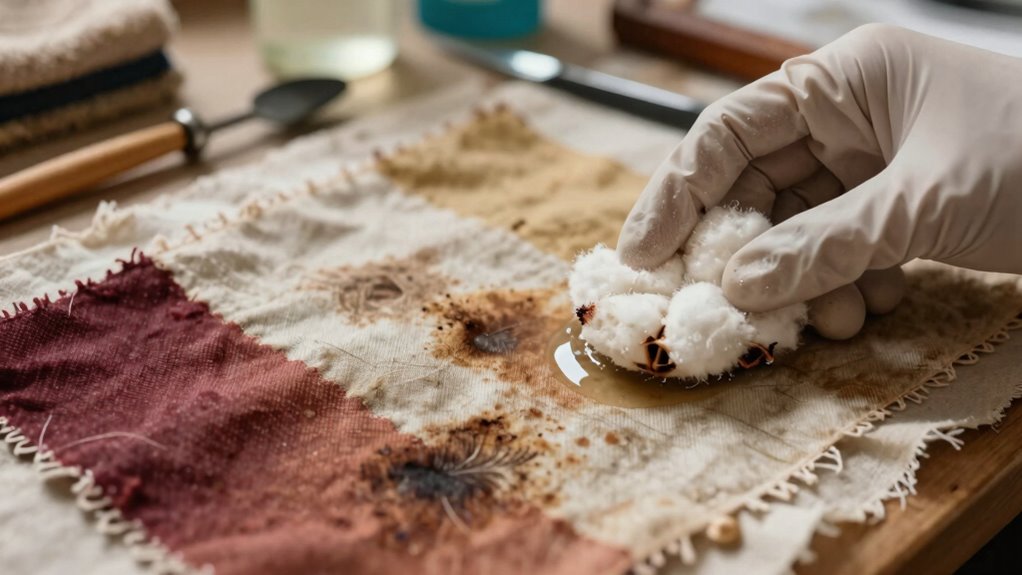
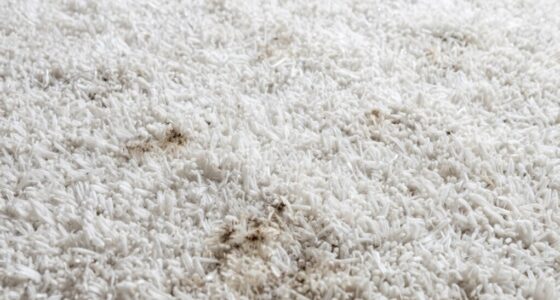
When you discover an old stain, it can feel overwhelming, but don’t worry; you can tackle it effectively. The first step is to identify the type of stain. Using stain identification techniques can help you narrow down what you’re dealing with. Is it a grease stain, a red wine spill, or perhaps something more mysterious? Each type of stain requires a different approach, so take a moment to observe its color, texture, and any other attributes that might give you clues.
Once you’ve identified the stain, you can choose the right effective cleaning solutions. For example, if it’s an oil-based stain, try using a dish soap that cuts grease. Mix a small amount with warm water and gently blot the stain. Avoid rubbing, as that can spread the stain further into the fabric. On the other hand, if you’re facing a protein stain, like blood or sweat, cold water is your best friend. Rinse the area with cold water before applying a mild detergent, as hot water can set these types of stains.
Don’t underestimate the power of household items, either. Baking soda can work wonders on many stains. Make a paste with water, apply it to the stain, and let it sit for about 30 minutes. Afterward, rinse it off and see if the stain has lightened. For tougher stains, you might want to reflect on using white vinegar or hydrogen peroxide, but always test these on an inconspicuous area first to verify they don’t cause discoloration. Additionally, knowing stain removal techniques can greatly increase your chances of success. Being aware of common stain types can help you select the most appropriate cleaning method.
If the stain is still hanging on after your initial attempts, don’t lose hope. Repeating the cleaning process can yield better results. Sometimes, old stains require a little extra patience. If you’re working with fabrics, think about using a laundry stain remover. Follow the product instructions carefully, and remember to check for colorfastness. Furthermore, understanding stain identification techniques can help you choose the most suitable cleaning method for any stain.
In extreme cases, you might need to consult a professional cleaner, especially for delicate fabrics or significant stains. They have specialized tools and techniques that can remove stains without damaging your items.
Ultimately, tackling old stains doesn’t have to be an intimidating task. With the right stain identification techniques and effective cleaning solutions, you can restore your fabrics to their former glory. Just remember to act carefully, and you’ll be well on your way to a stain-free outcome!
As an affiliate, we earn on qualifying purchases.
Frequently Asked Questions
Can I Use Bleach on All Types of Fabric Stains?
No, you can’t use bleach on all types of fabric stains. While bleach is effective on whites and some colorfast fabrics, it can damage or discolor delicate materials like silk or wool. Always check the fabric compatibility before applying bleach. It’s best to test a small, inconspicuous area first. For tough stains on sensitive fabrics, consider alternative stain removers to avoid permanent damage and preserve your garments.
How Do I Identify the Type of Stain?
Identifying a stain is like unraveling a mystery. Start with color analysis; vibrant reds might hint at fruit juice, while earthy browns could signal coffee. Classify stains into categories: protein-based (like blood), tannin-based (like wine), or dye-based (like ink). Look closely at texture and odor, too. Each clue helps you decode the stain’s origin, guiding you toward the best cleaning method without risking permanent damage to your fabric.
Are There Any Home Remedies for Tough Stains?
Yes, there are effective home remedies for tough stains! You can mix equal parts of vinegar and water to create a vinegar solution. Apply it to the stain and let it sit for a few minutes. For extra power, sprinkle baking soda on top, making a paste. Gently scrub with a cloth until the stain lifts. Rinse with cold water, and you’ll see great results without damaging your fabric!
What Tools Are Essential for Stain Removal?
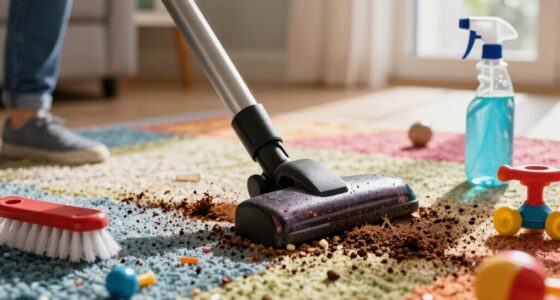
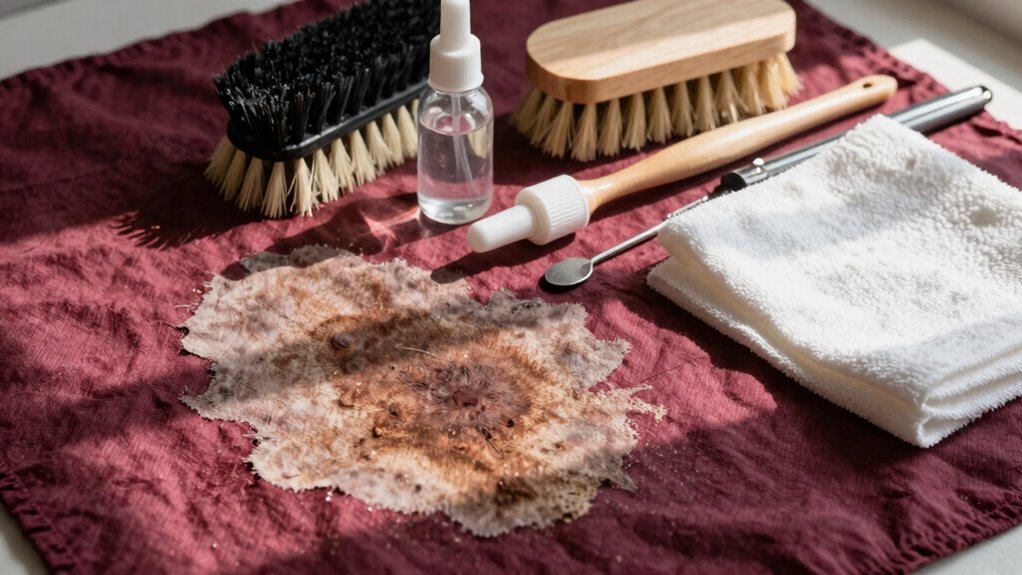
For effective stain removal, you’ll need some essential cleaning supplies. Start with a good stain remover specifically designed for various fabrics. Keep a set of microfiber cloths handy—they’re great for blotting. A soft-bristle brush can help lift stubborn stains without damaging the material. Don’t forget a spray bottle for mixing solutions and a pair of gloves to protect your hands. With these stain removal tools, you’ll be well-equipped to tackle any mess!
How Can I Prevent Future Stains From Setting?
To prevent future stains from setting, follow these stain prevention tips. First, treat spills immediately—blot, don’t rub! Use fabric care products designed for your specific materials. Consider applying a stain repellent spray for extra protection. Regularly washing and maintaining your fabrics also helps; always follow care instructions. Finally, keep a stain removal kit handy, so you’re prepared to act swiftly whenever accidents happen. Staying proactive goes a long way!
As an affiliate, we earn on qualifying purchases.
Conclusion
When it comes to old stains, don’t let them haunt you like a ghost from the past. With the right approach and a bit of patience, you can banish those pesky marks without making them permanent. Remember, every stain tells a story, but you’re the one in control of the narrative. So, grab your trusty cleaning supplies and tackle those stains like a modern-day Sherlock Holmes—you’ll be amazed at the results!
professional stain remover spray
As an affiliate, we earn on qualifying purchases.
As an affiliate, we earn on qualifying purchases.
laundry stain remover for delicate fabrics
As an affiliate, we earn on qualifying purchases.
As an affiliate, we earn on qualifying purchases.
Fall Picks
fall essentials
As an affiliate, we earn on qualifying purchases.