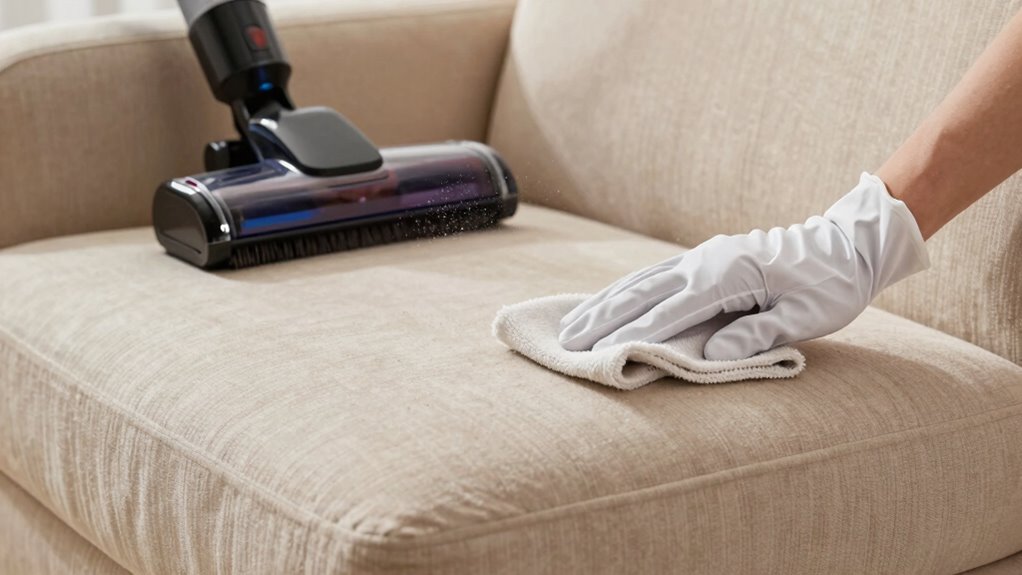
To clean upholstery and bedding without spreading fine dust, use gentle methods like vacuuming with a HEPA filter first to trap allergens. Wipe surfaces with a damp microfiber cloth to prevent dust from becoming airborne. Avoid over-wetting fabrics or using harsh chemicals that stir up dust. Regularly wash bedding in hot water and dry thoroughly. Incorporating these eco-friendly techniques will help keep your space cleaner and healthier—there’s more to discover for a truly allergen-free environment.
Key Takeaways
- Use a vacuum with a HEPA filter to gently remove dust and allergens before cleaning.
- Employ damp microfiber cloths to wipe surfaces, preventing dust from becoming airborne.
- Avoid over-wetting fabrics; opt for low-moisture or steam cleaning methods to minimize dust dispersal.
- Wash bedding and upholstery covers regularly in hot water, then dry thoroughly to reduce dust buildup.
- Incorporate air purifiers with HEPA filters to capture airborne dust during and after cleaning.
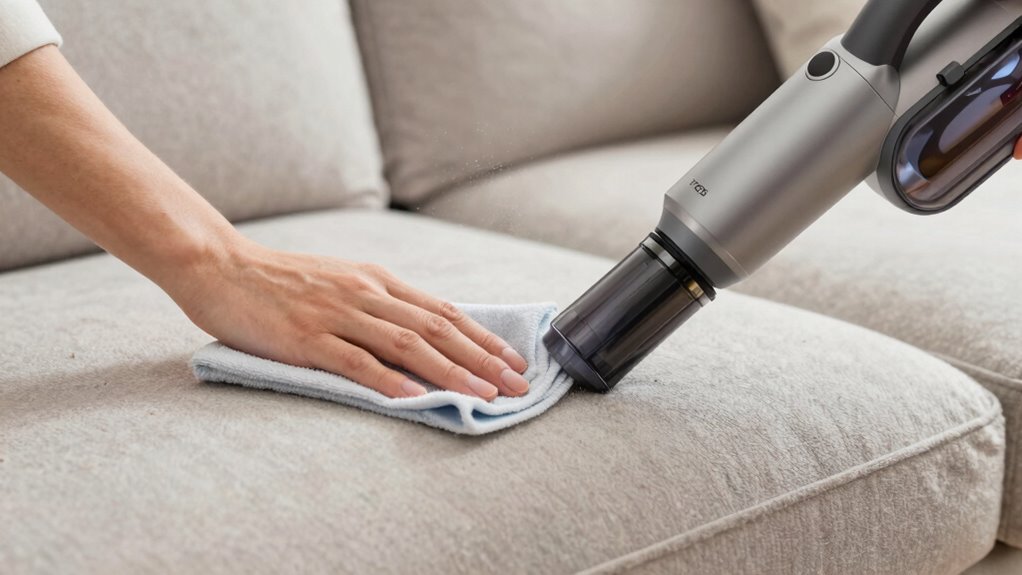
Keeping your upholstery and bedding clean is essential for a healthy and fresh living space. When it comes to maintaining cleanliness, you want to prevent spreading fine dust, which can aggravate allergies and compromise air quality. Proper cleaning techniques help you remove pet stains and allergens effectively while keeping dust at bay. If you have pets, pet stain removal becomes a priority. You need to act quickly to blot spills and stains, avoiding rubbing that can push particles deeper into the fabric. Use a gentle, enzyme-based cleaner formulated for pet stains to break down proteins and eliminate odors. This not only restores your furniture’s appearance but also reduces allergen buildup caused by pet dander and stains, making your environment safer for everyone.
Maintaining clean upholstery and bedding reduces allergens and creates a healthier, fresher home environment.
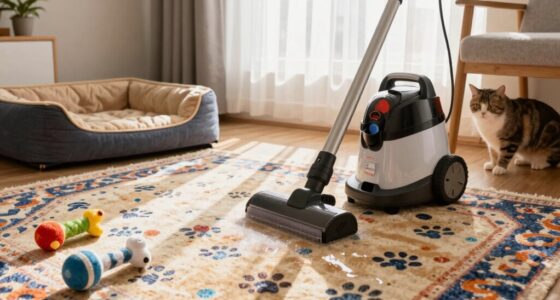
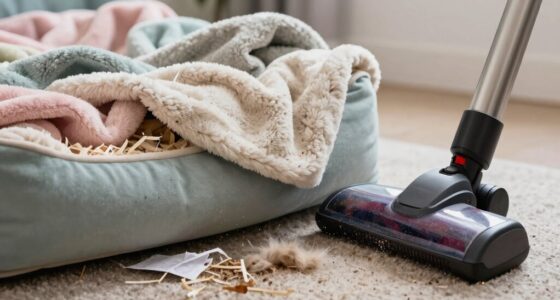
A vital aspect of cleaning upholstery and bedding is controlling the amount of dust you disturb. When you vacuum or dust, do so carefully, using a vacuum cleaner with a HEPA filter. This type of filter traps tiny particles, including pet dander, dust mites, and pollen, preventing them from becoming airborne and settling back into your fabrics. Always start by removing loose debris with a soft brush attachment, then use a damp microfiber cloth to wipe surfaces gently. This avoids kicking up dust into the air, which can trigger allergies or respiratory issues. When cleaning bedding, wash sheets and pillowcases regularly in hot water to eradicate dust mites and allergens. Dry everything thoroughly to prevent mold growth, which could introduce additional allergens. Incorporating dust control methods during cleaning can further minimize airborne particles and improve indoor air quality. Additionally, using air purifiers with HEPA filters can enhance dust and allergen removal in your living space.
For upholstered furniture, consider using a steam cleaner with a low-moisture setting. Steam cleaning heats up fibers enough to kill germs, dust mites, and bacteria without soaking the material, thereby reducing the risk of spreading dust and allergens. Just be sure to test a small, hidden area first to avoid water stains. When it comes to bedding, vacuum mattresses and pillows periodically, especially if you or family members have allergies. Using hypoallergenic covers can also create a barrier against pet dander, dust mites, and other irritants, further reducing allergen levels.
Throughout your cleaning routine, focus on minimizing dust dispersal. Avoid over-wetting fabrics or using harsh chemicals that can stir up dust particles. Instead, opt for eco-friendly, allergen-reducing cleaning solutions. Regular maintenance combined with prompt pet stain removal and mindful dust control keeps your upholstery and bedding fresh, clean, and healthier for everyone in your home.
HEPA filter vacuum cleaner for dust removal
As an affiliate, we earn on qualifying purchases.
As an affiliate, we earn on qualifying purchases.
Frequently Asked Questions
Can I Use a Vacuum on Delicate Fabrics?
Yes, you can use a vacuum on delicate fabrics, but you need to prioritize vacuum safety and consider fabric sensitivity. Use a vacuum with a gentle suction setting and a soft brush attachment to avoid damaging the fibers. Always test a small, inconspicuous area first to confirm it won’t harm the fabric. This approach helps keep your upholstery and bedding clean without risking tears or excessive wear.
Are Natural Cleaning Solutions Effective for Dust Removal?
Natural cleaning solutions are surprisingly powerful for dust removal, almost like magic! You’ll find they’re effective for allergy prevention because they don’t introduce harsh chemicals into your space. Eco-friendly solutions, like vinegar and baking soda, gently lift dust and dirt without spreading fine dust particles. Using these natural options keeps your upholstery and bedding fresh, safe, and free from allergens, creating a healthier home environment that’s gentle on the planet too.
How Often Should I Clean Upholstery and Bedding?
You should clean your upholstery and bedding at least once every one to two weeks to prevent allergens and maintain fabric longevity. Regular cleaning helps with allergy prevention by reducing dust buildup and keeps your fabrics looking fresh. Use gentle, natural solutions to avoid spreading fine dust. Consistent cleaning not only improves air quality but also extends the lifespan of your furniture and bedding, ensuring a healthier, more comfortable environment.
What Tools Are Best for Deep Cleaning Without Dust Spread?
Think of your cleaning tools as your shield against dust chaos. Use a HEPA vacuum with a dust containment system to trap fine particles, preventing dust from spreading. Pair it with air filtration units to purify the air during cleaning. Microfiber cloths and steam cleaners are also excellent for deep cleaning without dispersing dust. These tools work together to keep your space clean and allergen-free efficiently.
Is There a Risk of Damaging Fabrics With Certain Cleaning Methods?
Yes, certain cleaning methods can damage fabrics if you’re not careful. You should consider fabric durability before choosing your cleaning approach, as delicate materials may tear or discolor with harsh techniques. Also, use gentle cleaning chemicals suited for your fabric type—avoid strong chemicals that can weaken fibers. Always test a small, hidden area first, and follow manufacturer instructions to prevent any damage during cleaning.
microfiber cleaning cloth for upholstery
As an affiliate, we earn on qualifying purchases.
As an affiliate, we earn on qualifying purchases.
Conclusion
By following these gentle, mindful steps, you’ll breathe new life into your upholstery and bedding, turning each cleaning session into a delicate dance rather than a storm. With patience and care, you prevent the fine dust from spreading like whispers carried away by the wind. Think of your space as a sanctuary—pristine, serene, and protected. When you master these methods, you’re not just cleaning; you’re nurturing a haven where comfort and cleanliness grow hand in hand.
steam cleaner for upholstery and bedding
As an affiliate, we earn on qualifying purchases.
As an affiliate, we earn on qualifying purchases.
HEPA air purifier for dust and allergens
As an affiliate, we earn on qualifying purchases.
As an affiliate, we earn on qualifying purchases.