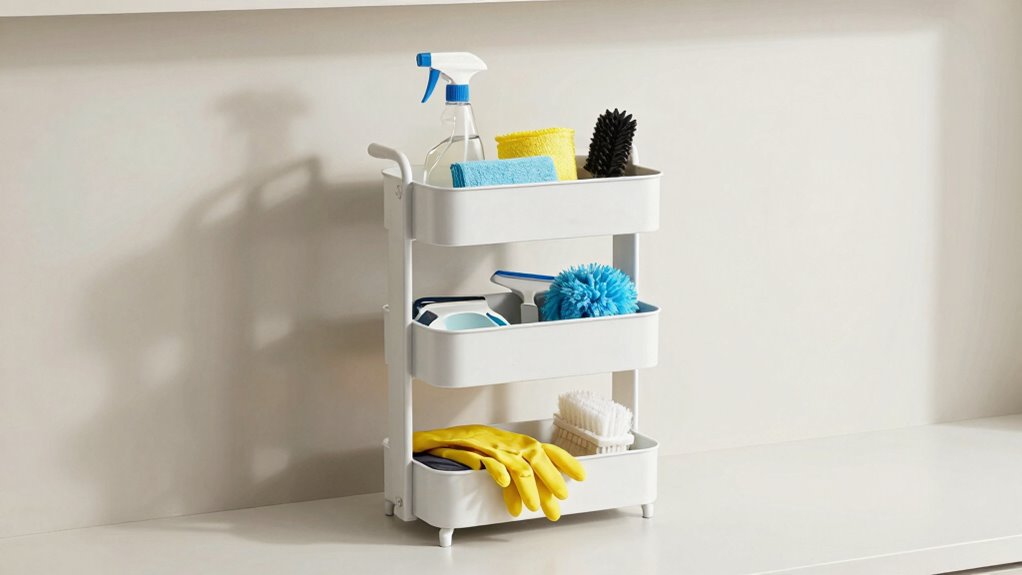
To layer your cleaning tools without clutter, organize them by usage frequency—daily, weekly, and deep-cleaning—using labeled bins, wall hooks, and stackable containers. Keep your most-used items within arm’s reach in obvious spots, while storing less frequent tools in dedicated sections. Regularly review and tidy your setup to prevent tool misplacement and clutter, maintaining a smooth workflow. If you keep exploring, you’ll discover how to create an efficient, accessible cleaning system that works effortlessly.
Key Takeaways
- Designate specific zones or shelves for daily, weekly, and deep-cleaning tools to maintain clear separation.
- Use labeled containers and wall-mounted racks to categorize tools by usage frequency.
- Implement a visual system like color-coding or labels to easily identify tool layers at a glance.
- Regularly review and reorganize storage to prevent clutter and ensure accessibility.
- Keep frequently used tools within arm’s reach for quick access, minimizing unnecessary movement.
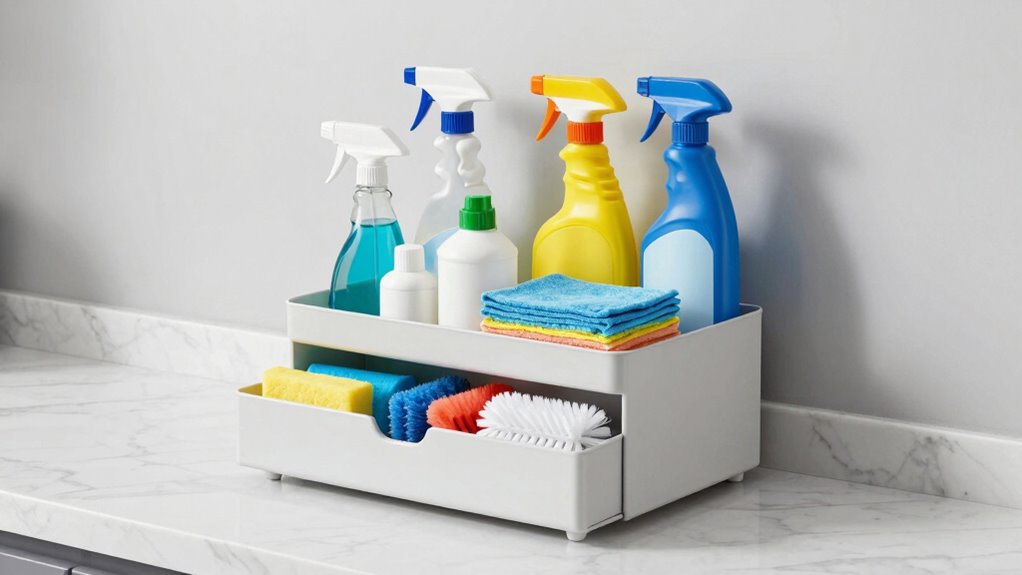
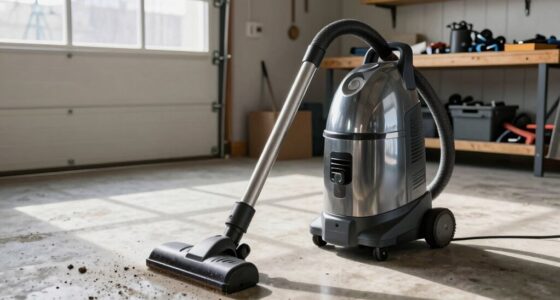
Ever wonder how professional cleaners achieve a spotless finish every time? It’s all about how they layer their cleaning tools—using smart storage solutions and meticulous tool organization to keep everything tidy and accessible. The key is to create a system that separates daily essentials from weekly and deep-cleaning tools, preventing clutter and making your routine more efficient. When you start with proper storage solutions, you set a foundation that keeps your workspace organized and your tools easy to find. Think about using labeled bins, wall-mounted racks, or stackable containers to categorize your equipment. Place your most-used items—like microfiber cloths, spray bottles, and dusters—within arm’s reach for daily cleaning. For weekly chores, store slightly heavier or more specialized tools—like scrub brushes, mop buckets, and extendable dusters—in a dedicated section or container. Deep-cleaning tools, such as heavy-duty vacuums, steam cleaners, or specialized brushes, can be stored separately in a closet or designated area, clearly marked to avoid mix-ups. Implementing organized storage not only improves efficiency but also prolongs the lifespan of your cleaning tools by keeping them protected. Additionally, incorporating labeling systems can help you quickly identify and access the right tools for each cleaning layer, reducing downtime and confusion.
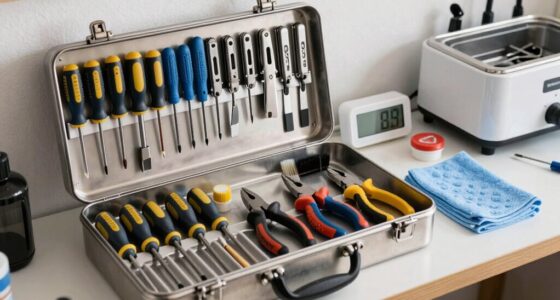
Tool organization isn’t just about storage; it’s about creating a system that allows you to move seamlessly from one cleaning layer to the next. When you organize your tools thoughtfully, you reduce the time spent searching for supplies and eliminate clutter that might get in your way. Use wall hooks or pegboards to hang items like brushes, squeegees, or dustpans, so they’re visible and ready to grab. Stackable bins or drawer dividers work well for smaller items like scrub pads, gloves, or microfiber cloths. Regularly reviewing and tidying your storage setup guarantees that each tool has its place, and nothing gets buried or lost in the shuffle. Incorporating layered approach and smart storage solutions can further optimize your organization and make your cleaning routine more effortless. Additionally, understanding the layered approach to cleaning tools helps in maintaining a logical flow to your cleaning process, reducing unnecessary steps. This approach also minimizes the risk of cross-contamination between different cleaning tasks, ensuring a more hygienic environment. The goal is to keep things logical and accessible, so your cleaning routine flows naturally. When your storage solutions are well thought out, you’ll find it easier to layer your cleaning efforts without feeling overwhelmed by clutter. You’ll know exactly where each type of tool belongs, which speeds up your process and keeps your space looking pristine. With proper tool organization, your cleaning becomes more effective, less stressful, and more consistent. You’ll enjoy the satisfaction of a tidy, clutter-free environment, knowing your tools are always ready and within reach. Achieving a spotless finish every time isn’t just about the effort you put in—it’s about how smartly you organize and store your tools to support your routine.
labeled storage bins for cleaning supplies
As an affiliate, we earn on qualifying purchases.
As an affiliate, we earn on qualifying purchases.
Frequently Asked Questions
How Do I Prevent Cross-Contamination Between Cleaning Tools?
To prevent cross-contamination, you should follow strict sanitization protocols and prioritize tool sterilization. Always clean tools thoroughly after each use, especially when switching between different areas or surfaces. Use separate containers or caddies for clean and dirty tools, and disinfect tools regularly. By maintaining consistent sterilization routines and organizing your tools properly, you minimize the risk of bacteria transfer, keeping your environment safe and hygienic.
What Storage Solutions Work Best for Layered Cleaning Tools?
Think of your cleaning tools as a carefully organized library; each shelf needs its own space. Use storage containers designed for easy access and separation, like stackable bins or divided drawers. Implement clear labeling systems to identify daily, weekly, and deep-clean tools instantly. This approach keeps clutter at bay, prevents cross-contamination, and makes your cleaning routine more efficient, ensuring each tool is ready when you need it.
How Often Should I Replace or Upgrade My Cleaning Tools?
You should replace or upgrade your cleaning tools based on their tool durability and a consistent replacement schedule. Typically, sponges and scrub brushes need replacing every 2-4 weeks, while microfiber cloths last longer but should be replaced when worn. For brooms and mops, consider upgrading every 6-12 months. Regularly inspect your tools for damage or wear to guarantee effective cleaning and prevent bacteria buildup.
Can I Use the Same Tools for Different Cleaning Tasks?
Yes, you can use the same tools for different cleaning tasks if you choose multipurpose tools and adopt a color-coded system. Multipurpose tools save space and streamline your cleaning routine, while color coding helps prevent cross-contamination between surfaces. For example, use a single microfiber cloth for multiple surfaces, but assign different colors to specific areas like bathrooms or kitchens. This approach keeps your tools organized and hygienic.
How Do I Organize Tools for Quick Access During Cleaning Sessions?
Ever wonder how to access your cleaning tools effortlessly? You should organize your tools with clear tool labeling and storage customization. Keep frequently used items in a portable caddy or on a wall-mounted rack for quick access. Group similar tools together, and assign dedicated spots for each. This way, you minimize clutter, save time, and make your cleaning sessions more efficient. Wouldn’t you prefer a streamlined cleaning routine?
wall-mounted cleaning tool racks
As an affiliate, we earn on qualifying purchases.
As an affiliate, we earn on qualifying purchases.
Conclusion
By layering your daily, weekly, and deep-clean tools thoughtfully, you’ll keep clutter at bay and make cleaning more efficient. Sure, it might seem like extra effort at first, but once you set up a system, it becomes second nature. Don’t let the idea of organizing tools overwhelm you—start small and build from there. With a little planning, you’ll enjoy a cleaner space without the chaos, making your routine smoother and more manageable.
stackable storage containers for cleaning tools
As an affiliate, we earn on qualifying purchases.
As an affiliate, we earn on qualifying purchases.
As an affiliate, we earn on qualifying purchases.