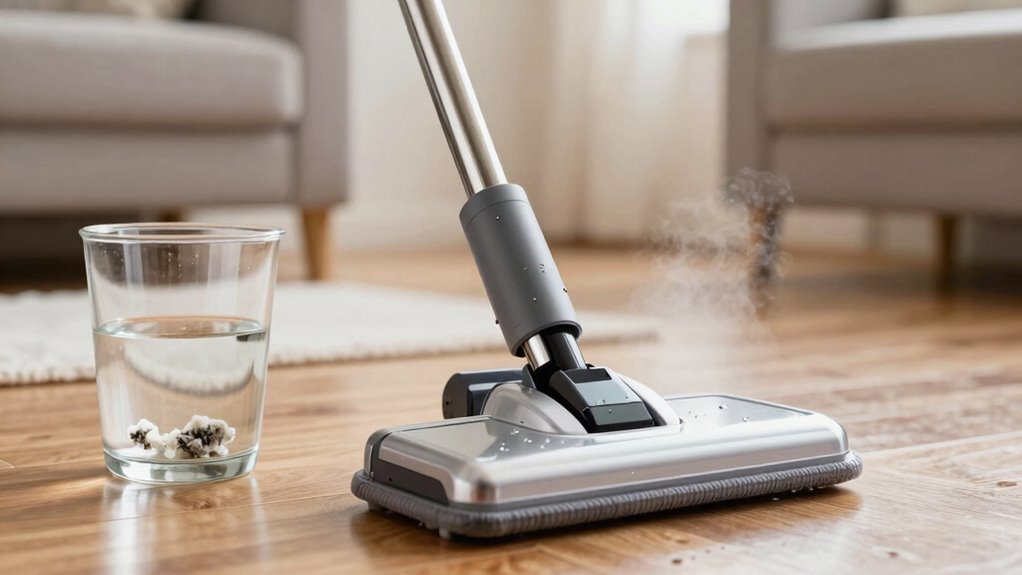

To quickly check if your steam mop needs descaling, examine the water tank for any white, chalky residue. This buildup indicates hard water use and can affect performance. Listen for unusual sounds during operation, and notice if steam generation is delayed or intermittent. If you spot these signs, it’s time to descale. Keeping an eye on these factors guarantees your mop runs smoothly, and there are more tips to help you maintain its efficiency.

Get cleaning gear delivered free with Prime
- Fast, free delivery on millions of items
- Prime Video, Amazon Music and more included
- Member-only deals all year
Key Takeaways
- Inspect the water tank for white, chalky residue indicating mineral buildup from hard water.
- Listen for unusual sounds during operation, as this can signal potential clogs.
- Check steam output consistency; sputtering or delayed steam generation suggests descaling is needed.
- Evaluate cleaning effectiveness after each use; poor results may indicate mineral interference.
- Monitor appliance performance regularly to catch early signs of issues related to buildup.
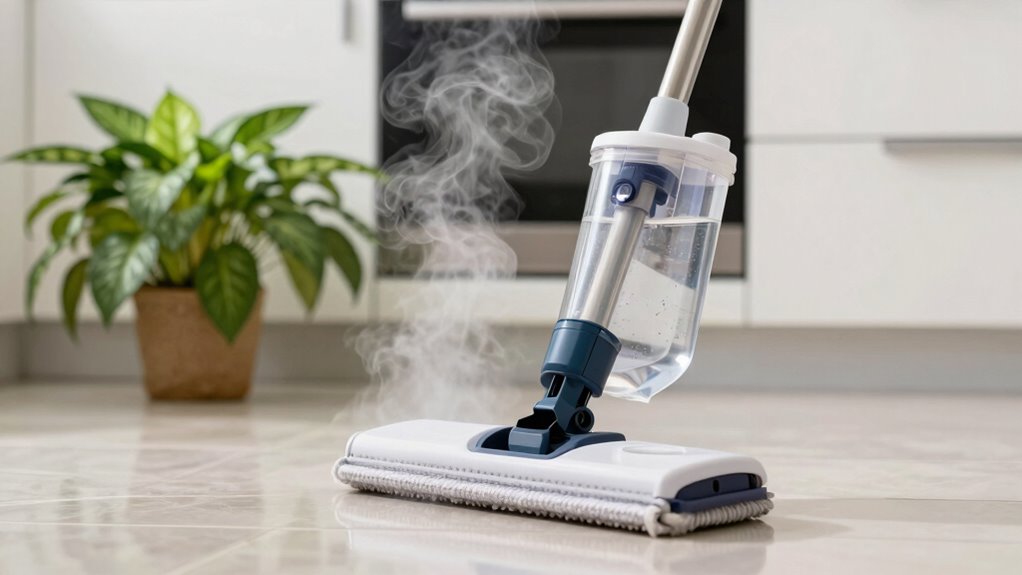
If you want your steam mop to perform at its best, checking for mineral buildup is vital. Steam mops rely on water turning into steam to effectively clean your floors, and if the water quality is poor, it can lead to unwanted mineral deposits inside the machine. These deposits can affect the steam mop’s efficiency and lifespan, making it essential to regularly assess the condition of your appliance.
Regularly check for mineral buildup in your steam mop to ensure optimal performance and longevity. Clean water is key!
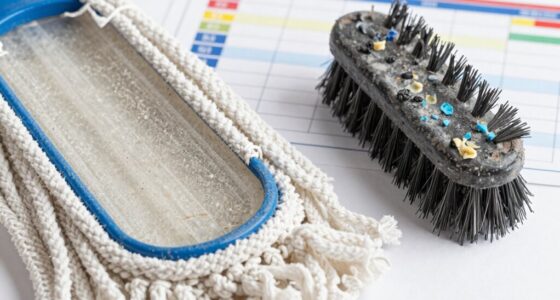
To check if your steam mop needs descaling, start by examining the water tank. If you notice any white, chalky residue, that’s a strong indication of mineral buildup. This residue typically results from using hard water, which contains high levels of minerals like calcium and magnesium. If you see this buildup, it’s time to take action. You don’t want to wait until your steam mop’s performance noticeably declines.
Next, listen for any unusual sounds while the steam mop is in operation. If it’s struggling to generate steam or making odd noises, that can be a sign that mineral deposits are clogging the steam vents. Pay attention to how the steam mop operates—if it takes longer to heat up or produces less steam than usual, it’s definitely worth checking for buildup. Regularly inspecting water quality can help prevent these issues from occurring. Being aware of the impact of mineral deposits on appliance performance can guide you in maintaining your steam mop more effectively. Additionally, understanding the signs of descaling can help you identify when it’s time to clean your device. Regularly monitoring your appliance’s performance can also help catch issues early before they become more serious.
Another quick method is to assess the steam output. When you use the mop, it should produce a consistent stream of steam. If you notice it sputtering or if steam is intermittent, that’s another red flag. It may mean the internal passages are blocked by mineral deposits. If you’ve been using tap water regularly, you might want to think about switching to distilled water to prevent future buildup. Using proper water quality can significantly reduce the risk of mineral deposits forming.
Finally, keep an eye on your cleaning results. If your floors don’t look as clean as they used to after mopping, it could indicate that your steam mop isn’t functioning at its best because of mineral buildup. You want your appliance to work effectively, so don’t ignore these signs. Regular descaling can help maintain optimal performance and extend the lifespan of your steam mop.
Products Worth Considering

Roborock Robot Vacuum and Mop with LiDAR Navigation and 10,000 Pa Suction

Dyson Ball Animal Total Clean Upright Vacuum

Philips Hue Festavia Globe Outdoor String Lights, 32 Bulbs, 91 ft
As an affiliate, we earn on qualifying purchases.
Frequently Asked Questions
How Often Should I Descale My Steam Mop?
You should descale your steam mop every 1 to 3 months, depending on your cleaning frequency and the hardness of your water. Regular maintenance tips suggest checking for mineral buildup after each use, especially if you notice a decrease in steam production. Keeping an eye on your mop’s performance can help you determine the best descaling schedule. Staying on top of this will guarantee your steam mop works efficiently for longer.
What Descaling Solution Is Recommended for Steam Mops?
When you think about keeping your steam mop in top shape, what’s the best solution? For descaling, you can use both homemade solutions, like a vinegar and water mix, or opt for commercial products specifically designed for steam mops. Homemade solutions are often cost-effective, while commercial products might offer stronger results. Choose what fits your needs best, and you’ll keep your steam mop running smoothly and efficiently!
Can I Use Vinegar for Descaling My Steam Mop?
Yes, you can use vinegar for descaling your steam mop. Vinegar benefits include its natural ability to break down mineral buildup, making it a cost-effective solution for steam mop maintenance. Just mix equal parts water and vinegar, run it through your mop, and let it sit for a bit before rinsing. This method not only helps keep your steam mop in top shape but also extends its lifespan, ensuring efficient cleaning.
Are There Signs That Indicate My Steam Mop Needs Descaling?
If you notice your steam mop’s steam output decreasing, it’s a clear sign it needs descaling. Imagine your mop struggling to release steam while tackling stubborn stains—frustrating, right? For proper steam mop maintenance, keep an eye out for reduced steam, odd noises, or mineral buildup on the nozzle. Following these descaling tips can help keep your mop in top shape, ensuring it works efficiently for all your cleaning needs.
What Happens if I Don’T Descale My Steam Mop?
If you don’t descale your steam mop regularly, you risk reduced performance and potential damage. Mineral buildup can clog the steam vents, leading to less steam pressure and inefficient cleaning. This neglect can also shorten your steam mop’s lifespan, making steam mop maintenance essential. To keep it running smoothly, follow the recommended descaling frequency. Regular care guarantees your mop works effectively, saving you time and effort in the long run.
Conclusion
Just like a garden needs tending to thrive, your steam mop requires a little care to keep it performing at its best. If you notice reduced steam or mineral buildup, it’s time to give it some attention. Descaling isn’t just maintenance; it’s a way to guarantee your cleaning companion stays strong and dependable. So, take a moment to check for those signs, and soon you’ll be back to effortlessly conquering dirt and grime in your home.