
To prep a room for your robot vacuum, start by clearing floor obstacles like shoes and toys, guaranteeing clear paths for navigation. Secure cords to avoid tangling and remove fragile items from surfaces. Don’t forget to check for pet toys and fur, which can clog the vacuum. Finally, inspect the vacuum’s filters and verify it’s fully charged for peak performance. With these steps, you’ll set the stage for efficient cleaning and discover more tips to enhance the process.

Get cleaning gear delivered free — and shop member deals
- Fast, free delivery on millions of items
- Access to Prime Big Deal Days deals on October 6–7
- Prime Video, Amazon Music and more included
Key Takeaways
- Clear the floor of obstacles like shoes and toys to ensure smooth navigation for the robot vacuum.
- Secure cords and cables with clips to prevent tangling and potential damage during cleaning.
- Remove items from surfaces to minimize dust and prevent accidents while the robot is operating.
- Prepare a pet-free zone by picking up toys and fur to avoid clogging the vacuum.
- Inspect the robot vacuum’s filters and brushes, ensuring it’s charged and clean for optimal performance.
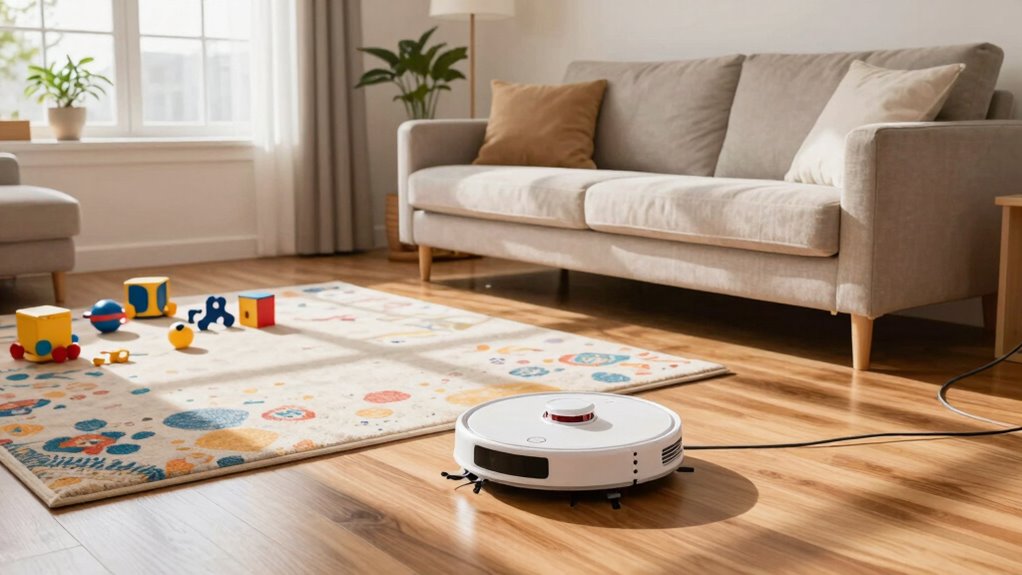
When you’re getting ready for robot cleaning, it’s essential to prep your room to guarantee a thorough job. A bit of preparation can make a world of difference in how effectively your robot vacuum operates. Start by surveying the space. Move any floor obstacles that might block your robot’s path. Think about items like shoes, toys, and small furniture pieces. If your vacuum can’t navigate around them, it won’t be able to clean effectively.
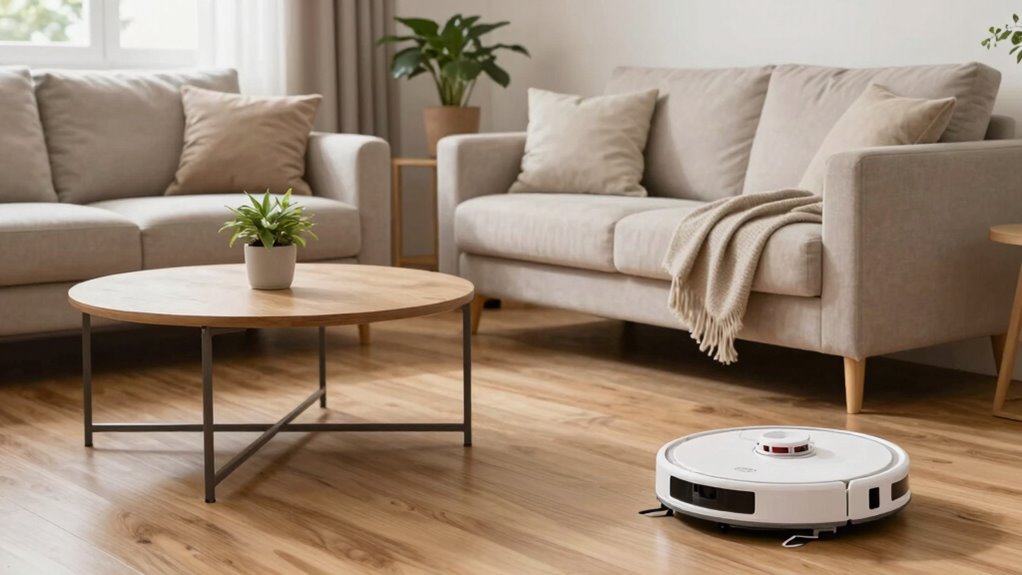
Next, consider your furniture arrangement. If your room is cluttered or cramped, the robot might struggle to reach certain areas. Rearranging the furniture to create a more open layout can help. This doesn’t mean you need to completely overhaul your space, but shifting a few pieces can facilitate smoother cleaning. For instance, if you can pull your couch a few inches away from the wall, it allows better access for the robot.
Rearranging furniture to create a more open layout helps your robot vacuum reach and clean those tricky spots effectively.
Don’t forget to lift or secure any cords or cables lying on the floor. Robot vacuums can easily get tangled in these, which not only disrupts their cleaning but could also damage both the cords and the vacuum itself. Use cord clips or ties to keep everything organized and out of the way. Ensuring your cords are properly managed is a crucial step for safe and efficient cleaning. Additionally, using cord management solutions can further prevent tangling issues.
Next, clear surfaces as well. Your robot may not directly clean these areas, but dust and debris can settle and get blown around when it’s working. If you can, remove any items from shelves or tables that might fall during the cleaning process. It’s a small step, but it helps prevent accidents.
Also, check for any areas that might need special attention. For instance, if you have a pet, you might want to make sure that any pet toys are picked up, as well as any fur that could clog the vacuum. You might even consider setting up a designated pet-free zone, so the vacuum can focus on the rest of the room without distractions. Preparing your space with indoor air quality in mind can also help improve overall cleanliness and reduce allergens stirred up during cleaning. Being aware of cleaning priorities can help you identify which areas require more attention before the robot begins its job.
Finally, inspect the robot vacuum’s readiness, including its filters and brushes, to ensure optimal performance. A fully charged battery means the cleaner can work efficiently without interruptions. Remember to also check for dust accumulation inside the vacuum to maintain efficiency. Once everything’s in place, you can set your robot to clean and relax, knowing you’ve done your part to ensure a thorough job. With these simple steps, your robot vacuum will tackle your space effectively, leaving you with clean floors and less stress.
robot vacuum obstacle removal tools
As an affiliate, we earn on qualifying purchases.
As an affiliate, we earn on qualifying purchases.
Frequently Asked Questions
Can I Use My Robot Cleaner on Carpets and Hardwood Floors?
Yes, you can use your robot cleaner on both carpets and hardwood floors. Most models come with specific carpet settings that adjust suction power for effective cleaning. Make certain to check if your robot is compatible with different floor types, as some may require a shift between settings. Regularly maintaining your robot guarantees it performs well on both surfaces, giving you a cleaner home with minimal effort. Enjoy the convenience of automated cleaning!
How Often Should I Clean My Robot Vacuum?
Most robot vacuums can pick up 99% of dirt and debris, making regular maintenance essential. You should clean your robot vacuum at least once a month to keep it running efficiently. Establishing a cleaning schedule helps prevent clogs and guarantees it’s ready when you need it. Don’t forget to empty the bin, clean the brushes, and check the filters. Proper robot vacuum maintenance extends its lifespan and keeps your home spotless!
Are Robot Vacuums Safe for Pets?
Yes, robot vacuums are generally safe for pets. They often come equipped with advanced sensors that detect obstacles, which helps prevent collisions with your furry friends. However, it’s still a good idea to monitor your pet’s interactions with the vacuum, especially if they’re skittish. To guarantee pet safety, keep an eye on your pet’s behavior around the vacuum and consider setting boundaries if needed. This way, everyone stays comfortable during cleaning time.
What Is the Average Lifespan of a Robot Vacuum?
When it comes to robot vacuums, you’ve got to know that they’re built to last, typically averaging around 5 to 7 years. To keep yours running smoothly, regular robot vacuum maintenance is key. A consistent cleaning schedule helps prevent wear and tear, ensuring peak performance. If you stay on top of battery care and filter replacements, you’ll stretch that lifespan even further. So, don’t let your vacuum gather dust—take care of it!
Do Robot Vacuums Work in Dark Rooms?
Yes, robot vacuums can work in dark rooms, thanks to advanced sensor technology. These sensors help them navigate obstacles and avoid cliffs, ensuring efficient cleaning even with minimal light. However, you might notice a slight dip in cleaning efficiency if the room is too dark, as they rely on visual cues. To maximize their performance, consider leaving a small light on or choosing a model designed for low-light conditions.
cord management clips for vacuum cords
As an affiliate, we earn on qualifying purchases.
As an affiliate, we earn on qualifying purchases.
Conclusion
By taking just a few minutes to prep your room, you’ll guarantee your robot cleaner works efficiently and effectively. Imagine your living room, where you’ve tucked away stray shoes and moved the coffee table slightly, letting your robot glide effortlessly over the floor. With no obstacles in its path, it powers through pet hair and dust, leaving your space spotless. A little preparation goes a long way in maximizing your robot’s cleaning performance!
pet fur removal tools for floors
As an affiliate, we earn on qualifying purchases.
As an affiliate, we earn on qualifying purchases.
As an affiliate, we earn on qualifying purchases.
Halloween Picks
halloween
As an affiliate, we earn on qualifying purchases.