To clean your robot sensors without causing errors, power down the device first. Use a mild soap solution or specialized electronic cleaner on a soft, lint-free cloth. Gently wipe the sensors in circular motions, focusing on corners while avoiding excess moisture. Check for scratches or cracks regularly, as these can impact performance. Cleaning once a week is ideal, especially in homes with pets. Keep going to discover more tips on ensuring your robot runs smoothly.

Get cleaning gear delivered free with Prime
- Fast, free delivery on millions of items
- Prime Video, Amazon Music and more included
- Member-only deals all year
Key Takeaways
- Power down the robot before cleaning to avoid accidental errors during the process.
- Use a mild soap solution or specialized electronic cleaner on a soft, lint-free cloth.
- Gently wipe sensors in a circular motion, focusing on corners to remove dirt effectively.
- Inspect sensors regularly for visible damage like scratches or cracks, addressing any issues promptly.
- Clean sensors at least once a week, or more often in homes with pets or children, to maintain optimal performance.
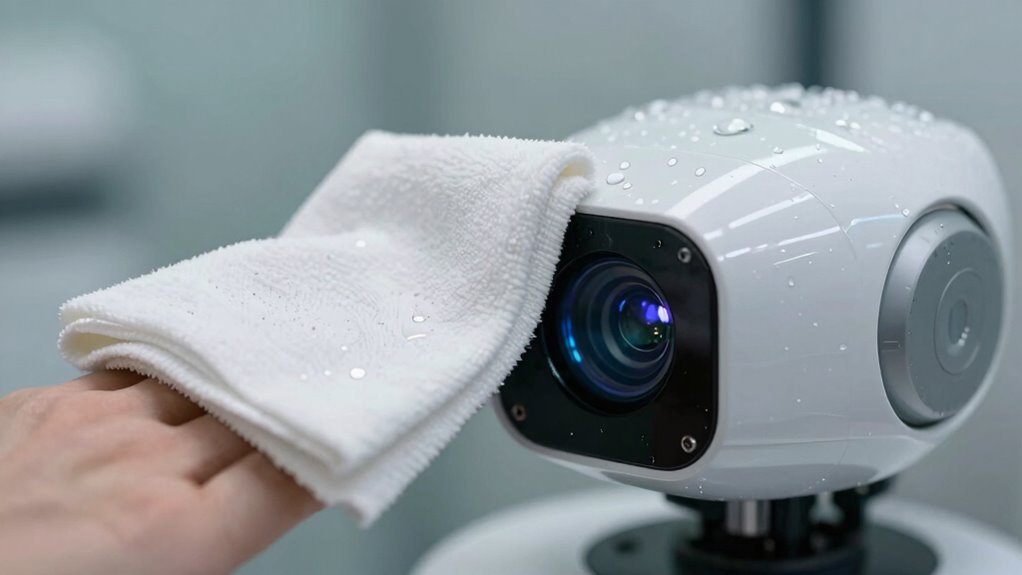
Cleaning robot sensors play an important role in how effectively these devices navigate and maintain your home. If the sensors aren’t in top shape, your robot could struggle, bump into obstacles, or miss spots altogether. To guarantee your cleaning robot works efficiently, follow some straightforward sensor maintenance tips that keep everything running smoothly.
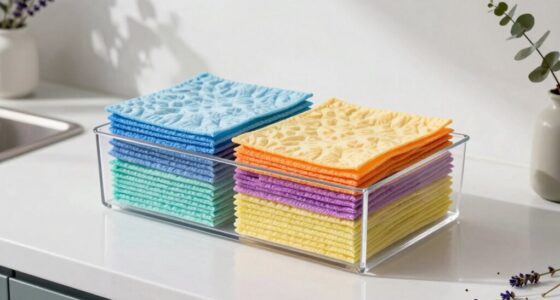
First, you’ll want to gather the right cleaning solutions. Avoid harsh chemicals that can damage the sensors. Instead, opt for a mild soap mixed with water or a specialized electronic cleaner. These gentle solutions are effective and safe for your robot’s delicate components. Make sure you have a soft, lint-free cloth or microfiber cloth to avoid scratching the sensors while cleaning.
Gather mild soap or specialized electronic cleaner and a soft cloth to safely clean your robot’s sensors without causing damage.
Before you start, it’s essential to power down your robot. This simple step can prevent accidental movements while you’re working on it. Once it’s off, locate the sensors—typically, these are on the front, sides, and sometimes the bottom of the device. You’ll want to inspect them for any visible dirt or debris. If you notice buildup, that’s your cue to clean. Regular inspection also helps you identify potential sensor damage early, before it affects performance. Additionally, understanding the significance of sensor accuracy can help you better maintain optimal device performance and prevent errors caused by dirt or damage. Performing routine checks can also help you detect signs of sensor deterioration that might not be immediately obvious but could impact navigation.
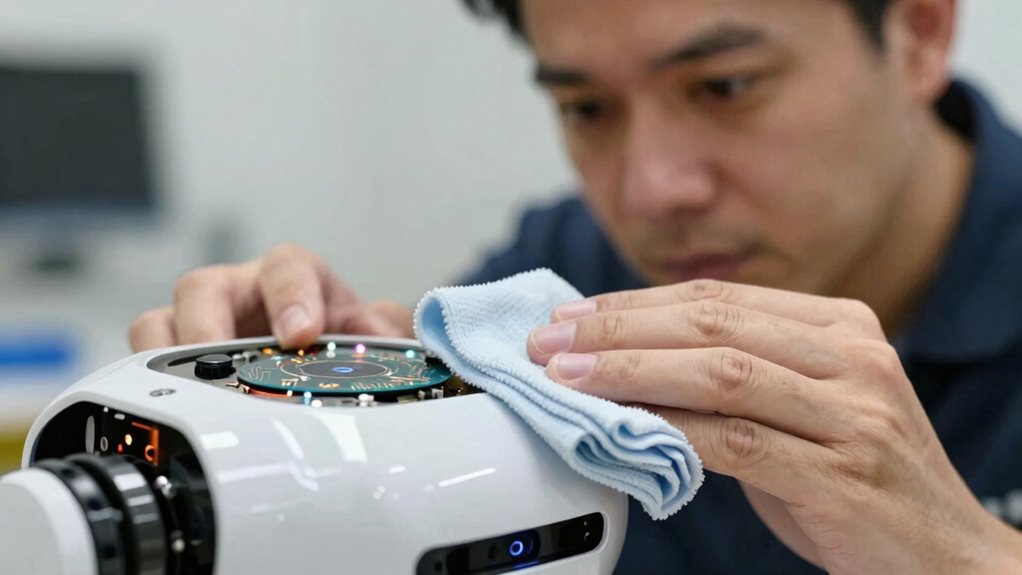
Dampen your cloth with the cleaning solution, making sure it’s not too wet. Excess moisture could seep into sensitive areas and cause malfunctions. Gently wipe the sensors in a circular motion, paying extra attention to corners where dirt tends to accumulate. It’s also helpful to use a soft cloth to prevent scratching the sensors while cleaning. After you’ve cleaned the sensors, use a dry cloth to remove any excess moisture. This step is crucial because leftover dampness could lead to sensor errors.
Regular maintenance is key. Depending on how often you use your cleaning robot, you should aim to clean the sensors at least once a week. If you have pets or kids, you might need to do this more frequently. By keeping the sensors clean, you minimize the chances of navigation issues and guarantee your robot can efficiently cover your entire space. Keep in mind that sensor longevity can be extended through proper care and timely inspections.
Additionally, keep an eye out for any signs of damage. If the sensors appear scratched or cracked, it might be time to think about replacement parts. Regularly checking the sensors not only enhances cleaning performance but also prolongs the life of your device.
As an affiliate, we earn on qualifying purchases.
Frequently Asked Questions
How Often Should I Clean My Robot Sensors?
You should clean your robot sensors every few weeks, depending on usage and environment. Dust and debris can build up quickly, impacting performance. Follow these cleaning frequency guidelines: if you use it daily, check weekly; for less frequent use, every month works. Use sensor maintenance tips like a soft cloth and gentle cleaner to avoid damaging sensitive components. Regular upkeep guarantees your robot runs smoothly and effectively in its tasks.
Can I Use Water to Clean Sensors?
Sure, you could use water to clean your sensors, but let’s not invite a tech water park disaster! Stick to safe cleaning methods instead. If you’re looking for effective sensor cleaning techniques, grab a microfiber cloth and a gentle cleaner designed for electronics. Your robot will thank you, and you won’t risk turning it into a soggy mess. Remember, water’s great for plants, not for high-tech gadgets!
What Materials Should I Avoid When Cleaning?
When you’re cleaning sensors, avoid harsh chemicals, abrasive materials, or anything that could scratch the surface. Don’t use paper towels or rough cloths, as they can leave lint or residue. Stick to gentle cleaning techniques, like soft microfiber cloths and specialized sensor wipes. For proper sensor maintenance, remember to keep it simple and effective—less is often more when it comes to protecting your sensors from damage during cleaning.
Will Cleaning Affect the Robot’s Performance?
Yes, cleaning can affect your robot’s performance if not done properly. To maintain ideal functionality, follow sensor maintenance tips and stick to cleaning frequency guidelines. Regularly inspect sensors for dirt buildup, but avoid harsh chemicals that could damage them. A gentle wipe with a soft cloth usually suffices. If you’re consistent with this routine, you’ll guarantee your robot operates efficiently without errors, keeping its performance at peak levels.
Are There Specific Cleaning Products Recommended for Sensors?
When a facility used a specialized cleaning solution for their robot sensors, they noticed improved performance. For your sensors, distilled water and isopropyl alcohol are great cleaning solution options. Avoid harsh chemicals, as they can damage delicate components. Regular sensor maintenance tips include using a microfiber cloth for gentle cleaning and ensuring the sensors are completely dry before reactivating the robot. This way, you maintain peak functionality without risking errors.
electronic cleaner for robot sensors
As an affiliate, we earn on qualifying purchases.
As an affiliate, we earn on qualifying purchases.
Conclusion
In summary, keeping your robot’s sensors clean is vital for smooth operation. Just like polishing a vintage car to keep it running like new, regular maintenance prevents errors and guarantees peak performance. Use a soft cloth and gentle cleaning solution, avoiding harsh chemicals that could damage the sensors. With a little care, your robot will navigate its world without a hitch, ready to tackle tasks just like a trusty steed in a modern-day adventure.
lint-free microfiber cloth for electronics
As an affiliate, we earn on qualifying purchases.
As an affiliate, we earn on qualifying purchases.
mild soap for electronic devices
As an affiliate, we earn on qualifying purchases.
As an affiliate, we earn on qualifying purchases.
Halloween Picks
halloween
As an affiliate, we earn on qualifying purchases.