
Robots often avoid mirrors and reflective furniture because these surfaces confuse their sensors. They misinterpret reflections, leading to errors in navigation and hesitation during operation. This disorientation disrupts their intended tasks, causing inefficient movements and potential safety risks. To maintain smooth interactions, robots are programmed to recognize and steer clear of reflective surfaces, treating them as hazards. If you want to explore how this impacts robot design and functionality, there’s more to uncover.

Get cleaning gear delivered free — and shop member deals
- Fast, free delivery on millions of items
- Access to Prime Big Deal Days deals on October 6–7
- Prime Video, Amazon Music and more included
Key Takeaways
- Robots struggle with self-image, causing confusion and disorientation when encountering mirrors and reflective surfaces.
- Reflective surfaces interfere with cameras and LIDAR, leading to misinterpretation of environmental data.
- Mirrors disrupt a robot’s operational flow, resulting in inefficient movements and potential task execution errors.
- Misinterpreting reflections can cause robots to react inappropriately, necessitating avoidance for safety.
- Many robots are programmed to recognize and steer clear of reflective surfaces to enhance safety and efficiency.
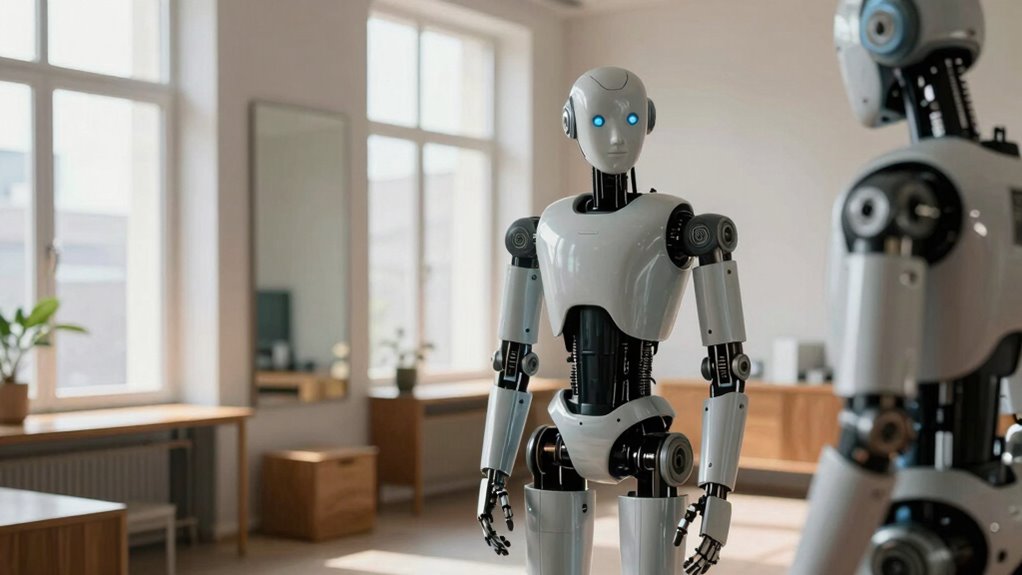
Have you ever wondered why robots seem to avoid mirrors? It’s a curious observation, isn’t it? When you think about it, mirrors and other reflective surfaces can pose unique challenges for robot perception. Unlike humans, who can easily recognize their own reflection, robots often struggle with this concept. Their programming doesn’t include an understanding of self-image, making mirrors a confusing obstacle.
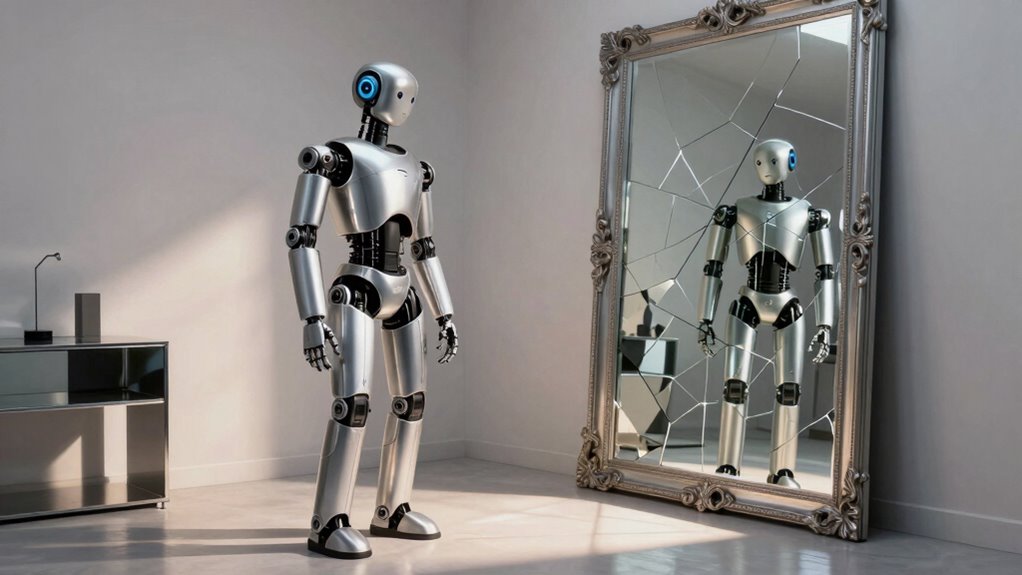
When a robot encounters a reflective surface, it receives back an image that doesn’t match its expectations. Instead of seeing an object or a clear path, it sees a duplicate of itself or the environment in an unfamiliar way. This mismatch can lead to errors in navigation. Imagine trying to walk straight, but every time you look ahead, you see a version of yourself standing still. It’s disorienting, right? For robots, this disorientation can lead to hesitation or avoidance altogether.
When robots face reflective surfaces, they encounter disorienting images, leading to confusion and potential navigation errors.
Reflective surfaces can also confuse the sensors used in robotic systems. Many robots rely on cameras and LIDAR to gauge their surroundings. These sensors interpret light signals to help the robot understand where it is and what’s around it. However, when light reflects off a mirror, it creates interference, causing the sensors to misinterpret the data. Instead of clear, actionable information, the robot might receive a distorted view of its environment, making it unsure how to proceed.
Moreover, robots are built with specific tasks in mind, often focusing on functionality rather than aesthetics. If a robot’s primary job is to navigate a room, encountering a mirror might disrupt its operational flow. It may not have the capability to process the reflection as a mere illusion; instead, it perceives it as a potential obstacle. This can lead to inefficient movements or even errors in task execution.
The avoidance of mirrors can also stem from safety protocols. In environments where robots operate alongside humans, ensuring smooth interactions is essential. If a robot misinterprets a reflection as another object or even another robot, it might react inappropriately. By steering clear of mirrors, robots can maintain a more predictable and safe operational pattern. Additionally, sensor interference caused by reflective surfaces further encourages avoidance to prevent navigation errors. Robots are often programmed with reflection recognition to enhance their safety and accuracy, which contributes to their tendency to avoid reflective surfaces.
Furthermore, some robots are programmed to recognize and avoid reflective surfaces intentionally to improve their overall safety and efficiency during operation.
robot sensor reflection avoidance
As an affiliate, we earn on qualifying purchases.
As an affiliate, we earn on qualifying purchases.
Frequently Asked Questions
Do Robots Have Self-Awareness to Recognize Reflections?
No, robots don’t have self-awareness to recognize reflections like humans do. While self-awareness theories suggest that true recognition involves understanding one’s own existence, robots typically lack this capability. They might process images and detect objects, but without the cognitive ability to grasp what a reflection means. So, when they encounter mirrors or reflective surfaces, they don’t interpret those images as themselves, leading to confusion or avoidance.
Can Robots Be Programmed to Interact With Mirrors?
Imagine a scene from “Alice in Wonderland,” where reflections reveal unexpected truths. Yes, you can program robots for mirror interaction. By using sensors and algorithms, they can recognize reflective surfaces and adjust their movements accordingly. Through careful coding, you’ll enable them to navigate and even respond to what they see. While they might not grasp the concept of self-reflection, their interaction with mirrors can showcase advanced programming and enhance their functionality in various environments.
How Do Mirrors Affect Robot Navigation Algorithms?
Mirrors create navigation challenges for robots by confusing their sensory perception. When you program a robot, it relies on sensors to map its environment. If it encounters a mirror, it might misinterpret the reflection as an actual obstacle or an additional space to navigate. This can lead to errors in its path-planning algorithms, causing hesitation or incorrect movements. To enhance performance, you’d need to adjust the algorithms to handle these reflective surfaces effectively.
Are There Types of Robots That Don’t Avoid Mirrors?
Not all robots shy away from mirrors. Some advanced models embrace mirror interaction, using reflective surfaces as tools for navigation and perception. These robots, equipped with sophisticated algorithms, can analyze reflections to enhance their spatial awareness. Imagine a dancer in front of a mirror, perfecting every move—similarly, these robots refine their movements by engaging with their reflections. In this dance of technology, they turn potential obstacles into opportunities for learning and adaptation.
What Materials Minimize Reflective Surfaces for Robots?
To minimize reflective surfaces for robots, use materials like matte plastics, textured fabrics, or non-polished metals. These choices reduce sensor interference caused by shiny, reflective materials that can confuse robotic systems. You’ll find that surfaces with a rough finish or darker colors help absorb light better, allowing robots to navigate more effectively. By selecting the right materials, you can enhance a robot’s performance in various environments without the distraction of reflections.
As an affiliate, we earn on qualifying purchases.
Conclusion
In summary, robots often steer clear of mirrors and reflective surfaces because they can confuse their sensors, leading to incorrect navigation. Did you know that around 70% of robot collisions occur in environments with reflective elements? This highlights just how important it is for robotic systems to recognize and adapt to their surroundings. By improving their ability to interpret reflections, we can help robots navigate more effectively, making them safer and more efficient companions in our everyday lives.
As an affiliate, we earn on qualifying purchases.
robot safety sensors reflective surfaces
As an affiliate, we earn on qualifying purchases.
As an affiliate, we earn on qualifying purchases.
Fall Picks
fall essentials
As an affiliate, we earn on qualifying purchases.