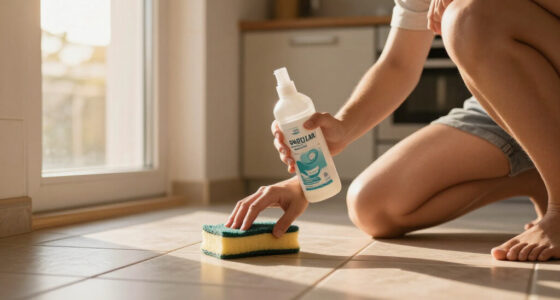
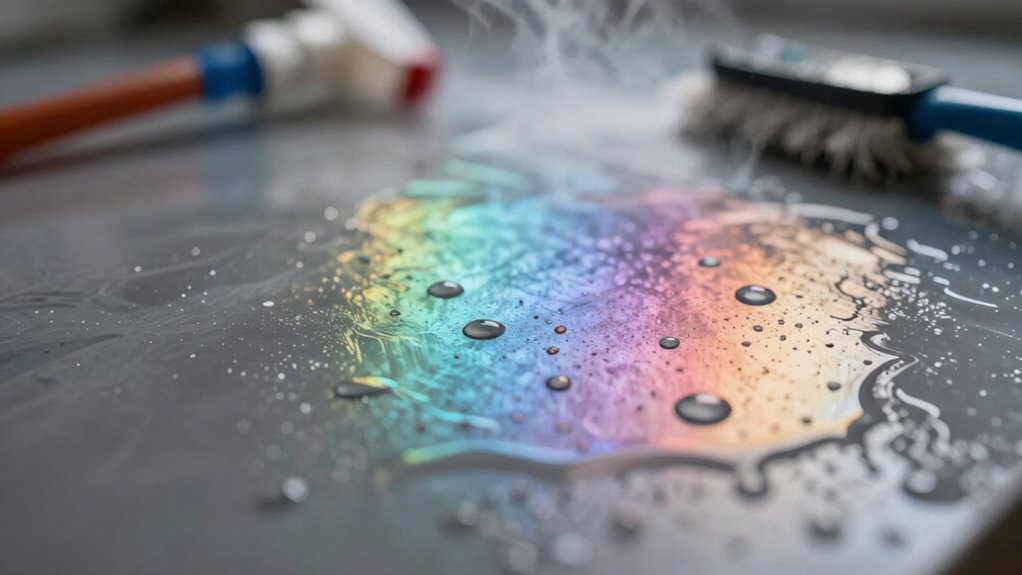
Some cleaners feel slippery long after they dry because they contain surfactants that lower water’s surface tension. This helps the cleaner spread and work better, but it can leave a lingering residue. You might notice this sensation more on porous or textured surfaces, which can cling to residues. If you want to avoid that slippery feeling, rinsing the surface or choosing low-residue formulas can help. Stick around, and you’ll discover more tips on choosing the right cleaners.

Get cleaning gear delivered free — and shop member deals
- Fast, free delivery on millions of items
- Access to Prime Big Deal Days deals on October 6–7
- Prime Video, Amazon Music and more included
Key Takeaways
- Surfactants in cleaning agents lower water’s surface tension, leading to slippery residues even after drying.
- Textured and porous surfaces retain slippery residues more than smooth surfaces, increasing the sensation.
- Excessive application of cleaners can leave behind more residue, contributing to a slippery feel.
- Rinsing surfaces with water post-cleaning helps remove lingering residues, reducing slipperiness.
- Understanding product formulations allows users to select low-residue cleaners, minimizing unwanted slippery sensations.
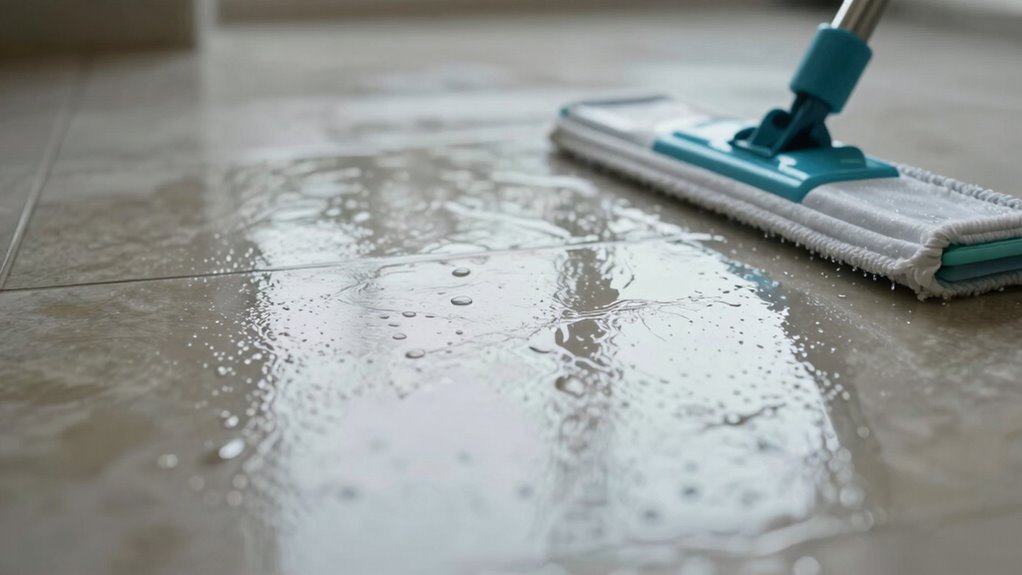
When you’re cleaning, you might notice some cleaners feel unexpectedly slippery, and that can change how you handle surfaces. This sensation often comes from slippery residues left behind after using certain cleaning agents. These residues can linger even after a surface appears dry, leading to confusion about whether you’ve effectively cleaned the area or inadvertently created a hazardous condition.
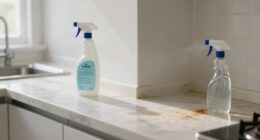
The slippery feeling primarily stems from the product formulations of various cleaners. Some cleaning agents contain surfactants, which lower the surface tension of water, allowing it to spread more easily. While this can enhance cleaning efficiency, it can also lead to a residue that feels slick. User experiences vary widely; some people might find this sensation comforting, while others may see it as a slippery issue that needs addressing.
The slippery sensation from some cleaners arises from surfactants that lower water’s surface tension, enhancing cleaning but leaving residues that feel slick.
Surface textures play an essential role in how these residues interact with different materials. For example, a smooth countertop might not retain the slippery feel as much as a textured one. If you’re using a cleaner on a porous surface, the residues can cling more tightly, creating that unwelcome slippery sensation. This can be especially problematic in kitchens or bathrooms, where safety is a priority. Additionally, the product formulation can influence how much residue is left behind and how slippery it feels. Using cleaning products with residue-forming ingredients can increase the likelihood of residual slipperiness.
Application techniques also matter. If you don’t wipe away the cleaner thoroughly or use an excessive amount, you’re more likely to leave behind a slippery residue. It’s essential to follow the manufacturer’s instructions closely, as they often provide guidance on how to apply the product for the best results. A quick spray and wipe might not suffice if the cleaner requires a longer dwell time to break down grime effectively. Furthermore, choosing cleaners with low-residue formulas can help reduce the slippery after-feel.
To mitigate the slippery after-feel, consider rinsing the surface with water after cleaning. This additional step can help remove any lingering residues, ensuring your surfaces not only look clean but feel safe to touch. Alternatively, you might want to experiment with different cleaners to see which ones leave the least residue. Being aware of cleaning product formulations can help you choose options that minimize unwanted slippery sensations.
In the end, understanding why some cleaners feel slippery can help you choose the right products and techniques for your cleaning tasks. By being mindful of the cleaning agents you use and how you apply them, you can enhance both your cleaning efficiency and the safety of your surfaces.
Frequently Asked Questions
Are Slippery Cleaners Safe for Pets and Children?
Slippery cleaners can pose risks for pets and children. You should always check the label for pet safety and avoid products with harmful chemicals. Residue concerns are real—cleaners that leave a slippery film can be hazardous if ingested or walked on. To keep your home safe, choose pet-friendly alternatives and guarantee thorough rinsing after cleaning. It’s better to err on the side of caution when it comes to your loved ones!
How Can I Test a Cleaner’s Residue Before Use?
To test a cleaner’s residue, first apply a small amount in an inconspicuous area. Watch for any wetness or slippery sensation after it dries. Using different application methods, like spraying versus wiping, can help you gauge the cleaner’s effect. If you notice a slick surface, it might leave residue. Always trust your instincts—if something feels off, it’s wise to switch to a safer alternative. Safety first, after all!
Do Different Surfaces React Differently to Slippery Cleaners?
Yes, different surfaces do react differently to slippery cleaners. For instance, smooth surfaces like glass or polished tile might show more residue types than textured ones like wood or concrete. When you apply a cleaner, it’s essential to evaluate the surface materials. Some surfaces may retain a slick feel long after drying, while others might absorb or repel the residue, affecting how slippery they feel. Always test first to find what’s best for each surface!
What Ingredients Cause Cleaners to Feel Slippery?
Certain ingredients, like surfactants, can make cleaners feel slippery. Imagine walking on ice—those surfactant properties create a slick barrier. When cleaners dry, they can leave behind residue formation that adds to that slippery sensation. For instance, a floor cleaner might have surfactants designed to lift dirt, but if they don’t rinse off completely, they can leave a slippery film. So, always check the label to avoid unexpected slips!
Can Slippery Cleaners Affect the Effectiveness of My Cleaning Routine?
Yes, slippery cleaners can impact your cleaning efficiency. When residues linger, they create a film that attracts dirt and grime, making surfaces harder to clean. You might find yourself scrubbing more than necessary, which wastes time and effort. To maintain a high cleaning efficiency, choose products that rinse away completely, leaving no slippery residue behind. This way, you guarantee your surfaces stay cleaner for longer, enhancing your overall cleaning routine.
Conclusion
Just like a freshly washed road glistens under the sun, some cleaners leave behind a lingering sheen that can make surfaces feel slippery. This isn’t just a nuisance; it’s a reminder that not everything that shines is safe. In life, we often encounter situations that seem smooth and appealing but may hide underlying risks. So, next time you reach for a cleaner, remember: clarity often requires more than just shining surfaces; it demands a careful touch and consideration.
Fall Picks
fall essentials
As an affiliate, we earn on qualifying purchases.