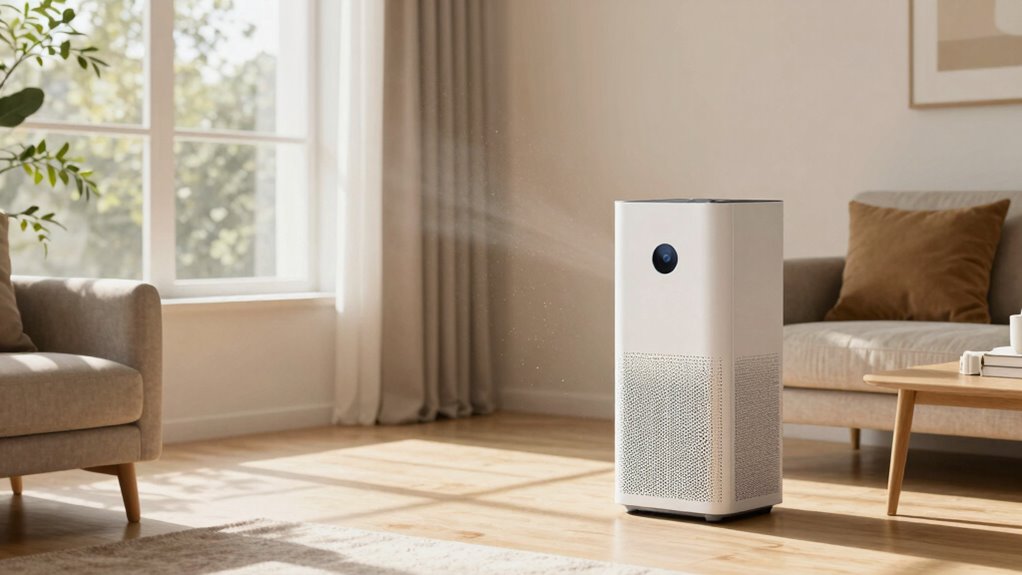
In open rooms, the placement of air purifiers is essential for maximizing airflow and capturing pollutants. You’ll want to position them away from obstructions like furniture to guarantee free air movement, which boosts purification efficiency. Consider the room size to guarantee adequate coverage, and remember that the distance from seating areas can minimize noise disruption. By understanding these factors, you can improve both air quality and comfort. There’s more to explore about optimizing your setup.

Get cleaning gear delivered free with Prime
- Fast, free delivery on millions of items
- Prime Video, Amazon Music and more included
- Member-only deals all year
Key Takeaways
- Open rooms have more airflow, making strategic placement crucial for effective pollutant capture and distribution.
- Proper positioning minimizes obstructions, enhancing air circulation and purification efficiency throughout the space.
- Larger areas may require multiple units to ensure adequate coverage and maintain air quality in all corners.
- Aesthetic integration is important; discreet placement can complement decor while maintaining functionality.
- Easy access for maintenance is vital; convenient locations encourage regular filter checks and cleaning for optimal performance.
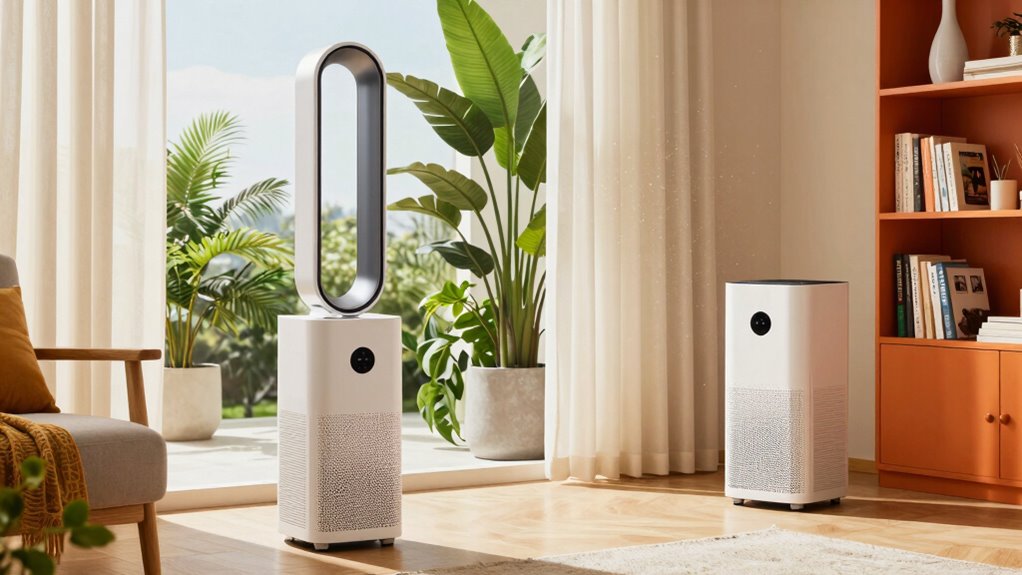
When it comes to maximizing air quality in open rooms, placement of your air purifier is key. You’ll want to take into account ideal positioning to enhance airflow dynamics, guaranteeing the device effectively captures pollutants and allergens. The size of the room plays a significant role in this equation; a larger space may require multiple units or strategic placement to cover all areas adequately.
Think about the furniture arrangement in your open room. You might have large sofas or bookshelves that can obstruct airflow. Ideally, you’ll want to position your air purifier in a location where it’s free from obstructions, allowing air to flow freely around it. This not only boosts purification efficiency but also helps the device work less hard, potentially extending its lifespan.
Noise levels can also factor into your placement decision. If you plan to use the air purifier in a space where you relax or work, contemplate placing it farther away from your seating area. Some units are quieter than others, but even the best can be disruptive at higher settings. By positioning your purifier strategically, you can enjoy cleaner air without compromising your comfort.
Aesthetic considerations shouldn’t be overlooked either. In an open room, the air purifier can stand out more than in smaller spaces. You might want to choose a design that complements your decor or find a discreet spot that blends seamlessly with your furnishings. Balancing form and function can help you maintain an inviting atmosphere while reaping the benefits of cleaner air.
Finally, don’t forget about maintenance access. You’ll want to make sure that you can easily reach the air purifier for filter changes and cleaning. Proper air quality management and regular upkeep are essential for the unit’s performance, so choosing a convenient location encourages consistent maintenance. Additionally, positioning your purifier in a spot with good airflow can improve its efficiency and lifespan. In open rooms, understanding air circulation patterns can further enhance overall air purification. Regularly monitoring air quality levels can help you determine if the placement needs adjustment over time. To optimize performance, it’s also important to consider filter replacement accessibility and ensure the area remains conducive to ongoing maintenance.
Products Worth Considering

Levoit Vital 100S-P Air Purifier with Washable Pre-Filter

LEVOIT Vital 200S-P Smart Air Purifier for Large Rooms

Coway Mighty AP-1512HH(W) Air Purifier, White
As an affiliate, we earn on qualifying purchases.
Frequently Asked Questions
How Do Air Purifiers Affect Indoor Humidity Levels?
Air purifiers can help manage indoor humidity levels, but they aren’t designed specifically for humidity control. They primarily improve air quality by removing pollutants. While some models come with built-in humidifiers, most simply circulate air, which can either raise or lower humidity depending on the environment. If you notice your space feels too dry or too humid, you might want to contemplate a dedicated humidifier or dehumidifier alongside your air purifier.
Can Air Purifiers Help With Smoke Odors?
Can you imagine enjoying a smoke-free home? Air purifiers can definitely help with smoke odors. They use advanced filters for smoke removal and odor neutralization, effectively reducing lingering smells from cigarettes or cooking. By circulating air and trapping particles, they create a fresher environment. Just remember, the effectiveness may vary based on the purifier’s capacity and the size of your space, so choose wisely for the best results!
What Is the Lifespan of an Air Purifier Filter?
The lifespan of an air purifier filter typically ranges from six months to two years, depending on usage and the type of filter. For peak performance, you should prioritize filter maintenance and keep an eye on the filter’s condition. When it’s clogged or discolored, it’s time for a filter replacement. Regular checks will help you maintain clean air quality and extend the overall life of your air purifier.
Are Air Purifiers Effective Against Allergens Like Pet Dander?
Yes, air purifiers are effective against allergens like pet dander. They filter out particles from the air, reducing the presence of allergen sources in your home. When you run your air purifier regularly, it captures pet dander and other irritants, helping to improve your indoor air quality. Just make sure to choose a model with a HEPA filter for the best results, and keep it in a central location for maximum effectiveness.
Do Air Purifiers Consume a Lot of Electricity?
Air purifiers can be like a gentle breeze, rejuvenating your space without draining your wallet. Most models are designed with energy efficiency in mind, so they won’t consume a lot of electricity. To maximize their benefits, use timers or smart plugs, and run them during off-peak hours. This way, you keep your air clean while keeping your energy costs in check. You’ll breathe easier without worrying about your electricity bill!
Conclusion
In open rooms, the placement of your air purifier can make a world of difference. You might find it surprising how a simple shift from one corner to another can enhance air circulation, capturing pollutants more effectively. Imagine sitting in your favorite chair, breathing deeply, and feeling the clean air wrap around you like a warm hug. It’s almost as if the room itself responds to your needs, transforming into a sanctuary. So, don’t underestimate the power of thoughtful placement!