To tell if your HEPA filter is clogged, look for signs like reduced airflow, lingering dust or odors, increased noise, or longer times for your air to circulate. You might also notice dirt buildup, discoloration, or a musty smell. Regularly inspecting and replacing your filter guarantees it functions effectively and maintains indoor air quality. Keep going to learn simple ways to check, clean, and prevent clogging for ideal performance.
Key Takeaways
- Look for reduced airflow, longer operation times, and decreased system efficiency as signs of a clogged HEPA filter.
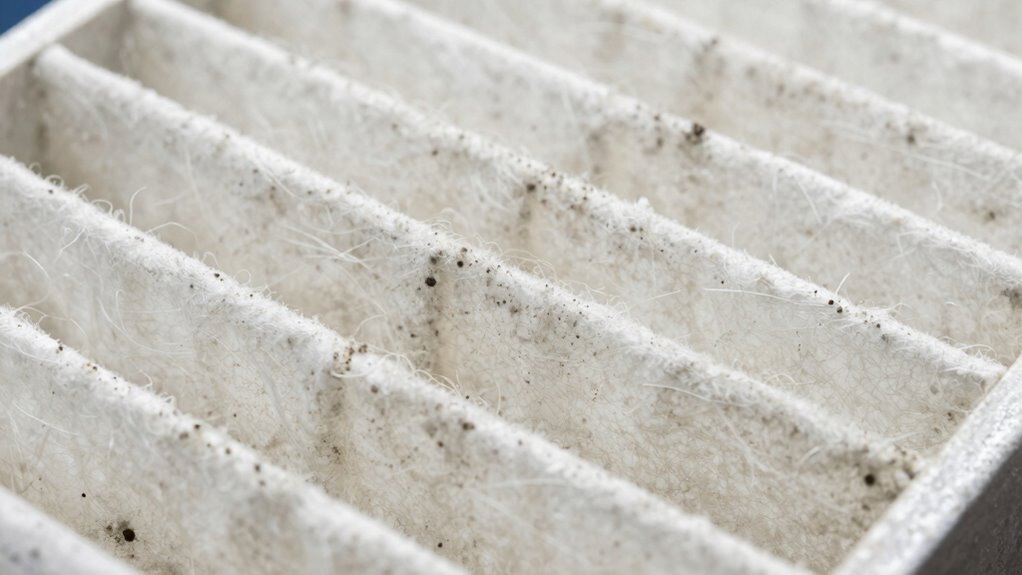
- Inspect the filter regularly for visible dirt, discoloration, tears, or damage that indicate clogging.
- Notice if indoor air quality declines, odors persist, or dust and allergens remain despite air purification efforts.
- Monitor system noise levels and airflow; increased noise or decreased airflow suggest filter obstruction.
- Follow manufacturer guidelines to replace filters every 6-12 months, or more frequently in dusty or pet-heavy environments.
How Do You Know If Your HEPA Filter Is Clogged?

How can you tell if your HEPA filter is clogged? One sign is a noticeable decline in air quality, with dust, odors, or allergens lingering longer than usual. If your vacuum or air purifier isn’t performing as effectively, it’s likely the filter has trapped too many particles. A blocked filter also shortens its lifespan, requiring more frequent replacements. You might notice increased noise or reduced airflow, indicating obstruction. Regularly check for visible dirt buildup or discoloration on the filter surface. If you’re unsure, consult your device’s guidelines for recommended replacement times. Additionally, understanding the importance of air filtration technology can help you better assess your filter’s condition, as advancements in filter design have improved performance and longevity. Proper filter maintenance is essential to keep your system operating efficiently and maintain healthy indoor air quality. Keeping an eye on these signs ensures your filter stays effective, maintains ideal air quality, and prolongs its usability. Proper care prevents airflow issues and preserves your indoor environment’s health.
How Do HEPA Filters Actually Clean the Air?
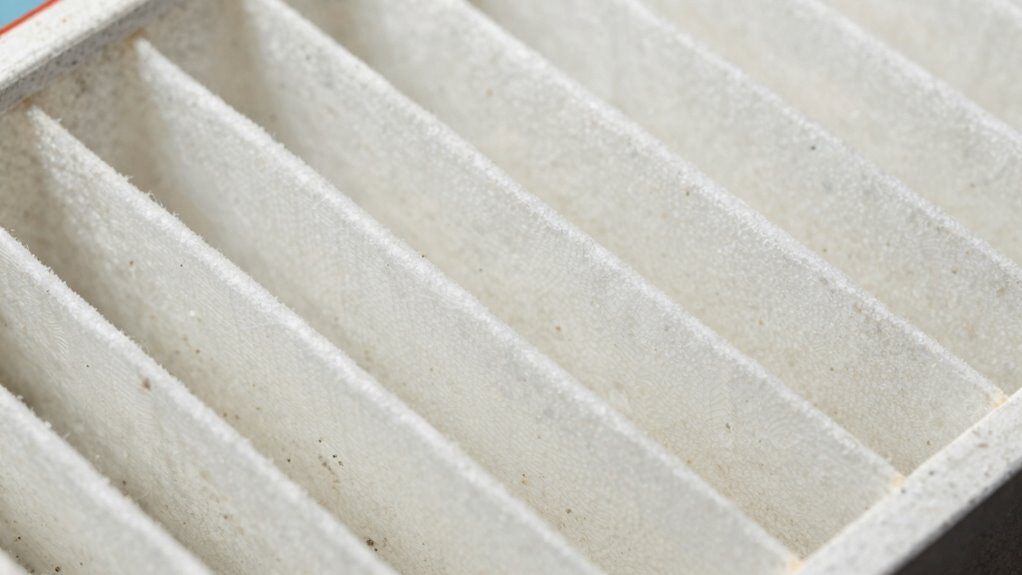
HEPA filters clean the air by trapping tiny particles that pass through them, preventing allergens, dust, and pollutants from circulating indoors. This process relies on effective air filtration, where particles are captured as air flows through the filter’s dense fibers. HEPA filters use a combination of mechanisms, including interception, impaction, and diffusion, to trap particles as small as 0.3 microns. Over time, these particles build up, reducing airflow and filtering efficiency. This highlights the importance of understanding your filter’s lifespan—regular replacement ensures it continues to clean the air effectively. Proper air filtration not only improves indoor air quality but also prolongs the filter’s usefulness, preventing it from becoming clogged and maintaining excellent performance over its lifespan. Regular maintenance and knowing how to identify clogged filters can help ensure your HEPA filter functions optimally. Additionally, understanding filter lifespan can guide timely replacements to sustain filtration performance. Keeping an eye on airflow reduction can also be an indicator that your filter needs attention before it becomes fully clogged.
How Often Should You Check and Replace Your HEPA Filter?

You should check your HEPA filter regularly to keep your air clean and your system running smoothly. Look for signs of clogging, like reduced airflow or increased dust, to know when it’s time to replace it. Typically, filters need changing every 6 to 12 months, but this varies based on usage and environment. Additionally, understanding regulatory exposure and operational considerations can help determine the appropriate maintenance schedule for your specific situation. Regular inspections can also help prevent issues that may impact your air quality and overall system performance. Monitoring filter lifespan based on environmental factors ensures optimal performance and health benefits, especially considering system efficiency in modern connected appliances. Being aware of environmental factors that influence filter wear can further optimize maintenance routines.
Recommended Checking Frequency
Determining the right frequency for checking your HEPA filter depends on several factors, including usage patterns and environmental conditions. Generally, it’s recommended to inspect your filter every 3 to 6 months to maintain excellent air quality and guarantee the filter’s lifespan isn’t shortened. If you live in a dusty area, have pets, or experience allergies, more frequent checks—about every 1 to 3 months—are advisable. Regular inspections help you catch clogging early, preventing decreased airflow and compromised filtration. Keep in mind that a clean filter improves indoor air quality and prolongs the filter’s lifespan. Adhering to these checking intervals ensures your HEPA filter performs efficiently, providing cleaner air and saving you money on premature replacements. Additionally, understanding your Guide to Compassionate Senior Caregiving can help you create a healthier environment for your loved ones. To optimize filter performance, it’s also beneficial to familiarize yourself with Vetted security zone info to understand how environmental factors might influence filter clogging. Paying attention to air quality indicators can further aid in determining when your filter needs attention. Regularly monitoring air quality levels in your home can provide valuable insights into when a filter change is necessary, especially in environments prone to pollution. Incorporating knowledge about indoor air quality management can empower you to make more informed decisions about filter maintenance.
Signs of Filter Clogging
When a filter starts to clog, airflow becomes noticeably reduced, and your air purifier or HVAC system has to work harder. This decline can negatively impact air quality, allowing dust, allergens, and pollutants to circulate more freely. You might notice a decrease in overall air purity or a musty smell, signaling that your HEPA filter is reaching the end of its filter lifespan. Other signs include increased noise from the system or longer run times. If you observe these indicators, it’s a clear sign you should check your filter. Regularly monitoring these signs helps maintain ideal air quality and ensures your system operates efficiently, preventing premature filter replacement and safeguarding your health. Discover California’s Spirit by staying vigilant about your indoor air quality. Additionally, understanding the importance of filter maintenance can help you develop a routine that prolongs filter life and improves system performance. Maintaining proper filter care can also reduce energy consumption and extend the lifespan of your HVAC system.
Replacement Timeframes
Monitoring your HEPA filter’s condition helps guarantee it functions effectively and maintains ideal air quality. Typically, you should check your filter every 3 to 6 months for excellent air purifier maintenance. Most HEPA filters have a filter lifespan of about 6 to 12 months, depending on usage and air quality. Regular inspections ensure you replace the filter before it becomes clogged, preventing reduced efficiency. Consider environmental factors—such as pet dander, dust, or smoke—that may shorten the lifespan. Use the table below as a guide:
| Usage Frequency | Recommended Replacement Interval |
|---|---|
| Light use | 12 months |
| Moderate use | 6-12 months |
| Heavy use | 3-6 months |
| Pet owners | 4-6 months |
| Smokers | 3-4 months |
Staying proactive with air purifier maintenance ensures your filter performs at its best. Regularly checking your filter’s filter indicator can also help determine when a replacement is necessary.
Simple Steps to Inspect and Clean Your HEPA Filter at Home
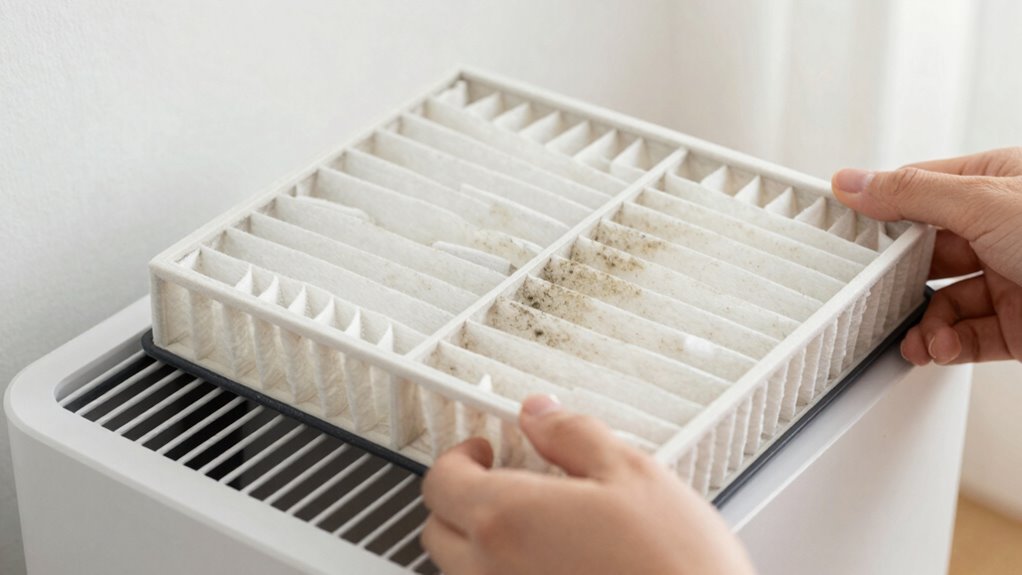
To keep your HEPA filter working efficiently, start by visually inspecting it for dirt or damage. Next, check for airflow restrictions that might indicate it’s time to clean or replace the filter. Proper cleaning techniques are essential to make sure you don’t damage the filter while maintaining its effectiveness. Regular maintenance of filtration systems ensures optimal performance and longevity. Additionally, understanding airflow dynamics can help you identify when your filter needs attention before it becomes severely clogged. Recognizing signs like uneven airflow or strange odors can also serve as early indicators of filter clogging, preventing potential airflow issues. Being aware of smart home integration features can also provide alerts when filter replacement is needed, enhancing convenience and maintenance accuracy.
Visual Filter Inspection
Performing a visual inspection of your HEPA filter is a straightforward way to determine if it needs cleaning or replacement. Carefully remove the filter and examine the filter material. Look for visual clues like darkened areas, dust buildup, or debris trapped within the fibers. If the filter appears visibly dirty or clogged with dust, it’s a sign that airflow may be restricted, and cleaning or replacing the filter is necessary. Check for any tears or damage in the filter material, which can compromise its effectiveness. Keep in mind that even if the filter looks relatively clean, dust and allergens may still be embedded deep within the material. Regular visual checks help you catch dirt buildup early, ensuring your HEPA filter functions best.
Check for Airflow Restriction
After inspecting your HEPA filter visually, the next step is to check for airflow restrictions. You might notice reduced airflow from your device or hear it working harder than usual. To test this, hold your hand near the output vent or exhaust. If airflow feels weak or uneven, your filter could be clogged, causing airflow restriction. This not only hampers air quality but also shortens your filter’s lifespan because debris builds up faster. Regularly checking airflow helps you identify when the filter needs attention before it becomes severely clogged. Keep in mind, a restricted airflow can strain your system, reduce efficiency, and lead to more frequent replacements. Staying vigilant ensures your HEPA filter functions at its best and maintains healthy air quality in your space.
Proper Cleaning Techniques
Cleaning your HEPA filter regularly is essential for maintaining peak air quality and system performance. To properly inspect and clean your filter at home, start by turning off your air purifier or HVAC system. Remove the filter carefully, avoiding shaking or damaging it. Check for visible dirt, dust, or debris that may clog the fibers. If the filter is washable, rinse it gently with water, ensuring you remove all trapped particles without using harsh detergents. Allow the filter to dry completely before reinstalling. For non-washable filters, replace them if they appear heavily soiled or clogged. Regular cleaning extends your filter’s lifespan and keeps airflow unobstructed, directly improving indoor air quality. Consistent maintenance guarantees your system runs efficiently and effectively.
What Causes HEPA Filters to Clog, and How Can You Prevent It?

HEPA filters can become clogged when they trap too many airborne particles, which gradually restricts airflow and reduces their effectiveness. Over time, this buildup impacts filter durability, causing it to wear out faster if not managed properly. To maintain best airflow, avoid exposing your filter to excessive dust, pet dander, or smoke, which accelerate clogging. Regularly replacing or checking your filter prevents particles from accumulating excessively. Proper airflow maintenance also includes ensuring your system’s fans and vents are unobstructed, reducing strain on the filter. By limiting sources of airborne contaminants and staying vigilant about filter condition, you extend its lifespan and keep your air clean. Prevention is key to avoiding frequent clogs and maintaining ideal airflow efficiency.
Tips to Keep Your HEPA Filter Working Well Over Time

To keep your HEPA filter functioning effectively over time, it’s essential to perform regular maintenance and monitor its condition. Clean or replace the filter as recommended by the manufacturer to maintain best air purifier efficiency. Avoid letting dust and debris accumulate, which can clog the filter and reduce its effectiveness. Additionally, choose a filter with durable filter material to guarantee longevity and consistent performance. Proper handling during replacement prevents damage to the filter material, extending its lifespan. Keep the air purifier in a clean environment and avoid exposing it to excessive dust or smoke. Regular inspections help you identify when the filter needs attention, ensuring your air purifier continues to operate at peak efficiency and maintains good indoor air quality.
Frequently Asked Questions
Can a Clogged HEPA Filter Cause Health Issues?
Yes, a clogged HEPA filter can cause health issues. When your filter is blocked, it can’t trap allergens effectively, leading to allergy symptoms like sneezing, coughing, and congestion. This also affects your respiratory health, as pollutants and irritants build up in the air you breathe. Regularly checking and replacing your HEPA filter guarantees it functions properly, helping you breathe easier and reducing potential health problems.
Are There Specific Signs Beyond Airflow Reduction Indicating a Clog?
Beyond airflow reduction, you can notice dust buildup around your filter or vents, which signals a clog. Unusual odors coming from your air purifier or HVAC system also indicate your HEPA filter might be clogged. If you see dust accumulating faster than usual or smell musty or strange odors, it’s time to check and replace your filter to maintain peak air quality and system efficiency.
Is It Safe to Clean a HEPA Filter With Water?
Did you know that improper air filter cleaning can reduce filtration efficiency by up to 50%? Cleaning your HEPA filter with water-based cleaning isn’t recommended, as it can damage the delicate fibers and compromise filtration. Instead, check your manufacturer’s guidelines. Usually, air filter cleaning involves gentle vacuuming or replacing the filter altogether. Water-based cleaning risks mold growth and reduced performance, so it’s safer to avoid it.
How Do Different Environments Affect HEPA Filter Lifespan?
Environmental factors and air quality directly impact your HEPA filter’s lifespan. If you live in a polluted area or have pets and smokers, your filter will clog faster due to more airborne contaminants. Poor air quality introduces dust, allergens, and pollutants that strain the filter. To maximize its life, regularly check and replace your HEPA filter, especially if environmental conditions are harsh or air quality is low.
What Are the Best Indicators for When to Replace a HEPA Filter?
Think of your HEPA filter as a silent sentinel — when it signals, it’s time to act. Look for indicator signs like reduced airflow, increased dust outside the filter, or a persistent bad smell. These are clear signs that filter replacement is needed. Trust your senses and these indicators to determine when your filter is past its prime, ensuring clean air and peak performance. Don’t wait too long, or efficiency drops.
Conclusion
Regularly inspecting your HEPA filter keeps your air fresh and inviting, much like tending a garden ensures vibrant blooms. By catching subtle signs of clogging early, you prevent tiny particles from piling up like stubborn weeds. With simple care and timely replacements, your filter continues to act as a gentle gatekeeper, allowing clean, crisp air to flow effortlessly into your space. Think of it as nurturing a quiet, reliable breeze that keeps your environment fresh and welcoming.