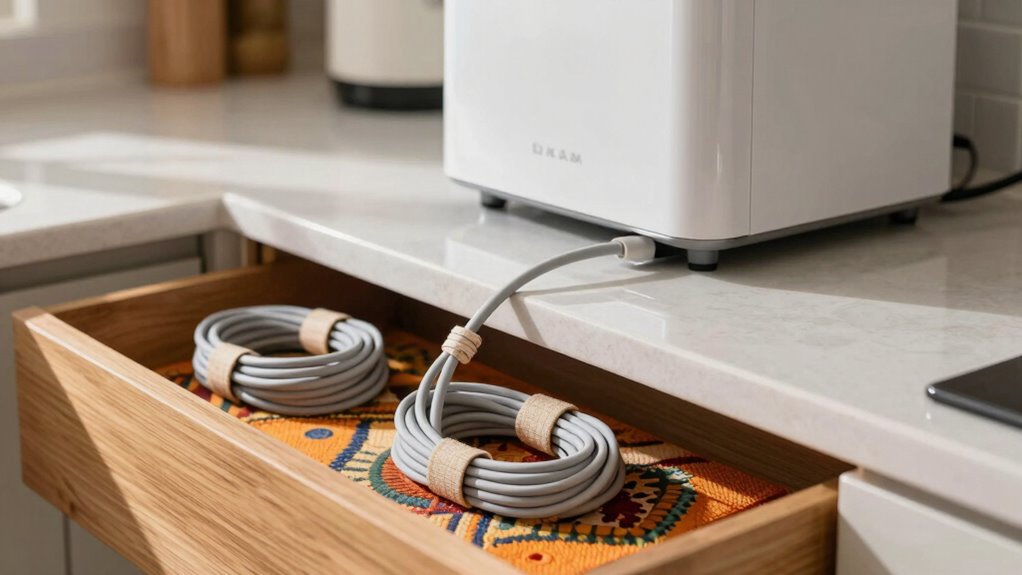

To keep your appliance cords from twisting and wearing out fast, organize them properly. Avoid stuffing cords in drawers; instead, use a figure-eight wrapping technique. Secure them with twist ties or Velcro straps to prevent kinks. Use cord organizers, like adhesive clips or cord reels, to route cords neatly along walls. This not only keeps your space tidy but also extends the life of your cords. You’ll find even more helpful tips to enhance your setup.

Get cleaning gear delivered free with Prime
- Fast, free delivery on millions of items
- Prime Video, Amazon Music and more included
- Member-only deals all year
Key Takeaways
- Use a figure-eight wrapping technique to prevent kinks and tangling of appliance cords.
- Employ cord organizers like clips or reels to keep cords neatly arranged and accessible.
- Avoid stuffing cords into drawers; instead, store them in a designated, organized area.
- Regularly inspect cords for signs of wear and replace them promptly to ensure safety.
- Keep cords away from high-traffic areas to minimize the risk of trip hazards and damage.
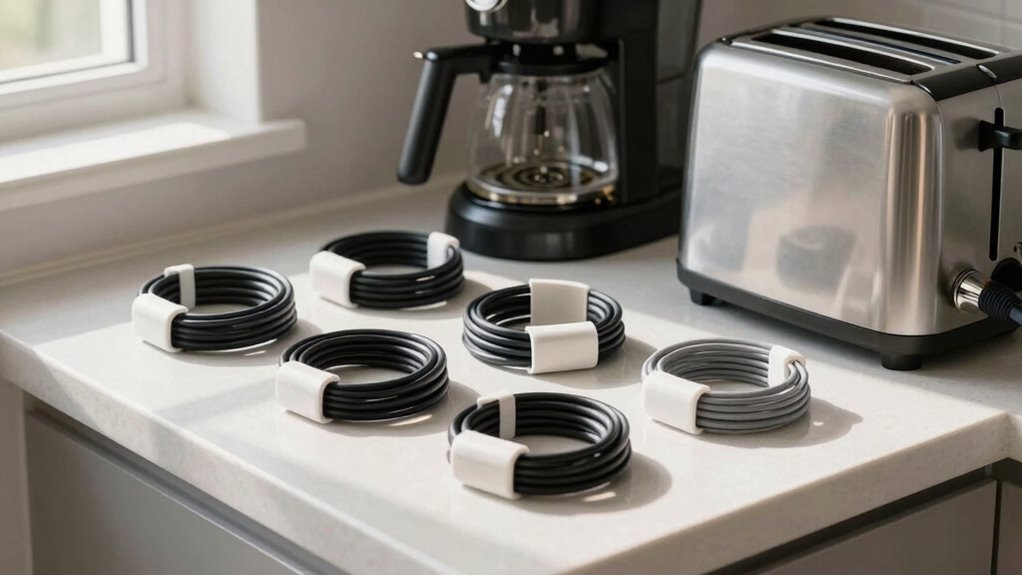
Appliance cords can be a real hassle when they twist and tangle, but there are simple ways to keep them in check. You don’t have to let those cords drive you crazy; with a little cord management, you can maintain a neat and organized space. Start by evaluating where your appliances are located. If they’re all over the place, it’s time to think about a more strategic setup. Group similar appliances together and try to keep their cords within a designated area. This helps reduce the chances of tangling and makes it easier to grab what you need.
Next, consider using cord organizers. You can find various products designed to keep cords in line, from simple clips to more advanced cord reels. These tools can be game-changers when it comes to keeping things tidy. For instance, adhesive clips can be attached to walls or furniture, allowing you to route cords neatly along surfaces. If you prefer something portable, a cord reel can help you wind up the cord when not in use, preventing it from twisting while it’s stored away.
Another effective strategy is to practice proper wrapping techniques. When you’re putting away your cords, don’t just shove them into a drawer or basket. Instead, wrap them loosely in a figure-eight pattern and secure them with a twist tie or Velcro strap. This method helps prevent kinks and damage while allowing you to unwind them easily when you need to use the appliance again. Plus, it’s a great way to enhance your cord organization. Proper home organization can also help prevent unnecessary strain on cords and prolong their lifespan. Implementing cord management practices not only improves safety but also extends the overall lifespan of your cords. This way, you’re not just making your space look better; you’re also prolonging the life of your cords.
As an affiliate, we earn on qualifying purchases.
Frequently Asked Questions
Can I Repair a Damaged Appliance Cord Myself?
Yes, you can repair a damaged appliance cord yourself! Start by unplugging the appliance and inspecting the damage. Use cord maintenance tips like trimming frayed ends or applying electrical tape for small issues. For more significant damage, consider DIY repair options like replacing the entire cord or using a cord repair kit. Just make certain to follow safety guidelines and verify the repair is secure before plugging it back in.
What Materials Are Best for Cord Organization?
Think of your cords as vines in a garden, yearning for order. For effective cord management, you’ll want protective sleeves to shield them from wear and tear. Cable clips are your trusty allies, keeping cords neatly in place and preventing twists. With these materials, you’ll create a harmonious space where chaos turns into calm, and your appliances can thrive without the hassle of tangled cords. Embrace this organization, and watch your setup flourish!
How Often Should I Replace Appliance Cords?
You should replace appliance cords every 5 to 10 years, depending on usage and wear. Keep an eye out for replacement indicators like fraying, cracks, or exposed wires. If you notice any burning smell or sparking, don’t hesitate—replace that cord immediately! A cord’s lifespan can vary, but prioritizing safety guarantees you avoid hazards in your home. Regularly inspect your cords to keep your appliances functioning well and safely.
Are There Specific Cords for Outdoor Appliances?
Absolutely, there are specific cords for outdoor appliances! Think of them like raincoats for your electronics. You’ll want to look for outdoor cord types made from weather-resistant materials, ensuring they can withstand moisture and temperature changes. For instance, a heavy-duty extension cord with a grounded plug can keep your tools safe in the rain. Investing in the right cords not only protects your appliances but also gives you peace of mind during outdoor projects.
What Are the Safety Risks of Worn-Out Cords?
Worn-out cords pose serious safety risks, including electrical hazards and fire risks. When insulation deteriorates, exposed wires can cause shocks or short circuits. These exposed wires can also spark and ignite nearby materials, leading to fires. Regularly inspecting your cords helps you catch wear and tear early. If you notice fraying or damage, replace the cord immediately to keep your home safe and prevent potential disasters. Stay vigilant about your appliance safety!
As an affiliate, we earn on qualifying purchases.
Conclusion
In a world where tangled cords can feel like a never-ending puzzle, taking a few simple steps can keep your appliance cords untwisted and thriving. By using clips, wrapping them neatly, and avoiding tight knots, you’re not just preserving their lifespan; you’re giving them the freedom to breathe. So, treat those cords with care, and they’ll reward you with years of service, like loyal companions, ready to help you whip up your next culinary masterpiece.
As an affiliate, we earn on qualifying purchases.
As an affiliate, we earn on qualifying purchases.
Halloween Picks
halloween
As an affiliate, we earn on qualifying purchases.