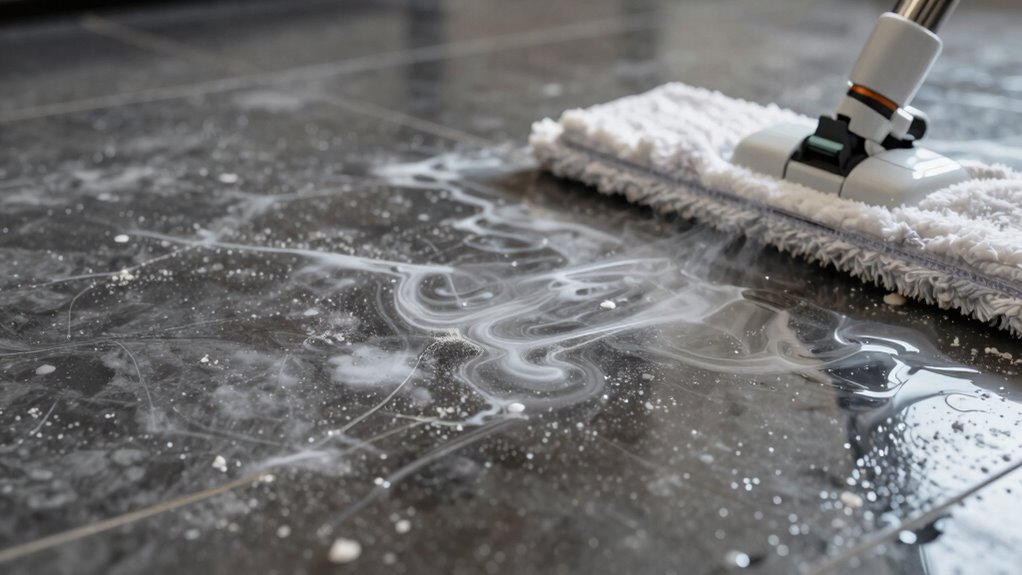

When you see white marks after using your steam mop, it’s usually mineral buildup from hard water evaporation. Minerals like calcium and magnesium crystallize and deposit on your floors, especially if you use untreated water or don’t clean your mop regularly. Over time, this residue can reduce cleaning effectiveness and leave visible streaks. To understand how to prevent and remove these deposits, keep exploring the causes and solutions that can keep your floors looking streak-free.
Key Takeaways
- White marks are caused by mineral deposits from hard water evaporating during steam cleaning.
- Minerals like calcium and magnesium crystallize on surfaces, creating visible white residues.
- Mineral buildup can clog steam vents, reducing steam output and cleaning effectiveness.
- Using soft or distilled water helps prevent mineral deposits and white marks.
- Regular descaling and proper maintenance of the steam mop minimize mineral residue formation.
Why Do White Marks Appear on Floors After Steam Mopping?
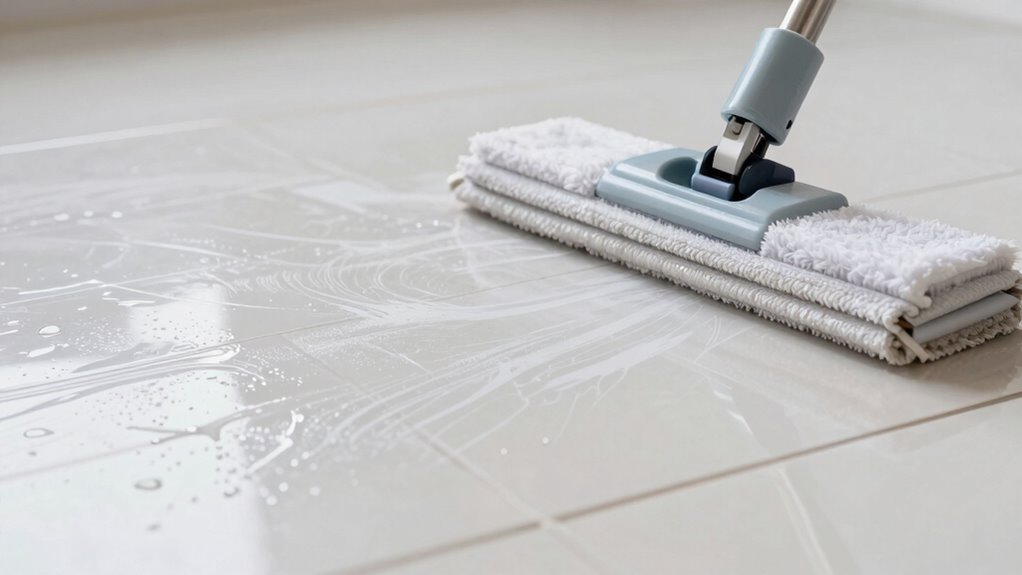
White marks often appear on floors after steam mopping because mineral deposits in the water are left behind as the steam evaporates. Many cleaning myths suggest that these marks are caused by dirt or soap residue, but that’s not true. Instead, they’re mineral deposits from hard water that settle on your flooring. Some people try alternative methods like vinegar or baking soda to clean these marks, but these can sometimes worsen the buildup or damage your floor. The best approach is to use distilled or softened water in your steam mop, which reduces mineral deposits. Understanding that these white marks are mineral residue helps you avoid ineffective cleaning myths and choose proper solutions to keep your floors clear and shiny. Additionally, using correct water types can significantly decrease mineral buildup and prevent future white marks on your floors.
How Do Mineral Deposits Form When You Steam Clean?
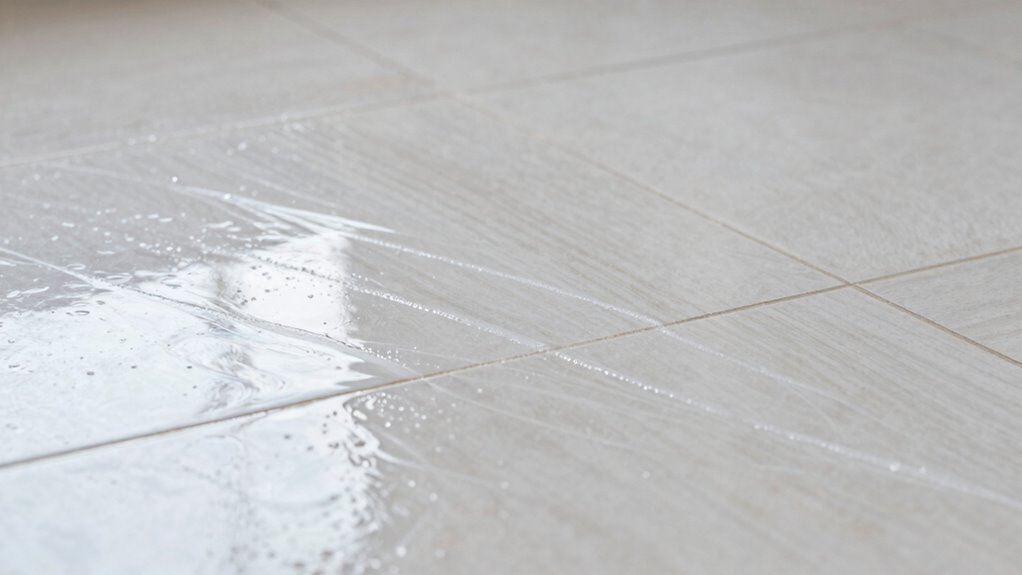
When you steam clean, minerals in your water can leave deposits behind. As the water evaporates, these minerals settle on your floors, forming residue. Understanding this process helps you see how mineral buildup occurs over time. Additionally, using distilled water can significantly reduce mineral deposits and keep your floors cleaner longer. Proper maintenance, such as regular cleaning of your steam mop and avoiding hard water, also minimizes mineral buildup and prolongs the effectiveness of your device. Being aware of water hardness levels in your area can further help you choose the best water to prevent mineral deposits. Recognizing the role of hard water in mineral accumulation can guide you in selecting appropriate cleaning practices. Moreover, understanding the impact of electric water heating on mineral solubility can help you optimize your cleaning routine.
Mineral Content in Water
Mineral deposits in your steam mop are caused by the minerals present in your water. When your water has high mineral content, especially calcium and magnesium, it’s considered hard water. Water hardness directly influences how much mineral scale forms inside your steam mop during use. As you steam, the heat causes minerals to crystallize and stick to surfaces, creating white deposits. These deposits are the mineral scale that accumulates over time, reducing your mop’s efficiency and leaving unwanted marks. The more mineral-rich your water, the faster these deposits build up. Using soft water or distilled water can substantially reduce mineral buildup. Additionally, employing water softening techniques can help prevent excessive deposits and keep your steam mop working smoothly. Understanding your water’s mineral content helps you prevent excessive deposits and keeps your steam mop working smoothly.
Evaporation of Water
As you steam clean, the heat causes the water to evaporate, leaving behind any dissolved minerals. This process involves water evaporation turning liquid into vapor, which rises and cools, leading to steam condensation on surfaces. When water evaporates, it removes the liquid, but minerals like calcium and magnesium don’t evaporate—they stay behind, forming deposits. The cycle of water evaporation and steam condensation continuously concentrates minerals in the area you’re cleaning. Over time, these minerals settle into white marks or crusty build-up. To minimize this, use distilled water or wipe surfaces after steaming. Remember, the key to understanding mineral buildup lies in how water evaporation concentrates minerals, which then deposit when steam condenses back onto surfaces. Mineral deposits form as a result of this process, especially in areas with hard water. Additionally, the rate of mineral buildup can be affected by the water quality, so using softened or distilled water can significantly reduce deposits. Proper water filtration can help prevent excess mineral accumulation and keep your steam mop functioning efficiently.
Residue Formation Process
During the steaming process, the heat causes water to turn into vapor, which rises and then condenses on surfaces as steam. If your water contains minerals, these can settle as deposits when the vapor cools. In industrial cleaning, mineral buildup often results from hard water, leaving white marks or residue behind. Water purification methods, like filtration, help reduce minerals, but if the minerals aren’t removed, they accumulate on floors and surfaces over time. As the steam condenses, minerals are left behind, forming deposits that create visible residue. Continuous steaming without mineral removal accelerates this buildup. Over time, these deposits can harden, making them more difficult to clean. Understanding this process helps you prevent and manage residue formation during regular steam cleaning sessions.
How Can You Tell if Your Floors Have Mineral Buildup?
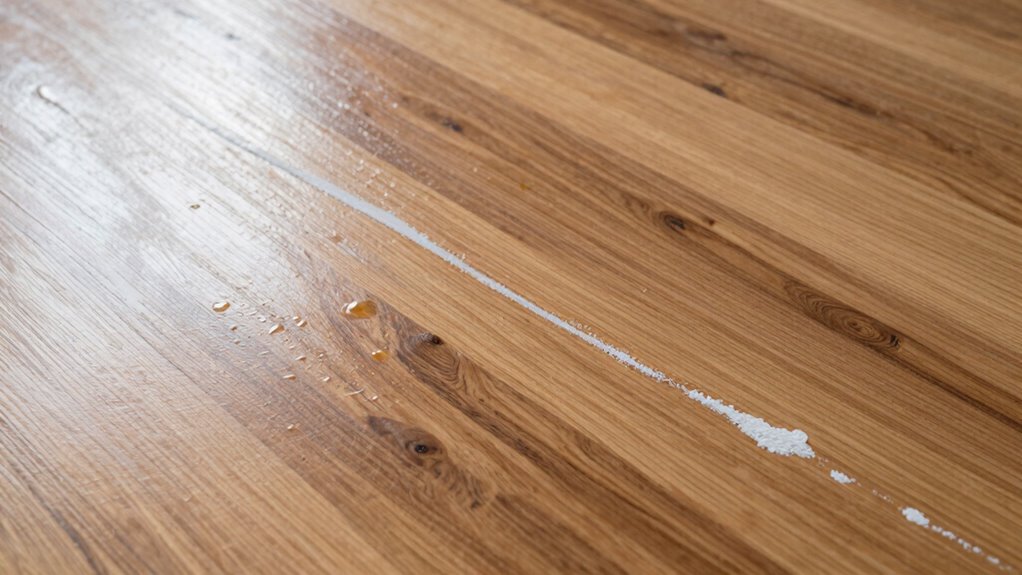
You might notice a white residue on your floors or find that your steam mop isn’t cleaning as well as before. Unusual textures or a dull surface can also be signs of mineral buildup. Keep an eye out for these clues to catch the problem early, especially since mineral deposits can damage your cleaning equipment, which can lead to costly repairs or replacements. Additionally, mineral buildup can affect the efficiency of your steam mop by reducing steam output, making it harder to achieve a thorough clean. Regular maintenance and using distilled water can help prevent mineral accumulation, and incorporating proper cleaning techniques can further safeguard your device’s performance. Being aware of indoor water quality can also help you prevent mineral deposits from forming in the first place.
Visible White Residue
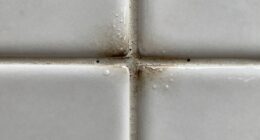
How can you tell if your floors have mineral buildup? Look closely for visible white residue on the surface after mopping. This stubborn film often appears in corners, grout lines, or areas with less foot traffic. If you notice these deposits, it’s a sign minerals are accumulating over time. Regular cleaning schedules and proper mop maintenance help prevent this buildup, but once it appears, you’ll need to address it. Understanding mineral buildup can help you identify and treat the problem effectively. Recognizing the water quality in your home can also reveal whether mineral deposits are likely to form, especially if your water source has high mineral content. Elevated mineral levels in water can accelerate mineral deposit formation on your floors. Mineral deposits can sometimes be mistaken for soap scum or other residues, so recognizing the difference is important for proper treatment. Here are some signs to watch for:
- White streaks or patches that won’t scrub away
- Cloudy or hazy floor appearance
- White spots around mop pads or steam vents
- Reduced shine or gloss on your floors
- Persistent residue despite cleaning efforts
Recognizing these signs ensures you can take action before mineral deposits cause long-term damage.
Reduced Steam Effectiveness
When mineral buildup occurs, your steam mop may struggle to produce consistent steam, resulting in less effective cleaning sessions. You might notice your floors aren’t as shiny or clean as they used to be, despite multiple passes. This reduced steam effectiveness is a clear sign that mineral deposits are clogging the steam vents or heating elements. Regular steam mop maintenance can help prevent this issue, but water quality plays a significant role too. Hard water contains more minerals that can accumulate over time, leading to buildup. If you’re using tap water with high mineral content, you may see a decline in steam output sooner. To keep your floors spotlessly clean, consider using distilled or filtered water and perform routine maintenance to remove mineral deposits. Additionally, incorporating essential oils for cleaning can help maintain your steam mop’s performance and ensure a thorough clean. Using water softening systems can also reduce mineral buildup and extend the life of your appliance. Proper water quality management is essential to prevent mineral deposits from restricting steam flow and damaging your device over time. Regularly inspecting and cleaning your steam mop’s vents and heating elements can further prevent mineral buildup. Incorporating descaling agents periodically can also effectively dissolve mineral deposits before they cause significant clogs.
Unusual Floor Texture
Mineral buildup doesn’t just affect your steam mop’s performance; it can also change the texture of your floors. You might notice areas feeling rough, uneven, or gritty despite regular cleaning. These tactile changes are signs of mineral deposits accumulating beneath the surface. To identify this issue, pay attention to subtle surface irregularities that weren’t there before. Incorporate cleaning tips like using vinegar solutions or specialized floor cleaners to prevent buildup. Consistent floor maintenance helps preserve the smoothness and appearance of your floors.
- Rough patches that weren’t previously there
- Slightly raised or uneven areas
- Persistent streaks or white marks after cleaning
- Changes in how your floor feels underfoot
- Visible mineral deposits on the surface
How to Prevent Mineral Deposits and White Marks
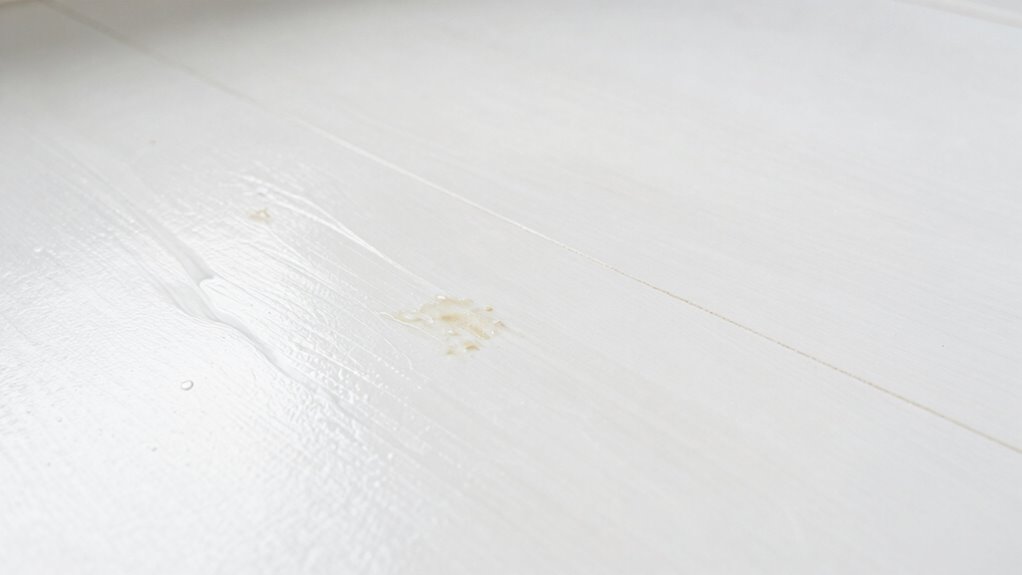
To prevent mineral deposits and white marks from forming on your steam mop, it’s essential to use distilled or demineralized water instead of tap water. This reduces mineral content, preventing buildup. Water softening techniques, like using water filters or conditioners, can also help minimize minerals in your water supply. Consider alternative cleaning methods, such as mixing vinegar with water, to reduce mineral residue. Regularly empty and dry the water tank to avoid stagnation and mineral concentration. Using the right water and maintaining your steam mop properly helps keep mineral deposits at bay. These simple steps ensure your floors stay spotless without white marks or buildup, extending the lifespan of your steam mop and maintaining a clean, streak-free surface.
Easy Ways to Remove White Marks and Mineral Deposits
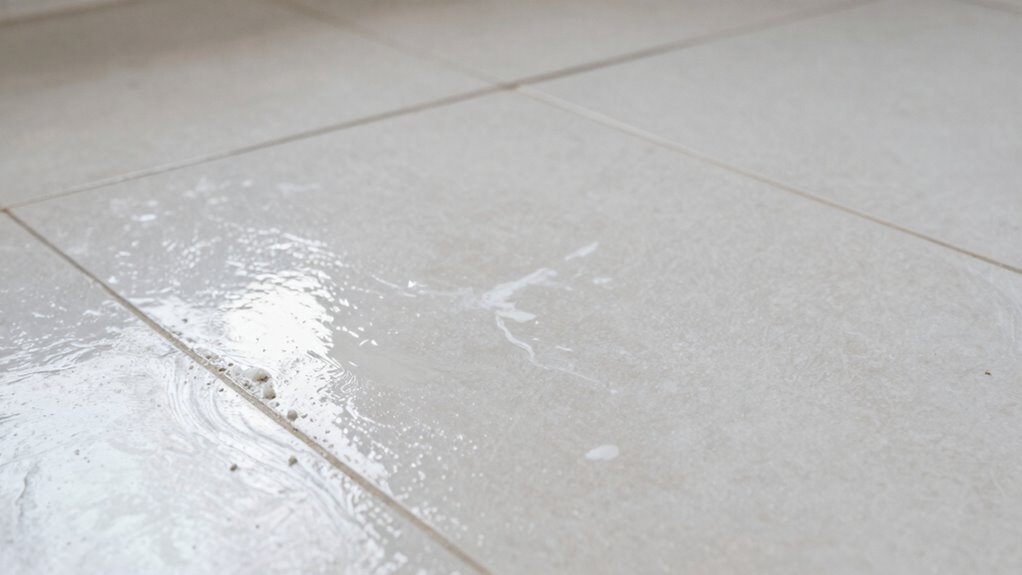
Removing white marks and mineral deposits from your steam mop is straightforward with the right techniques. Start by using cleaning techniques that target mineral buildup, such as descaling solutions or vinegar. Adjust your water quality by switching to distilled or filtered water, which reduces mineral content that causes deposits. Regularly cleaning the mop’s nozzles and water tank prevents buildup before it becomes noticeable.
Remove mineral deposits with vinegar and use distilled water to keep your steam mop spotless.
Consider these tips:
- Use a vinegar and water solution for descaling
- Rinse the water tank thoroughly after each use
- Avoid tap water with high mineral content
- Clean steam nozzles with a soft brush
- Schedule periodic deep cleaning to maintain performance
These methods help eliminate deposits, ensuring your steam mop works efficiently and avoids white marks.
Tips for Keeping Your Floors Streak-Free When Using a Steam Mop

Using a steam mop can leave your floors looking streak-free and spotless if you follow some simple tips. First, ensure your floors are free of dust and debris before mopping, as dirt can cause streaks. Use the right cleaning techniques, such as moving the mop in straight, overlapping lines and avoiding over-wetting the surface. To prevent mineral buildup and white marks, regularly rinse and descale your steam mop according to the manufacturer’s instructions. If streaks persist, consider alternative methods like mixing a small amount of vinegar with water to enhance cleaning and reduce residue. Always test a small area first to avoid damage. Proper maintenance and mindful cleaning techniques help keep your floors gleaming without streaks or mineral deposits.
Frequently Asked Questions
Can Using Distilled Water Prevent White Marks on Floors?
Yes, using distilled water can prevent mineral buildup on your floors. Since distilled water lacks minerals, it reduces the chances of white marks caused by mineral deposits. This helps keep your floors looking clean and shiny longer. By switching to distilled water, you effectively prevent mineral buildup, ensuring your steam mop works efficiently without leaving those pesky white marks. It’s a simple, effective way to maintain your floors better.
Do Different Floor Types React Differently to Steam Mops?
Different floor types react differently to steam mops, so you should verify floor type compatibility first. For example, hardwood and laminate floors might be sensitive to excess moisture, while tile and vinyl handle steam better. Be aware of steam mop variations, as some models offer adjustable steam settings to suit your floor. Always test a small area first to prevent damage and ensure the cleaning method is safe for your specific flooring.
Are There Specific Cleaning Products That Cause Mineral Buildup?
Imagine a dance between cleaning products and minerals; some products, especially those with harsh chemicals or added salts, react poorly with minerals in your water, causing deposits. These interactions, influenced by water hardness, lead to stubborn white marks on your floor. To prevent this, use gentle, mineral-safe cleaning products and softened water. This way, you keep your floors spotless without unwanted buildup, ensuring a shiny, mark-free surface.
How Often Should I Descale My Steam Mop?
You should descale your steam mop every 3 to 4 months to prevent mineral deposits and maintain peak performance. Regular descaling helps remove mineral buildup, which can cause white marks on floors and reduce steam efficiency. If you use hard water, consider descaling more often. Following the recommended descaling frequency ensures your mop stays effective, prolongs its lifespan, and keeps your floors spotless without white marks.
Is Mineral Buildup Harmful to My Floor’s Surface?
Think of mineral buildup like tiny invaders that can wear down your floor’s defenses. It’s not just about appearance; it can cause scratches or dullness over time. To protect your surface, guarantee proper mop maintenance and consider using floor sealants that form a barrier. Regular descaling prevents mineral deposits, keeping your floors shiny and prolonging their life. Don’t let buildup silently undermine your careful cleaning efforts.
Conclusion
Think of your floors as a canvas, and your steam mop as a gentle painter. When mineral deposits leave white marks, it’s like smudges on a masterpiece. But with a little care, you can keep your floors gleaming like a polished gem. Regular maintenance and proper techniques are your brushes, helping you restore your shining surface. Soon, your floors will sparkle brighter than dawn, inviting you to dance across their pristine, streak-free surface.