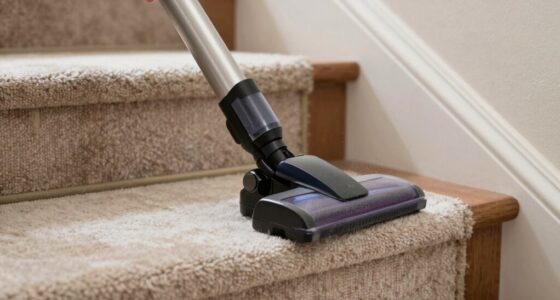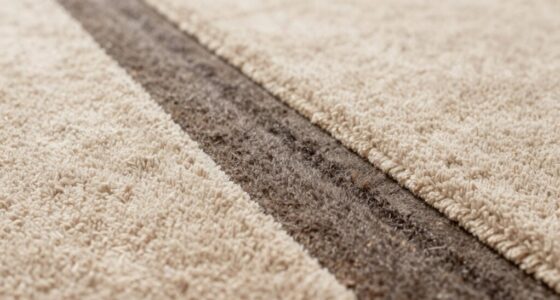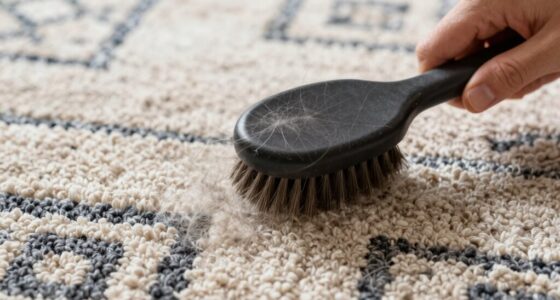
To fluff up carpet matting without damaging fibers, start by vacuuming the area thoroughly to loosen dirt and debris. Use a stiff brush or a rubber ball to gently lift and lift flattened fibers. For deeper fluffing, try steaming with a clothes steamer or a steam cleaner — just be careful not to soak the carpet. Regular gentle brushing and maintenance can restore softness, so keep exploring tips that help preserve your carpet’s plushness.
Key Takeaways
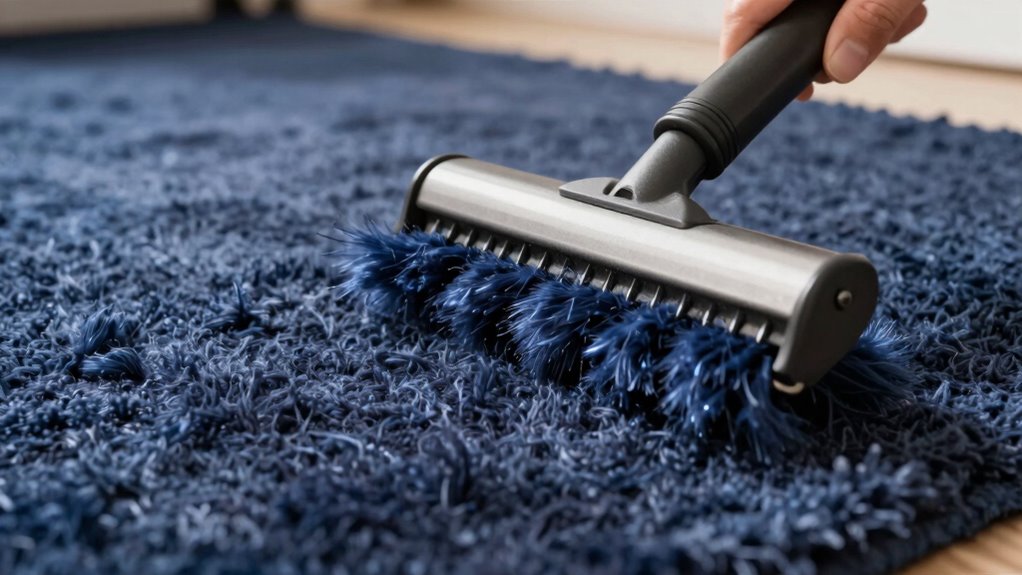
- Use a stiff-bristled brush or carpet rake to gently lift flattened fibers without applying excessive pressure.
- Employ a tennis or rubber ball to roll over matted areas, encouraging fibers to bounce back naturally.
- Vacuum with a beater bar regularly to loosen fibers and remove debris that can cause further matting.
- Avoid aggressive brushing or excessive moisture, which can damage fibers and worsen matting.
- Test fluffing techniques on small hidden areas first to ensure fibers respond well before treating visible sections.
Why Does Carpet Matting Happen and How Does It Affect Your Home?
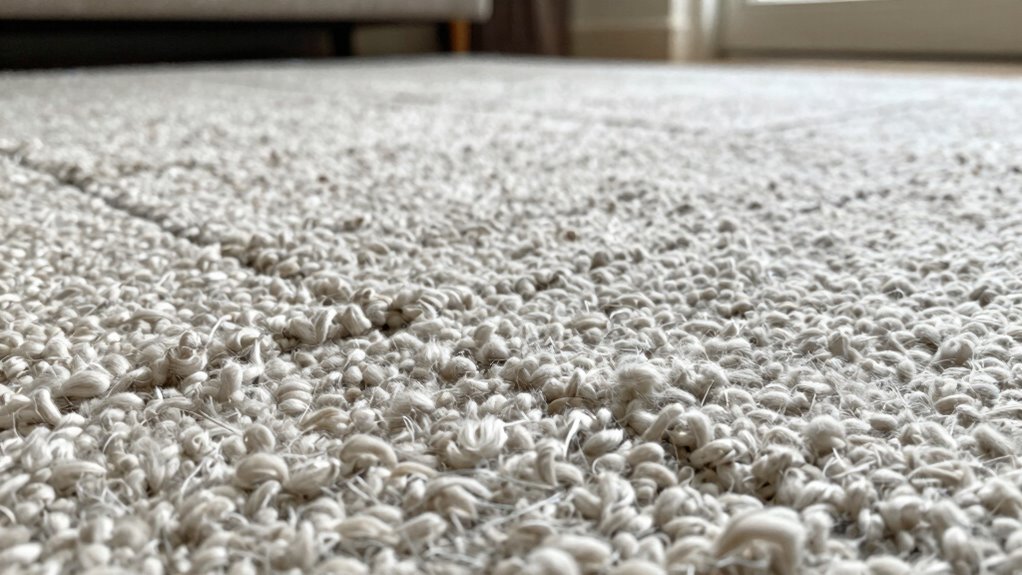
Carpet matting occurs when the fibers become compressed and tangled, often resulting from heavy foot traffic or frequent use. Over time, the natural movement and pressure cause the carpet fibers to lose their loft, leading to a flattened appearance. This not only diminishes the softness and comfort but also impacts your home aesthetics, making your space look worn and dull. When fibers mat, the surface becomes uneven, and dirt or debris can settle more easily, worsening the appearance. Understanding why matting happens helps you recognize the importance of proper maintenance. It’s a sign that your carpet needs some attention to restore its original texture and vibrancy. Addressing matting promptly keeps your home looking fresh and inviting. Additionally, regular vacuuming can help prevent excessive fiber compression and prolong the life of your carpet fibers. Recognizing early signs of fiber damage allows for timely interventions that can help restore the carpet’s original look. Proper maintenance techniques, including gentle fluffing and professional cleaning when necessary, can also help mitigate the effects of matting and extend your carpet’s lifespan. Moreover, employing appropriate cleaning methods can prevent further fiber deterioration and keep your carpet looking its best. Incorporating preventive measures like rotating furniture and using area rugs can also reduce uneven wear and fiber compression over time.
How to Tell If Your Carpet Can Be Fluffed Safely?
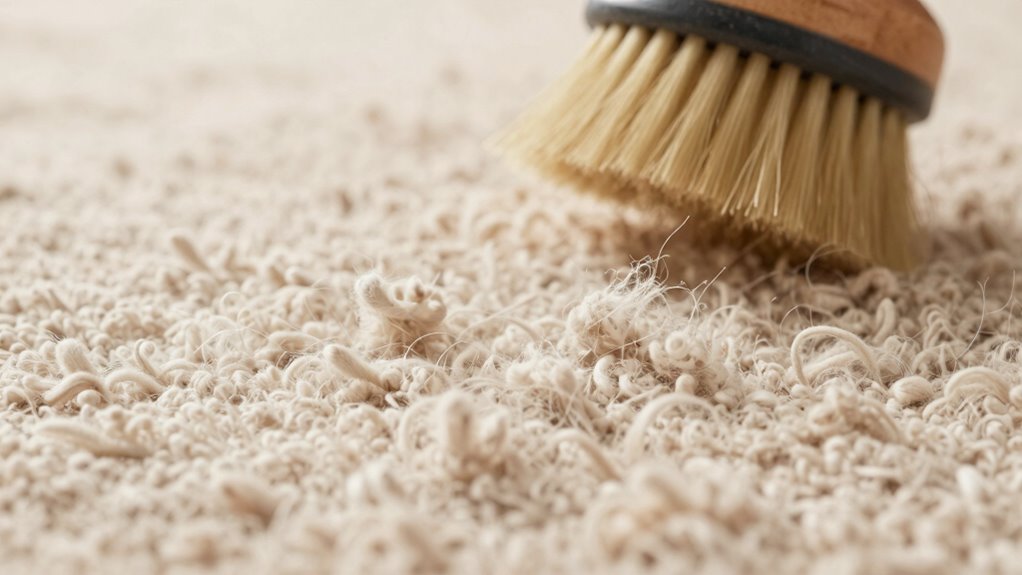
Before fluffing your carpet, check if the material is suitable and won’t be damaged. Look for signs of fiber wear or fraying that could indicate it’s too fragile for manipulation. If you notice any damage, it’s best to avoid aggressive fluffing to prevent further harm.
Carpet Material Compatibility
Not all carpets respond well to fluffing, so it’s important to determine if your specific material is suitable for the process. Synthetic fibers and natural fibers behave differently when fluffed. Synthetic carpets, like nylon or polyester, often tolerate fluffing better but can still be damaged if mishandled. Natural fibers, such as wool or jute, are more delicate and prone to shrinking or fraying. To assess compatibility:
- Check the label for fiber type and care instructions.
- Test a small, hidden area first.
- Feel the carpet’s texture—stiffness may indicate damage risk.
- Consult manufacturer guidelines or seek professional advice.
- Understanding your carpet’s fiber properties helps you avoid costly mistakes and ensures safe, effective fluffing that revives your carpet’s appearance. Additionally, knowing the fiber structure can inform the best technique to use during fluffing, reducing the chance of fiber damage. Being aware of the material composition can also help you choose appropriate cleaning and maintenance methods to prolong your carpet’s lifespan. Incorporating proper fluffing techniques can be supported by understanding the airflow and cleaning methods suitable for your carpet type, which can prevent damage during the process. Recognizing the importance of fiber resilience can further guide you in selecting the most gentle and effective fluffing approach.
Fiber Damage Signs
Determining if your carpet can be safely fluffed begins with inspecting it closely for signs of damage. Look for fiber degradation, which appears as frayed or unraveling fibers, and check for color fading, indicating the fibers are weakening. If these signs are present, fluffing could worsen the damage. Use this table to assess your carpet’s condition:
| Damage Type | How to Spot It | Risk of Fluffing |
|---|---|---|
| Fiber Degradation | Frayed, unraveling fibers | High—avoid fluffing |
| Color Fading | Loss of vibrancy or dull appearance | Moderate—caution advised |
| Structural Wear | Flattened, matted areas | Usually safe to fluff |
Additionally, understanding the fiber characteristics of your carpet can help determine whether fluffing is a suitable remedy. If your carpet shows extensive fiber degradation or significant color fading, it’s best not to attempt fluffing.
Simple Household Tools to Fluff Your Carpet
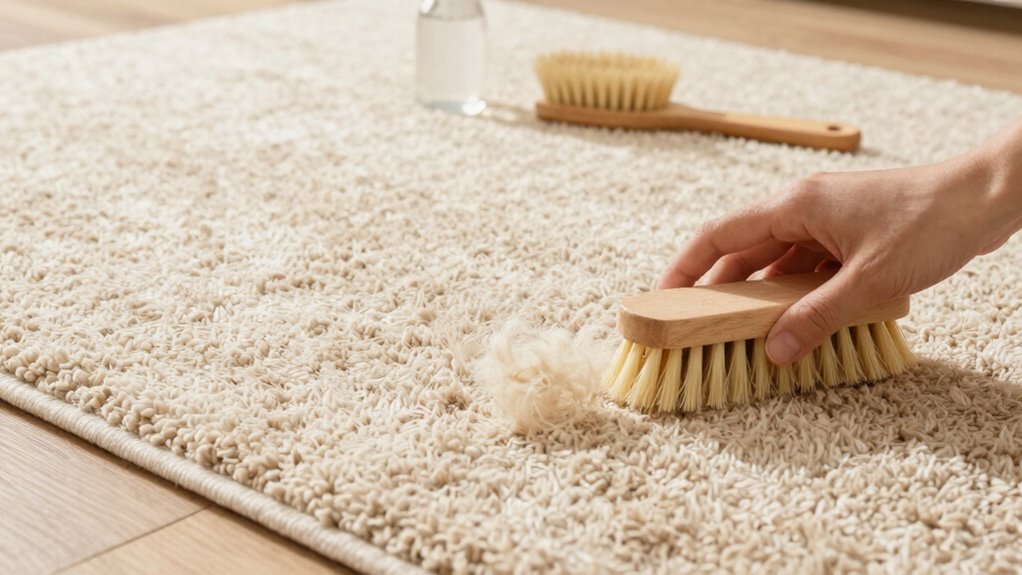
You don’t need specialized equipment to fluff up your carpet—many common household tools can do the job effectively. For DIY maintenance, grab items you already have around the house to restore that plush feel. Here are some simple tools to try:
- A stiff-bristled brush to lift flattened fibers gently, which can help restore the carpet’s original texture.
- An old tennis ball or rubber ball to roll over matted areas, using energetic alignment principles to encourage fibers to bounce back.
- A vacuum cleaner with a beater bar to loosen fibers and improve overall carpet appearance.
- A comb or pet grooming brush to tease out compressed fibers, enhancing their natural fluffiness.
- Regularly maintaining your carpet can prevent matting and prolong its lifespan, keeping it looking fresh over time. Additionally, ensuring proper carpet care practices can help distribute foot traffic’s impact evenly, reducing uneven matting. Incorporating gentle cleaning techniques can also prevent fibers from becoming overly compacted. Proper vacuuming habits are essential for removing debris that could contribute to matting if left unattended.
These household tools can make a noticeable difference without risking damage. Using them correctly helps you maintain your carpet’s softness and freshness, saving money and extending its lifespan. It’s a quick, satisfying way to bring your carpet back to life.
Effective Ways to Restore Your Carpet’s Plushness
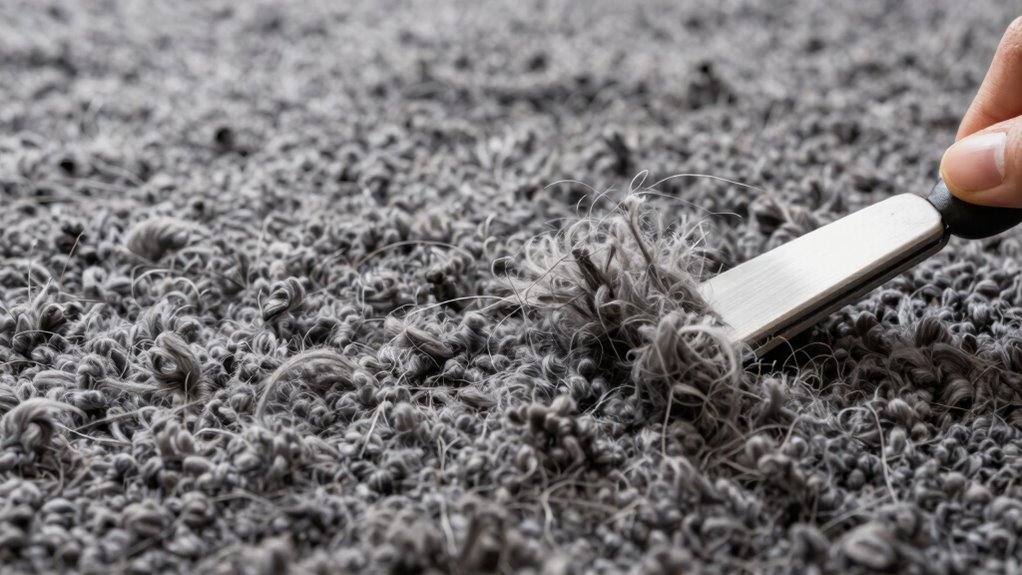
Using household tools to fluff your carpet is a great start, but for deeper restoration of its plushness, targeted techniques can make a significant difference. You can improve your carpet’s feel by performing effective pet hair removal and DIY cleaning methods. Additionally, understanding the importance of fiber alignment can help you better maintain the plushness over time. Properly maintaining your carpet through regular care helps prevent fibers from becoming permanently flattened. Being aware of how fiber structure impacts plushness enables more effective restoration. Here’s a simple approach:
| Technique | Tool Needed | Benefit |
|---|---|---|
| Deep Brushing | Carpet rake or stiff broom | Loosens embedded fibers |
| Light Vacuuming | Upright vacuum with beater bar | Removes dust and pet hair |
| Gentle Fluffing | Carpet brush or paddle | Restores fiber alignment |
| Spot Cleaning | Mild detergent & water | Refreshes worn areas |
Implementing these steps helps lift flattened fibers, bringing back softness without damaging the fibers. Regular maintenance and understanding how to organize your cleaning routines can further prolong the plushness of your carpet over time.
Tips to Prevent Carpet Matting and Keep Floors Fluffy
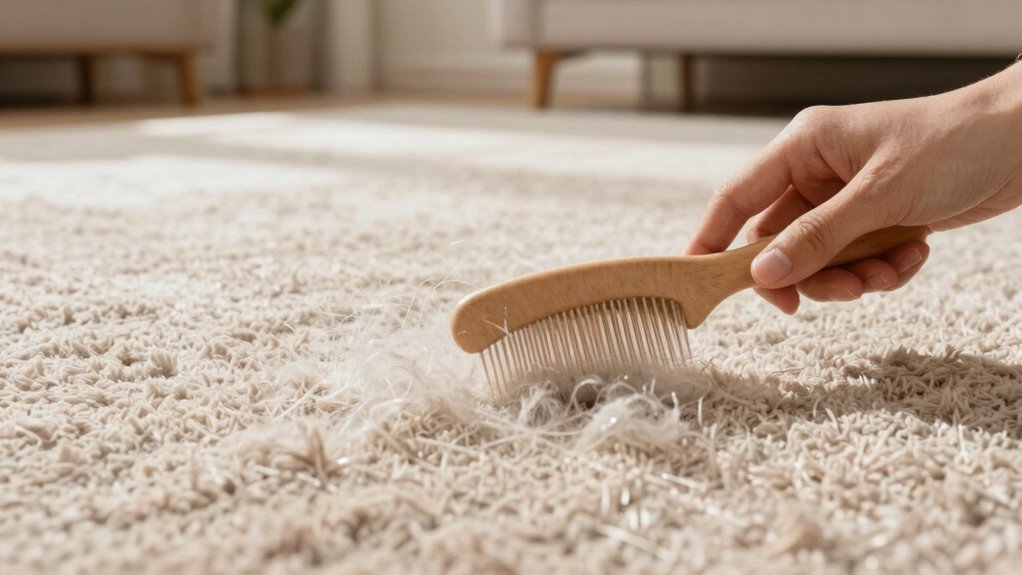
To keep your carpets fluffy and prevent matting, regular vacuuming is essential to remove dirt and debris before they settle deep. Using carpet protectors or rugs in high-traffic areas can also reduce wear and tear. By staying consistent with these practices, you’ll help extend your carpet’s plushness and appearance. Additionally, considering upgrading your carpet material can enhance durability and resistance to matting over time, especially when selecting fibers with fiber treatment designed to maintain softness and resilience. Proper carpet maintenance techniques, such as occasional deep cleaning, can further help preserve your carpet’s texture and prevent premature matting and fiber damage.
Regular Vacuuming Practices
Regular vacuuming is essential for preventing carpet matting and maintaining a fluffy, inviting surface. By adopting proper vacuum techniques and sticking to a consistent maintenance schedule, you protect your carpet’s fibers. Here are key tips to help you stay on track:
- Use gentle, overlapping passes to lift dirt without damaging fibers.
- Vacuum frequently, at least twice a week, to prevent dirt buildup.
- Adjust your vacuum setting to suit the carpet’s pile height for ideal cleaning.
- Empty the bag or canister regularly to maintain suction and efficiency.
Following these practices keeps your carpet plush and prevents matting, ensuring your floors stay cozy and beautiful for years to come.
Use of Carpet Protectors
Carpet protectors are a simple yet effective way to prevent matting and keep your floors fluffy. They act as a barrier between shoes, furniture, and foot traffic, reducing friction that causes fibers to mat. Using a quality carpet protector can considerably improve matting prevention, especially in high-traffic areas. Place mats at entry points to catch dirt and debris before they settle into fibers, which can contribute to matting. Additionally, consider using furniture pads under heavy pieces to distribute weight evenly and avoid crushing fibers. Regularly moving lightweight furniture also helps prevent uneven wear. By incorporating these steps, you minimize fiber crushing and matting, ensuring your carpet stays plush, vibrant, and inviting longer.
When to Call in Professionals for Carpet Repairs
Sometimes, carpet damage is too severe or complex for DIY fixes, making professional help essential. If you’re unsure whether your carpet needs expert attention, consider these signs:
- You notice uneven areas or persistent buckling that won’t respond to stretching.
- The damage affects large sections, risking further wear or safety hazards.
- DIY attempts have failed to restore the carpet’s appearance or padding.
- You need a professional assessment to determine if carpet stretching or repairs are necessary.
Calling in professionals ensures proper evaluation and effective solutions. They can perform precise carpet stretching to eliminate wrinkles and secure the fibers, preventing further damage. Trusting experts preserves your carpet’s integrity and prolongs its lifespan, giving you peace of mind.
Troubleshooting Persistent Flattening in Your Carpet
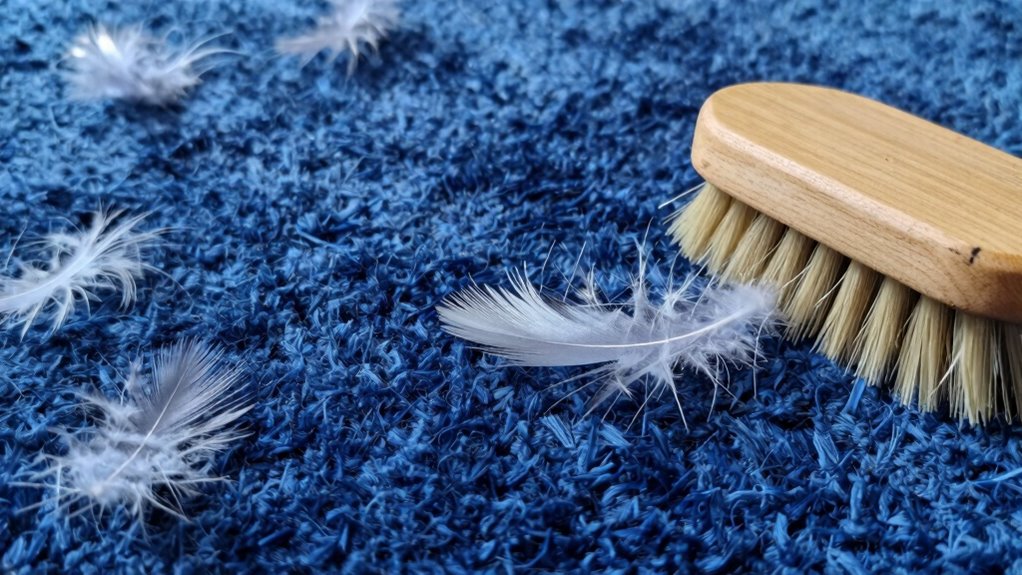
Persistent flattening is a common issue that can detract from your carpet’s appearance and comfort, even after attempting simple fixes. To troubleshoot, start by thoroughly removing pet hair, which can weigh fibers down and cause uneven flattening. Use a pet hair removal tool or vacuum with a brush attachment to lift embedded hair. Next, address any stains that might be contributing to the problem; stain treatment not only cleans but also restores fiber resilience. If flattening persists, try steaming the affected area with a clothes steamer or steam cleaner, which helps lift fibers without damaging them. Avoid aggressive brushing or excessive moisture, as these can worsen matting. Consistent maintenance and gentle methods will help restore your carpet’s fluff and prevent future flattening.
Frequently Asked Questions
Can Certain Carpet Fibers Withstand Fluffing Without Damage?
Certain carpet fibers, like nylon and polyester, can withstand fluffing without damage because of their high fiber durability. You should use gentle fluffing techniques, such as lightly brushing or lifting the fibers with a soft brush, to avoid harm. Avoid aggressive scrubbing or using harsh tools, as these can weaken or fray the fibers. By choosing the right fibers and applying proper fluffing techniques, you keep your carpet looking fresh and undamaged.
How Long Does It Take for a Carpet to Recover After Fluffing?
After fluffing your carpet, it typically takes a few days to a week for it to fully recover, like a gentle breeze restoring a field of grass. During this time, maintain regular vacuuming to lift fibers and prevent stains from settling in. Keep your vacuum well-maintained, avoid heavy traffic initially, and soon your carpet will look vibrant again, showing off its soft, inviting texture once more.
Are There Eco-Friendly Products to Help Restore Carpet Fluffiness?
Yes, there are eco-friendly solutions to restore your carpet’s fluffiness, especially if it’s made from natural fibers. You can use baking soda mixed with essential oils as a gentle deodorizer and fiber booster, or sprinkle a mixture of cornstarch and baking soda to fluff fibers without harsh chemicals. Regularly vacuum, and try gentle brushing or steam cleaning to revive your carpet naturally and safely, keeping it fresh and fluffy.
Does Pet Hair or Debris Impact the Fluffing Process?
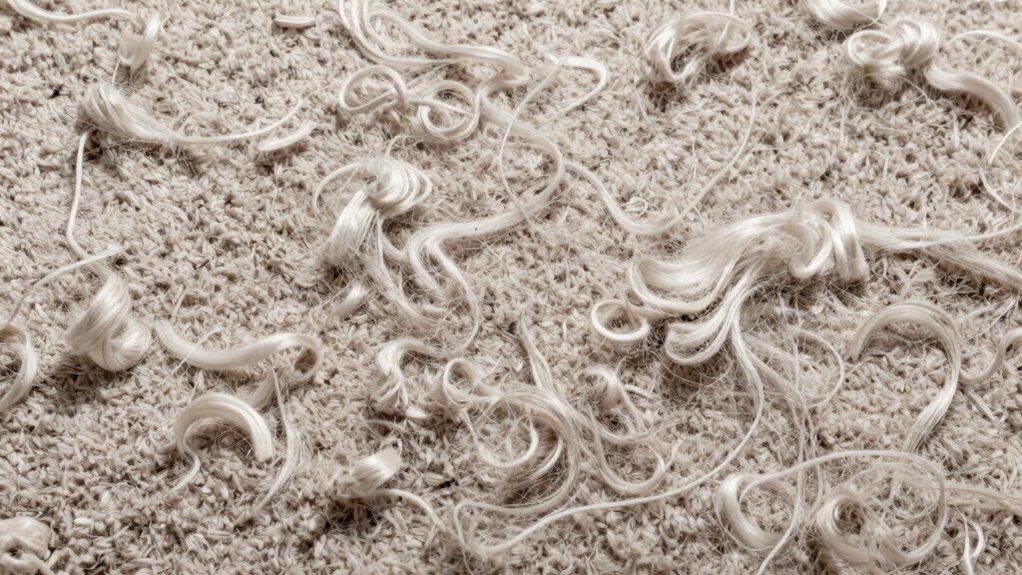
Pet hair and debris are like stubborn knots in your carpet’s hairdo, making fluffing tricky. They can cling to fibers, preventing them from bouncing back smoothly. To keep your fluffing from turning into a battle, do pet hair removal first, using gentle tools, and prevent debris buildup with regular vacuuming. This keeps your carpet’s fibers free to regain their bounce, ensuring a fresh, soft look every time.
Can Professional Cleaning Methods Also Help Fluff and Restore Carpets?
Yes, professional cleaning methods can help fluff and restore carpets effectively. Skilled technicians use advanced cleaning techniques like steam cleaning or hot water extraction to loosen compacted fibers and lift dirt. These methods not only deep clean but also rejuvenate your carpet’s appearance and texture. Regular professional cleanings prevent matting, maintain fiber health, and keep your carpet looking fresh, soft, and fluffy for longer.
Conclusion
Did you know that regular fluffing can extend your carpet’s lifespan by up to 30%? By understanding why matting happens and using simple techniques, you can keep your carpets looking fresh and plush. Remember, with just a few household tools and proper care, you can restore your carpet’s softness without damaging fibers. Don’t wait until it’s too late—fluff your carpets regularly and enjoy a cozy, inviting space for years to come.