After a deep clean, your carpet fibers open up and loosen dirt, making it look fresher initially. However, if you don’t vacuum regularly afterward, the loosened particles settle quickly and cause your carpet to appear dirty again sooner. Using an effective vacuum with strong suction and maintaining a consistent cleaning schedule helps prevent rapid dirt buildup. Keep going to uncover more tips to keep your carpets cleaner longer.
Key Takeaways
- Deep cleaning temporarily loosens dirt, making carpets appear fresher but leaving debris that settles back quickly.
- Insufficient vacuuming after cleaning allows loosened particles to re-accumulate on the surface.
- Using a low-quality or poorly maintained vacuum reduces debris removal, causing carpets to re-dirty faster.
- Increasing vacuuming frequency, especially in high-traffic areas, helps prevent dirt buildup post-cleaning.
- Regularly maintaining and upgrading vacuum equipment ensures more effective dirt removal and longer-lasting cleanliness.
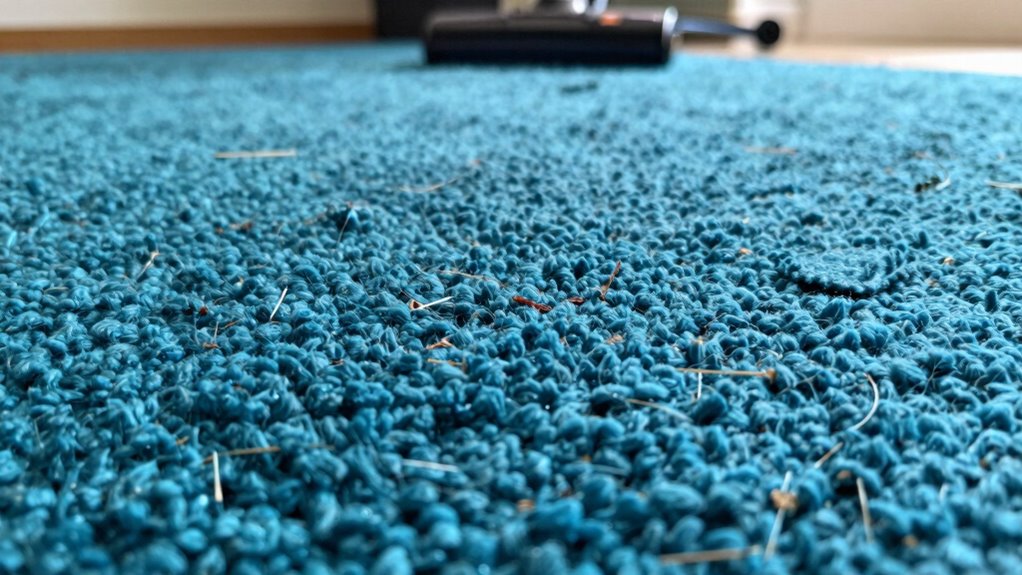
Have you ever noticed your carpets seem to get dirty faster after a deep clean? It might seem counterintuitive, but it’s a common experience. The reason often comes down to how the deep cleaning process affects your carpets’ surface and your vacuum effectiveness. When you opt for a deep clean, whether with steam, chemicals, or professional services, it can loosen dirt and debris embedded deep in the fibers. While this initially makes the carpets look fresher, it can leave behind a layer of loosened particles that settle back onto the surface more quickly. If your vacuum isn’t highly effective at removing these particles or if you don’t adjust your cleaning frequency, your carpets may start to look dirty sooner than expected.
Deep cleaning can loosen dirt, causing carpets to look dirty faster if not vacuumed properly afterward.
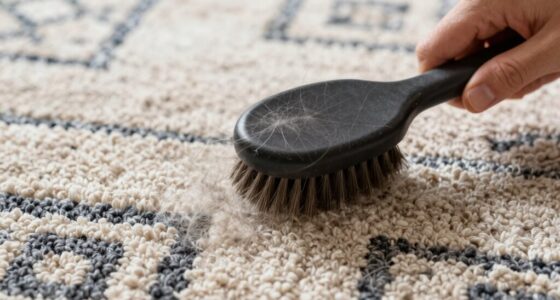
Vacuum effectiveness plays an essential role here. If your vacuum isn’t powerful enough or doesn’t have strong suction, it won’t pick up all the loosened dirt after a deep clean. That leftover debris can build up faster, creating a cycle where your carpets appear dirty again sooner. To prevent this, you need to guarantee your vacuum is well-maintained, with clean filters and a good brush roll, and that you’re using the right settings for your carpet type. Investing in a high-quality vacuum can make a significant difference in maintaining cleanliness and reducing the appearance of dirt buildup.
Another key factor is cleaning frequency. After a deep clean, it’s tempting to go back to your regular schedule, but that can work against you in this situation. If you don’t vacuum regularly after a deep clean—say, at least once or twice a week—you’re allowing dirt and dust to accumulate faster. The loosened particles from the deep clean settle back into the fibers, especially if you’re not removing them promptly. Adjusting your cleaning frequency for a few weeks after a deep clean can help keep your carpets looking fresh longer. This means increasing your vacuuming sessions during this period, ensuring you’re covering all high-traffic areas thoroughly.
Additionally, it’s important to understand that deep cleaning temporarily opens up the carpet fibers, making them more receptive to dirt and dust. If you don’t follow up with consistent vacuuming, those fibers can trap dirt more easily, leading to a quicker re-dirtying process. Using a vacuum with adjustable height settings and a strong suction power will help dislodge and remove debris more effectively. Combining this with a more frequent cleaning schedule immediately after a deep clean will help your carpets stay cleaner, longer. Moreover, understanding the importance of contrast ratio can help you choose a vacuum that maximizes cleaning efficiency, especially in low-light conditions where dirt and debris are less visible.
Frequently Asked Questions
Does Using the Wrong Cleaning Products Cause Carpets to Re-Soil Quickly?
Using the wrong cleaning products can definitely cause your carpets to re-soil quickly. Poor cleaning product selection may leave behind residues that attract dirt, making carpets appear dirty faster. To prevent this, choose appropriate cleaning products and follow proper residue removal techniques. Guarantee thorough rinsing and extraction during cleaning to avoid leftover residues, which helps your carpets stay cleaner longer and maintain their fresh appearance.
How Often Should I Schedule Professional Deep Cleans for Optimal Carpet Health?
You should schedule professional deep cleans about once every 12 to 18 months for ideal carpet health. Between visits, vacuum frequently—at least once a week—to prevent dirt buildup. If you spot stains, treat them promptly with appropriate stain removers. Regular vacuuming and timely stain treatment help maintain your carpet’s cleanliness longer, reducing the need for more frequent deep cleans and keeping your carpets looking fresh and healthy.
Can Improper Drying Techniques Lead to Faster Dirt Accumulation?
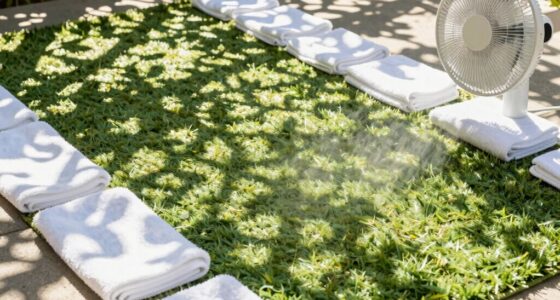
Improper drying techniques can definitely lead to faster dirt buildup. Imagine leaving a sponge soaked in water—moisture retention encourages dirt and mold growth. When carpets don’t dry quickly, airflow disruption traps moisture, creating an environment for dirt to cling more easily. You might notice your carpet gets dirty sooner after cleaning if it’s not thoroughly dried. Ensuring proper airflow speeds up drying, reducing moisture retention and helping your carpet stay cleaner longer.
Are Certain Carpet Fibers More Prone to Rapid Soiling After Cleaning?
Certain carpet fibers are more prone to rapid soiling after cleaning because of their fiber porosity and stain susceptibility. For example, natural fibers like wool absorb more dirt and spills, making them dirtier faster. Synthetic fibers such as nylon are less porous but can still attract dirt if not properly cleaned or protected. Knowing your carpet’s fiber type helps you choose the right cleaning methods and prevent quick re-soiling.
How Does Improper Vacuuming Before Cleaning Affect Post-Cleaning Dirt Buildup?
If you skip proper pre clean preparation and don’t use high-quality vacuuming, dirt and debris can remain deep in your carpet fibers. This residual dirt gets pushed to the surface during cleaning, causing rapid dirt buildup afterward. Using a powerful vacuum before deep cleaning guarantees loose dirt is removed, reducing the chance of quick re-soiling. Investing in good vacuum quality and thorough pre-clean prep keeps your carpets cleaner longer.
Conclusion
So, savvy about surfaces, steer clear of shortcuts that invite grime. Regularly maintain, meaningfully mop, and methodically minimize dirt buildup. By balancing the benefits of deep cleaning with proper prevention, you’ll keep carpets cleaner longer. Remember, consistent care curbs grime, guards against griminess, and grants you glorious, gleaming carpets. Stay smart, stay simple, and your carpets will stay cleaner, longer—saving you stress, time, and trouble in the long run.