
Using high heat when cleaning your synthetic rug can warp fibers, cause discoloration, and reduce its lifespan. Hot water or steam may seem effective, but it can weaken fibers and fade colors. Instead, opt for lukewarm or cool water and gentle cleaning techniques to protect your rug’s structure and vibrancy. Proper temperature control is key. Keep exploring to discover more tips for safe, effective synthetic rug care.
Key Takeaways
- Always use lukewarm or cool water during cleaning to prevent fiber warping and melting.
- Avoid hot water or steam, as high heat weakens synthetic fibers and causes permanent damage.
- Check the rug’s care instructions to determine safe temperature ranges before cleaning.
- Use gentle cleaning tools and avoid high heat settings on equipment to protect fiber integrity.
- Proper temperature control preserves rug shape, color vibrancy, and extends the lifespan of synthetic fibers.
Why Excessive Heat Can Damage Your Synthetic Rug
Excessive heat during cleaning can severely damage your synthetic rug. Synthetic fibers are known for their durability and fiber resilience, but they aren’t heat-proof. High temperatures can weaken the fibers, causing them to warp, melt,, or lose their shape. When you expose your rug to intense heat, you risk compromising its structural integrity, leading to permanent damage. This damage not only affects the rug’s appearance but also shortens its lifespan. You might think that hot water or steam will clean more effectively, but too much heat can undo the benefits of synthetic durability. Always stick to moderate temperatures to protect your rug’s fibers. Understanding fiber heat tolerance is also important to prevent heat buildup during cleaning, which can further damage the fibers. Knowing temperature thresholds can guide you in avoiding the heat mistake that warps fibers and prolongs your rug’s life.
Is Hot Water Safe for Cleaning Synthetic Rugs?
Hot water is commonly used in cleaning, but when it comes to synthetic rugs, you need to be cautious. Excessive heat from hot water can cause fiber melting, which weakens the rug’s structure. Synthetic fibers are sensitive to heat damage, and high temperatures can warp or distort their shape. Using hot water may seem effective for deep cleaning, but it risks compromising the rug’s integrity. Instead, opt for lukewarm or cool water to prevent fiber melting and preserve the rug’s appearance. Always check your rug’s care instructions before cleaning and avoid exposing it to high temperatures, as heat damage can be irreversible. Proper temperature control guarantees your synthetic rug stays clean without risking long-term damage. Additionally, understanding passive voice detection can help improve your overall writing clarity and effectiveness. Being aware of fiber sensitivity when cleaning can also ensure you choose the safest methods for your rug’s longevity. Furthermore, choosing the right cleaning techniques can help prevent heat-related damage, ensuring the fibers remain intact and the rug maintains its original look. To further protect your investment, consider using appropriate cleaning products that are formulated for synthetic fibers.
How Heat Causes Color Fading and Discoloration in Synthetic Fibers
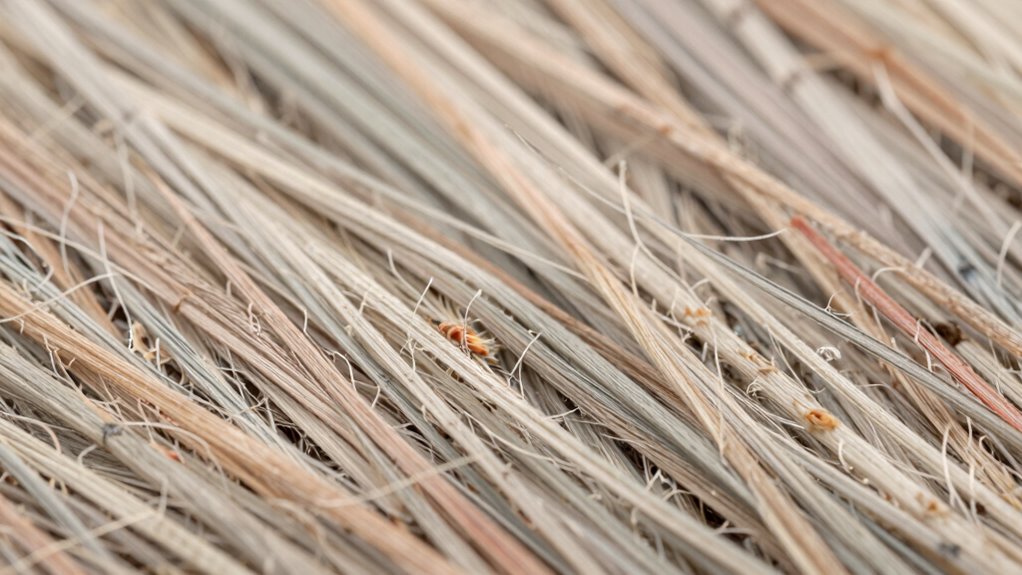
When synthetic fibers are exposed to high temperatures during cleaning, their vibrant colors can fade or become uneven. Heat accelerates fiber discoloration by breaking down the dye molecules, leading to dye fading that diminishes the rug’s original brightness. This process weakens the bond between dyes and fibers, causing colors to dull or develop uneven patches. Overheating can also intensify color loss, making the damage more noticeable and permanent. As a result, your rug’s appearance can suffer considerably, losing its visual appeal and value. To preserve the richness of synthetic fibers, it’s essential to avoid using excessive heat during cleaning. Keeping temperatures moderate helps prevent fiber discoloration and maintains the rug’s original color vibrancy for longer. Understanding fiber properties is crucial for effective and safe cleaning practices that protect your rug’s appearance, especially since heat sensitivity varies among synthetic materials. Recognizing the thermal limits of different fibers can help you avoid unintentional damage during cleaning. Being aware of heat-induced damage can further improve your cleaning strategy and prolong the life of your rug.
How to Spot Fiber Warping and Damage After Cleaning
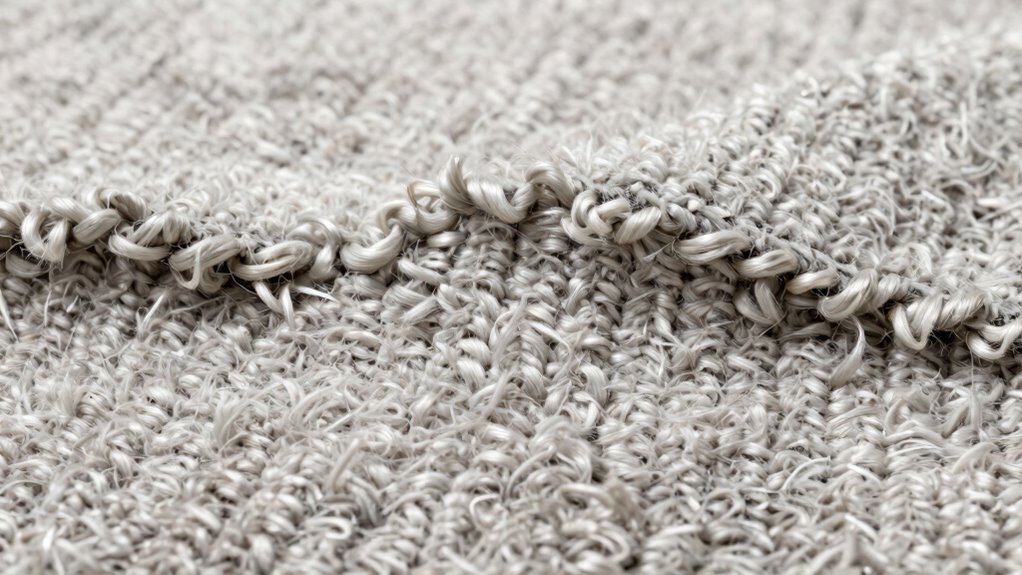
After cleaning your synthetic rug, it’s important to check for fiber warping and damage, as these issues can compromise the rug’s appearance and longevity. Look closely at the fibers to spot subtle signs of distortion or unevenness. Incorporating proper cleaning techniques into your cleaning routine can help monitor the condition of your rug over time. Here are key indicators to watch for: 1. Bended or curled fibers that don’t lie flat 2. Areas where fibers appear stretched or misshapen 3. Frayed or frizzed fibers indicating fiber damage. Being aware of art care principles can also guide you in choosing the appropriate cleaning methods. Additionally, understanding local craft traditions can inform you about authentic cleaning products and techniques suited for your rug type. These signs suggest heat or improper cleaning techniques caused fiber warping or damage. Identifying these issues early allows you to address them before they worsen, helping preserve your rug’s structure and vibrant look. Regular inspection ensures your synthetic rug stays beautiful and durable over time.
Benefits of Gentle Cleaning Techniques for Synthetic Rugs
Using gentle cleaning techniques on your synthetic rug not only helps avoid fiber warping and damage but also preserves its vibrant appearance and structural integrity. These methods are especially important for maintaining various area rug patterns and ensuring they stay sharp and clear. Different synthetic fiber types, like nylon or polyester, respond best to mild cleaning, preventing unnecessary stress or distortion. Gentle techniques reduce the risk of color fading and fiber breakdown, keeping your rug looking fresh longer. They also help maintain the rug’s texture, softness, and overall durability. By avoiding harsh chemicals or vigorous scrubbing, you protect your investment and keep your rug’s intricate designs and fiber quality intact. Incorporating smart cleaning tools that utilize gentle, adaptive methods can further enhance the longevity of your rug. Additionally, understanding fiber types and their cleaning requirements ensures you select the most suitable approach for your specific rug. Proper cleaning techniques are essential for preventing damage caused by improper maintenance. Using techniques aligned with proper cleaning practices helps ensure the fibers stay aligned and the rug’s pattern remains pristine. Regularly maintenance routines also contribute significantly to extending the life of your synthetic rug, making it look new for years. Overall, gentle cleaning is key to prolonging the life and beauty of your synthetic rug.
How to Clean Your Synthetic Rug Safely Without Heat
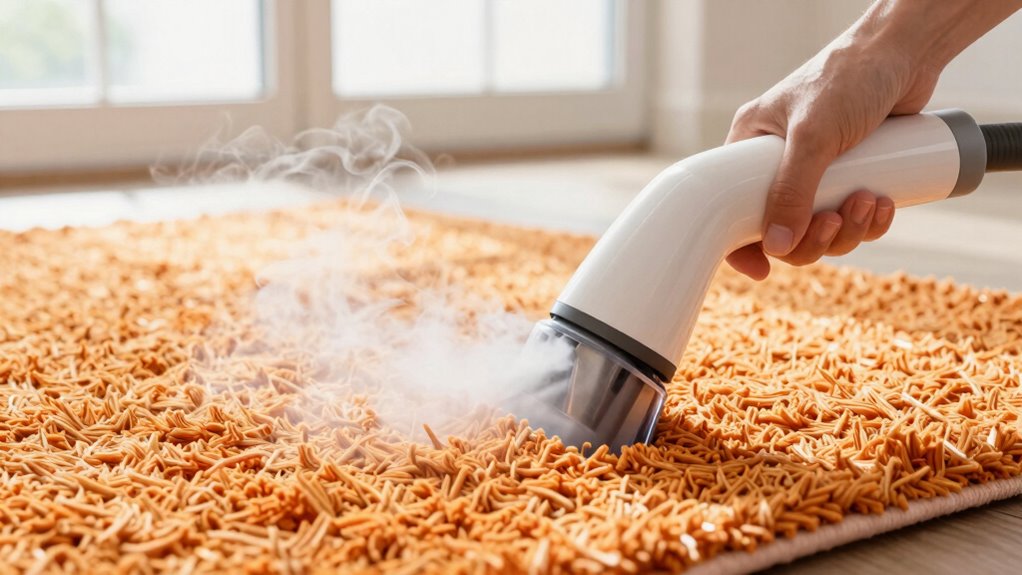
To clean your synthetic rug safely without heat, start by thoroughly vacuuming to remove loose dirt and debris. Next, perform colorfastness testing by dabbing a small, hidden area with water and mild detergent to verify colors won’t bleed. Proper fiber identification helps determine the right cleaning approach, preventing damage. Here are three essential steps:
- Use a mild, pH-balanced cleaner suited for synthetic fibers.
- Apply the cleaning solution with a soft cloth or sponge, avoiding excess moisture.
- Gently blot, never rub, to lift stains without harming fibers.
Avoid heat sources like steam or hot water, which can warp synthetic fibers. Recognizing the importance of fiber identification can help you choose the most effective cleaning method and prevent costly damage. Following these steps helps maintain your rug’s appearance and fiber integrity without risking damage.
Best Cleaning Products for Synthetic Rugs That Won’t Harm Fibers
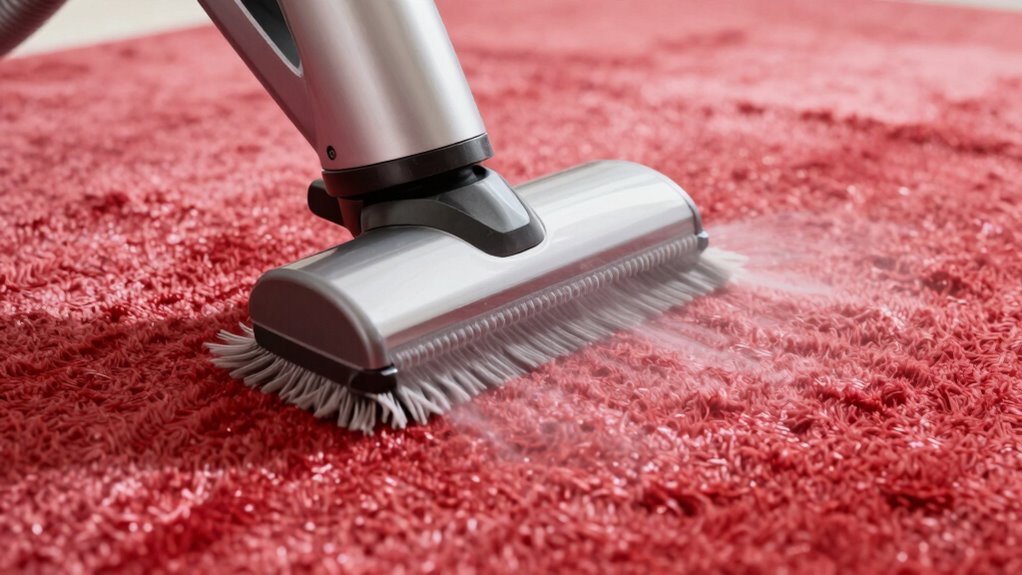
Choosing the right cleaning products is essential to protect your synthetic rug’s fibers while effectively removing dirt and stains. Look for gentle, pH-balanced solutions that preserve fiber durability and dye stability. Avoid harsh chemicals that can weaken fibers or cause fading. Instead, opt for eco-friendly or manufacturer-recommended cleaners designed specifically for synthetic materials. Visualize your options with this table:
| Product Type | Effect on Fibers | Dye Preservation |
|---|---|---|
| Mild Detergents | Maintains durability | Preserves color |
| Enzyme Cleaners | Breaks down stains safely | No fading |
| Vinegar Solutions | Gentle, non-abrasive | Keeps dyes stable |
| Commercial Synthetic Cleaners | Designed for fibers | Formulated for dye stability |
Choosing appropriate products ensures your rug stays vibrant and resilient over time.
Tips to Maintain Your Synthetic Rug’s Appearance Over Time
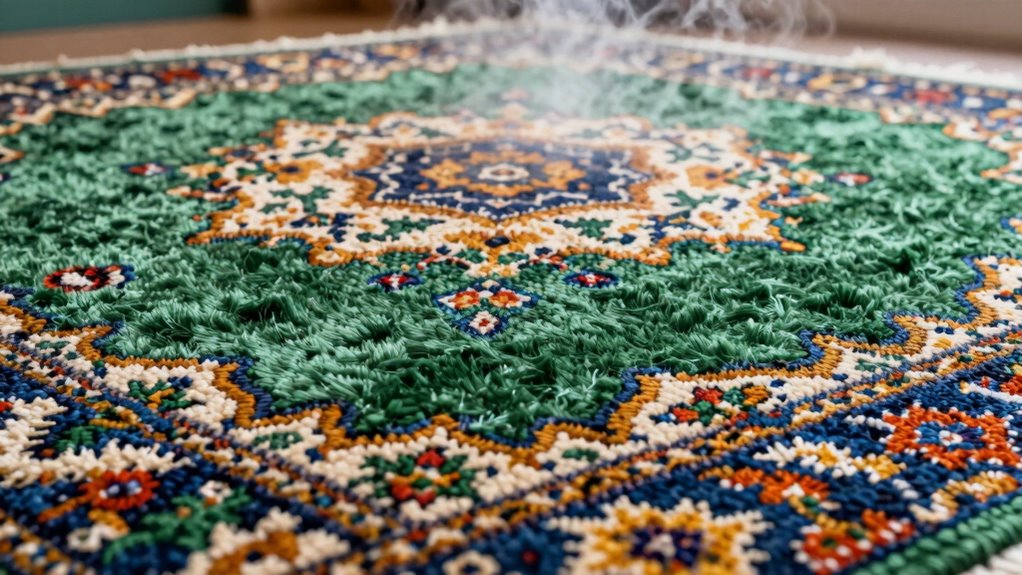
Regularly vacuum your synthetic rug to prevent dirt from settling into fibers, which can cause fading and wear over time. This simple step keeps your rug looking fresh longer. To maintain its appearance, consider these tips:
- Use a gentle brush or handheld vacuum for fringe cleaning to prevent fraying and keep edges tidy.
- Regularly remove pet hair with a rubber broom or lint roller, especially in high-traffic areas.
- Spot clean spills immediately with a mild, synthetic-friendly cleaner, avoiding excessive heat to prevent fiber damage.
Common Mistakes to Avoid When Cleaning Synthetic Rugs
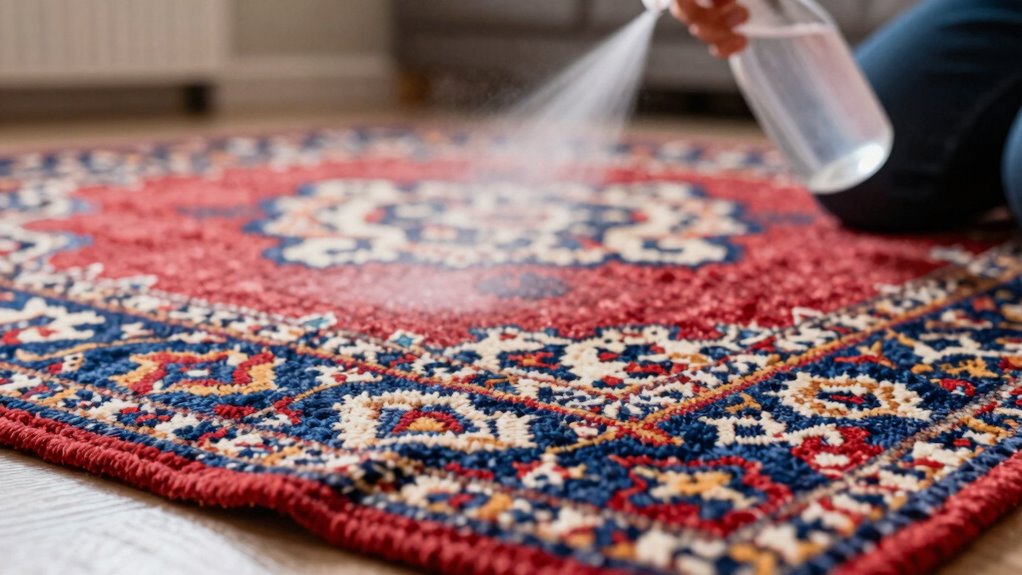
When cleaning your synthetic rug, avoid using hot water, as it can damage the fibers and cause fading. Steer clear of harsh chemicals, which may weaken the rug’s material and lead to quicker wear. Stick to gentle cleaning methods to keep your rug looking fresh and lasting longer.
Using Hot Water
Have you considered that using hot water to clean your synthetic rug might do more harm than good? Hot water can cause heat damage and fiber warping, compromising your rug’s appearance and durability. To avoid these issues, keep these points in mind:
- Hot water can weaken synthetic fibers, making them more prone to tearing.
- Excessive heat causes fibers to warp, leading to permanent distortions.
- Using lukewarm or cold water preserves fiber integrity and prevents warping.
Always opt for cooler water when cleaning synthetic rugs, especially during deep cleaning. Avoid the temptation of hot water, as it can undo your efforts by damaging fibers and causing irreversible warping. Proper temperature control guarantees your rug stays beautiful and intact longer.
Relying on Harsh Chemicals
Relying on harsh chemicals to clean your synthetic rug can do more harm than good, as these substances often damage fibers and strip away protective coatings. Chemical overuse weakens the rug’s structure, leading to accelerated fiber degradation over time. Strong cleaning agents may seem effective initially, but they can cause discoloration, brittle fibers, and a loss of texture. Instead, opt for gentle, pH-balanced cleaners designed specifically for synthetic materials. Always test a small area first, and avoid scrubbing aggressively. Using the wrong chemicals undermines your efforts to clean and can permanently harm your rug. Protect your investment by choosing safer cleaning methods that preserve fiber integrity and maintain the rug’s appearance for years to come.
When to Call Professionals for Safe Synthetic Rug Cleaning
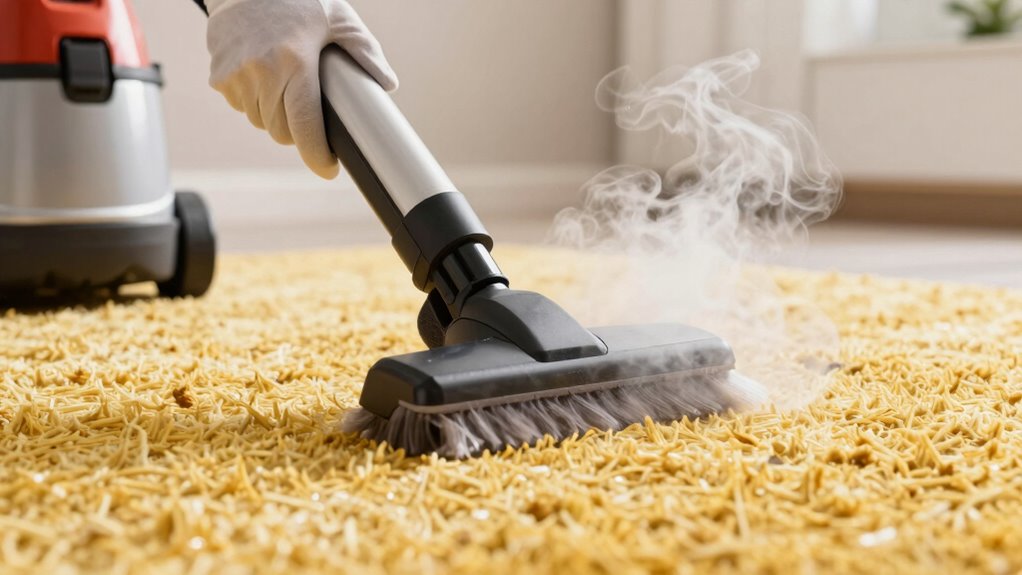
If you notice deep stains that won’t lift or suspect damage to delicate fibers, it’s time to call in professionals. They have the right tools and expertise to clean safely without causing further harm. Recognizing these signs helps protect your rug and keeps it looking its best.
Recognizing Deep Stains
How can you tell if a stain on your synthetic rug is truly deep and requires professional cleaning? Deep stains often cause fiber discoloration that isn’t easily lifted. If the stain persists after standard cleaning, it may be more than surface level. Look for these signs:
- The stain has spread or worsened over time.
- You notice dye bleeding or color fading around the affected area.
- The discoloration feels embedded, not removable with simple cleaning solutions.
Deep stains often involve dye bleeding or fiber discoloration that penetrates beyond the surface. Attempting aggressive cleaning can warp fibers or set the stain further. When in doubt, calling professionals ensures safe, thorough removal without risking damage.
Handling Delicate Fibers
Sometimes, synthetic fibers are more delicate than they appear, and aggressive cleaning methods can cause irreparable damage. If your rug shows signs of fiber fragility—such as fraying or shedding—it’s best to avoid harsh scrubbing or high heat, which can weaken fibers further. Additionally, if your rug has dyes that seem to fade or bleed easily, handling it improperly might compromise dye stability. In these cases, calling in professionals is the safest option. Experts use specialized techniques and gentle cleaning agents designed for delicate fibers, minimizing the risk of warping or discoloration. Recognizing when your rug’s fibers are fragile or dyes are unstable helps you avoid costly damage and preserves your rug’s appearance and longevity. When in doubt, turn to professionals for expert care.
Frequently Asked Questions
Can Cold Water Effectively Clean Synthetic Rugs Without Causing Damage?
Yes, cold water cleaning effectively cleans your synthetic rug without causing damage. Using cold water helps preserve the fibers and prevents warping or shrinking. You should avoid hot water, which can weaken or distort synthetic fibers. By opting for cold water cleaning, you protect your rug’s quality and maintain its appearance longer. Always test a small area first and use gentle cleaning methods to guarantee ideal synthetic rug preservation.
Are There Specific Cleaning Agents Recommended for Synthetic Fibers?
Ever wondered what cleaning agents work best on synthetic fibers? You should opt for mild, pH-balanced cleaners designed specifically for synthetic rugs. These cleaning agents effectively lift dirt without damaging fibers or causing fading. Avoid harsh chemicals like bleach or ammonia, which can weaken synthetic fibers over time. Always test a small, inconspicuous area first to guarantee compatibility, and follow manufacturer instructions for the best results.
How Often Should I Clean My Synthetic Rug to Prevent Fiber Damage?
You should clean your synthetic rug every 6 to 12 months to maintain its appearance and prevent fiber damage. Follow a consistent cleaning schedule, especially in high-traffic areas, to keep dirt and debris from settling in. Regular vacuuming between deep cleanings helps prolong the rug’s lifespan. Avoid over-wetting or exposing the fibers to excessive heat during cleaning, which can cause warping and damage.
What Signs Indicate My Synthetic Rug Needs Professional Cleaning?
In the blink of an eye, your rug can lose its luster. If you notice color fading or unpleasant odors lingering despite regular cleaning, it’s time to call in professionals. These signs indicate deep-seated dirt or mold that DIY methods can’t tackle. Don’t wait for stains or damage to worsen—professional cleaning restores your rug’s vibrancy and freshness, ensuring it stays beautiful and healthy for years to come.
Does Steam Cleaning Pose Risks to Synthetic Rug Fibers?
Steam cleaning can pose risks to synthetic rug fibers because of potential steam damage, which may cause fiber distortion. When you use excessive heat or too much moisture, fibers can warp or become misshapen. To avoid this, make sure professional cleaners use controlled steam methods, and never apply high heat directly. Proper technique prevents damage, helping your rug stay vibrant and intact while effectively removing dirt and stains.
Conclusion
Avoid the heat mistake by sticking to gentle cleaning methods and cool water. Excessive heat can warp fibers, fade colors, and cause irreversible damage to your synthetic rug. Think of it like cooking—too much heat ruins the texture and appearance. By being cautious and choosing the right products, you’ll keep your rug looking fresh and vibrant for years. Remember, when in doubt, calling professionals is your safest bet for long-lasting beauty.