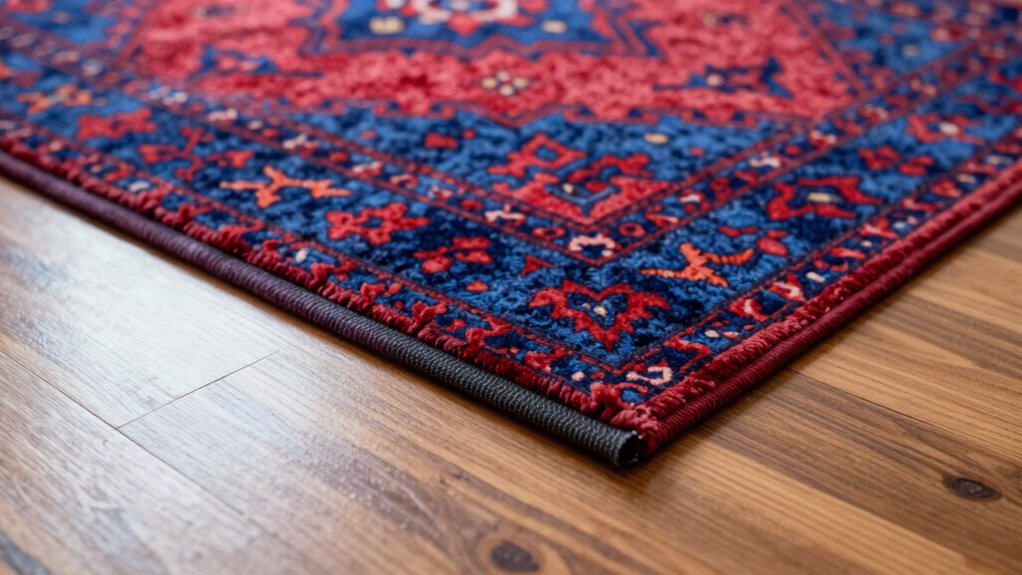
To prevent your area rug from sliding without leaving sticky residue, choose a residue-free rug pad that matches your floor type, such as natural fiber or textured pads designed for non-slip grip. You can also use rubber dots or strips at the corners and make certain the rug is properly placed and flat. Regular maintenance and adjusting placement help keep it secure. Keep exploring for more tips to maintain a safe, residue-free setup.
Key Takeaways
- Use residue-free non-slip rug pads made of natural or rubber materials compatible with your floor type.
- Position the rug against walls or in high-traffic areas to naturally reduce movement.
- Fold the edges of the rug underneath for added stability without adhesives.
- Regularly clean the floor and underside of the rug to prevent debris that can cause slipping.
- Add rubber dots or strips to rug corners for extra grip without leaving residue.
Why Do Rugs Slip and How Residue-Free Solutions Help

Rugs often slip because their backing isn’t designed to grip the floor securely, especially on smooth surfaces like hardwood or tile. This rug slippage happens because the backing lacks enough friction to stay put. Many people turn to adhesive alternatives to prevent this issue without using messy glues or tapes that leave residue. Options like non-slip rug pads or double-sided tapes designed for flooring provide grip without damage. These residue-free solutions work by increasing friction between the rug and the floor, keeping it in place during daily activities. They’re easy to install and remove, making them a practical choice for maintaining the look of your space without the hassle of cleaning sticky residue. Using these alternatives ensures your rug stays put safely and effortlessly. Additionally, understanding your flooring type can help you select the most effective clean-home systems to keep your space safe and tidy. Properly selecting flooring-compatible solutions can further enhance safety and prevent slips. When choosing a rug grip, consider the material compatibility to ensure it works well with your specific flooring type. Selecting the right solution also involves considering the rug material, as different fabrics may react differently to various grip options.
How to Choose the Best Residue-Free Rug Pad for Your Floors
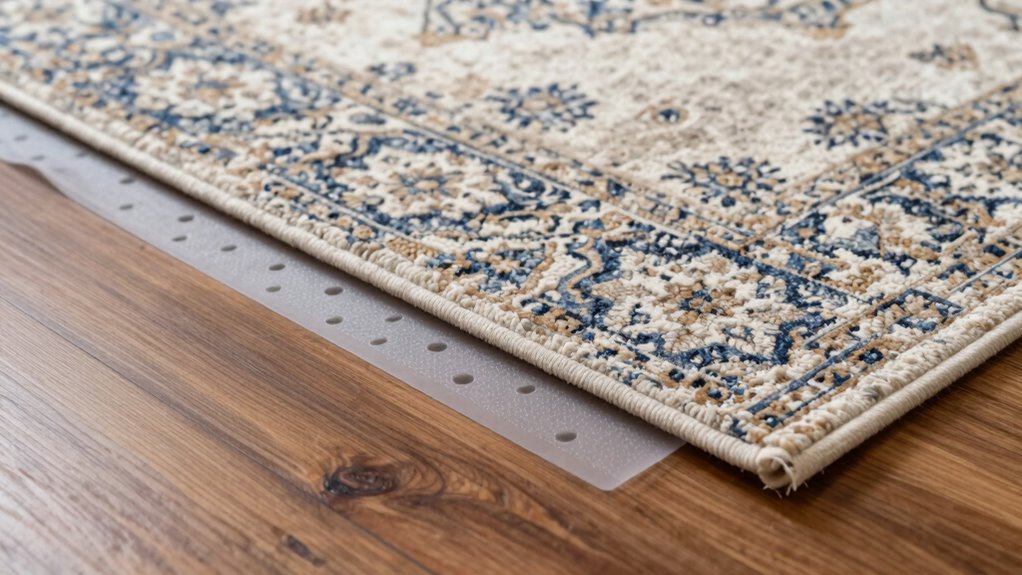
Choosing the right residue-free rug pad starts with understanding your floor type and how much grip you need. Focus on fiber density and pad thickness to find the best match. Higher fiber density offers better grip and prevents slipping, especially on smooth surfaces like wood or tile. Thicker pads provide extra cushioning but may reduce grip if too plush. To select the best pad:
Choose a residue-free rug pad with the right fiber density and thickness for your floor type to ensure safety and comfort.
- Match fiber density to your floor type—denser fibers suit hardwood, while lower density works on carpet.
- Choose a pad thickness that balances comfort and grip, avoiding overly thick pads on slick floors.
- Verify the material composition to guarantee it’s residue-free and safe for your flooring.
- Considering boho-inspired decor styles, selecting eco-friendly and natural fiber pads can enhance your space’s aesthetic while maintaining safety. Additionally, understanding fiber density can help you select a pad that offers optimal grip without damaging your floors. Incorporating non-slip materials designed for specific flooring types can further improve safety and stability. Being aware of floor surface properties can help you make more informed choices for better safety and longevity.
Simple Friction Techniques to Keep Your Rug in Place
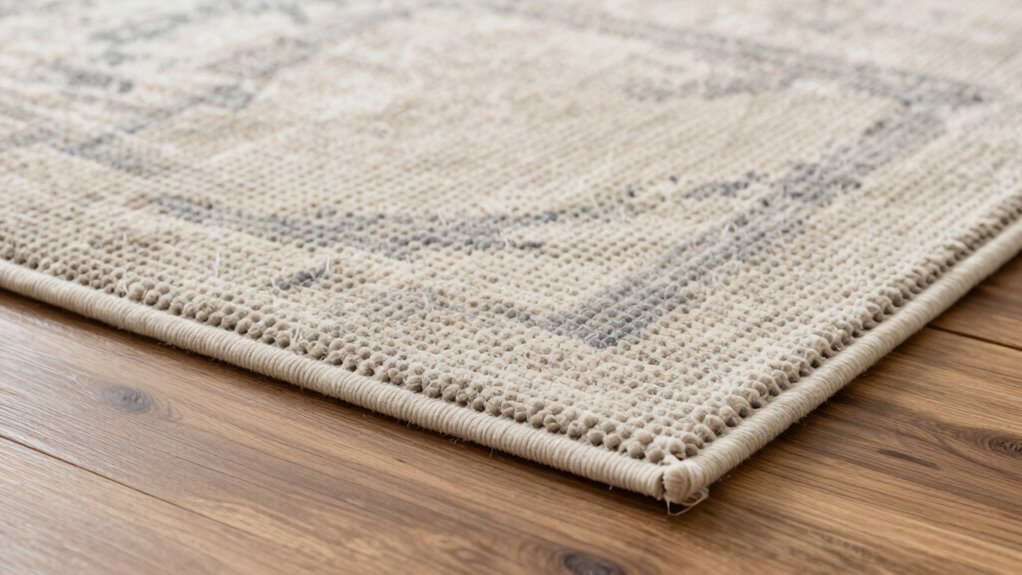
Even simple friction techniques can effectively prevent your rug from slipping, without the need for adhesives or bulky pads. Using friction methods, like placing your rug on a textured or non-slip surface, increases grip naturally. You can also try strategic placement strategies, such as positioning the rug against walls or in high-traffic areas where movement is less likely. Another option is to fold the edges of the rug slightly underneath itself to create extra resistance. Additionally, you might consider adding a few strategically placed rubber dots or strips underneath the corners, which boost friction without leaving residue. These straightforward friction techniques work well on most flooring types and require no special tools, making them a simple, effective solution for keeping your rug securely in place. Incorporating non-slip surfaces can further enhance stability. Understanding the importance of proper rug placement can help you choose the best method for your space. For added security, you can also consider testing different techniques to find the most effective solution for your specific rug and flooring type. Exploring alternative friction methods, such as textured backing or weighted edges, can also improve your rug’s grip. Recognizing that surface texture plays a crucial role in friction can guide you in selecting the most suitable approach.
Tips for Proper Rug Placement and Floor Maintenance
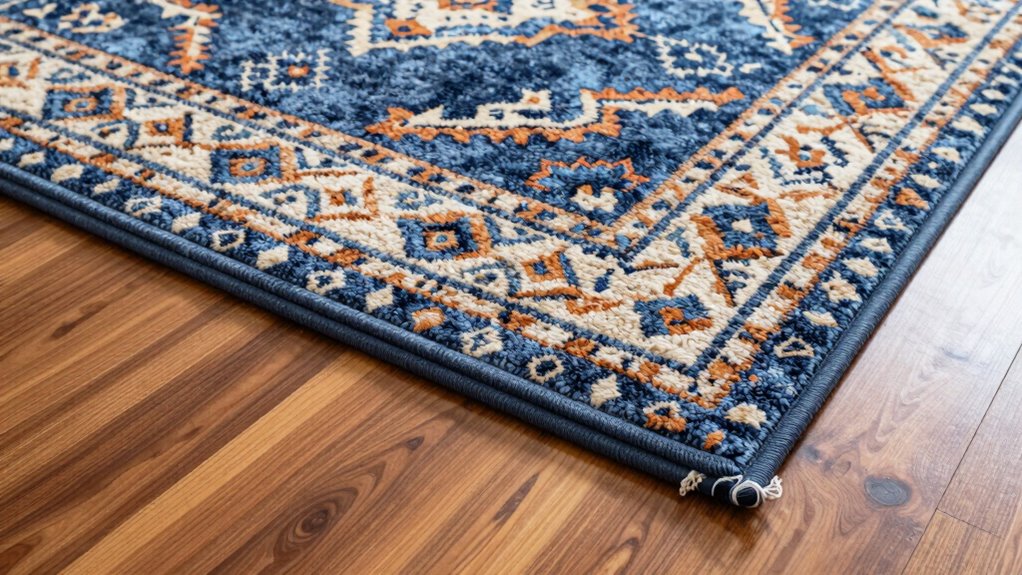
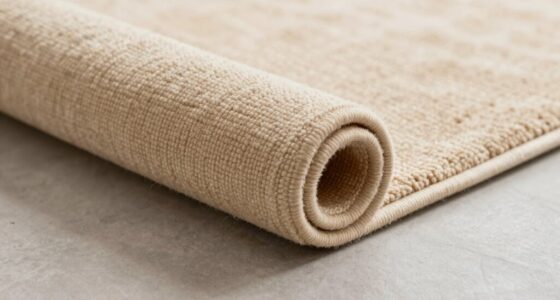
Proper rug placement starts with understanding how to position your rug for maximum stability and minimal damage to your floor. First, make certain your rug lies flat and is centered in the space, avoiding edges that curl or bunch. Second, consider using decorative accents, like small furniture or decorative trims, to help hold the rug in place and enhance seasonal decor themes. Third, regularly maintain your floor by cleaning it thoroughly before placing the rug, removing dust and debris that can cause slipping. This not only prolongs the life of your rug but also keeps your floor in good condition. Additionally, choosing the right rug pad can provide extra grip and cushioning, further preventing slips. Using a non-slip rug pad that is compatible with your flooring type can greatly improve stability. For added security, you might also adjust the placement of the rug periodically to prevent curling or shifting. Incorporating proper floor maintenance routines helps ensure your rug stays in place and your floor remains undamaged. Implementing quality rug pads can significantly enhance the durability and grip of your rug, especially on smooth surfaces. Proper placement and floor care create a stable foundation for your seasonal decor, preventing slipping while showcasing your decorative accents beautifully.
How to Maintain and Troubleshoot Your Rug’s Grip Over Time
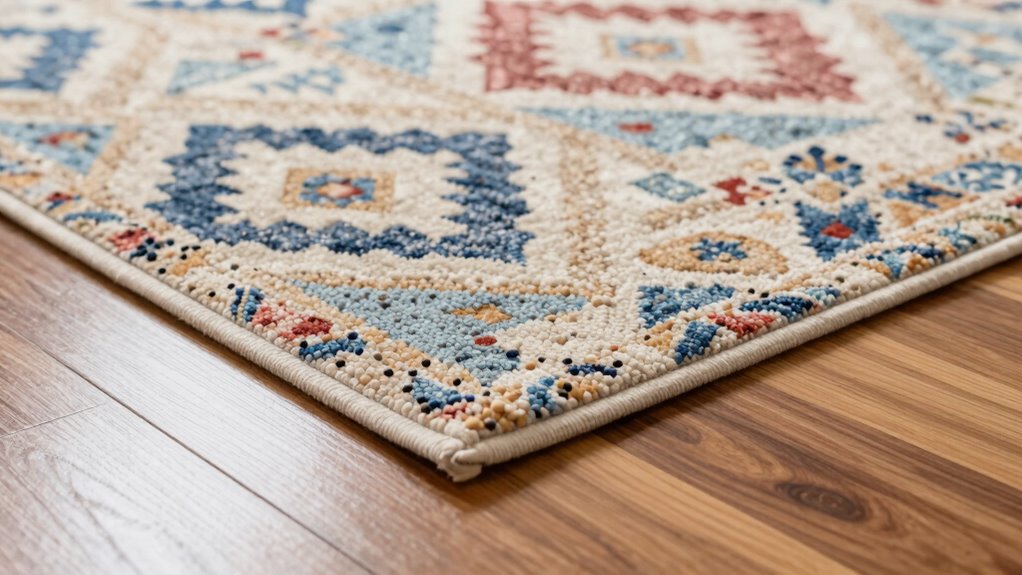
Over time, the grip of your rug can weaken due to regular foot traffic, cleaning, or wear on the backing and anti-slip materials. To maintain its grip, avoid excessive rug cleaning that can strip anti-slip properties; instead, gently vacuum and spot clean when needed. Check your furniture placement regularly—moving pieces can shift the rug and reduce friction. If your rug starts to slide, consider reapplying a non-slip rug pad or replacing worn anti-slip backing. Inspect the rug’s underside for damage or debris that might hinder grip. Keeping the rug clean and repositioned helps preserve its staying power. By actively maintaining these areas, you’ll extend the life of your rug’s grip and prevent unnecessary slipping over time.
Frequently Asked Questions
Can I Use Household Items to Prevent Rug Slipping?
Yes, you can use household items for DIY solutions to prevent rug slipping. Try placing rubber shelf liners or non-slip mats underneath your rug for better grip. You might also use double-sided tape or felt pads on the rug’s corners. Just keep safety considerations in mind—avoid using items that could damage your flooring or cause tripping hazards. Always test small areas first to confirm they won’t stain or damage your rug.
Are There Eco-Friendly Options for Residue-Free Rug Grips?
Yes, eco-friendly options exist for residue-free rug grips. You can use biodegradable adhesives that secure your rug without harmful residues, making them safe for the environment. Natural fiber grips, like coir or felt pads, also work well by providing friction without chemicals. These options help keep your rug in place while being gentle on the planet, ensuring a clean look and safe setup.
How Often Should I Check My Rug’s Stability?
Did you know that slipping rugs cause over 2,000 falls annually? You should check your rug’s stability at least once a month. Regular rug inspection helps catch loose edges or uneven surfaces early, preventing accidents. By maintaining consistency in rug inspection, you guarantee safety and prolong your rug’s lifespan. Make stability maintenance a routine part of your home safety checks, especially in high-traffic areas.
Will Rug Pads Damage Hardwood Floors Over Time?
Rug pads generally won’t damage your hardwood floors if you choose a pad with good durability and a non-slip backing. Look for pads designed specifically for hardwood finish, as they prevent scratches and wear. Over time, some pads might wear down, but regular checks and replacing them when necessary will keep your floors safe. Using the right rug pad helps preserve your hardwood’s beauty and prevents slipping without causing damage.
Can Pet Activity Affect the Rug’s Grip?
Pet activity can definitely affect your rug’s grip, especially if your pets love to run or scratch. Their playful behavior might cause the rug to shift or bunch up, so you need to think about pet safety and how your pet interacts with the rug. Using non-slip rug pads or tape helps maintain rug stability, ensuring your pet stays safe and the rug stays in place, regardless of their rug behavior.
Conclusion
By choosing the right rug pad and applying simple friction techniques, you can keep your area rugs securely in place—like anchoring a boat against the tide. Regular maintenance guarantees your rug’s grip stays strong through life’s daily waves. With these residue-free solutions, you’ll enjoy a safe, slip-free space that feels as steady as the ground beneath your feet, transforming your room into a haven of stability and comfort.