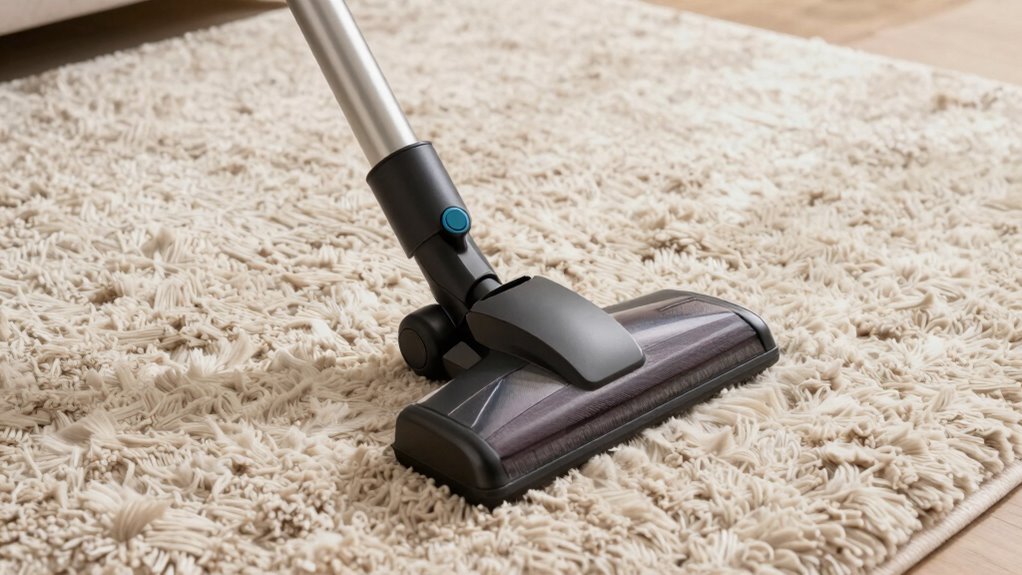
To vacuum high-pile rugs safely, use a lightweight vacuum with adjustable suction and turn off or raise the brush roll to prevent fiber damage. Vacuum slowly with gentle, deliberate passes, avoiding pressing hard on the surface. Use attachments designed for delicate fibers, like soft brush heads, and keep filters clean for peak performance. For more tips on preserving your plush rug’s appearance and longevity, keep exploring this guide.
Key Takeaways
- Use a lightweight vacuum with adjustable suction and set it to a gentle, low-power setting.
- Turn off or disable the brush roll to prevent fiber pulling or fraying.
- Set the vacuum height or brush controls higher to avoid pressing the fibers down.
- Vacuum slowly and deliberately with gentle passes, avoiding excessive pressure.
- Regularly clean filters and brushes to maintain optimal suction and prevent debris buildup.
Why High-Pile Rugs Need Gentle Vacuuming
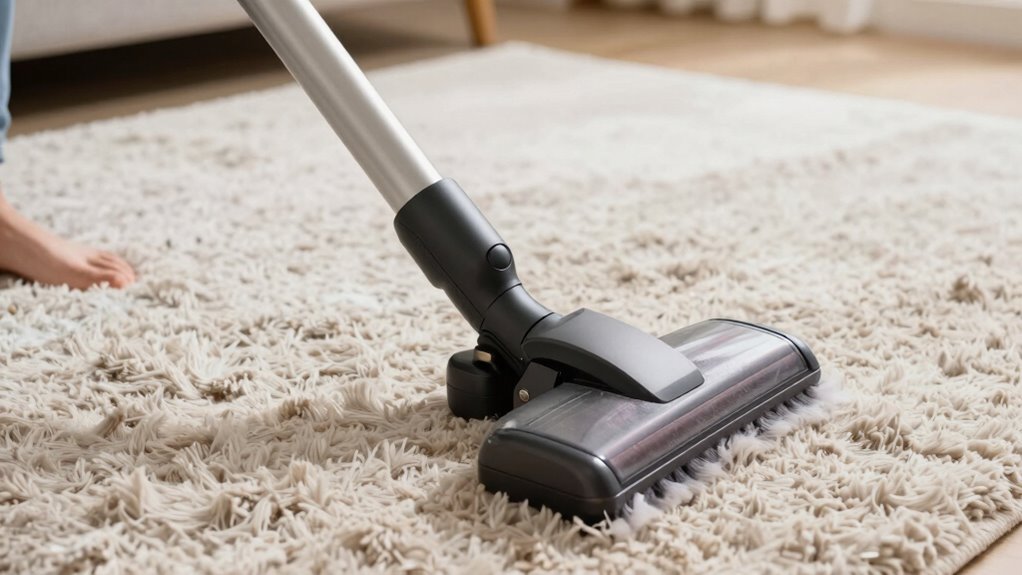
High-pile rugs have thick, plush fibers that can trap dirt and debris more easily than low-pile carpets, but they also require careful handling during vacuuming. The fibers in high-pile rugs are more fragile, making them susceptible to damage if you’re too aggressive. Using a harsh vacuum or applying too much pressure can cause fiber fragility, leading to fraying or tearing. Additionally, aggressive vacuuming can disturb the pile, causing it to become matted or uneven over time. To keep your rug looking its best, you need to be gentle, avoiding heavy-duty suction or vigorous passes. Properly caring for these rugs guarantees you won’t damage the fibers or disrupt the pile, preserving their plushness and appearance for years to come. Filtration systems in vacuums can also help trap dust without excessive agitation, protecting delicate fibers during cleaning. Regularly checking your vacuum’s settings and attachments ensures you maintain an appropriate level of care for your high-pile rugs. Incorporating gentle cleaning techniques can further extend the lifespan of your rug fibers, especially considering the cosmic connections that can influence the fragility of materials and fibers over time. Being aware of environmental factors like humidity and temperature can also help maintain the integrity of delicate fibers, enhancing their durability.
How to Choose the Right Vacuum for Thick, Plush Rugs
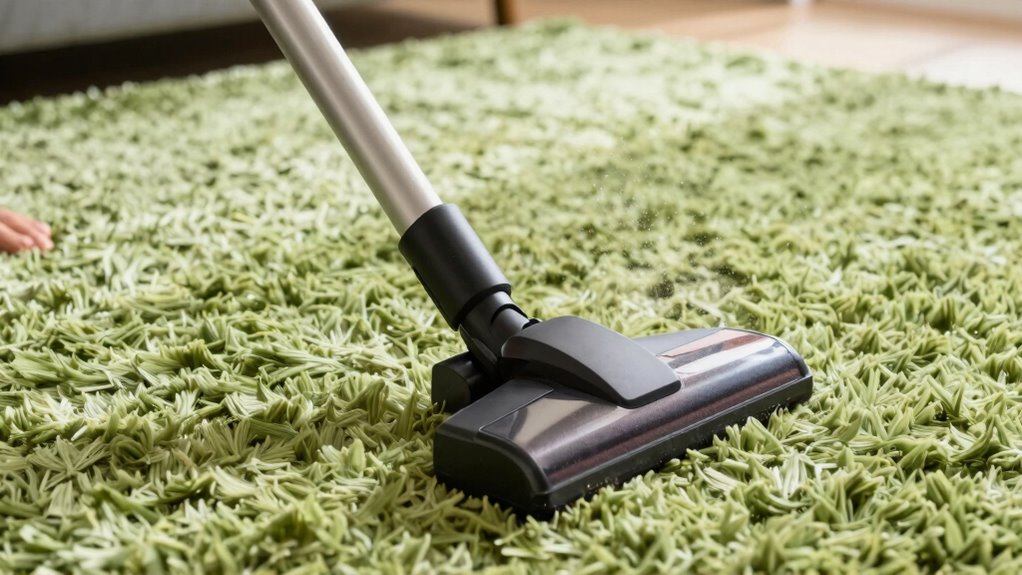
Choosing the right vacuum for thick, plush rugs is essential to clean effectively without damaging the fibers. Look for a lightweight model, as heavy vacuums can stress the rug and make cleaning difficult. Opt for a vacuum with a high-quality filter type, such as HEPA, to trap dust and allergens without releasing particles back into the air. Consider these factors:
| Feature | Importance |
|---|---|
| Vacuum weight | Easier to maneuver, reduces fiber damage |
| Filter type | Ensures thorough cleaning, healthier air |
A balanced combination of lightweight design and an efficient filter system helps you clean deep fibers gently. This way, you protect your high-pile rug while maintaining a spotless surface. Regularly checking that your vacuum has an appropriate brush roll setting can further prevent fiber damage during cleaning. Additionally, choosing a vacuum with adjustable suction can help tailor the cleaning power to delicate fibers, preventing unnecessary wear.
Adjust Your Vacuum Settings to Protect Rug Fibers
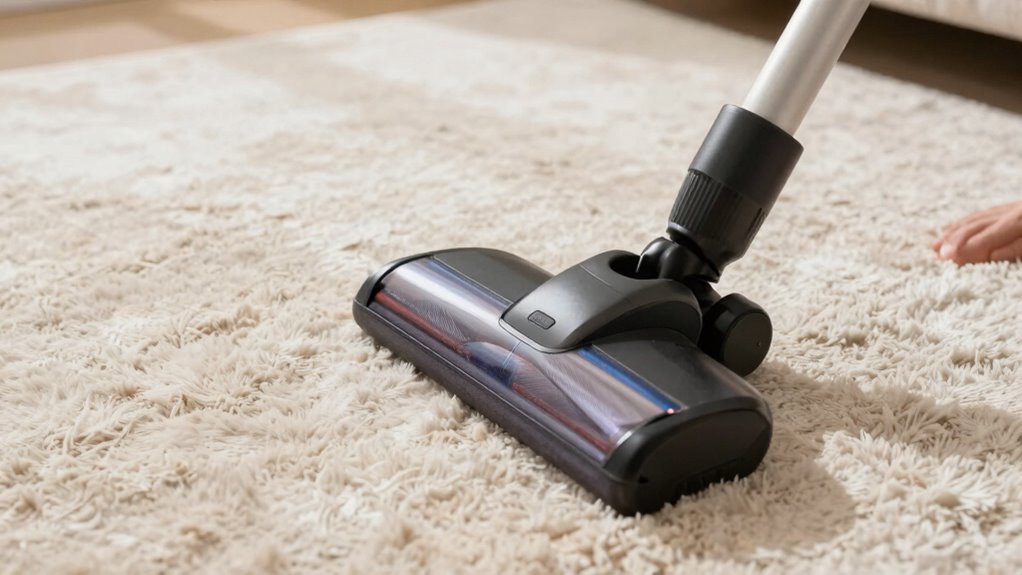
To prevent damage to your rug fibers, adjusting your vacuum settings correctly is essential. Start by reducing the vacuum suction to a gentler level, so it doesn’t pull or stretch the delicate fibers. Next, set the brush settings to a higher or “off” position if possible; this prevents the brush roll from aggressively grabbing the fibers, which can cause fraying or matting. Many vacuums have adjustable height or brush controls—use these to lift the brush away from the rug surface slightly. Always test on a small area first to ensure the settings aren’t too harsh. Properly adjusted vacuum suction and brush settings help maintain your high-pile rug’s softness and appearance while effectively removing dirt and debris. Additionally, being mindful of the correct vacuum technique can further protect your rug fibers during cleaning. Understanding the fiber types of your rug can also help you choose the most suitable cleaning method and settings for optimal care. Recognizing the rug construction can guide you in selecting the safest cleaning practices. Incorporating proper maintenance practices can extend the lifespan of your high-pile rugs and keep them looking their best. Furthermore, using appropriate cleaning tools designed for delicate fibers can enhance your cleaning routine.
Proper Techniques for Vacuuming High-Pile Rugs Safely
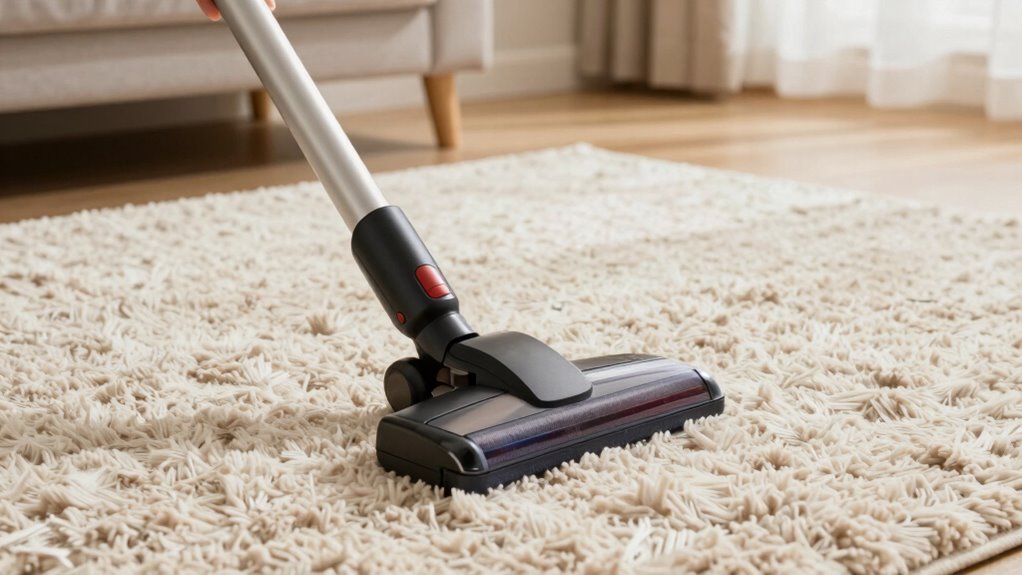
To clean high-pile rugs safely, use gentle suction to avoid damaging the fibers. Make sure you’re employing the correct tools, like a brush attachment or upholstery nozzle, to prevent pulling or tearing. By applying proper techniques, you’ll keep your rug looking fresh without risking damage. Additionally, be mindful of the ear wax odor that can sometimes cling to fibers, indicating the need for gentle cleaning methods. Proper vacuuming not only preserves the fiber integrity but also maintains the rug’s overall appearance over time.
Use Gentle Suction
Because high-pile rugs have thick, plush fibers, using gentle suction is essential to prevent damage. When you vacuum, set your machine to a lower suction level to avoid pulling or tearing fibers. This proper technique helps maintain the rug’s texture and appearance. It also helps reduce vacuum noise, making the process quieter and less disruptive. Be mindful of the rug’s color—excessive suction can cause fibers to lift or fray, especially in darker or more delicate dyes. Move the vacuum slowly and evenly across the surface, ensuring you don’t press down too hard. This gentle approach preserves the rug’s texture and appearance while effectively removing dirt and debris. Using gentle suction maintains the rug’s plushness and prevents fibers from becoming matted or damaged over time. Additionally, understanding fiber care and proper maintenance techniques supports long-term rug health. Regularly checking and filter maintenance on your vacuum ensures optimal suction and cleaning efficiency, further protecting delicate fibers. Proper vacuuming techniques are vital for extending the life of high-pile rugs and keeping them looking their best. Incorporating correct cleaning methods can further enhance the longevity of your vintage-inspired home decor.
Employ Proper Tools
Using the right tools is essential for vacuuming high-pile rugs safely. Start by selecting vacuum attachments designed for delicate surfaces, such as upholstery or gentle brush heads. These attachments help prevent fibers from being pulled or torn. Avoid using the vacuum’s brush rollers unless they have a switch to turn them off, as spinning rollers can damage high-pile fibers. Instead, opt for a vacuum with a soft brush attachment or a suction-only mode. When using a vacuum with a brush roller, make sure it’s turned off or set to a gentle setting. Proper tools guarantee you clean effectively without harming the rug’s fibers, prolonging its lifespan and maintaining its appearance. Always check your vacuum’s settings and attachments before beginning. Additionally, understanding field‑of‑view and imaging‑scale examples can help you better assess and select the right equipment for delicate cleaning tasks. Using a vacuum with adjustable height settings can further enhance your ability to clean without causing damage to the fibers. Selecting the appropriate suction power ensures thorough cleaning while safeguarding the rug’s delicate fibers. Incorporating proper maintenance of vacuum filters helps maintain optimal suction and prevent debris from damaging fibers over time. Being aware of fiber sensitivity and pile density can also guide you in choosing the most suitable cleaning approach for your high-pile rug.
Common Mistakes to Avoid When Vacuuming Plush Carpets
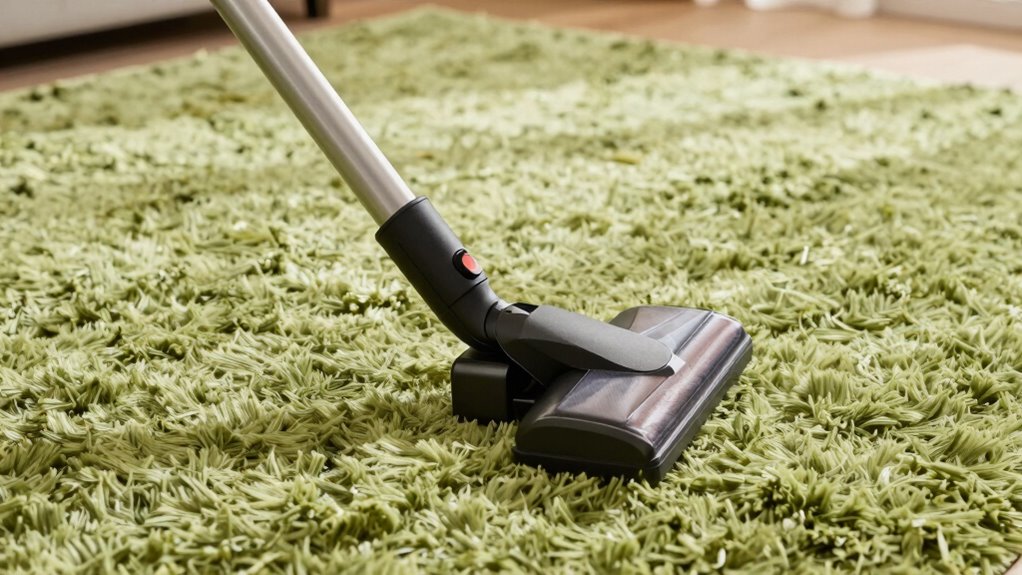
Vacuuming plush carpets requires attention to detail, as common mistakes can easily damage the fibers or reduce cleaning effectiveness. First, avoid using a vacuum with a beater bar on high-pile rugs, which can pull and fray fibers. Second, don’t rush through the process; slow, deliberate passes help lift dirt without damaging the pile. Third, skip excessive pressure when vacuuming, as pressing too hard can flatten fibers and hinder stain removal. Fourth, neglect regular maintenance—clean filters and brushes to ensure pet hair removal is efficient and to prevent dirt buildup. Also, remember to change vacuum settings for different tasks, especially when targeting stains or pet hair. Incorporating connected equipment like smart vacuums can optimize cleaning routines and help monitor maintenance needs. Avoid these mistakes to keep your plush carpets looking fresh and undamaged.
Extra Tips for Keeping Your High-Pile Rug Looking Its Best
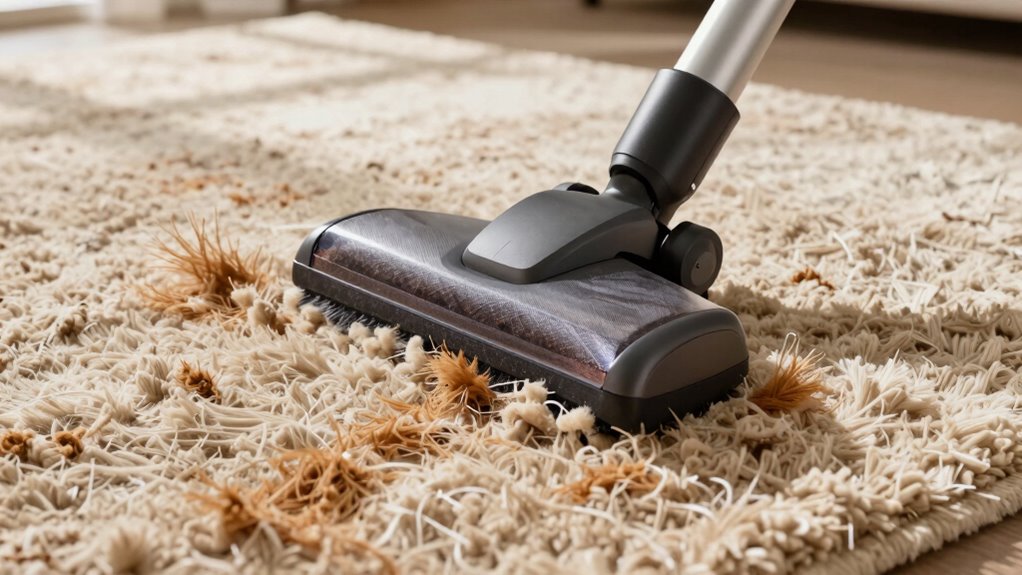
To keep your high-pile rug looking its best, regular maintenance is essential. Start by carefully cleaning the decorative fringe with a gentle brush or vacuum attachment to prevent tangling or fraying. When removing pet hair, use a rubber broom or a pet hair removal tool designed for delicate fibers to lift hair without damaging the pile. Avoid harsh brushes or aggressive vacuuming that can pull or distort the fibers. Maintain a consistent cleaning schedule, and consider flipping or rotating the rug periodically to ensure even wear. Also, address spills immediately to prevent stains. These simple steps will help preserve the rug’s plush texture, vibrant colors, and decorative fringe, ensuring it stays beautiful and cozy for years.
When to Call in Professionals for Rug Cleaning

Sometimes, despite your best efforts, deep-seated dirt, stains, or odors can linger in your high-pile rug, making professional cleaning necessary. You should consider calling in experts if:
- Your area rugs have stubborn stains that won’t come out after repeated cleaning.
- Odors persist even after thorough vacuuming and spot cleaning.
- Pet hair removal becomes overwhelming, and shedding causes buildup.
- Dirt and debris are deeply embedded, affecting the rug’s appearance and air quality.
Professional cleaning can effectively remove deep dirt, restore fibers, and eliminate odors that regular vacuuming misses. If you notice these signs, don’t hesitate to seek professional help to keep your high-pile rugs clean, fresh, and well-maintained.
Quick Troubleshooting for Vacuuming High-Pile Rugs

If you encounter issues while vacuuming your high-pile rug, quick troubleshooting can save you time and effort. First, check your vacuum’s vacuum bag; a full bag reduces suction power and hampers cleaning. Replacing or emptying it often restores performance. Next, examine the cord length—ensure it’s fully extended to avoid loss of power or inconsistent suction. If suction remains weak, make sure the brush roll isn’t tangled or clogged, as debris can block airflow. Adjust the height setting to the appropriate level for high-pile fibers, preventing damage and ensuring effective cleaning. Testing these simple steps can resolve common problems quickly, helping you vacuum thoroughly without harming your rug fibers. Staying attentive to your vacuum’s condition keeps your high-pile rug clean and well-maintained.
Frequently Asked Questions
Can I Vacuum High-Pile Rugs Daily Without Damage?
You can vacuum high-pile rugs daily without damage if you adjust your vacuum settings properly. Use a gentle, low suction setting and a vacuum with adjustable height to prevent fiber damage. Regular vacuuming helps with rug maintenance by removing dirt and debris that can wear fibers over time. Just avoid using a beater bar or rotating brush, as these can pull or tear delicate fibers.
What Vacuum Attachments Are Best for Thick Rugs?
If you wanna tame that jungle of fibers, go for vacuum attachments with gentle brush heads and adjustable suction. Skip those harsh, bare-floor nozzles—they’re better suited for sleek surfaces. Instead, opt for soft-bristled brush attachments that loosen dirt without yanking fibers. Keep the suction low to medium, so you clean thoroughly without causing chaos. Your thick rug will thank you with every gentle, effective pass—no tears, just fresh, happy fibers.
How Often Should I Deep Clean My High-Pile Rug?
You should deep clean your high-pile rug every 12 to 18 months as part of your maintenance schedule. Regular deep cleaning helps remove dirt and allergens that vacuuming alone can’t eliminate. When stains occur, use proper stain removal techniques promptly to prevent lasting damage. Keep in mind that consistent deep cleaning and proper stain treatment extend your rug’s lifespan and keep it looking fresh and vibrant.
Can Using a Beater Bar Ruin Plush Rug Fibers?
Using a beater bar can damage plush rug fibers if you’re not careful. For example, if you aggressively vacuum a high-pile rug with the beater bar on, it can pull or fray the fibers, harming the rug’s appearance and longevity. Beater bar risks include fiber snags and matting, so for plush rug care, it’s best to use a vacuum with adjustable settings or turn off the beater bar to protect your rug’s fibers.
Are There Eco-Friendly Vacuum Options for High-Pile Rugs?
Yes, eco-friendly vacuums are great options for high-pile rugs. You can find models with sustainable cleaning features like energy efficiency, biodegradable filters, and non-toxic materials. These vacuums reduce your environmental impact while still effectively cleaning your rugs. Look for brands that prioritize sustainability and eco-friendly vacuums designed specifically for delicate fibers. This way, you maintain a clean home while supporting eco-conscious choices.
Conclusion
Vacuuming high-pile rugs might seem tricky, but with the right techniques, you can keep them looking their best without damage. Don’t worry—using gentle settings and proper tools makes all the difference. Even if it feels like a hassle, investing a little extra care now prevents costly repairs later. Stick to these tips, and your plush rug will stay fluffy and beautiful for years to come—no professional cleaning needed, unless you want to go the extra mile.