Wet dog smell in your carpet happens when moisture combines with fibers, creating a perfect environment for bacteria and mold that produce that familiar odor. It’s worsened by deep-set odors, lingering moisture, and muddy paw prints. To stop it, quickly dry the area, blot excess water, and use odor neutralizers like vinegar or enzymatic cleaners. Keep exploring for more tips to keep your home fresh and odor-free.
Key Takeaways
- Moisture in carpets fosters bacteria and mold, which produce the persistent wet dog smell.
- Regular pet grooming and quick drying after walks prevent odor-causing bacteria buildup.
- Applying enzymatic cleaners or vinegar-water solutions can neutralize odors effectively.
- Using fans, dehumidifiers, and thorough drying minimizes moisture and odor development.
- Persistent or deep-seated odors may require professional carpet cleaning for complete removal.
What Causes Wet Dog Odor in Carpets?
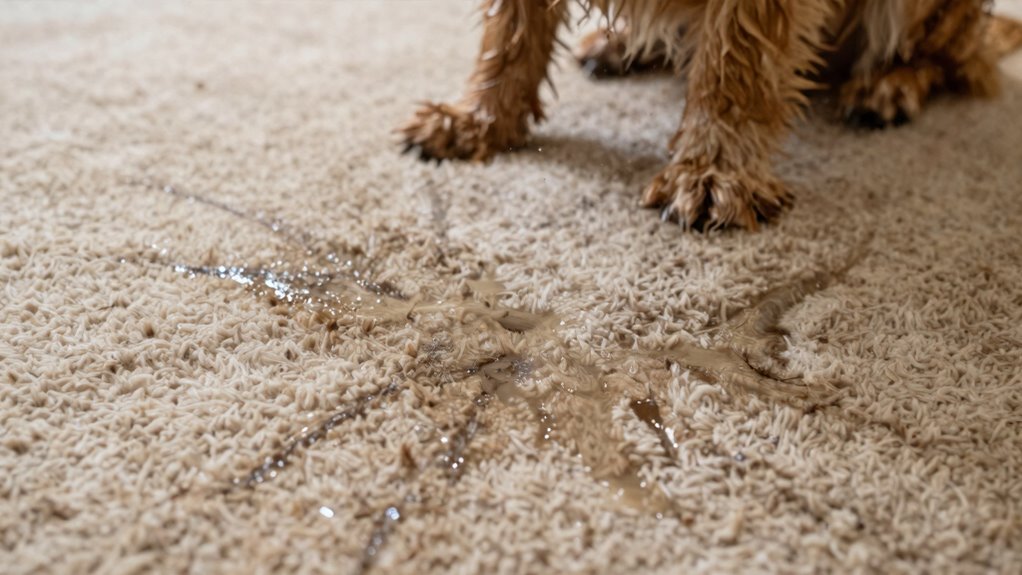
When a dog’s fur gets wet, it often leaves behind more than just dampness—it can also cause a strong, persistent odor in your carpets. This pet odor develops because moisture interacts with the carpet fibers, creating an environment where bacteria and mold thrive. These microbes break down organic compounds from your dog’s fur, saliva, and skin, producing that unmistakable wet dog smell. Carpet fibers trap these odors deep within, making them harder to eliminate over time. The longer the moisture stays, the more intense the smell becomes, especially if your pet frequently gets wet or muddy. Properly understanding how pet odor interacts with carpet fibers helps you identify why your carpets smell and what’s causing that stubborn wet dog scent.
How Can I Quickly Remove Wet Dog Smell From My Carpet?

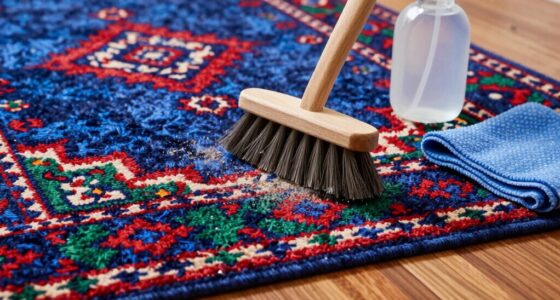
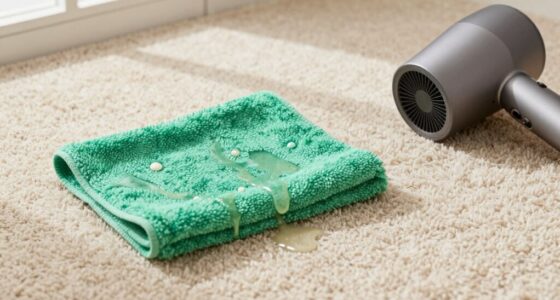
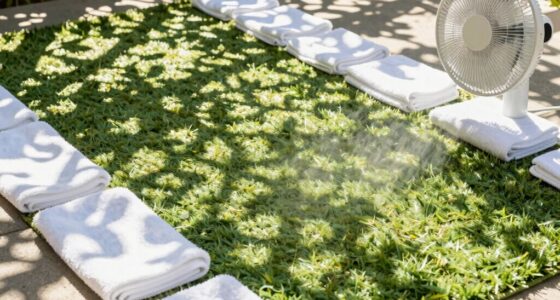
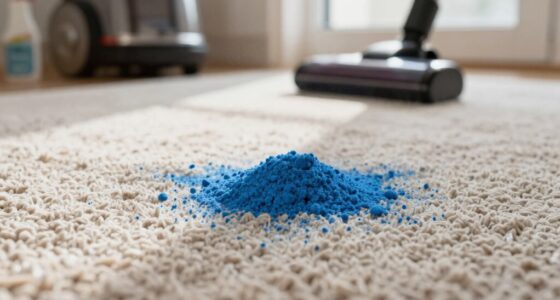
To quickly remove wet dog smell from your carpet, start by blotting up as much moisture as possible using paper towels or a clean cloth. This step helps prevent the odor from setting deeper into the fibers. Next, apply odor neutralization solutions like a mixture of white vinegar and water or commercial enzymatic cleaners designed for pet odors. Use quick drying techniques such as fans, open windows, or a dehumidifier to speed up the drying process. You can also sprinkle baking soda over the affected area, let it sit for 15-30 minutes, then vacuum thoroughly. These methods work together to reduce moisture and neutralize odors efficiently, helping you restore a fresh-smelling carpet swiftly. Keep in mind, prompt action is key to preventing persistent wet dog smell. Additionally, proper carpet cleaning techniques can help maintain a fresh environment and reduce future odors. Regularly deep cleaning carpets can further prevent odor buildup over time. To further enhance odor control, consider air purifier maintenance practices, which can remove airborne pet odors effectively. For long-term odor control, consider reliable backup power options to ensure your home remains comfortable during unexpected outages. Using appropriate vacuuming methods can also help remove trapped pet dander and lingering smells for a cleaner, fresher carpet.
How to Prevent Wet Dog Odor From Developing in Your Home
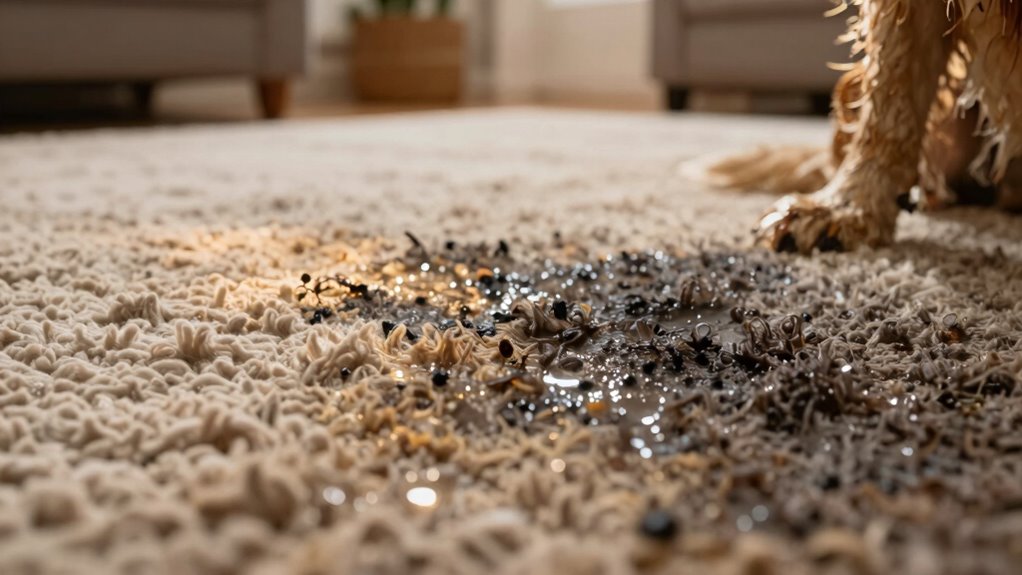
Preventing wet dog odor from taking hold in your home starts with proper pet hygiene and quick drying. Regular pet grooming keeps your dog clean and reduces the chance of odor-causing bacteria building up. After walks or baths, thoroughly dry your dog to prevent moisture from lingering on their coat. Using odor neutralizers in your home also helps control potential smells before they develop. Consider applying pet-safe sprays that target odor-causing molecules or using dehumidifiers to reduce humidity, which can intensify odors. Maintaining a clean, dry environment minimizes the likelihood of that wet dog smell taking hold in carpets and furniture. Consistent grooming and prompt drying are your best defenses against developing persistent odors in your home.
Best Natural and Store-Bought Products to Eliminate Dog Odor
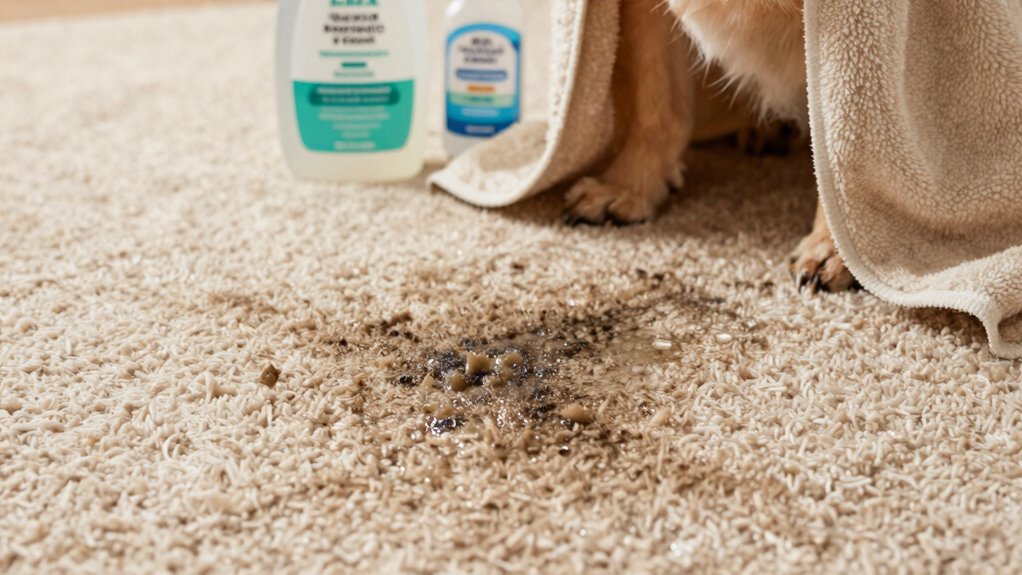
Finding effective ways to eliminate dog odor often involves choosing the right products, whether natural or store-bought. Pet-friendly sprays are a great option, as they neutralize odors without harsh chemicals. Look for sprays labeled safe for pets and effective against pet smells. Baking soda remedies are another natural solution; sprinkling baking soda on carpets, letting it sit, then vacuuming can absorb odors effectively. For store-bought options, enzymatic cleaners are excellent at breaking down odor-causing bacteria. You might also consider odor-neutralizing sprays designed specifically for pet odors, which provide quick relief. Additionally, safe cleaning products ensure safety and effectiveness when tackling pet odors. Incorporating odor absorption techniques can further enhance odor removal. Understanding the role of enzymes in odor elimination can help select the most effective products. Using proper ventilation during and after cleaning can also significantly reduce lingering smells. Remember to always test any product on a small area first to avoid damage or discoloration. Using these products can help keep your carpet smelling fresh and clean.
When Should You Call Professional Carpet Cleaners for Odor Problems?
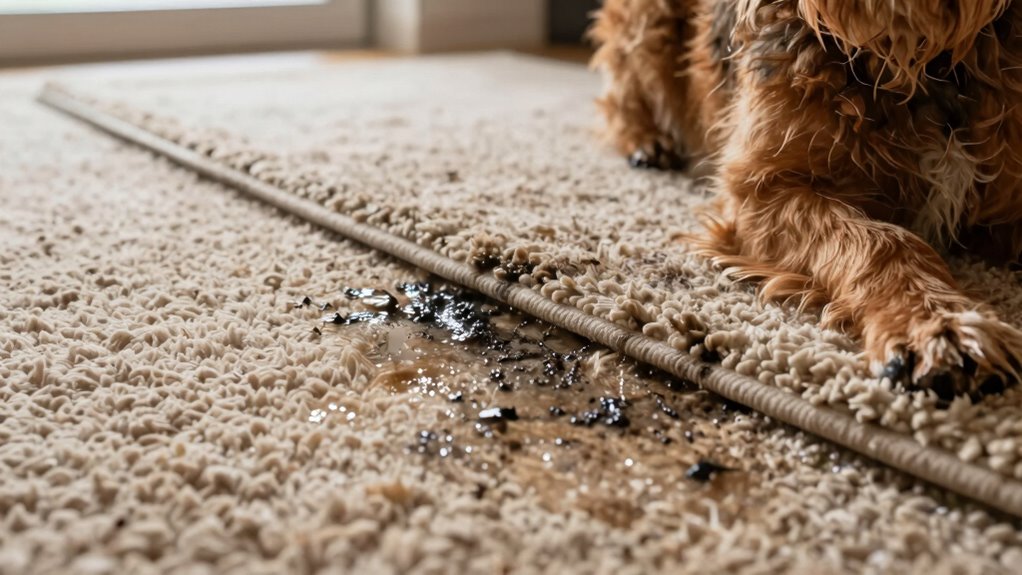
Sometimes, despite using natural remedies and over-the-counter products, pet odors linger stubbornly in your carpets. If you notice persistent smells or see signs of carpet discoloration, it’s time to call professional carpet cleaners. You should do so if pet allergies worsen or if you experience sneezing, coughing, or itchy eyes when near the carpet. Odors that refuse to fade may be deeply embedded, making DIY solutions ineffective. Additionally, if you observe staining or uneven discoloration, professionals have specialized equipment to restore your carpet’s appearance and eliminate odors thoroughly. Waiting too long can worsen pet allergies or damage your carpet’s fibers. Professional cleaning ensures all odors are removed and your carpet stays healthy and fresh for your family. Recognizing the difference between surface stains and deep-seated odors can help determine when professional intervention is necessary, especially with advanced cleaning technologies. Proper assessment of free floating pet hair and dander can also aid in targeting stubborn odors more effectively. Addressing deep-seated odors promptly with professional tools can prevent further odor absorption and prolong the life of your carpet, especially when combined with specialized extraction methods. Regular maintenance and understanding odor penetration can significantly improve your carpet’s longevity and air quality.
Frequently Asked Questions
Can Certain Dog Breeds Be More Prone to Causing Carpet Odors?
Yes, certain dog breeds are more prone to causing carpet odors due to breed-specific odors and coat length. Breeds with longer or denser coats, like Golden Retrievers or Basset Hounds, tend to trap more dirt and moisture, leading to stronger smells. Short-haired breeds usually shed less odor-causing oils. Regular grooming, cleaning, and quick drying help reduce these odors, regardless of breed or coat length.
How Long Does It Typically Take for Wet Dog Smell to Fade Naturally?
Imagine the wet dog smell as a stubborn fog hanging in your room. Usually, it takes about 48 to 72 hours for the odor absorption to weaken, and the smell duration can vary based on humidity, carpet type, and ventilation. To speed up the process, guarantee proper air circulation and sunlight exposure. Patience is key, but quick action helps keep that fog from lingering too long.
Are There Specific Carpet Materials That Trap Odors More Than Others?
Certain carpet fibers, like wool and nylon, tend to trap odors more than synthetic options like polyester or polypropylene. These materials have higher odor retention, making smells linger longer. If your carpet’s fiber type retains odors, you might notice the wet dog smell sticking around even after cleaning. Choosing carpets with low odor retention properties or using odor-neutralizing treatments can help prevent persistent smells and keep your space fresher.
Does Humidity Affect the Persistence of Dog Odors in Carpets?
Did you know that in humid environments, odors can linger up to 50% longer? Humidity impact greatly affects odor persistence in carpets because moist air allows bacteria and mold to thrive, trapping dog smells deeper into fibers. When humidity rises, it makes it harder to eliminate wet dog odors, so you need to improve ventilation and use dehumidifiers to help reduce odor persistence and keep your carpets fresh.
Can Regular Pet Grooming Reduce Carpet Odor Issues Effectively?
Yes, regular pet grooming can greatly reduce carpet odor issues. By maintaining good pet hygiene, you minimize dirt, oils, and dander that contribute to persistent smells. Combining grooming with effective odor control techniques, like thorough cleaning and deodorizing your carpets, ensures a fresher environment. Consistent grooming keeps your pet cleaner and helps prevent the ‘wet dog’ smell from settling into your carpets, making your home more pleasant for everyone.
Conclusion
Dealing with that ‘wet dog’ smell in your carpet can be frustrating, but now you know what causes it and how to tackle it effectively. With quick action and preventative tips, you can keep your home smelling fresh and inviting. Are you ready to take control of those stubborn odors and enjoy a cleaner, more pleasant space? Remember, regular maintenance and the right products make all the difference in keeping your carpets odor-free.