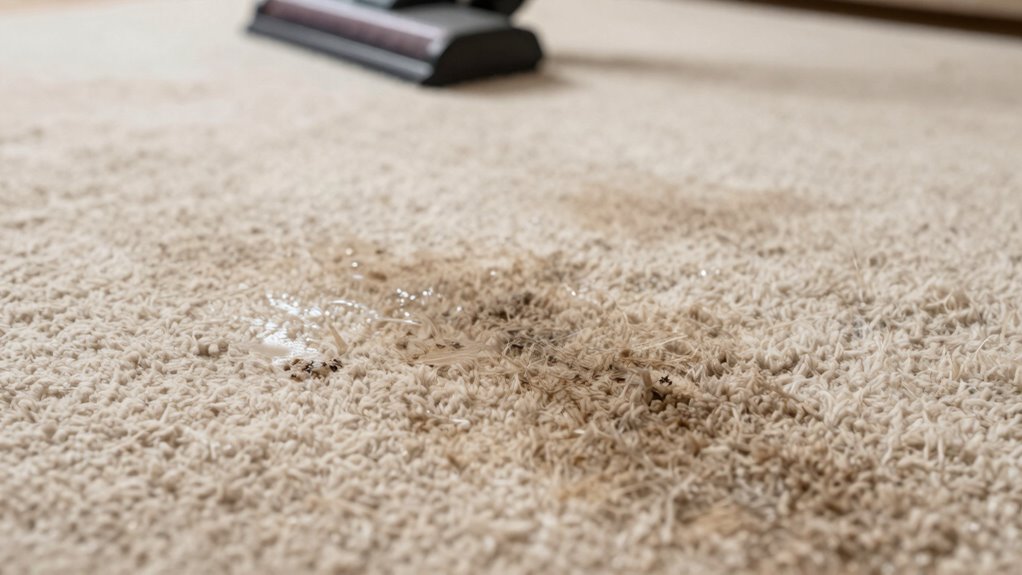

If your carpet stains keep coming back, it’s likely due to wicking, where residual moisture pulls stain particles and dye from deep within the fibers back to the surface as the carpet dries. This happens if you don’t remove all moisture or clean improperly, causing stains to reappear over time. Understanding how wicking works can help you prevent it. Keep exploring the details to learn how to stop this cycle for good.
Key Takeaways
- Residual moisture within carpet fibers can draw stain particles back to the surface as the carpet dries.
- Deeply penetrated stains can migrate through fibers, causing stains to reappear after cleaning.
- Incomplete drying leaves moisture that promotes wicking and re-staining over time.
- Wicking occurs when moisture and stain-causing substances travel upward through capillary action during drying.
- Proper drying, moisture control, and targeted cleaning prevent stains from re-emerging due to wicking.
Why Do Carpet Stains Keep Reappearing After Cleaning?
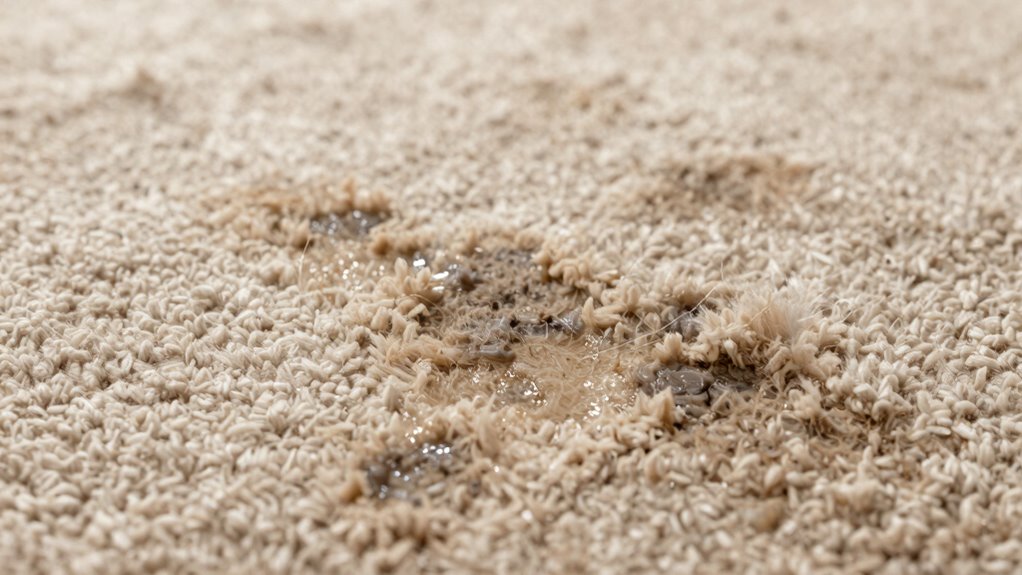
Carpet stains often reappear after cleaning because the underlying fibers still hold onto the stain particles or moisture. Pet hair can trap dirt and moisture inside the fibers, making it difficult to fully remove stains. If odor control isn’t addressed, lingering smells can make stains seem to return even after cleaning. When moisture remains, it can cause the stain to wick back to the surface as the carpet dries, prompting repeated cleaning attempts. Additionally, pet hair embedded deep in the fibers can interfere with cleaning solutions, allowing stain particles to stay hidden beneath the surface. Without proper extraction and thorough drying, these particles and trapped odors continue to cause stains to reappear, leaving your carpet looking dirty even after you’ve just cleaned it. Furthermore, inadequate drying can lead to increased humidity levels, creating an environment conducive to stain reemergence. Using appropriate drying techniques is essential to prevent wicking and ensure a clean, stain-free carpet. Implementing effective drying methods helps eliminate residual moisture that encourages mold growth and further staining, contributing to the longevity of your cleaning efforts.
What Is Wicking, and How Does It Cause Reappearing Stains?
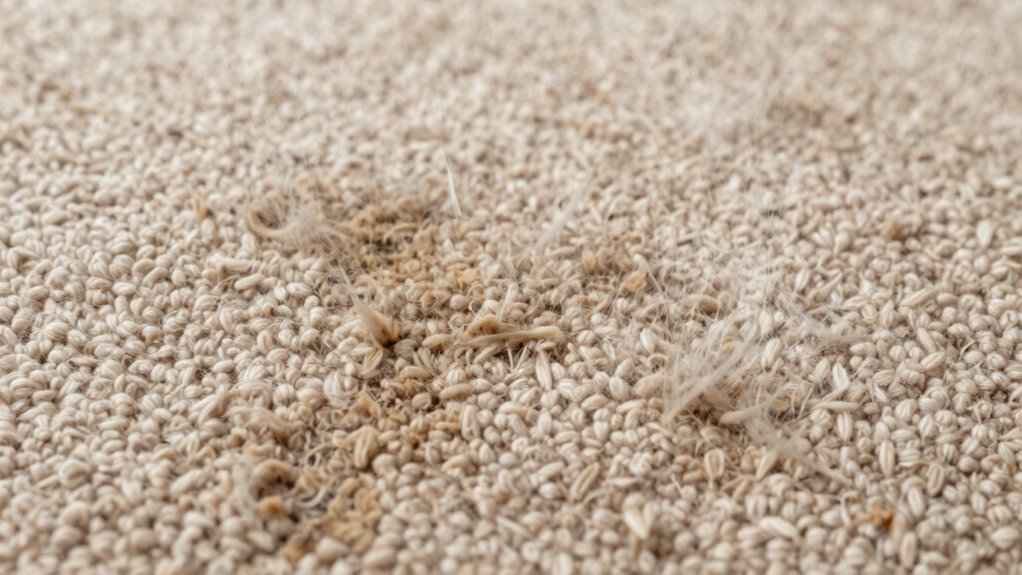
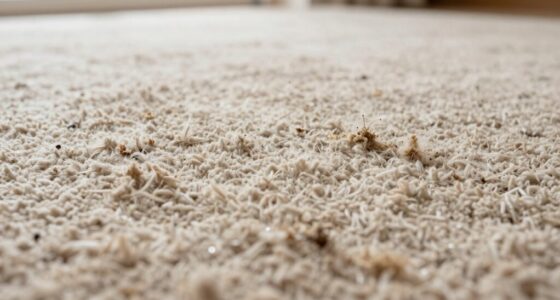
Wicking occurs when moisture from beneath the carpet surface rises upward as it dries, carrying stain particles with it. This process involves fiber migration, where dyed fibers or particles move within the carpet fibers, and dye migration, where color from stains spreads into surrounding areas. When you clean a spill, the moisture soaks into the backing and padding, not just the surface. As it evaporates, it pulls stain residues upward, making the stain reappear. If the stain penetrates deep, the dye can migrate within the fibers, spreading and causing re-staining. This is why even after cleaning, stains seem to come back—because the moisture draws out residual dye and stain particles from beneath, leading to persistent reappearance. Understanding the precise nature of stain penetration can help in choosing more effective cleaning methods and prevent re-soiling. Additionally, recognizing the mechanisms of wicking can guide you in employing techniques that minimize future reappearing stains. Properly addressing the source of moisture and employing targeted cleaning can reduce the chances of wicking-related re-stains over time. Being aware of fiber properties can also influence the cleaning approach to prevent further dye migration or fiber damage.
How Wicking Works in Your Carpet : A Simple Explanation
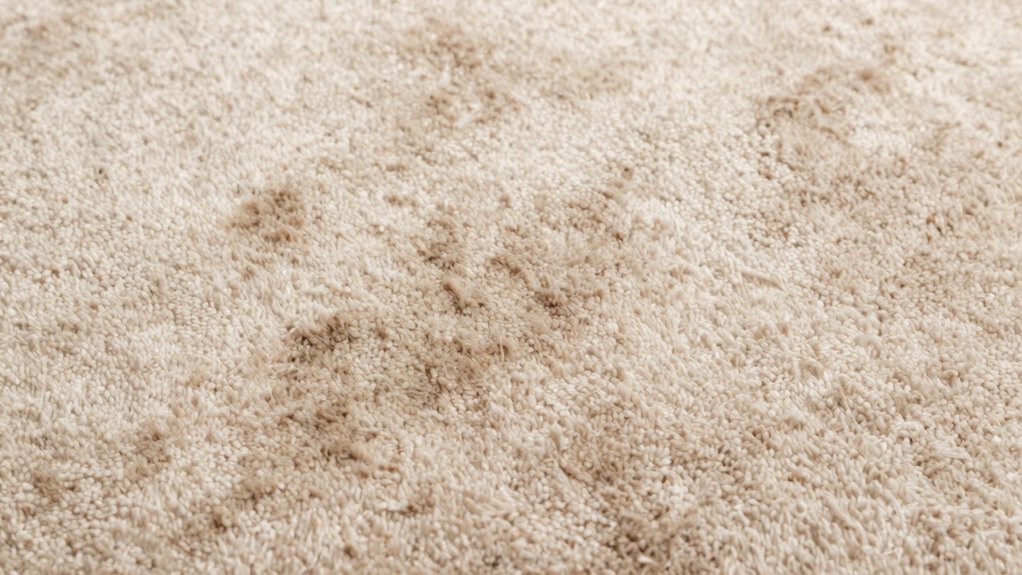
When a spill happens, cleaning might seem simple, but moisture can still travel beneath the surface. This is because fibers absorb liquids through a process called fiber absorption, which allows moisture to move deeper into the carpet. Capillary action is the key mechanism here—liquid climbs upward or spreads outward through tiny spaces between fibers. This movement draws stain-causing substances below the surface, making stains reappear even after cleaning. Additionally, improper drying can leave residual moisture that promotes mold growth, further complicating stain removal. Recognizing the importance of sound healing science can help you understand the complexity involved in effective cleaning and maintenance techniques. Understanding energy-efficient solutions in cleaning processes can also contribute to better long-term results. Proper drying methods and humidity control are essential to prevent moisture from lingering and causing recurring stains.
How Can You Tell If Wicking Is Making Your Carpet Stains Reappear?

If you notice stains reappearing after cleaning, wicking might be the cause. Look for persistent stain patterns that return even after you’ve cleaned the surface. You can also use moisture detection methods to see if hidden moisture is fueling the stains’ reappearance. Understanding smart appliances can help you monitor moisture levels in your home more effectively. Additionally, recognizing the science of wicking can improve your ability to identify and address the underlying issue.
Persistent Stain Patterns
Persistent stain patterns can be tricky to identify because they often look like new spills, but the real culprit is wicking. If you notice stains reappearing after cleaning, it’s likely due to stain migration caused by fiber attraction. To spot wicking-related patterns, consider these signs:
- Stains reappear in the same area after cleaning.
- Patterns seem to follow the carpet fibers rather than random spots.
- The stain appears lighter initially but darkens over time.
- The stain’s edges are blurry or uneven, indicating fiber attraction pulling residual stain upward.
These clues suggest that wicking is causing your carpet stains to keep coming back, often hiding deeper stain migration beneath the surface. Recognizing these patterns helps determine if professional cleaning or extraction is needed.
Moisture Detection Methods
Moisture plays a key role in revealing whether wicking is causing your carpet stains to reappear. To detect hidden moisture, you can use moisture sensors placed in problem areas. These sensors quickly identify elevated moisture levels that aren’t visible to the naked eye, indicating ongoing wicking issues. Leak detection devices can also help locate sources of excess moisture beneath the carpet or padding. By monitoring moisture levels regularly, you’ll know if the stains re-emerge due to unresolved wicking. Prompt detection allows you to address the root cause before stains become permanent. Combining moisture sensors and leak detection tools provides an effective way to confirm if moisture is causing your carpet stains to reappear, enabling targeted and timely cleaning or repairs. Additionally, understanding electric power generation with bike generators can help you explore alternative moisture control methods in certain environments. Using proper ventilation techniques can further reduce moisture buildup and prevent wicking-related issues, especially when combined with improved air circulation.
Prevent Wicking During Carpet Cleaning : Top Tips
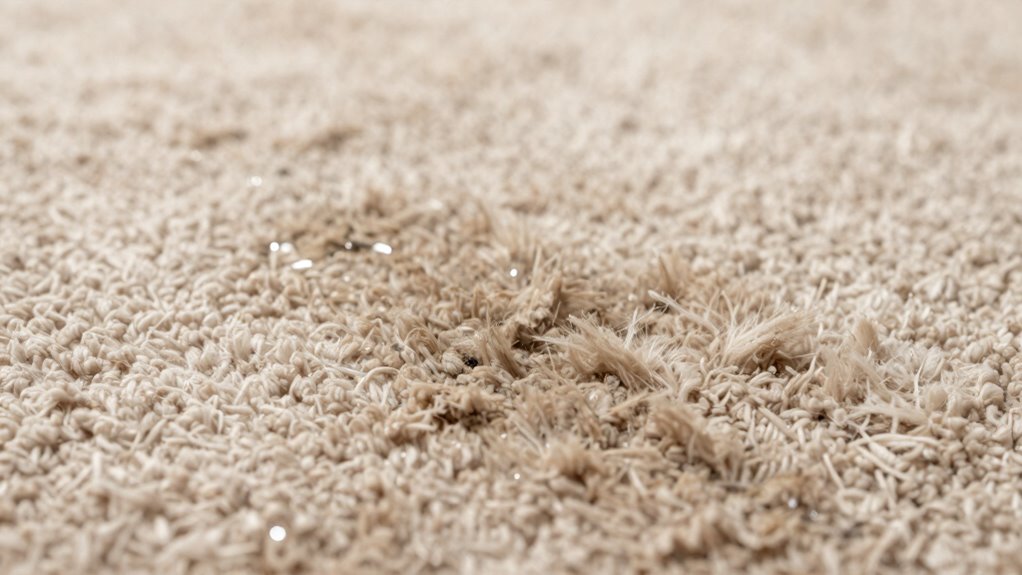
To prevent wicking during carpet cleaning, make sure you use the right cleaning solutions that are designed for your carpet type. Avoid oversaturating the fibers by limiting the amount of moisture you apply, as excess water can lead to stains reappearing. Keeping these tips in mind will help your carpet stay clean and stain-free longer. Additionally, choosing appropriate cleaning solutions can significantly reduce the risk of wicking and ensure better results. Using trusted local businesses that specialize in carpet cleaning can also help ensure proper techniques are employed, further reducing the chances of wicking. Proper drying techniques are essential to prevent moisture from lingering and causing stains to wick back up through the fibers. Moreover, understanding how carpet fibers interact with moisture can help you select the most effective cleaning methods and products.
Use Proper Cleaning Solutions
Choosing the right cleaning solutions is essential to prevent wicking and guarantee your carpet stays clean. Using appropriate stain removal products ensures you’re not over-wetting the fibers, which can cause stains to reappear. Select cleaning solutions specifically formulated for carpets, avoiding harsh chemicals that might damage the fibers or leave residues.
Here are four tips to help you choose wisely:
- Opt for solutions designed for stain removal, targeting specific spills effectively.
- Use minimal amounts of cleaning solutions to avoid excess moisture.
- Test new products on a small, hidden area first.
- Follow manufacturer instructions precisely for ideal results.
Using the correct cleaning solutions helps prevent wicking by reducing moisture and residue, keeping your carpet fresh and stain-free longer.
Limit Excess Moisture
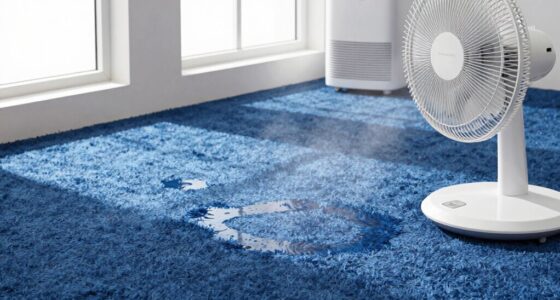
Limiting excess moisture during carpet cleaning is essential to preventing wicking and long-term stains. When too much water seeps into your carpet fibers, it can carry dirt and residues deep below the surface. As the carpet dries, moisture wicks upward, bringing stains and odors back to the surface. To avoid this, use only the necessary amount of water or cleaning solution. Make sure your cleaning tools are well-controlled to prevent oversaturation. After cleaning, use fans or open windows to speed up drying, reducing the chance of excess moisture lingering in the fibers. Keeping moisture levels in check not only prevents wicking but also preserves your carpet’s appearance and longevity. Stay mindful of moisture levels during and after cleaning for the best long-term results.
How to Remove Wicking-Related Stains Permanently
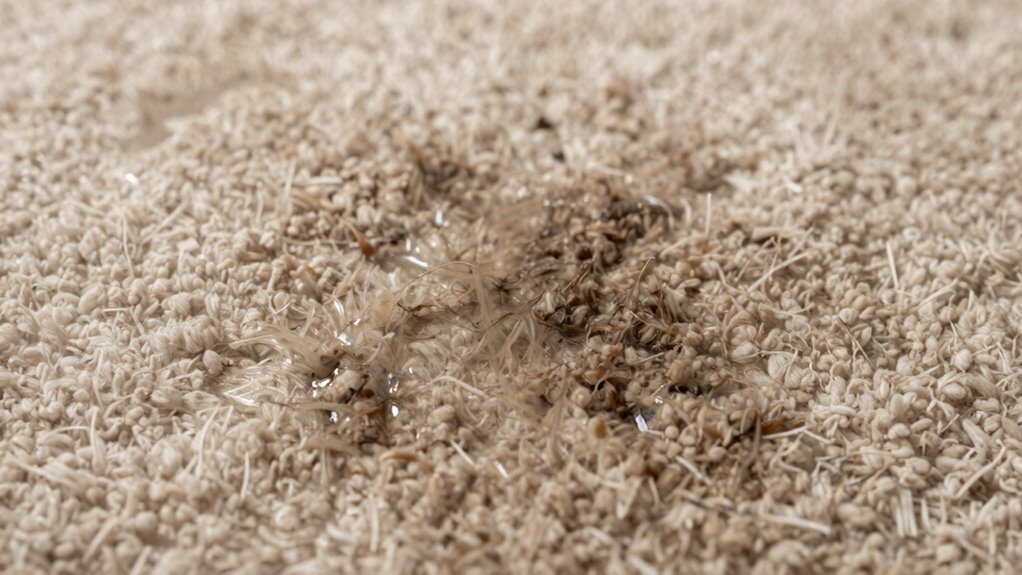
Wicking-related stains can be stubborn because they draw moisture and discoloration from the backing or padding up into the carpet fibers. To eliminate these persistent stains permanently, you need to stop the wicking process. First, address fiber degradation by removing any damaged fibers that could trap moisture, preventing the stain from reappearing. Second, apply a stain sealer designed for carpets, which creates a barrier to prevent moisture and stains from migrating upward. Third, use hot water extraction to thoroughly clean and remove residual contaminants deep within the fibers. Finally, ensure proper drying to avoid residual moisture that can cause fiber degradation. These steps help seal in stains and prevent their return, giving your carpet a cleaner, longer-lasting appearance.
Choosing the Right Cleaning Products to Stop Wicking
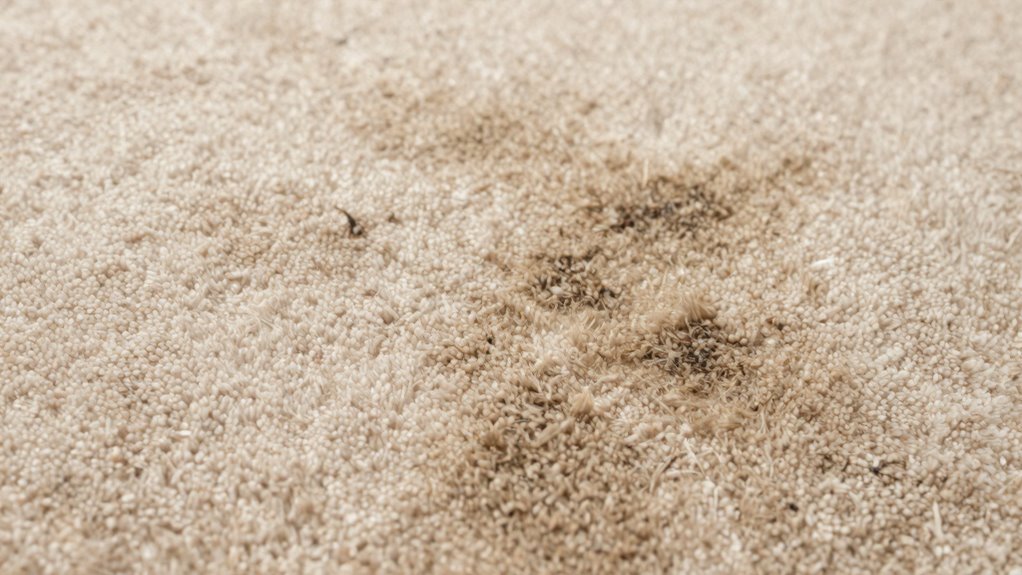
Choosing the right cleaning products is essential to prevent wicking from returning. You should look for effective cleaning agents that lift stains without leaving harsh chemical residues behind. Using the correct products helps keep your carpet clean and stops stains from reappearing.
Selecting Effective Cleaning Agents
Selecting the right cleaning agents is crucial for effectively stopping carpet wicking. You want products that penetrate deep without leaving residues that cause future stains. When working with natural fiber carpets, choose cleaners designed for delicate fibers to preserve stain resistance. Here are four tips:
- Opt for pH-balanced solutions to prevent damage.
- Use enzymatic cleaners for organic stains.
- Select products labeled safe for natural fibers.
- Avoid harsh chemicals that leave residues, which can lead to wicking.
Choosing appropriate agents ensures thorough cleaning and reduces future wicking issues. Always test a small area first to check for colorfastness. Properly selected cleaning agents help maintain your carpet’s stain resistance and prolong its lifespan.
Avoiding Harsh Chemical Residues
To prevent future wicking, it’s essential to avoid cleaning products that leave harsh chemical residues behind. Chemical residues can seep into the carpet’s backing, causing stains to reappear over time. Instead, choose gentle, eco-friendly cleaning solutions that minimize residue buildup. Harsh chemicals may temporarily mask stains but can also create a layer that traps moisture and dirt, leading to recurring stains. Look for products specifically formulated for deep cleaning without leaving harmful residues. This approach not only helps prevent stain masking but also reduces the risk of wicking. By selecting the right cleaning agents, you guarantee your carpet stays cleaner longer and avoids the cycle of stains reappearing, saving you time and effort in the long run.
When Should You Call a Professional Carpet Cleaner?
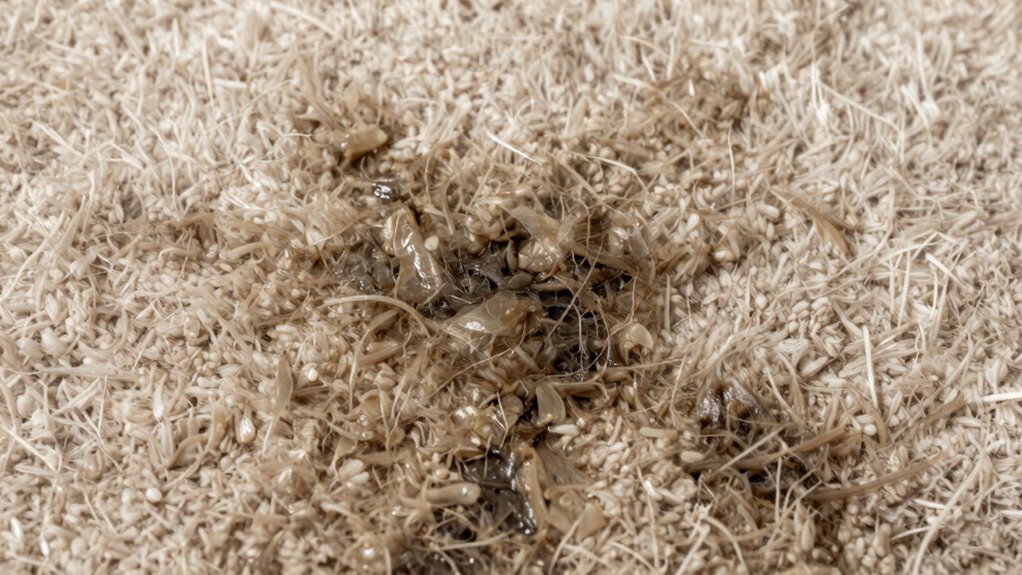
Knowing when to call a professional carpet cleaner can guarantee you time and assure your carpets get the deep clean they need. If stain removal becomes difficult or stains keep reappearing, it’s time to seek expert help. Additionally, consider calling a professional if you notice deep-seated dirt that regular cleaning can’t eliminate or if your carpet fibers appear worn or damaged after cleaning attempts. Here are some signs to watch for:
- Persistent stains that resist home treatments
- Wicking that causes stains to reappear after drying
- Odors that won’t go away, even after cleaning
- Frequent foot traffic leading to embedded dirt and grit
A professional cleaner can handle these issues efficiently, restoring your carpets’ appearance and preventing further damage.
Tips for Maintaining Your Carpet and Avoiding Future Wicking Problems
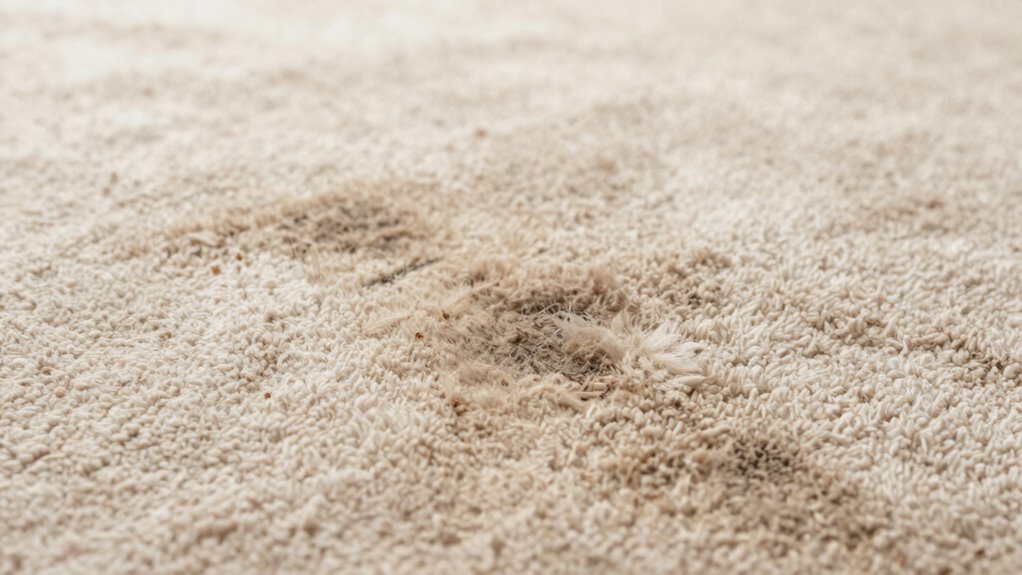
Regular maintenance can prevent many carpet issues, including wicking problems that cause stains to reappear after drying. To do this, avoid fiber damage by using gentle cleaning methods and not overwetting the carpet. Promptly address spills with blotting instead of scrubbing, which can weaken fibers and worsen wicking. Regular vacuuming helps remove dirt that can degrade carpet fibers over time. Additionally, maintaining proper odor control prevents lingering smells that can signal underlying moisture issues, which contribute to wicking. Consider using enzyme cleaners for organic stains, as they break down residues without harming fibers. Periodic professional cleanings can also help preserve your carpet’s integrity, reducing the risk of fiber damage and future wicking problems. Staying consistent with these tips keeps your carpet looking fresh and stain-free longer.
FAQs: Common Questions About Wicking and Carpet Stains
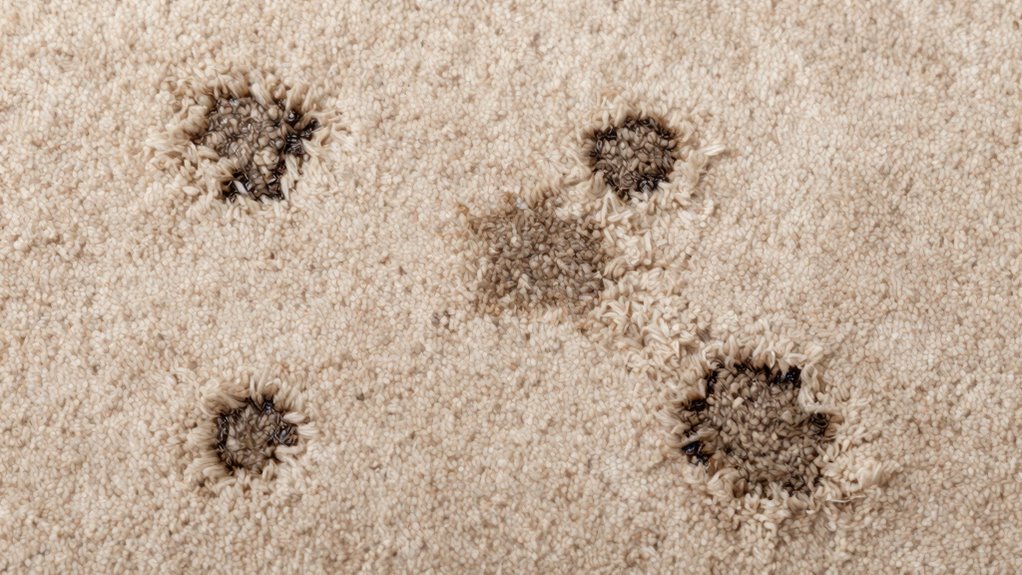
Are you wondering why some stains keep coming back even after cleaning? Wicking occurs when moisture travels through carpet fibers, often influenced by fiber types and stain color. Here are some common questions:
- How do fiber types affect wicking? Synthetic fibers like nylon are less prone, while natural fibers like wool can absorb more moisture, increasing wicking risk.
- Why does stain color matter? Darker stains are easier to see and remove but may penetrate deeper, causing more persistent wicking.
- Can I prevent wicking? Yes, by thoroughly removing moisture and using proper cleaning techniques suited for your carpet’s fiber type.
- How do I fix wicking issues? It often requires professional extraction or re-cleaning to eliminate residual moisture and prevent recurrence.
Frequently Asked Questions
Can Wicking Occur on All Types of Carpets?
Yes, wicking can occur on all types of carpets, regardless of fiber types or carpet materials. When spills seep deep into the fibers, they can rise back to the surface as the carpet dries, causing stains to reappear. This process affects both synthetic and natural fibers, so it’s essential to properly clean and treat your carpets to prevent ongoing wicking issues. Regular maintenance helps keep stains from coming back.
Is It Possible to Prevent Wicking With DIY Methods?
Yes, you can prevent wicking with DIY methods. Start with thorough stain removal, then apply a stain sealing product designed for carpets. This creates a barrier that prevents moisture from wicking back up, reducing the chances of stains reappearing. Regular maintenance and quick cleanup of spills also help. Keep in mind, however, that sealing isn’t foolproof, so consistent care remains essential to minimize wicking issues.
How Long Does It Typically Take for Stains to Wick?
Think of stain absorption like a vintage radio soaking up signals—it can happen quickly or take hours. Usually, stains wick back within 24 to 48 hours, depending on carpet fiber types and how much liquid was initially absorbed. Some fibers, like wool, resist wicking longer, while synthetic fibers might show it sooner. To prevent this, act fast and blot thoroughly, keeping the stain from traveling deeper.
Are There Specific Cleaning Agents That Cause Wicking?
Certain cleaning agents can trigger wicking, especially if they react with carpet fiber sensitivity. Harsh chemicals or excessive moisture may cause stains to reappear as the liquid rises through capillary action. To prevent this, use pH-balanced, carpet-safe cleaning products and avoid over-wetting. Always test cleaning agents on a small area first, ensuring they don’t react negatively with your carpet fibers, which can lead to persistent wicking issues.
What Are the Signs That Wicking Has Damaged My Carpet?
Like a silent thief in the night, wicking damages your carpet quietly. Signs include persistent stains that reappear despite cleaning, moisture detection in the fibers, and fiber discoloration. If your carpet feels damp or shows unusual dark patches, it’s a clear warning. You might also notice a musty smell or suspect hidden moisture. Catch these signs early to prevent further damage and restore your carpet’s beauty.
Conclusion
Think of your carpet as a garden needing careful tending. When stains hide beneath the surface, they’re like stubborn weeds waiting to sprout again. By understanding wicking, you’re armed with the tools to uproot those hidden issues. With proper care and patience, you can keep your carpet’s beauty blooming, preventing unwanted reappearances. Remember, a well-maintained carpet is like a vibrant garden—thriving beneath the surface, ready to flourish for years to come.