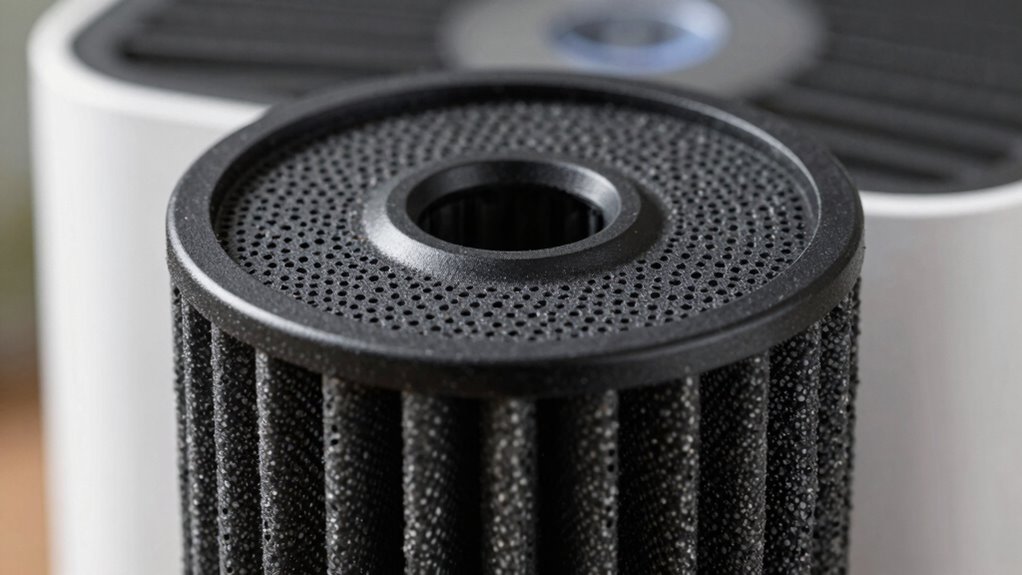

Activated carbon filters effectively remove chemicals, odors, and organic compounds by trapping pollutants on their porous surface through adsorption. They work best against low molecular weight, volatile, or water-soluble chemicals like chlorine, VOCs, and formaldehyde. However, they struggle with inorganic contaminants, heavy metals, and microbes. Regular maintenance and filter replacement are vital for continued performance. To learn more about their limitations and best uses, keep exploring how these filters can fit into your water or air purification.
Key Takeaways
- Activated carbon filters effectively remove chemicals, organic compounds, chlorine, and odors but are less effective against heavy metals and microorganisms.
- They rely on adsorption, trapping low molecular weight, volatile, or water-soluble chemicals within their porous structure.
- Saturation over time reduces performance, requiring regular replacement to prevent contaminants from leaching or passing through.
- They are suitable for removing common impurities like VOCs and industrial odors but may need additional treatment for inorganic contaminants.
- Proper maintenance and testing ensure ongoing filter effectiveness, as pore clogging and chemical saturation diminish filtration capacity.
How Do Activated Carbon Filters Work to Remove Contaminants?
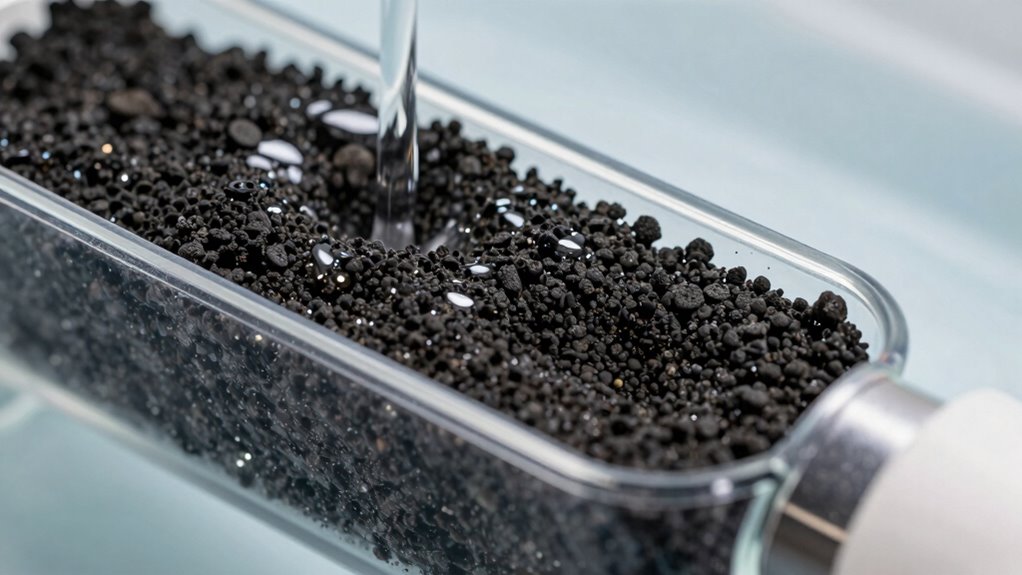
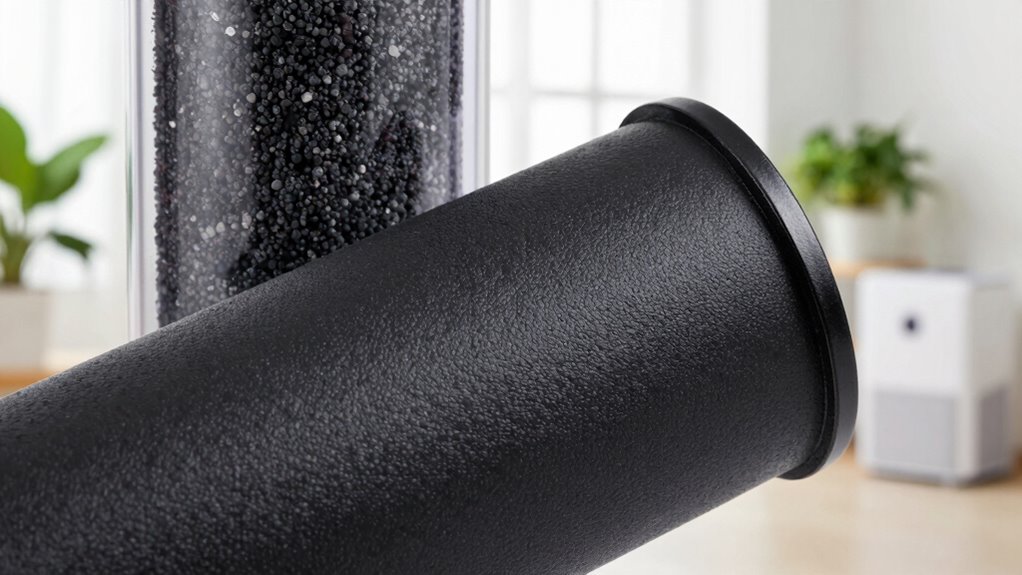
Have you ever wondered how activated carbon filters manage to trap so many different contaminants? It all comes down to the adsorption process, which is at the core of how these filters work. Activated carbon has a highly porous structure, creating an extensive pore network that provides a large surface area. When contaminated water or air passes through, pollutants like chemicals and odors stick to this surface through adsorption, not absorption. The pore structure allows molecules to become trapped within tiny holes and crevices, effectively removing impurities. This process is highly efficient because the more porous the carbon, the more contaminants it can trap. Additionally, the porous structure plays a key role in maximizing the contact between contaminants and the filter material. The adsorption capacity depends on the carbon’s surface area and pore size distribution, which can be optimized during manufacturing. Proper activation techniques can enhance carbon surface chemistry, further improving the filter’s ability to attract and hold specific contaminants. Moreover, maintaining the pore integrity of activated carbon is essential for sustained filtration performance over time. Ensuring optimal pore structure can also help extend the lifespan of the filter and improve its overall efficiency.
Which Odors and Chemicals Can Activated Carbon Filters Handle Best?
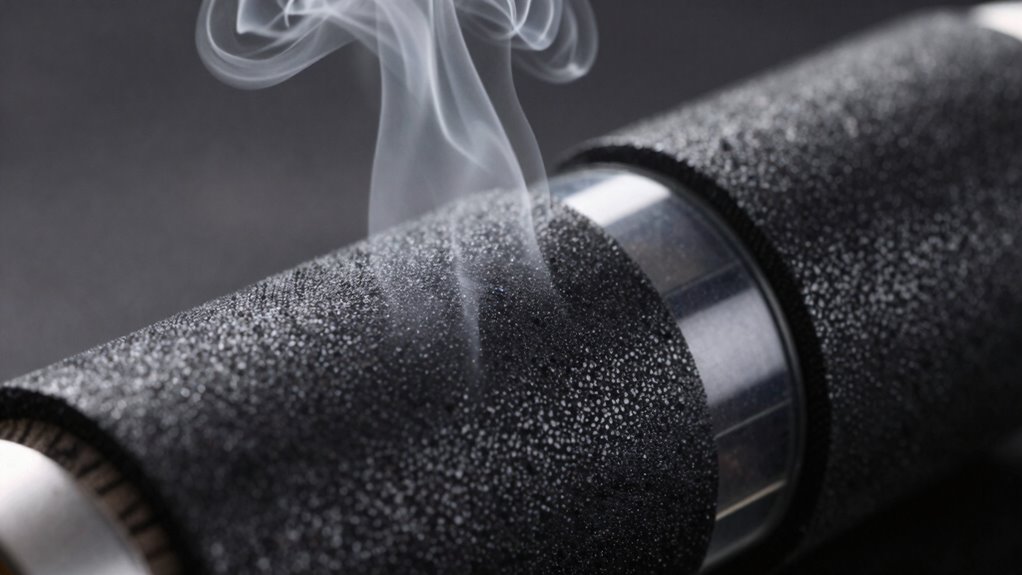
Activated carbon filters excel at removing a variety of odors and chemicals, especially those with low molecular weight that are volatile or soluble in water. They’re particularly effective at tackling industrial odors from manufacturing, sewage, or chemical plants, where strong, persistent smells can be problematic. These filters work through chemical absorption, trapping odor molecules within their porous structure. You’ll find them best at removing substances like volatile organic compounds (VOCs), formaldehyde, and certain gases that cause odors. Keep in mind, activated carbon is highly versatile for many chemical odors, but it’s less effective against gases like ammonia or sulfur compounds. Overall, if you’re dealing with low molecular weight, water-soluble chemicals or industrial odors, activated carbon filters are your go-to solution. Additionally, understanding the features of different filter types can help optimize odor removal performance. For optimal results, selecting the right activated carbon with appropriate pore size and surface area enhances adsorption efficiency for specific contaminants. Being aware of the limitations of activated carbon ensures you choose the most suitable filtration method for your needs. Furthermore, advancements in planter materials can improve the sustainability and effectiveness of indoor gardening systems.
What Are the Limitations and When Should You Consider Other Options?

Activated carbon filters work well for many odors and chemicals, but they do have limitations. They aren’t effective against gases like formaldehyde or certain volatile organic compounds that require specialized treatments. When these pollutants are a concern, you should consider other filtration options to guarantee cleaner air.
Limitations of Carbon Filters
While carbon filters are effective at trapping many pollutants, they do have limitations that you should be aware of. One major issue is their adsorption limitations; over time, filters become saturated and lose efficiency, requiring regular replacement. Additionally, some chemicals can leach from the activated carbon itself, especially if the filter isn’t properly maintained or if it’s made from low-quality materials, leading to chemical leaching into your water. These filters are less effective against certain contaminants like heavy metals and microorganisms, which they can’t reliably remove. If your water contains these pollutants, relying solely on carbon filters isn’t sufficient. In such cases, you should consider other filtration methods, like reverse osmosis or specialized filters, to ensure thorough purification.
Effectiveness Against Certain Pollutants
Have you ever wondered if carbon filters can handle all types of pollutants in your water? Their effectiveness depends on their adsorption capacity and chemical specificity. While activated carbon excels at removing organic compounds, chlorine, and certain volatile organic chemicals, it struggles with heavy metals, nitrates, and microorganisms. The filter’s limited adsorption capacity means it can become saturated, reducing its ability to remove pollutants over time. Additionally, chemical specificity matters; some chemicals simply don’t bind well to carbon, so they slip through. If your water contains high levels of inorganic contaminants or microbes, relying solely on activated carbon isn’t enough. In these cases, consider additional treatment options like reverse osmosis, UV sterilization, or specialized filters to ensure thorough purification.
How to Decide If an Activated Carbon Filter Is Right for Your Home?
Deciding whether an activated carbon filter is right for your home depends on understanding your specific water quality needs. Start by evaluating your water supply to identify pollutants you want to remove, such as chlorine, odors, or organic compounds. Consider cost considerations, including initial purchase, installation, and ongoing maintenance. Activated carbon filters are generally affordable upfront, but replacement costs can add up over time. Check installation requirements; many filters are simple to install under your sink or on the main line, but some may need professional help. If your water mainly contains chlorine or tastes off, an activated carbon filter could be an effective and economical choice. However, if you face other contaminants, you might need additional treatment options. Understanding the media filtration process can help you determine whether an activated carbon filter will meet your needs. Additionally, knowing the types of pollutants that activated carbon can remove ensures you select the best filter for your situation. Evaluating your water’s contaminant profile can further aid in making an informed decision, especially when considering the specific removal capabilities of different filters. Incorporating maintenance requirements into your decision-making process can also help ensure the filter remains effective over time.
Are There Downsides or Risks to Using Activated Carbon Filters?

While activated carbon filters are effective, you should be aware of some risks. They can sometimes release chemicals into your water if not maintained properly, and they don’t remove all contaminants. Regular filter replacement is essential to keep them working safely and effectively. Additionally, filter maintenance practices and monitoring can help ensure optimal filter performance and timely maintenance. Proper installation and adherence to manufacturer guidelines can also mitigate potential issues related to water quality management. Being aware of the contaminant removal capabilities of your filter can help prevent the false sense of security that might come with relying solely on activated carbon filtration. Moreover, incorporating water testing can help verify the effectiveness of your filtration system over time.
Potential Chemical Leaching Risks
Activated carbon filters are generally safe, but they can sometimes introduce chemical leaching into your water. This occurs when chemicals from the filter material itself, such as activated carbon or manufacturing residues, leach into the water you drink. While most filters are tested for safety, poorly manufactured or expired filters may pose health concerns due to chemical leaching. These contaminants can include substances like phenols or other organic compounds, which might affect your health over time. To minimize risks, choose high-quality filters from reputable brands, replace filters regularly, and follow manufacturer instructions. Proper maintenance reduces the chance of chemical leaching, ensuring your water remains safe and clean. Additionally, filter lifespan and adherence to usage guidelines are crucial in preventing leaching issues. Being aware of potential risks helps you make informed decisions about your water filtration system. Regularly monitoring water quality and staying informed about filter safety standards can further help mitigate these concerns. Staying updated on filter certifications can also provide added assurance of safety and performance. Moreover, selecting natural filtration methods can offer an eco-friendly alternative that minimizes chemical exposure.
Limited Effectiveness Against All Contaminants
Although activated carbon filters are effective at removing many impurities, they don’t eliminate all types of contaminants, which can pose risks if you rely on them exclusively. Their ability to remove chemicals relies on chemical adsorption, but pore size limitations restrict this process. Smaller contaminants, like certain viruses or dissolved metals, may pass through unfiltered. To visualize this, consider the following:
| Contaminant Type | Filter Capability | Limitation |
|---|---|---|
| Organic chemicals | Removed effectively | Pore size captures larger molecules |
| Heavy metals | Partially removed | Limited by chemical affinity |
| Microorganisms | Not reliably removed | Too small for pores |
| Viruses | Not effectively removed | Pore size too large |
This table highlights that some contaminants bypass activated carbon filters, emphasizing the need for complementary filtration methods. Additionally, the pore size of activated carbon can become clogged or exhausted over time, reducing its effectiveness.
Regular Filter Maintenance Needed
Regular maintenance of activated carbon filters is essential to guarantee their effectiveness and safety. Over time, the filter’s lifespan decreases as it becomes saturated with contaminants, reducing its ability to adsorb impurities. Following a proper maintenance schedule ensures you replace or regenerate the filter before it becomes ineffective or risks releasing trapped pollutants back into the water or air. Skipping maintenance can lead to clogged filters, decreased flow rate, and potential bacterial growth. Regularly inspecting and changing your filter prevents these issues and maintains optimal performance. Be mindful of the manufacturer’s recommendations for replacement timing, and don’t delay, as neglecting filter upkeep can compromise your health and the system’s efficiency. Proper maintenance is straightforward but vital for reliable filtration.
Tips to Maximize the Effectiveness of Your Activated Carbon Filter

To get the most out of your activated carbon filter, maintaining it properly and following best practices is essential. First, stay on top of filter replacement; change the filter according to the manufacturer’s schedule to guarantee maximum adsorption. Second, follow installation tips carefully—install the filter correctly to prevent leaks and maximize contact with impurities. Third, avoid overloading the filter; excessive contaminants reduce effectiveness and shorten lifespan. Fourth, keep the surrounding area clean and dry to prevent mold or debris from contaminating the filter. Regularly inspect the filter for signs of saturation or damage, replacing it promptly. These steps help maintain filtration efficiency, extend the filter’s lifespan, and ensure you’re consistently removing unwanted substances from your water or air.
Frequently Asked Questions
How Often Should I Replace My Activated Carbon Filter?
You should replace your activated carbon filter every 3 to 6 months, following the filter replacement and lifespan guidelines. Regularly check for signs of reduced effectiveness, like a bad odor or decreased water flow. Factors like water quality and usage can affect how often you need to change it. Staying on top of your filter replacement schedule ensures your water stays clean and safe, maintaining ideal filtration performance.
Can Activated Carbon Filters Remove Viruses From Water?
Activated carbon filters aren’t effective for virus filtration in water purification. They primarily remove chemicals, odors, and organic compounds, but viruses are too small for these filters to trap effectively. If you want to make sure your water is virus-free, you should consider using a UV purifier or a reverse osmosis system, which are designed specifically for virus removal. Relying solely on activated carbon filters won’t provide the protection you need from waterborne viruses.
Are Activated Carbon Filters Effective Against Heavy Metals?
Imagine water flowing through a dark, porous sponge, trapping unseen toxins. Activated carbon filters are effective against heavy metals through chemical adsorption, capturing substances like lead and mercury. They act like magnets for these contaminants, ensuring your water is safer to drink. While they excel at filtering chemicals and organic compounds, they’re less effective against dissolved heavy metals without additional filtration stages. You can trust them for significant heavy metal filtration in your water.
Do Activated Carbon Filters Remove Beneficial Minerals?
Activated carbon filters generally don’t remove beneficial minerals from your water. They focus on contaminants, but mineral retention remains mostly unaffected, so essential minerals stay in your water. However, some filters may cause slight pH alteration, which can affect mineral balance. If you’re concerned about retaining beneficial minerals, look for filters specifically designed to preserve mineral content, and be aware of potential pH changes during filtration.
Can I Use Activated Carbon Filters for Both Water and Air Purification?
You can definitely use activated carbon filters for both water and air purification. Did you know they’re highly effective at improving air quality by removing odors and volatile organic compounds? For water filtration, they eliminate chemicals like chlorine and pesticides. Using these filters for both applications is practical, as they target many common contaminants. Just guarantee you choose the right type for each purpose to maximize their efficiency and keep your environment clean and safe.
Conclusion
Remember, no filter is perfect—think of activated carbon like a sponge soaking up what it can, but leaving behind what it can’t. While it’s great for odors and chemicals, it won’t catch everything. Regular maintenance keeps it working best, and sometimes, you’ll need other options for complete protection. Stay vigilant and treat your home like a garden—you tend to what you want to flourish, knowing some weeds are harder to uproot.