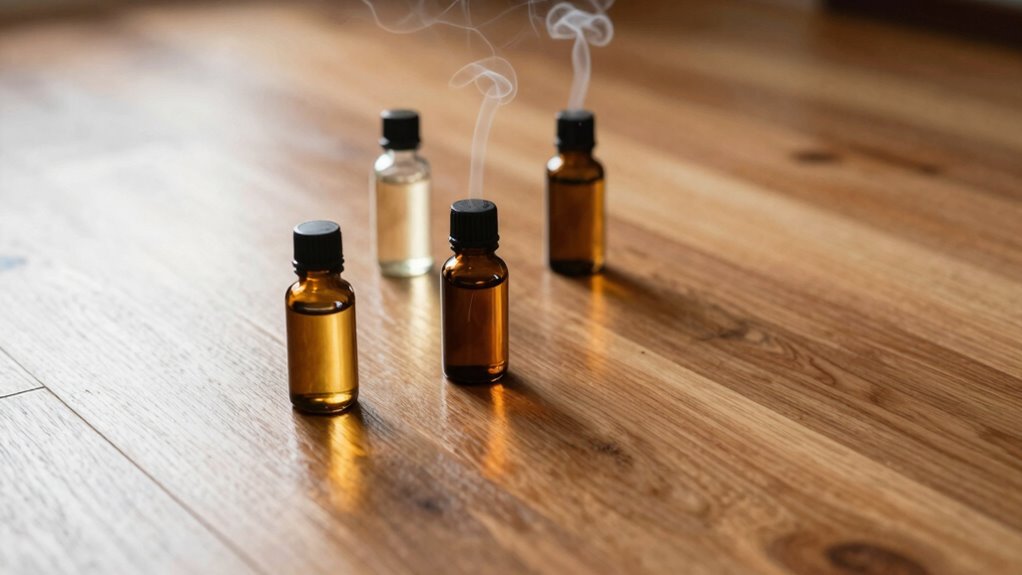
Essential oils can damage certain floor finishes, especially porous surfaces like unsealed wood, cork, and natural stone, by causing discoloration, staining, and finish breakdown. Their acidity can react with protective coatings, leading to dullness, scratches, and even peeling over time. Recognizing the signs early and applying proper precautions, such as testing small areas and cleaning spills promptly, can help prevent this damage. To learn how to protect your floors and restore them, keep exploring further.
Key Takeaways
- Essential oils can cause staining, discoloration, or dulling of porous floor finishes like unsealed wood or natural stone.
- Acidic oils may chemically react with protective coatings, leading to finish breakdown and uneven surface appearance.
- Penetration of oils into porous surfaces can result in long-term damage, such as stains and weakened finishes.
- Some finishes are more vulnerable to essential oil damage due to their natural porosity and inadequate sealing.
- Proper testing, dilution, and application techniques are essential to prevent essential oils from damaging floor surfaces.
How Do Essential Oils Interact With Different Floor Finishes?

Essential oils can interact differently with various floor finishes, affecting both their appearance and longevity. When applying oils, oil absorption plays a key role; porous finishes like unsealed wood absorb oils more readily, potentially causing stains or discoloration. Conversely, sealed or coated surfaces tend to be more resistant, but finish compatibility remains vital. Some finishes may react chemically with certain oils, leading to damage or deterioration over time. It’s important to know which finishes are compatible with essential oils to prevent unintended effects. Testing a small, hidden area first helps verify the finish won’t be compromised. Being aware of these interactions allows you to preserve your floors’ beauty and durability while safely enjoying the benefits of essential oils. Proper floor finish selection and maintenance] are essential for long-term protection against oil damage.
Which Types of Floors Are Most Vulnerable to Essential Oil Damage?
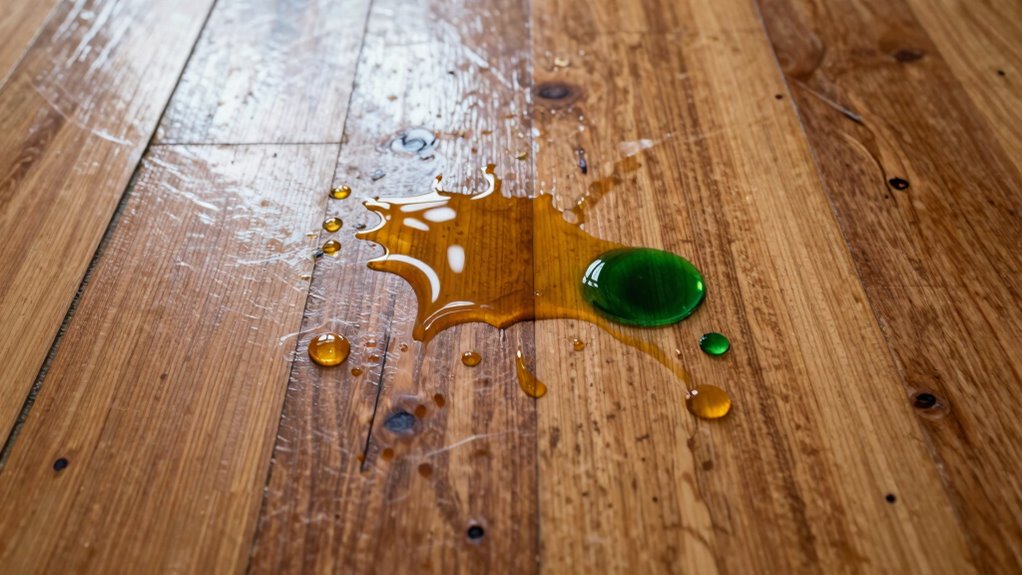
Floors with porous surfaces are most vulnerable to damage from essential oils because their natural absorption can lead to staining, discoloration, and long-term deterioration. Materials like hardwood, cork, and certain natural stone are especially at risk, as their porous nature allows oils to seep in more easily. These porous surfaces often react adversely to common cleaning products, which may contain harsh chemicals that worsen the damage. If you use inappropriate cleaning products or neglect to seal porous floors properly, essential oils can cause lasting harm. Additionally, understanding the porous nature of flooring materials can help in selecting appropriate protective measures. Recognizing the vulnerability of porous surfaces can guide you in choosing the safest cleaning methods and products. Non-porous flooring options like ceramic tile or sealed vinyl are less affected, but porous surfaces require extra care. Knowing your flooring material helps you choose suitable cleaning products and protect your floors from essential oil damage, especially considering the material’s susceptibility to absorption and staining. Being aware of the porousness of materials can also help you make better decisions regarding sealing and maintenance practices, and selecting appropriate protective measures can mitigate this risk.
How Can You Tell If Your Floor Has Been Damaged by Essential Oils?
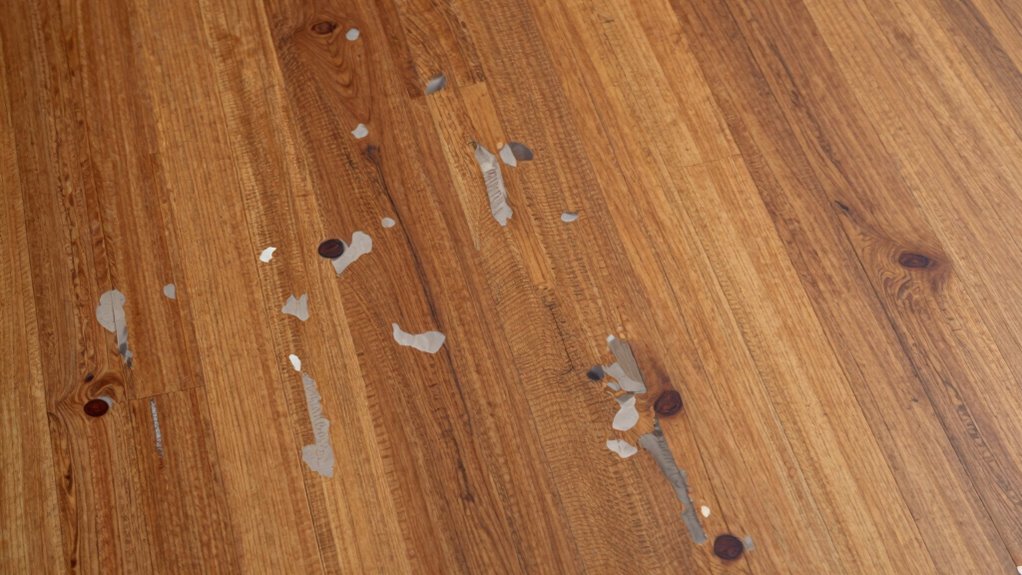
Damage from essential oils can often be subtle at first, making it tricky to recognize until it worsens. One sign is a duller surface sheen, which indicates the finish may be compromised. You might also notice odor persistence, even after cleaning, suggesting oils have seeped into the finish or underlying layers. To help identify damage, compare sections of your floor:
| Visual Clues | Olfactory Clues |
|---|---|
| Loss of gloss or uneven sheen | Lingering fragrance |
| Scratches or dull patches | Unusual, persistent smell |
| Discoloration or spots | Odor that won’t fade |
| Surface feels rough or sticky | Smell remains despite cleaning |
Additionally, understanding floor finishes and their sensitivities can help you recognize early signs of damage. Suprem fabric, known for its durability and resistance to wear, can serve as a comparison point for assessing the quality of your flooring’s finish. Recognizing how floor finishes react to essential oils can help you take timely action to protect your flooring. Being aware of the chemical reactions between oils and certain finishes allows for better prevention and maintenance. It’s also helpful to learn about the long-term effects of essential oils on various surfaces to prevent ongoing damage. Stay alert for these signs to catch damage early and prevent further deterioration.
How Do Essential Oils Cause Discoloration and Finish Breakdown?
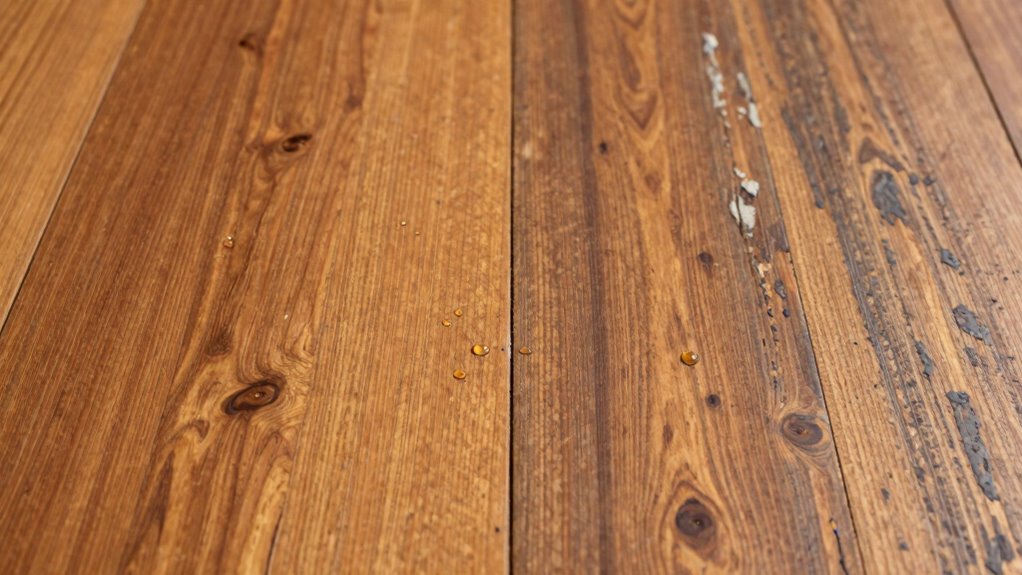
Essential oils can cause discoloration and finish breakdown because they are often acidic, which can damage your floor’s protective layer. When oils penetrate the surface, they may leave stains or weaken the finish over time. Understanding how these factors interact helps you protect your floors from lasting damage. Additionally, Free Floating properties of oils can lead to uneven spreading, further complicating the maintenance process. Recognizing the chemical composition of essential oils can help you better understand their potential to harm different flooring surfaces. Proper application techniques and understanding air purifier maintenance can also minimize unintended exposure to damaging substances. Being aware of affiliate disclosures ensures you make informed decisions about product use and protective measures. Knowing about Jack can also be useful for selecting appropriate cleaning solutions that won’t harm your flooring.
Acidic Nature Effects
Because many essential oils are naturally acidic, applying them to your floors can lead to discoloration and damage to the finish. Their acidic nature can react with protective coatings, causing uneven discoloration or dulling the surface. The aromatic properties of these oils often attract attention, but their acidity can accelerate deterioration, especially if your floor finish has low resistance. The absorption rates of different oils influence how deeply they penetrate, but even surface-level contact can cause harm if the oils are highly acidic. Over time, repeated exposure may weaken the finish layer, leading to cracks or peeling. Additionally, understanding the acidic properties of essential oils can help you determine which ones are safer to use around your home. To protect your floors, it’s essential to understand the acidity of the oils you use and avoid applying those with high acidity directly onto the surface. Being aware of chemical reactions between oils and finishes can further aid in preventing damage and maintaining the integrity of your flooring.
Oil Penetration and Stains
When essential oils come into contact with your floors, their ability to penetrate the surface can lead to discoloration and deterioration of the finish. This happens through molecular interaction and surface absorption. Essential oils consist of molecules that can seep into porous finishes or wood, disrupting the surface layer. As these oils are absorbed, they can cause staining that’s difficult to remove, especially if left untreated. The penetration process is influenced by the surface porosity, which determines how readily oils can infiltrate. Over time, the oil’s penetration weakens the protective coating, leading to finish breakdown. The more porous the surface, the easier it is for oils to infiltrate, increasing the risk of permanent discoloration. Understanding this process helps you prevent damage by avoiding direct contact of essential oils and promptly cleaning any spills to minimize surface absorption. Additionally, using vetted deals on protective finishes can help safeguard your floors from such damage.
What Are Best Practices for Using Essential Oils Safely on Floors?
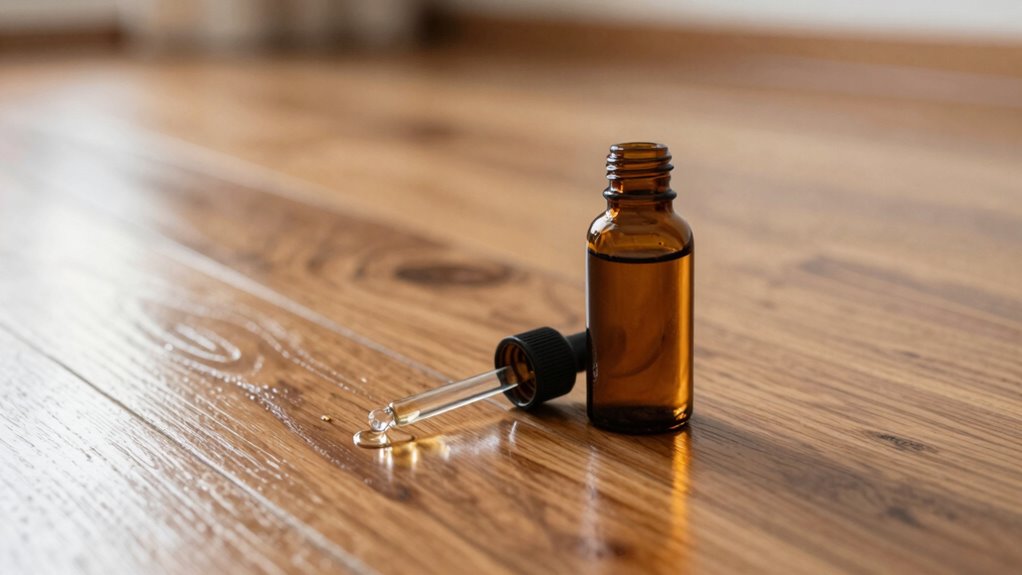
To use essential oils safely on your floors, always dilute them properly before application. It’s also important to test a small, hidden area first to check for any adverse reactions. Incorporating connected equipment or smart diffusers can also help monitor proper dilution levels and usage. Understanding the impact of celestial bodies on personal traits can guide you in choosing the most suitable essential oils for your specific needs. Additionally, employing safe application practices can further prevent damage to your flooring materials. Regularly reviewing financial planning mistakes related to product misuse can help maintain your flooring’s longevity and safety.
Dilution and Application Tips
Using essential oils safely on floors starts with proper dilution to prevent any damage or irritation. You should always use dilution techniques that involve mixing a few drops of essential oil with a carrier, like water or a mild soap, before applying. This reduces the risk of damaging finishes or causing skin irritation. When it comes to application methods, avoid pouring oils directly onto the surface. Instead, use a soft cloth or a spray bottle for even distribution. Always start with a small area to see how your floor reacts before covering larger sections. Make sure to wipe away excess solution and allow the floor to dry thoroughly. Following these dilution and application tips helps protect your floors while enjoying the benefits of essential oils.
Test Before Full Use
Before applying essential oils to your entire floor, it’s crucial to perform a spot test to verify finish compatibility. This step helps prevent damage or unwanted reactions. To do this effectively:
- Choose a small, inconspicuous area of your floor for testing.
- Mix a diluted essential oil solution according to your intended use.
- Apply a small amount to the spot test area.
- Wait 24 hours to observe any changes in finish or appearance.
If the finish remains unaffected, it’s safe to proceed with the full application. Always remember, spot testing is your best practice for ensuring compatibility and avoiding costly mistakes. Taking this precaution safeguards your floors and ensures the longevity of your finish.
How Can You Protect Your Floors From Damage When Using Essential Oils?
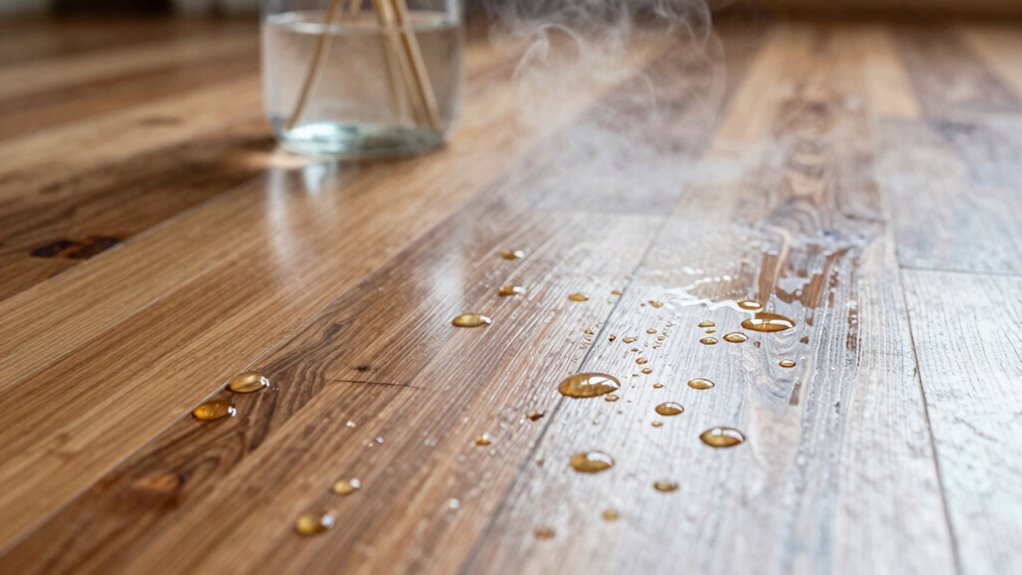
Essential oils are popular for their aromatic and therapeutic benefits, but they can also damage your floors if not used carefully. To protect your surfaces, focus on proper floor maintenance by cleaning spills immediately and avoiding excess oil buildup. Use a diffuser with a secure lid to control scent diffusion, preventing oils from splashing or spilling onto your floors. When applying oils, keep bottles away from edges and high-traffic areas. Consider placing essential oils in well-ventilated spaces or using diffusers on a stable, protected surface. Wearing shoes or using floor mats can also reduce tracking of oils inside. These precautions help minimize direct contact and preserve your flooring’s finish, ensuring your space remains beautiful and damage-free while enjoying the benefits of essential oils.
How Do You Clean and Restore Floors Damaged by Essential Oils?
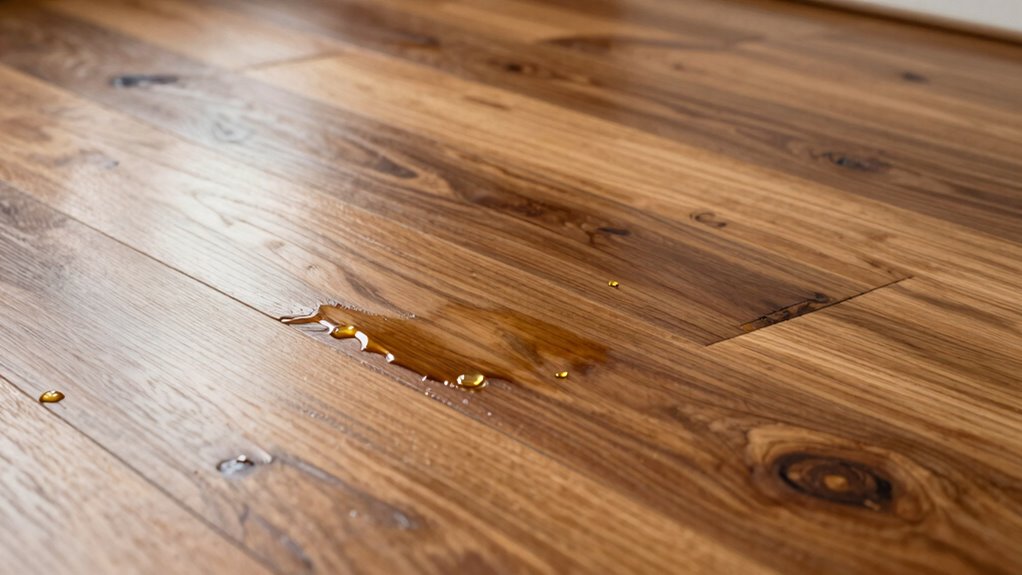
When essential oils spill or splash onto your floors, they can leave stains, dull finishes, or even cause surface damage if not cleaned promptly. To restore your flooring, start with DIY cleaning methods:
- Blot the spill immediately with a clean, damp cloth to remove excess oil.
- Mix a gentle cleaning solution with mild soap and warm water to wipe the area.
- Use a soft scrub brush for stubborn stains, avoiding abrasive pads that could damage protective coatings.
- Rinse thoroughly and dry with a soft cloth to prevent residue buildup.
If the finish remains dull, consider reapplying protective coatings like sealants or varnishes to restore shine and add a barrier against future spills. Regular maintenance keeps your floors looking their best.
What Safer Alternatives Can You Use Instead of Essential Oils on Floors?

If you’re looking for safer alternatives to essential oils for flooring, consider using natural cleaning agents like vinegar, baking soda, or hydrogen peroxide. These options provide effective DIY cleaning while avoiding potential damage from essential oils. For natural fragrances, you can add a few drops of citrus or herbal extracts to your cleaning solutions. This way, your floors smell fresh without risking finish damage. Below is a simple comparison:
| Safer Alternatives | Benefits |
|---|---|
| Vinegar | Natural disinfectant, inexpensive |
| Baking Soda | Odor neutralizer, gentle scrub |
| Hydrogen Peroxide | Disinfects, safe for most surfaces |
Using these options allows you to maintain your floors with natural fragrances and peace of mind.
Frequently Asked Questions
Are There Specific Essential Oils That Are Safer for All Floor Types?
Yes, there are suitable oils that are generally safe for all floor types when applied with caution. You should focus on safe application by diluting essential oils properly and testing a small area first. Lavender, tea tree, and lemon are often considered safer options, but always check for compatibility with your specific finish. Using these oils sparingly helps prevent damage while enjoying their natural benefits.
Can Essential Oils Damage Underlayment or Subfloor Materials?
Yes, essential oils can potentially harm underlayment or subfloor materials. When you apply oils that contain solvents or acids, you risk underlayment erosion or subfloor degradation over time. These substances may seep through finishes and cause moisture to weaken the underlying layers. To protect your floors, always use diluted oils, avoid direct contact, and ensure proper sealing. Regular inspection can also help catch any early signs of damage.
How Long Does It Typically Take for Essential Oils to Cause Visible Damage?
You’ll see damage from essential oils in just days or weeks, depending on the finish and application. Chemical reactions between the oils and certain surfaces weaken finishes, while lingering scent residue can stain or dull the surface. The more frequently you apply oils or the more concentrated they are, the faster these issues appear. Stay alert, inspect regularly, and clean promptly to prevent lasting damage from these aromatic substances.
Are There Legal or Warranty Issues Related to Using Essential Oils on Floors?
You should know that using essential oils on your floors could lead to legal liabilities if damages occur, as it might void warranties. Many manufacturers include warranty exclusions for damage caused by non-recommended products or substances. If you choose to use essential oils, check your warranty terms carefully. Keep in mind that accidental damage resulting from essential oil use could leave you responsible for repairs or replacements.
Do Essential Oils Affect Floor Finishes Differently Based on Environmental Conditions?
Environmental variability markedly impacts how essential oils affect floor finishes. If your environment has high humidity or temperature fluctuations, certain finishes become more sensitive and may react adversely to essential oils. You should be cautious, as these conditions can amplify the oils’ effects, leading to discoloration or damage. To protect your floors, consider the specific finish sensitivity and monitor environmental factors closely before applying essential oils.
Conclusion
To keep your floors shining like a mirror, steer clear of direct essential oil contact or dilute them properly. Think of your floors as delicate flowers—gentle care keeps them vibrant. With the right precautions, you can enjoy the benefits of essential oils without risking damage. Remember, a little prevention goes a long way in preserving your floors’ beauty, ensuring they remain as stunning as a sunset on a calm evening.