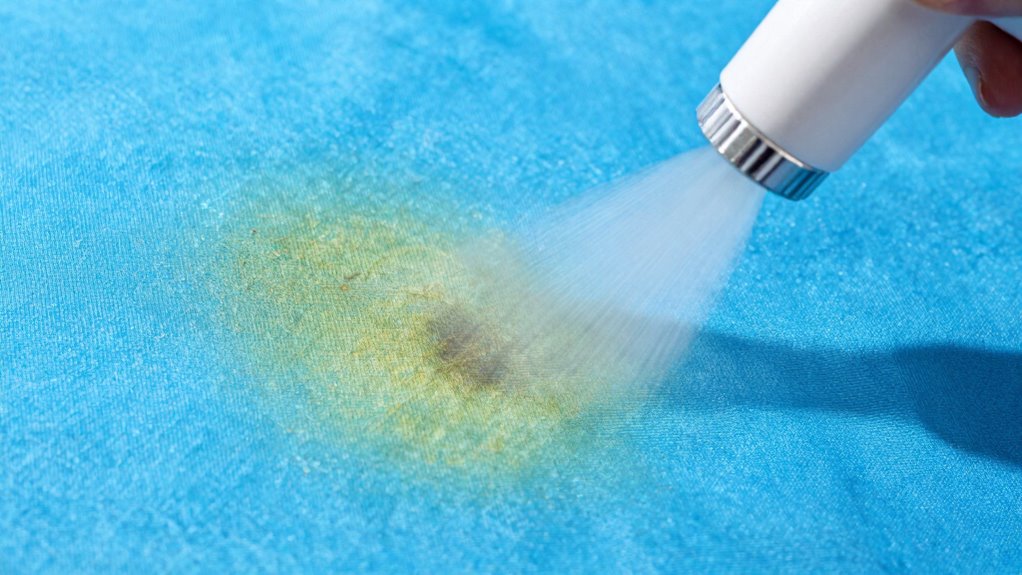

Heated spray works well on oily or greasy stains because the heat helps break down the oils, making them easier to remove. However, it can worsen organic stains like blood or sweat, as heat may set them deeper into fibers. The effectiveness depends on stain type, age, and fabric. Using heat appropriately can help, but in some cases, it’s better to avoid it. If you want to learn how to choose the right approach for different stains, keep exploring these tips.

Get cleaning gear delivered free with Prime
- Fast, free delivery on millions of items
- Prime Video, Amazon Music and more included
- Member-only deals all year
Key Takeaways
- Heated spray breaks down greasy and oily stains by melting fats, aiding removal, while it may set protein-based stains deeper.
- The effectiveness depends on stain chemistry; organic stains respond well with heat, whereas synthetic or ink stains may not.
- Fresh stains are easier to treat with heat as their bonds to fabric are weaker compared to older, set-in stains.
- Fabric type influences heat tolerance; natural fibers handle heat better than sensitive synthetics, affecting stain removal success.
- Proper temperature control prevents damage and ensures heat enhances cleaning without setting stubborn or delicate stains.
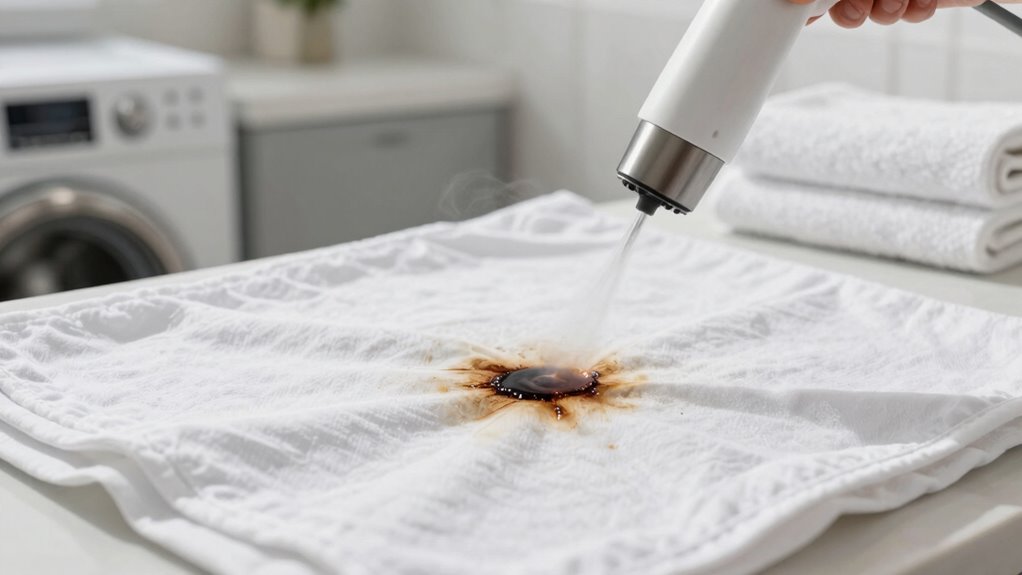
Heated spray is a popular cleaning tool, but its effectiveness varies depending on the type of stain. When you use heated spray, you’re relying on high temperature to loosen and lift dirt, grease, or grime. But not all stains respond the same way, and understanding why can help you get better results. The key factors are the stain type and fabric compatibility. Different stains have different chemical compositions, and some are more responsive to heat than others.
For example, greasy or oily stains tend to respond well to heated spray because heat breaks down the oils, making them easier to dissolve. When you target cooking grease or makeup smudges, the heat helps loosen the bonds between the stain and the fabric fibers. However, if you’re dealing with protein-based stains like blood, sweat, or food, heat can sometimes make things worse. High temperatures may cause these stains to set deeper into the fibers, making them more difficult to remove. Additionally, the age of the stain can influence its response, with older stains often requiring more specialized treatment based on stain chemistry.
Fabric compatibility also plays a critical role. Not all fabrics can withstand high heat without damage. Natural fibers like cotton and linen generally tolerate heated spray well, as long as you don’t overdo it. Synthetic fabrics such as polyester or nylon, on the other hand, are more sensitive. Applying too much heat can cause melting, discoloration, or weakening of the fibers. If you’re unsure whether your fabric is compatible with heated spray, it’s best to test on a small, inconspicuous area first. Additionally, some fabrics may have a lower heat tolerance due to their fiber composition, which influences how they respond to heat treatments. Recognizing the fiber type can help prevent accidental damage. Another factor to take into account is the stain’s age. Fresh stains tend to respond better to heated spray because the bond between the stain and fabric is less established. Older, set-in stains may require a different approach or additional treatment, even with heat. Furthermore, the type of cleaning solution used alongside the heated spray can influence effectiveness. Combining heat with enzymatic cleaners works well on organic stains, but might be less effective on synthetic dyes or ink marks. Understanding stain chemistry can help you choose the right method for different types of stains. It is also helpful to consider the temperature settings to avoid damaging delicate fabrics or setting stains further.
Products Worth Considering

Google Nest Doorbell (Wired, 3rd Gen, 2025) – Snow

Philips Hue Play Screen Sync and 65-Inch Play Gradient Smart TV Light Strip

Levoit Eleva 300X Air Purifier with Sealed HEPA Filtration
As an affiliate, we earn on qualifying purchases.
Frequently Asked Questions
Can Heated Spray Damage Delicate Fabrics?
Heated spray can damage delicate fabrics if you’re not careful. The fabric safety depends on the material’s sensitivity, so always check care labels first. Temperature impact is vital; high heat might weaken fibers or cause discoloration. To avoid damage, use the lowest effective heat setting and test on a small, inconspicuous area before applying it directly to the stain. This guarantees you protect delicate fabrics while treating stains effectively.
How Long Should Heated Spray Sit on a Stain?
You should let heated spray sit on a stain for about 5 to 10 minutes, but always check the product’s instructions. This allows the solution to penetrate the fabric and break down the stain effectively, boosting stain removal speed. Confirm the spray’s fabric compatibility before applying, especially on delicate fabrics, to avoid damage. Monitoring the time prevents overexposure, which can harm sensitive materials.
Is Heated Spray Safe for All Stain Types?
Heated spray isn’t safe for all stain types because of chemical reactions that can occur. For some stains, heat activates cleaning agents effectively, breaking down the stain molecules. However, for others—like protein-based or dye-based stains—heat might set the stain further or cause damage. Always check the stain type and follow product instructions carefully. Testing on a small, hidden area first helps prevent unintended damage or discoloration.
Does Temperature Affect the Effectiveness of Heated Spray?
Back in the day, temperature calibration was key, and it still is. The temperature you use directly impacts the effectiveness of heated spray; higher temps can enhance stain penetration, breaking down tougher spots. But, if the heat’s too high, you risk damaging fabrics. Adjusting the temperature carefully guarantees you optimize stain removal without compromising the material. So, yes, temperature does affect how well heated spray works.
Can Heated Spray Be Used on Set-In Stains?
Heated spray can sometimes be used on set-in stains, but you need to think about chemical reactions and fabric compatibility first. The heat can activate stain-breaking chemicals, making them more effective, but it might also damage delicate fabrics. Always test on a small, hidden area first. If the fabric is compatible, heated spray can loosen the stain, but for stubborn or old stains, professional treatment might be better.
Conclusion
Think of heated spray as a magic wand that works wonders on certain stains, like a gentle breeze whispering away dirt. But just as some weather refuses to clear, not all stains yield to its warmth. It’s a dance of chemistry and fabric, where heat can either dislodge stubborn grime or leave it stubbornly rooted. So, next time you face a stain, remember—sometimes, all it takes is a little heat to turn the tide.