The ideal humidity range to reduce mold and dust is between 40% and 50%. Maintaining your indoor moisture within this range helps prevent mold spores from settling and stops dust mites from thriving. Too high or too low humidity can cause problems like mold growth or dry skin. Keeping an eye on your humidity with proper tools and adjusting accordingly guarantees a healthier, more comfortable environment. For more tips, there’s plenty to explore ahead.
Key Takeaways
- Maintain indoor humidity between 40-50% to minimize mold growth and dust mite proliferation.
- Humidity above 60% significantly increases mold and dust mite risks.
- Keeping humidity below 50% helps prevent condensation and damp conditions that promote mold.
- Consistent monitoring with hygrometers ensures humidity stays within the ideal range.
- Proper ventilation and dehumidifiers are effective tools for maintaining the sweet spot.
What Is the Ideal Humidity Range to Prevent Mold and Dust?
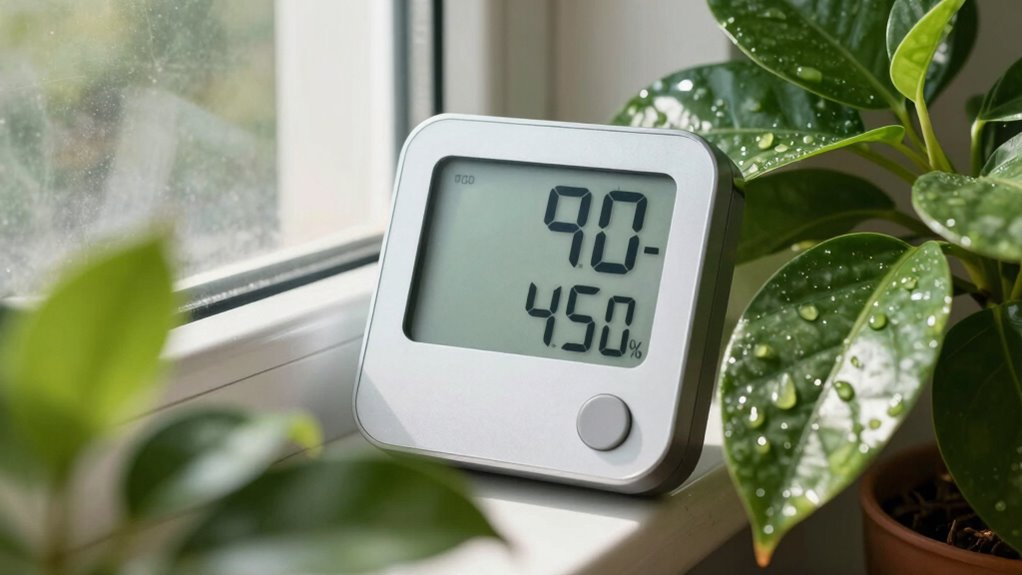
Maintaining the right humidity level is essential for preventing mold and dust buildup in your home. Aim for a humidity range of 40-50%, which helps keep indoor plants healthy without encouraging mold growth. Proper air circulation is key; it prevents moisture from stagnating and creating damp spots where mold can thrive. When your home has good airflow, dust particles are less likely to settle and accumulate. Avoid overly humid conditions that can cause indoor plants to stay wet longer, fostering mold. Use fans or open windows periodically to promote air movement. Keeping humidity within this range also reduces dust mites and mold spores, creating a healthier environment. Monitoring with a hygrometer guarantees you stay within the ideal humidity sweet spot for mold and dust prevention. Additionally, energy-efficient climate control systems can help maintain a consistent humidity level, reducing the risk of mold and dust buildup while conserving energy. Proper humidity regulation techniques are essential for creating a comfortable and safe living space. Ensuring proper humidity levels is a crucial aspect of a healthy, mold-free home environment, especially when combined with proper ventilation techniques. Incorporating dehumidifiers can further enhance moisture control in areas prone to dampness.
Why Humidity Levels Affect Mold Growth and Dust Mite Presence
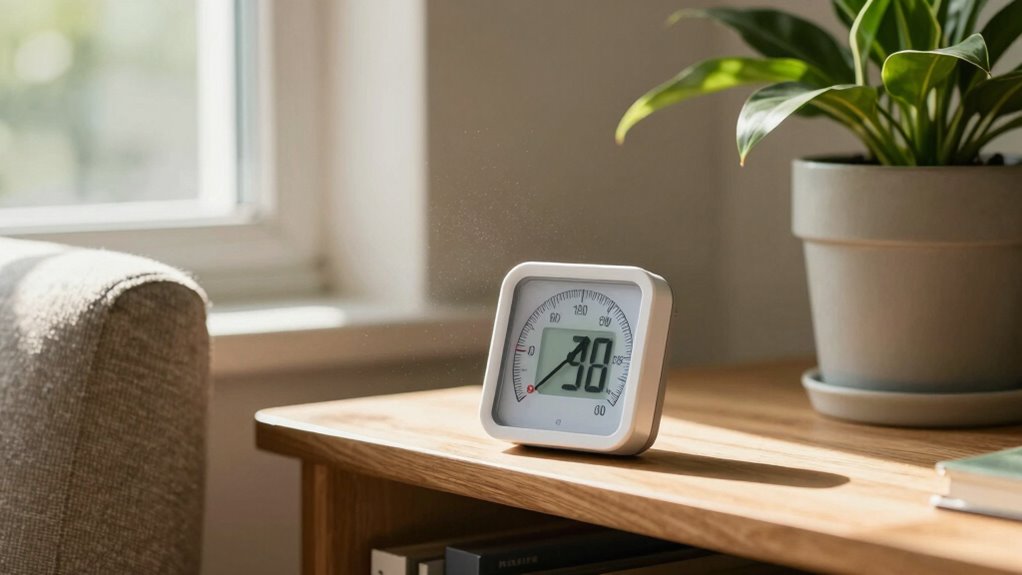
Humidity levels directly influence mold growth and dust mite presence because these organisms thrive in moist environments. When moisture retention is high, mold spores settle and multiply more easily, especially with poor indoor airflow that traps humidity. Dust mites also flourish in humid conditions, as they need moisture to survive and reproduce. To understand this better, consider the table below:
| Humidity Level | Effect on Mold | Effect on Dust Mites |
|---|---|---|
| 30-50% | Limited growth | Reduced presence |
| Above 60% | Rapid growth | Increased infestation |
| Below 30% | Dry, inhibits growth | Less active, but may cause dryness |
| Fluctuating | Promotes mold spread | Mites adapt or escape |
Maintaining suitable humidity helps control moisture retention, limiting mold and dust mite populations while promoting healthy indoor airflow. Proper humidity management also supports indoor air quality by reducing airborne contaminants. Additionally, consistent humidity levels contribute to overall home comfort, making indoor environments more pleasant and healthier for occupants.
How Can You Tell if Your Home’s Humidity Is Too High or Too Low?
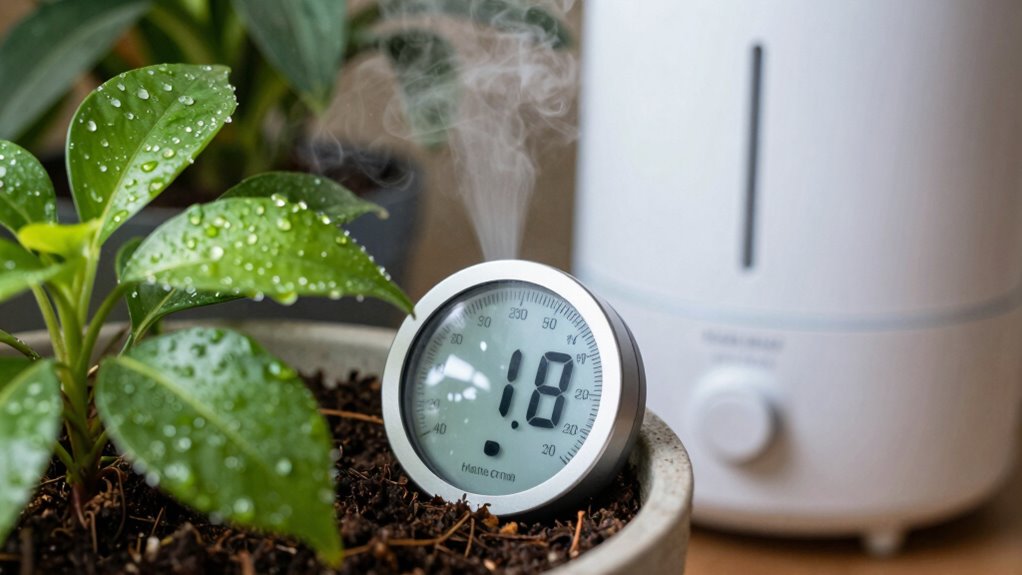
You can tell if your home’s humidity is off by paying attention to certain signs and using a hygrometer. Excess moisture might cause condensation on windows or a musty smell, while too little humidity can lead to static and dry skin. Monitoring these clues helps you find the right balance for a healthier, more comfortable home. Being aware of indoor air quality can help you make informed adjustments to maintain optimal humidity levels. Maintaining proper home humidity levels not only improves comfort but also reduces the risk of mold growth and dust issues.
Monitoring Indoor Humidity Levels
To determine if your home’s humidity levels are too high or too low, it is vital to pay attention to both physical signs and precise measurements. Indoor plants can help indicate humidity changes; if they wilt or develop mold, it suggests excess moisture. Conversely, browning leaves may signal low humidity. Using a hygrometer provides accurate readings, helping you monitor indoor humidity levels directly. Proper air purification systems can also improve air quality and maintain balanced humidity. Regularly checking these measurements guarantees you’re within the ideal range, preventing mold growth and dust accumulation. Additionally, choosing air purifiers with filter maintenance features ensures ongoing effectiveness in controlling airborne contaminants. Maintaining appropriate humidity levels can also optimize the efficiency of small appliances, reducing energy consumption and prolonging their lifespan. Reliable humidity control devices can help maintain consistent indoor conditions, making it easier to keep your home comfortable. Incorporating indoor environmental monitoring tools allows for more precise adjustments and peace of mind. By combining observation of indoor plants with reliable humidity tools, you can maintain a comfortable, healthy environment for your home. Ensuring your HVAC system is properly maintained can also significantly impact indoor humidity regulation.
Signs of Excess Moisture
When indoor moisture levels become unbalanced, noticeable signs will emerge in your home. Moisture intrusion can lead to water stains on walls or ceilings, indicating excess humidity. You might also notice persistent condensation issues on windows, mirrors, or other cold surfaces, which can promote mold growth. Feelings of dampness or a musty odor are common indicators that moisture is too high. These signs often result from poor ventilation or leaks, allowing humidity to build up. If ignored, excess moisture can cause paint to peel or wallpaper to bubble. Recognizing these symptoms early helps prevent long-term damage and health issues. Keep an eye out for water stains, condensation, and musty smells—these are clear signs your home’s moisture levels might be too high. Proper home safety & accessibility measures, such as ventilation, can help maintain optimal humidity levels and reduce these problems. Regularly monitoring indoor humidity levels with a hygrometer can provide accurate readings and help you take corrective action promptly. Additionally, understanding the Gold IRA markets can guide you toward smart investment choices if you’re considering diversifying your assets in response to property conditions or economic shifts.
Indicators of Too Dry
Even though high humidity often gets more attention, low indoor moisture levels can cause just as many issues. If you notice persistent static electricity, cracked wood, or peeling paint, these are clear humidity indicators of a dry environment. You might also experience dry, itchy skin or irritated nasal passages. Wooden furniture and flooring may feel brittle or warped. A dry environment can lead to increased dust and static buildup, making it harder to breathe comfortably. If you see these signs, your home’s humidity is likely too low. Maintaining proper moisture levels helps prevent these issues and keeps your space comfortable. Using a hygrometer can help you monitor humidity indicators and ensure your indoor environment stays within the ideal range. Additionally, professional services can provide expert guidance on achieving optimal humidity levels for comfort and health. Regularly checking your home’s humidity with reliable measurement tools can help you maintain a balanced environment and prevent issues associated with both excess and deficiency of moisture. Ensuring proper humidity levels also supports hamster health and can prevent respiratory problems for both pets and humans.
How Do You Measure and Monitor Your Home’s Humidity?
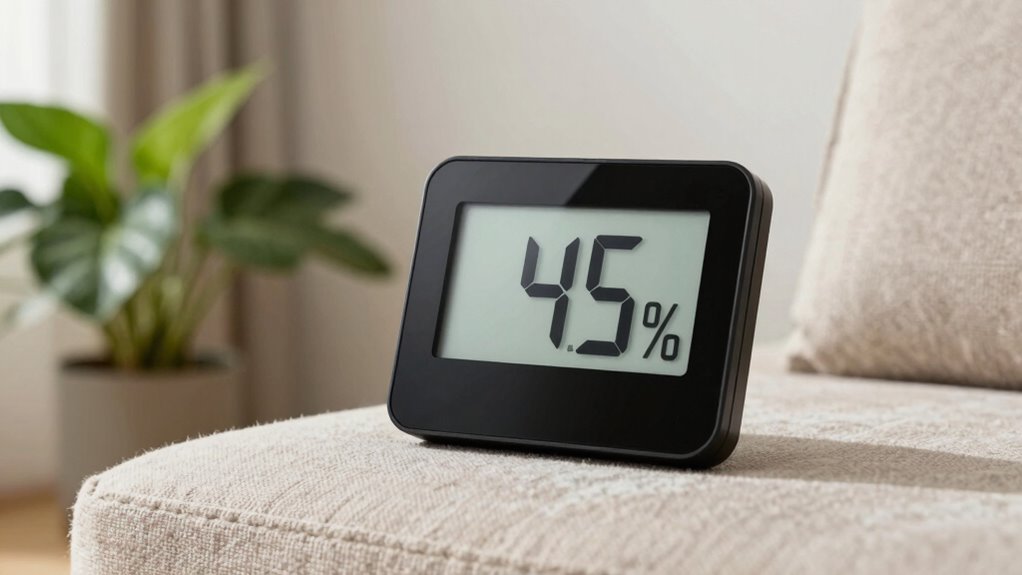
Measuring and monitoring your home’s humidity levels is essential for maintaining a comfortable and healthy environment. To do this effectively, use a reliable hygrometer or humidity sensor. Regular dehumidifier maintenance guarantees your device functions accurately, preventing false readings. If your device allows, calibrate the humidity sensor periodically to maintain precision. Keep the sensor away from direct sunlight, vents, or sources of moisture, as these can skew readings. Check the display regularly to track changes and identify trends over time. Installing multiple sensors in different rooms can give you a holistic view of your home’s humidity levels. Proper sensor placement is crucial for accurate readings and effective climate control. Additionally, understanding the ideal humidity range helps you set your device correctly for optimal comfort and safety. Consistently monitoring your environment enables you to respond promptly to fluctuations and maintain ideal conditions, ensuring your home remains free of mold and dust issues.
Practical Tips to Keep Humidity in the 40–60% Range

To maintain ideal humidity levels, you should regularly check your home’s moisture with a hygrometer. Using dehumidifiers or humidifiers can help fine-tune the environment, while proper ventilation ensures fresh air circulation. These simple steps make it easier to keep humidity within the ideal 40–60% range.
Use a Hygrometer Regularly
Keeping track of your home’s humidity levels is essential, and a hygrometer makes it simple. Regularly check the readings to guarantee your indoor humidity stays between 40% and 60%. To get accurate results, perform hygrometer calibration periodically, especially if it’s a analog model. Proper humidity sensor placement is vital—place it away from windows, vents, or direct sunlight to avoid skewed readings. Keep it at a consistent height, roughly at eye level, in a central area of your home. By monitoring humidity regularly, you can quickly spot fluctuations and adjust your dehumidifier or humidifier as needed. Consistent use of a hygrometer helps maintain a healthy environment, reducing mold and dust buildup effectively.
Employ Dehumidifiers or Humidifiers
Using dehumidifiers and humidifiers is an effective way to maintain your home’s humidity within the ideal 40–60% range. These devices help prevent mold growth and reduce dust buildup. To maximize their benefits:
- Regularly clean and maintain your dehumidifier or humidifier to guarantee best performance.
- Use air purifier maintenance routines to keep indoor air clean, reducing allergens that thrive in high humidity.
- Apply mold resistant paints in damp areas to further inhibit mold development.
- Monitor humidity levels with a hygrometer, adjusting your devices as needed to stay within the target range.
Consistent use of these tools, combined with proper maintenance, helps keep your environment comfortable and safe while minimizing mold and dust issues.
Ventilate Living Spaces
Ever wonder how proper ventilation can help regulate indoor humidity? Good airflow improves air quality and prevents excess moisture buildup. By opening windows and using exhaust fans in kitchens and bathrooms, you allow moist air to escape and fresh air to circulate. This reduces humidity levels that can lead to mold growth and dust accumulation. Regularly ventilating your living spaces helps maintain the ideal 40–60% humidity range, supporting a healthier environment. If outdoor conditions are dry, consider briefly running exhaust fans or opening windows during cooler parts of the day. Proper ventilation is an easy, effective way to control indoor moisture, promote mold prevention, and keep your air quality high. Consistent airflow guarantees your home stays comfortable and free from excess humidity issues.
Best Devices and Tools to Control Humidity and Reduce Allergens
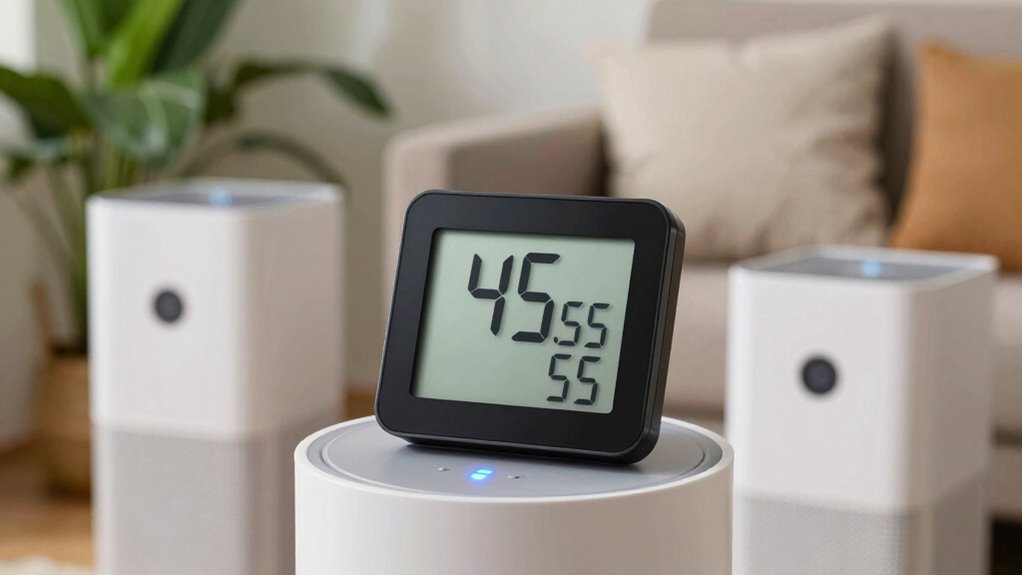
To effectively control humidity levels and reduce allergens in your home, investing in the right devices is essential. A high-quality dehumidifier helps maintain optimal moisture, but regular dehumidifier maintenance is vital for efficiency. Additionally, a reliable humidity sensor ensures accurate readings, so calibrate it periodically for precision. Consider these tools:
- Dehumidifiers with automatic humidity control to keep levels steady without constant adjustments.
- Digital hygrometers for precise humidity measurement and sensor calibration.
- Ventilation fans to improve air circulation and prevent excess moisture buildup.
- Air purifiers with HEPA filters to reduce dust and allergens, complementing humidity control efforts.
Choosing the right devices streamlines moisture management, making it easier to create a healthier indoor environment.
How to Adjust Humidity Levels Seasonally for Comfort and Safety
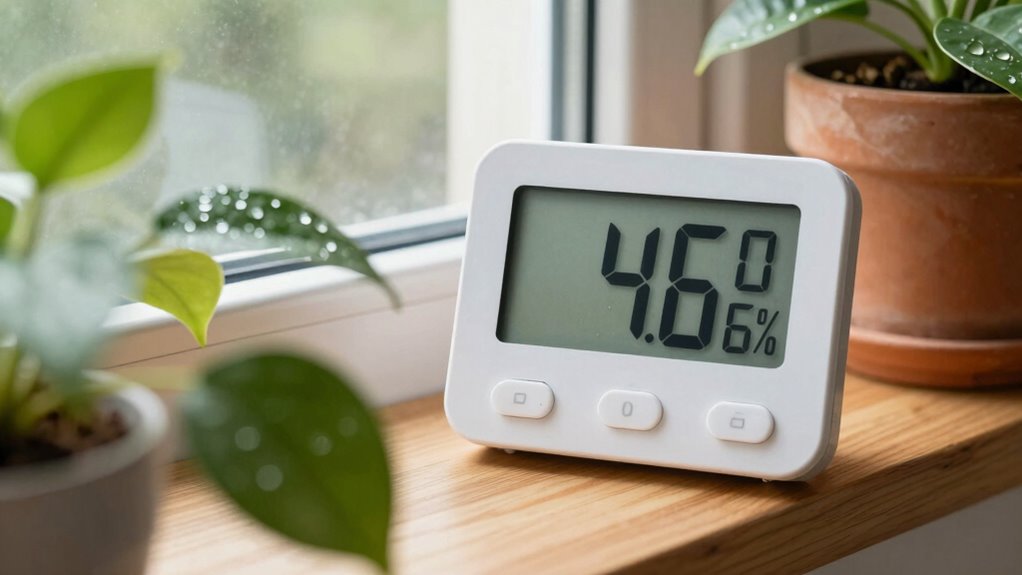
As seasons change, it’s important to keep an eye on your indoor humidity levels to stay comfortable and safe. You can use humidifiers or dehumidifiers to adjust moisture when needed, and modify ventilation to improve air quality. Regularly monitoring these factors helps you maintain the ideal humidity throughout the year.
Monitor Seasonal Humidity Changes
Monitoring seasonal humidity changes is essential for maintaining a comfortable and safe indoor environment. By tracking how seasonal moisture levels shift, you can better manage humidity fluctuations that impact health and comfort.
Here are four ways to stay on top of these changes:
- Use a hygrometer regularly to measure indoor humidity levels throughout the year.
- Observe outdoor weather patterns, noting periods of high or low humidity.
- Adjust your home’s ventilation or insulation to counteract seasonal moisture changes.
- Keep a humidity log to identify trends and anticipate necessary adjustments.
Being aware of seasonal moisture trends helps you respond proactively. This ensures your indoor environment remains within the ideal humidity range, reducing mold risk and dust issues while increasing comfort.
Use Humidifiers or Dehumidifiers
Adjusting your home’s humidity levels with humidifiers or dehumidifiers is essential for maintaining comfort and safety throughout the year. During dry months, a humidifier adds moisture to improve air circulation and prevent dry skin or respiratory issues. Conversely, in humid seasons, a dehumidifier reduces excess moisture that fosters mold and dust mites. Keep your air purifier nearby to improve air quality and remove airborne allergens. Properly calibrated devices help stabilize humidity at the ideal range, reducing health risks and enhancing comfort. Regularly check and adjust these units to respond to seasonal changes, ensuring your indoor environment remains balanced. Proper humidity control not only promotes better air quality but also protects your home from mold growth and dust accumulation.
Adjust Ventilation Strategies
To maintain ideal humidity levels throughout the year, you need to modify your ventilation strategies according to seasonal changes. Proper ventilation techniques help control moisture, ensuring comfort and safety. Here are four ways to adjust for airflow optimization:
- Increase ventilation during humid summer months by opening windows or using exhaust fans to reduce indoor moisture.
- Seal leaks and close vents in winter to prevent excessive dry air from entering and to conserve heat.
- Use exhaust fans in bathrooms and kitchens year-round to remove excess humidity generated by daily activities.
- Balance airflow by adjusting vents and fans, ensuring consistent air exchange without creating drafts or uneven humidity.
Common Mistakes That Make Humidity Control Harder
One of the most common mistakes in humidity control is neglecting to use proper tools or ignoring sensor readings, which can lead to inaccurate adjustments. Relying on guesswork instead of reliable hygrometers often results in humidity levels drifting outside the ideal range. Common pitfalls include ignoring regular maintenance, like cleaning or calibrating sensors, which causes faulty readings. Maintenance mistakes such as neglecting to replace filters or failing to check moisture sources can also worsen humidity issues. These errors make it harder to maintain consistent levels, risking mold growth or dust accumulation. To avoid this, you need to regularly monitor, calibrate, and maintain your equipment. Staying vigilant with proper tools ensures accurate readings, helping you keep humidity in the ideal range and prevent problems caused by mismanagement.
How Proper Humidity Management Protects Your Health and Property
Maintaining proper humidity levels is essential for protecting both your health and your property. When humidity stays within the ideal range, you reduce mold growth and dust accumulation, which can trigger allergies and respiratory issues. Using humidity sensors helps you monitor levels accurately, preventing over- or under-humidification. Proper humidity also benefits indoor plants, keeping them healthy and vibrant. Here are four ways it safeguards your environment:
Proper humidity levels prevent mold, dust, and protect your health, home, and indoor plants.
- Stops mold from settling and damaging walls or furniture
- Keeps dust mites and allergens at bay
- Protects your indoor plants from dehydration or rot
- Creates a comfortable, stable environment for your family
Signs That Your Humidity Control Is Working or Needs Adjustment
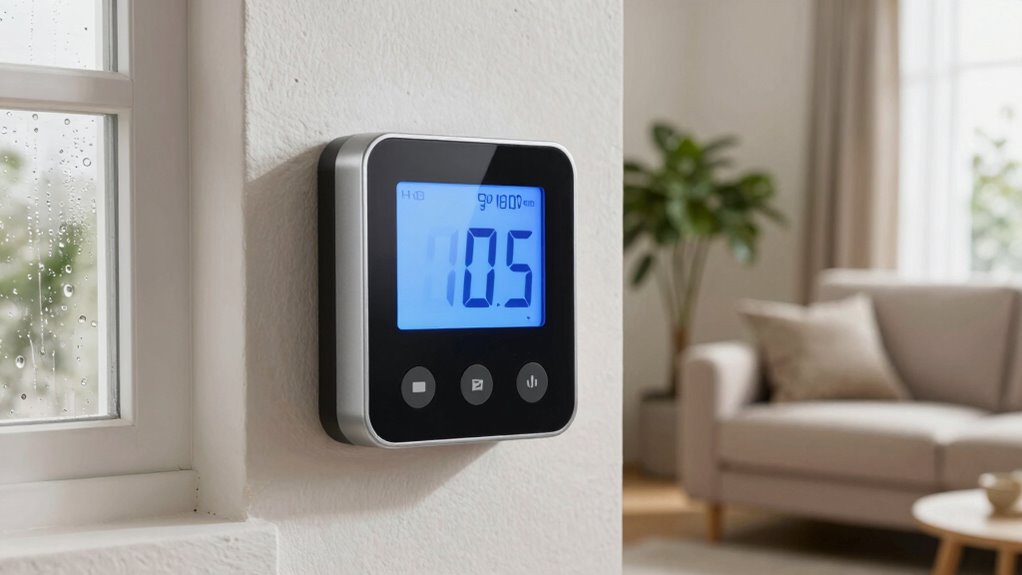
When your humidity control system is working properly, you’ll notice clear signs that your environment stays within the ideal range. You’ll feel comfortable, and mold or musty odors won’t develop. If your space remains consistently dry or damp, it’s a sign you need to adjust your system. Watch for common humidity myths—like thinking moisture sources aren’t important—that can mislead you. To evaluate, consider this table:
| Signs System Is Working | Signs It Needs Adjustment |
|---|---|
| No condensation on windows | Excess condensation or dryness |
| No musty odors | Persistent musty smells |
| Comfortable temperature | Fluctuating humidity levels |
| No visible mold | Visible mold or mildew |
Stay vigilant; proper humidity control prevents mold and dust buildup effectively.
Frequently Asked Questions
Can Outdoor Humidity Influence Indoor Humidity Levels Significantly?
Yes, outdoor humidity can greatly influence indoor humidity levels. When outdoor humidity is high, it increases indoor moisture through air exchange, making your home more humid. Conversely, low outdoor humidity helps keep indoor air drier. To maintain a comfortable and healthy environment, consider using dehumidifiers or ventilation during periods of high outdoor humidity, and guarantee proper air exchange to prevent mold growth and reduce dust mites.
How Does Humidity Affect Indoor Air Quality Besides Mold and Dust?
Humidity impacts your indoor air quality by affecting comfort and respiratory health. When you maintain proper humidity levels, it reduces airborne irritants and prevents dryness or excessive dampness. Regular HVAC maintenance ensures ideal humidity control, while indoor plants naturally help regulate moisture. By keeping humidity balanced, you create a healthier environment, minimize allergens, and improve overall air quality for you and your family.
Are There Specific Rooms Where Humidity Control Matters More?
Like a guardian angel, humidity control is essential in your bedroom and bathroom. These rooms tend to trap moisture, boosting mold and dust. Your HVAC system and ventilation efficiency work together to maintain ideal humidity levels, preventing issues. You should focus on these spaces to improve overall air quality, ensuring comfort and health. Proper humidity in these rooms makes a significant difference in creating a safe, fresh environment for you.
What Is the Impact of Humidity on Electronic Devices and Furniture?
You should keep humidity levels in check to protect your electronics and furniture. High humidity can cause electronic corrosion and wood warping, while low humidity may lead to static. Regular dehumidifier maintenance and using humidity level sensors help you maintain ideal conditions. By monitoring and adjusting humidity, you prevent damage, extend the life of your devices, and keep your furniture in good shape.
Can Humidity Fluctuations Occur Rapidly or Gradually Over Time?
Humidity fluctuations can happen gradually or rapidly, depending on your environment. If your space experiences sudden weather changes or HVAC system shifts, moisture variability increases, causing rapid fluctuations. However, in stable conditions, humidity tends to change slowly, maintaining better humidity stability. Monitoring your indoor humidity helps you respond to these changes promptly, protecting your electronics and furniture from potential damage caused by moisture swings.
Conclusion
Maintaining the right humidity level keeps mold at bay, dust mites in check, and your home comfortable. It’s about balancing moisture, monitoring levels, and adjusting seasonally. It’s about preventing damage, promoting health, and ensuring peace of mind. By staying vigilant, measuring accurately, and acting proactively, you create a healthier environment. Because when you control humidity wisely, you protect your home, your health, and your happiness—simple steps toward a safer, more comfortable living space.