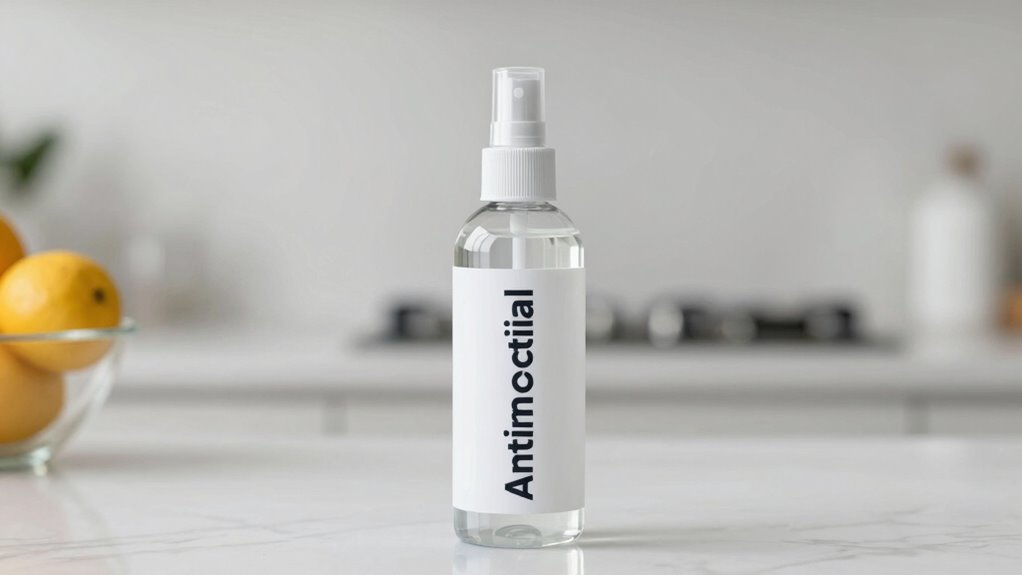
When you see ‘antimicrobial’ on a cleaning product, it means it contains chemicals designed to actively kill or inhibit germs like bacteria and viruses, providing extra protection beyond regular cleaning. These products aim to reduce germs to safer levels, especially in high-touch areas. However, they don’t eliminate all germs and overuse can lead to resistant strains. To learn how to use these products effectively and safely, keep exploring the details below.
Key Takeaways
- “Antimicrobial” indicates the product helps reduce bacteria and viruses, not completely sterilize surfaces.
- It is designed to lower germ levels in high-risk areas, providing extra protection.
- Use of antimicrobials should complement regular cleaning; they do not replace soap and water.
- Overusing antimicrobials can lead to germ resistance, reducing their effectiveness over time.
- Common chemicals like triclosan may raise safety and environmental concerns if misused.
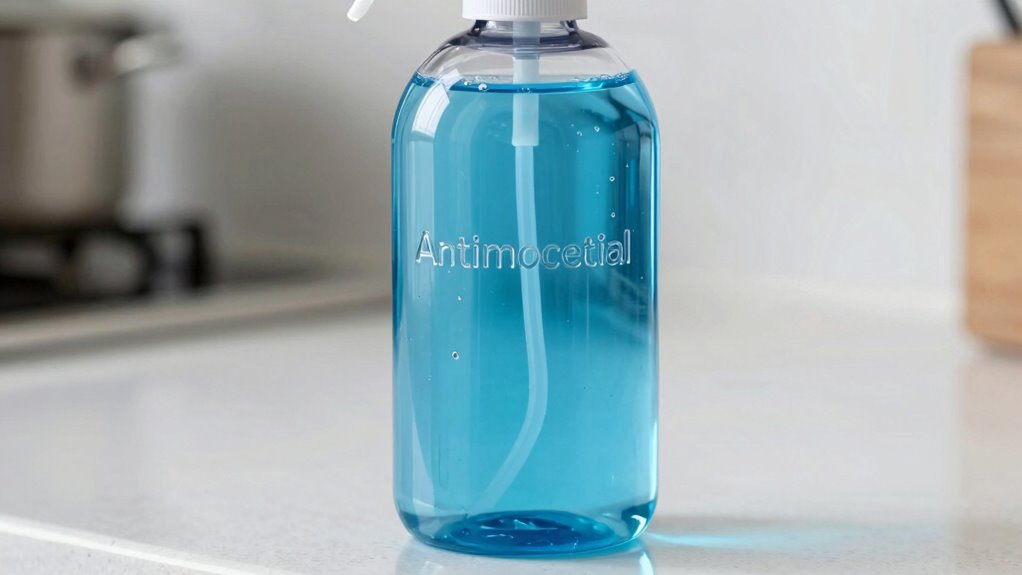
Many cleaning products now include antimicrobial agents to help reduce bacteria and viruses on surfaces. When you see this label, it means the product isn’t just cleaning; it’s actively working to inhibit the growth of germs. These agents are designed to provide an extra layer of protection, especially in places where germs can spread quickly, like kitchens and bathrooms. However, understanding what antimicrobial truly means involves looking at how these products influence germ resistance and what safety measures you should consider.
Antimicrobial agents don’t eliminate all germs but aim to reduce their numbers to safer levels. This can help prevent the spread of infections and keep your home healthier. But it’s important to recognize that overusing antimicrobial products might contribute to germ resistance, meaning some bacteria could become less affected over time. This resistance can reduce the effectiveness of these products and make it harder to control certain pathogens. So, while antimicrobials add a layer of defense, they shouldn’t replace basic cleaning practices like scrubbing with soap and water. Instead, they should be part of a balanced approach to hygiene.
Another vital aspect to consider is chemical safety. Many antimicrobial agents contain chemicals like triclosan or quaternary ammonium compounds, which can raise concerns about their safety and environmental impact. You need to be aware of how these chemicals interact with your skin, your family’s health, and the environment. Manufacturers often claim these products are safe when used as directed, but improper use or overuse could lead to health issues or contribute to chemical buildup. It’s wise to read labels carefully, follow instructions, and avoid mixing antimicrobials with other cleaning agents, which can sometimes produce harmful fumes. Additionally, vetted information indicates that some antimicrobial chemicals may persist in the environment and impact ecosystems over time.

MicroGold Multi-Action Disinfectant Antimicrobial Spray Tested and Proven Effective to Kill the COVID-19 Virus, Kills 99.9% of Viruses and Bacteria, 24 Fluid Ounces, 1 Pack, Packaging May Vary
- EPA Approved: Kills COVID-19 in 3 minutes
- Effective Against 99.9%: Kills viruses and bacteria including SARS-CoV-2
- Hospital-Grade Technology: Eliminates viruses and bacteria, suppresses growth
As an affiliate, we earn on qualifying purchases.
As an affiliate, we earn on qualifying purchases.
Frequently Asked Questions
Do Antimicrobial Products Kill Viruses as Well as Bacteria?
Antimicrobial products can kill bacteria and help prevent viral transmission, but they don’t necessarily sterilize surfaces completely. While they reduce germs, they aren’t a guarantee for full surface sterilization or virus elimination. Using these products regularly can lower infection risks, but it’s important to follow manufacturer instructions. For complete viral protection, consider additional disinfectants proven effective against viruses, especially in high-touch areas.
Are Antimicrobial Cleaners Safe for Children and Pets?
Antimicrobial cleaners can be safe for children and pets if used properly, but you should always check the label for chemical safety info. Be cautious about antimicrobial resistance, which can happen if overused or misused, reducing product effectiveness. Keep pets and kids away during and shortly after cleaning, and follow dosage instructions. Proper use minimizes risks and helps prevent resistance issues, ensuring your home stays safe and clean.
How Long Does the Antimicrobial Effect Last After Cleaning?
The clock’s ticking on residual protection; antimicrobial effects typically last for about 24 hours but can vary depending on the product and surface. Keep in mind, the duration effectiveness diminishes with cleaning, wiping away the protective layer. For continuous protection, reapply regularly. So, don’t rely solely on antimicrobial cleaners for long-term defense—think of it as a short-term shield rather than a permanent barrier.
Can Bacteria Develop Resistance to Antimicrobial Agents?
Yes, bacteria can develop resistance to antimicrobial agents through microbial adaptation. Overuse or misuse of these products can promote antibiotic resistance, making bacteria less responsive over time. You should use antimicrobial cleaners as directed and avoid excessive application, as this helps prevent bacteria from evolving defenses. Staying informed about proper disinfectant use guarantees you minimize the risk of fostering resistant bacteria and maintain effective sanitation.
Are All Antimicrobial Claims on Cleaning Products Scientifically Verified?
Not all antimicrobial claims on cleaning product labeling are scientifically verified. You should check if the product has undergone third-party testing for antimicrobial efficacy, which guarantees the claims are backed by evidence. Some labels may exaggerate or make unsubstantiated claims, so it’s wise to research the product’s certification. Trustworthy products will clearly state their testing standards and results, giving you confidence that the antimicrobial claim is valid.

method Antibacterial Bathroom Cleaner, Spearmint, 28 fl oz
- Product Size: 28 fl oz bottle
- Type of Cleaner: Antibacterial bathroom cleaner
- Usage: All-purpose disinfectant spray
As an affiliate, we earn on qualifying purchases.
As an affiliate, we earn on qualifying purchases.
Conclusion
Knowing what “antimicrobial” really means helps you make smarter cleaning choices. Keep in mind, products labeled as antimicrobial don’t necessarily eliminate all germs, and overuse can lead to resistant bacteria. Did you know that studies show bacteria can develop resistance after just a few weeks of exposure? So, use these products wisely, and don’t forget that regular cleaning with soap and water is still your best defense against germs. Stay informed and stay healthy!

Diversey Suma Final Step J-512 Sanitizer, AccuMix, 32 oz
- Cleaning & Sanitizing Power: No-rinse sanitizing at 200-400 ppm quat
- Foodservice Ready: Suitable for restaurants and commercial kitchens
- Versatile Use: Utensil, sink, equipment, and surface sanitizing
As an affiliate, we earn on qualifying purchases.
As an affiliate, we earn on qualifying purchases.

Professional Disposables Surface Disinfectant Super Sani-Cloth Wipes, 160Count
- Effective Germicidal Formula: 55.5% active germicidal agents including quat and alcohol
- Material-Friendly Design: Neutral pH prevents material degradation
- Fast-Acting Disinfection: Kills bacteria, fungi, viruses in 2 minutes
As an affiliate, we earn on qualifying purchases.
As an affiliate, we earn on qualifying purchases.