
‘Low VOC’ means a product emits fewer volatile organic compounds, which can pollute your indoor air and cause health issues. Certifications from agencies like GREENGUARD or Green Seal verify these claims through testing, but standards vary. To truly improve your home’s air quality, you need to understand what these labels mean and how to choose safer options. Keep exploring to discover practical ways to reduce VOCs and breathe easier indoors.
Key Takeaways
- ‘Low VOC’ indicates products emit fewer volatile organic compounds, reducing indoor air pollution and health risks.
- Certification from agencies like GREENGUARD verifies VOC limits through independent testing.
- VOC levels and standards vary; understanding specific certifications helps assess product safety.
- Proper ventilation and air purifiers further decrease VOC concentrations indoors.
- Choosing reputable labels and transparent ingredients supports healthier indoor air quality.
What Are VOCs and Why Do They Matter for Indoor Air Quality?

VOCs, or volatile organic compounds, are chemicals that easily evaporate into the air at room temperature. When you’re indoors, these compounds become part of the indoor pollutants that can affect air quality. Many common household items—paints, cleaning products, and furniture—release VOCs, which can linger in your environment. Poor indoor air quality standards often overlook VOCs, even though they can cause health issues like headaches, dizziness, or respiratory irritation. Understanding what VOCs are helps you recognize potential sources of indoor pollution and take steps to improve air quality. Regular ventilation and choosing low-VOC products can considerably reduce your exposure. Additionally, European cloud infrastructure innovations are increasingly supporting environmental monitoring and air quality management. Staying aware of indoor pollutants ensures you maintain a healthier, safer living space. Using smart gear and proper ventilation techniques can further help manage indoor air quality effectively. Recognizing the chemical composition of VOCs can also aid in selecting safer household materials.
What Do ‘Low VOC’ Labels Really Mean and How Are They Certified?

When you see a “Low VOC” label, it’s important to understand what certification processes back it up, as standards can differ between organizations. These processes evaluate and verify that products meet specific VOC limit criteria, but the limits themselves can vary widely. Recognizing this variability helps you make more informed choices about the products you use indoors. Additionally, understanding the certification standards behind “Low VOC” labels can help ensure that the claims are meaningful and consistent across different products. Being aware of the testing procedures involved can further clarify how rigorous these certifications are and what they truly signify about product safety.
Certification Processes Explained
Have you ever wondered what a ‘Low VOC’ label truly signifies? Certification processes guarantee products meet specific standards to reduce indoor air pollutants. These involve rigorous testing for formaldehyde emissions and chemical additives that can off-gas over time. Certification bodies, like GREENGUARD or CARB, evaluate products through standardized testing methods. They verify that VOC levels stay below set thresholds, ensuring safer indoor environments. The process includes:
- Testing for formaldehyde emissions and other hazardous chemicals
- Evaluating chemical additives used in manufacturing
- Ongoing compliance checks and re-certifications
- Clear documentation of testing results for transparency
- Certification standards establish the baseline for what qualifies as ‘Low VOC,’ providing transparency for consumers.
These steps help you understand that a ‘Low VOC’ label isn’t just a marketing term but a verified commitment to indoor air quality, ensuring fewer harmful emissions in your home. EnergyLast
Variability in VOC Limits
While certification processes set standards for VOC emissions, the limits defining what qualifies as ‘Low VOC’ can vary substantially between products and certifying organizations. This VOC measurement variability leads to VOC limit discrepancies, meaning the same product might meet one standard but not another. For example, different certifications may set maximum VOC levels as shown below:
| Certification | VOC Limit (g/L) | Measurement Method |
|---|---|---|
| Label A | 50 | ASTM D5116 |
| Label B | 100 | EPA Method 24 |
| Label C | 20 | ISO 16000-3 |
| Label D | 75 | Volatile Organic Compound Test |
These differences can influence your perception of a product’s safety, emphasizing the importance of understanding what specific standards mean. Additionally, measurement methods can impact the reported VOC levels, further contributing to the variability in ‘Low VOC’ labels.
How Do VOCs Affect Your Health and Comfort at Home?

VOCs can substantially impact your health and comfort at home by releasing harmful chemicals into the air you breathe. Poor air quality from VOCs can cause a range of health impacts, especially with prolonged exposure. You might experience headaches, eye irritation, or respiratory issues. In some cases, VOCs can trigger allergies or worsen asthma symptoms. Over time, exposure may even increase your risk of more serious health problems. To understand the effects better, consider these points:
- Short-term symptoms like dizziness and coughing
- Long-term risks such as liver or kidney damage
- Increased sensitivity to odors and irritants
- Impact on overall indoor air quality and comfort
- Indoor air quality can be significantly affected by the presence of VOCs, emphasizing the importance of proper ventilation and air purification. Additionally, air purification methods can help reduce VOC levels and improve indoor environments. Understanding the sources of VOCs in your home can also help you take targeted steps to reduce their presence and protect your health. Recognizing common VOC sources like household cleaners and building materials is essential for creating a healthier indoor environment. Being aware of ventilation strategies can further aid in dispersing VOCs and maintaining fresh indoor air.
How Can You Tell If a Product Is Truly Low VOC or VOC-Free?
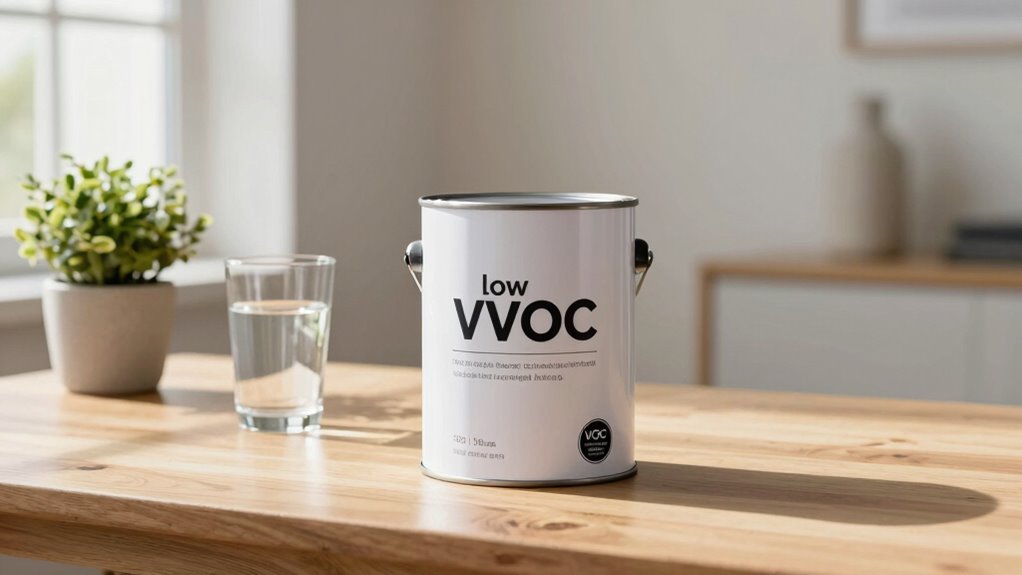
To guarantee a product is truly low VOC or VOC-free, check for reputable certification labels like GREENGUARD or Green Seal. You should also read ingredient lists carefully, as transparency helps you identify harmful chemicals. Being vigilant with labels and ingredient info makes it easier to choose safer, healthier products. Additionally, understanding chemical safety standards can further ensure the product meets strict low VOC requirements. Knowing the top best anime movies can also help you find engaging content that aligns with your interests while promoting a healthy indoor environment. Moreover, being aware of vetted wave and wind standards for air quality can assist in assessing the overall safety of indoor air. Staying informed about indoor air quality regulations is essential for making well-rounded choices in creating a healthier home environment.
Certification Labels to Check
How can you quickly identify if a product truly meets low VOC or VOC-free claims? Look for certification labels that adhere to recognized labeling standards. These labels confirm the product’s VOC emission levels and verify it meets specific criteria.
- GREENGUARD Certification: Indicates low VOC emissions for healthier indoor air. Many reputable products also display indoor air quality standards that meet these certifications.
- UL GREENGUARD Gold: Meets stricter standards, especially for sensitive environments.
- EPA Safer Choice: Labels products that are safer for indoor air quality.
- Green Seal: Certifies products with reduced VOC emissions and environmental safety.
Checking for these labels helps you verify a product’s VOC emission claims and confirms compliance with established labeling standards. This way, you can trust that the product is genuinely low VOC or VOC-free. Additionally, consulting resources like water quality and flow rate information can ensure the product’s performance aligns with your indoor air quality goals. Incorporating such indoor air quality testing can further ensure your environment remains healthy and safe, and understanding credit card insights can help you make informed purchasing decisions for your home improvement projects.
Furthermore, understanding VOC measurement methods can provide insight into how these levels are determined and verified by testing laboratories.
Ingredient Transparency Matters
Ever wonder if a product truly lives up to its low VOC or VOC-free claims? Ingredient transparency is key. Look for clear, detailed labels that list all ingredients, not just vague terms like “fragrance” or “solvent.” Accurate labeling helps you verify if harmful VOCs are present or avoided. Companies committed to transparency provide complete ingredient lists, making it easier to trust their claims. Beware of products with vague or incomplete labels, which can hide VOCs or undisclosed chemicals. A product’s labeling accuracy directly impacts your ability to make informed choices for healthier indoor air. By paying close attention to ingredient transparency, you ensure that what’s on the label truly reflects the product’s contents, giving you confidence in selecting low VOC or VOC-free options.
Simple Ways to Reduce VOCs and Improve Indoor Air Safety

Reducing VOCs indoors is essential for maintaining a healthier environment, and simple changes can make a big difference. Improving air quality starts with being mindful of product labeling and choosing low-VOC options. You can also increase ventilation by opening windows or using exhaust fans to dilute indoor pollutants. Regularly dust and vacuum to prevent buildup of VOC-containing particles. Using air purifiers with HEPA filters can help remove airborne VOCs, enhancing safety. Additionally, understanding the evolving language of the internet can help you stay informed about product labels and safety standards. Here are some quick tips:
- Read product labels carefully to select low or zero VOC products
- Increase airflow with fans or open windows
- Store paints, cleaners, and chemicals outside living areas
- Maintain HVAC systems for ideal air circulation
- Be aware of indoor air quality issues that can arise from VOCs and take proactive steps to mitigate them.
These small steps can considerably improve indoor air quality and reduce your exposure to harmful VOCs.
Which Safer Alternatives Exist for Paints, Cleaners, and Furniture?

Choosing safer alternatives for paints, cleaners, and furniture can considerably lower your indoor VOC exposure. Natural alternatives offer plant-based, non-toxic options that reduce harmful emissions while still providing effective results. Look for eco-friendly options labeled as low or zero VOC, which are formulated with fewer volatile organic compounds, making them safer for indoor air quality. For paints, choose those made with natural ingredients like clay, milk paint, or plant-based dyes. When selecting cleaners, opt for vinegar, baking soda, or citrus-based solutions instead of harsh chemical products. For furniture, prioritize pieces made from solid wood, bamboo, or sustainably sourced materials without chemical finishes or adhesives. These eco-friendly options help create a healthier indoor environment and minimize your exposure to VOCs.
What Regulations and Certifications Guarantee Low VOC Standards?

Regulations and certifications play a crucial role in ensuring that products meet low VOC standards and are safe for indoor environments. They set clear guidelines, so you can trust that labeled products are truly low in VOCs. Certification agencies evaluate products against these regulatory standards, providing credibility and assurance. Look for labels from reputable organizations like GREENGUARD, Green Seal, or UL Environment, which verify low VOC content. These standards help prevent harmful emissions and protect your health. Understanding these certifications can guide you toward safer choices for your home or office. To make informed decisions, consider these points:
Certifications like GREENGUARD and Green Seal ensure products meet low VOC and safety standards.
- Certification agencies’ testing protocols
- Industry standards like CARB or LEED
- Independent verification processes
- Enforceable legal regulations
Frequently Asked Questions
How Do VOC Levels Vary Between Different Indoor Environments?
You’ll find VOC levels vary between indoor environments based on factors like the presence of indoor plants and air purifiers. Rooms with more plants often have lower VOCs, as they naturally absorb pollutants. Using air purifiers also helps reduce VOC concentrations, creating healthier air. So, your environment’s VOC levels depend on how well you manage these natural and mechanical air-cleaning methods, making your space safer and more comfortable.
Are There Seasonal or Climate Factors Influencing VOC Emissions?
Seasonal fluctuations and climate impact can substantially influence VOC emissions indoors. Warm temperatures and high humidity typically increase VOC release from sources like paints, adhesives, and furnishings. During summer, you might notice higher VOC levels due to heat, while cooler months often see reduced emissions. Changes in humidity and outdoor air quality also affect indoor VOC concentrations, making it essential to monitor and ventilate your space accordingly for healthier indoor air quality.
Can Ventilation Systems Effectively Reduce VOC Concentrations?
Ventilation systems can effectively reduce VOC concentrations by increasing air exchange and removing contaminated indoor air. Using proper filtration methods like HEPA filters helps trap VOC particles, further improving air quality. Regularly maintaining your ventilation system guarantees it operates efficiently. By combining good air exchange practices with effective filtration, you create a healthier indoor environment, minimizing VOC buildup and promoting better air quality for you and your family.
What Are the Long-Term Effects of Low-Level VOC Exposure?
Long-term low-level VOC exposure can affect your health, with studies showing even small amounts linked to respiratory issues and headaches. Over prolonged exposure, you might experience increased allergy symptoms or fatigue. The health impacts depend on exposure duration; the longer you’re exposed, the greater the potential risks. Staying in low-VOC environments reduces these risks, helping maintain better indoor air quality and overall health.
Do Natural or Organic Products Always Have Lower VOC Emissions?
Natural or organic products don’t always have lower VOC emissions, even with natural certifications or organic labeling. These labels indicate certain standards but don’t guarantee low VOC levels. You should check product labels and safety data sheets to understand VOC content. Always research specific products, as some natural ingredients can emit VOCs, while others are genuinely low-emission options. Being informed helps you choose safer, healthier products for indoor air quality.
Conclusion
By choosing thoughtfully and paying attention to labels, you can create a more welcoming, subtle sanctuary free from the quiet disruptions of VOCs. While no space is perfectly pristine, making informed choices helps foster a healthier environment where comfort and well-being gently thrive. Remember, small steps toward safer products can weave a subtle but meaningful difference, nurturing your home’s atmosphere with care and intention. It’s about cultivating a space where vibrancy and serenity can softly coexist.