Many shoppers mistake higher CADR numbers as a sign of overall better air purifier performance, but that’s not always true. CADR measures how quickly a purifier removes specific pollutants like smoke, pollen, or dust, not its overall effectiveness or suitability for your space. Factors like room size, filter maintenance, and placement matter just as much. If you want a clear understanding of what CADR really means and how to choose wisely, keep looking.
Key Takeaways
- Many shoppers mistakenly believe higher CADR means overall air quality, but it only measures pollutant removal speed for specific particles.
- CADR ratings are based on standardized tests and do not account for room size, ventilation, or placement affecting real-world performance.
- A high CADR for smoke, dust, or pollen indicates faster removal of those pollutants but doesn’t guarantee better overall air health.
- People often overlook that CADR measures pollutant removal efficiency, not the purifier’s total airflow or energy consumption.
- Proper filter maintenance and correct room matching are essential, as CADR ratings alone can be misleading without considering these factors.
What Is CADR and Why Does It Matter?
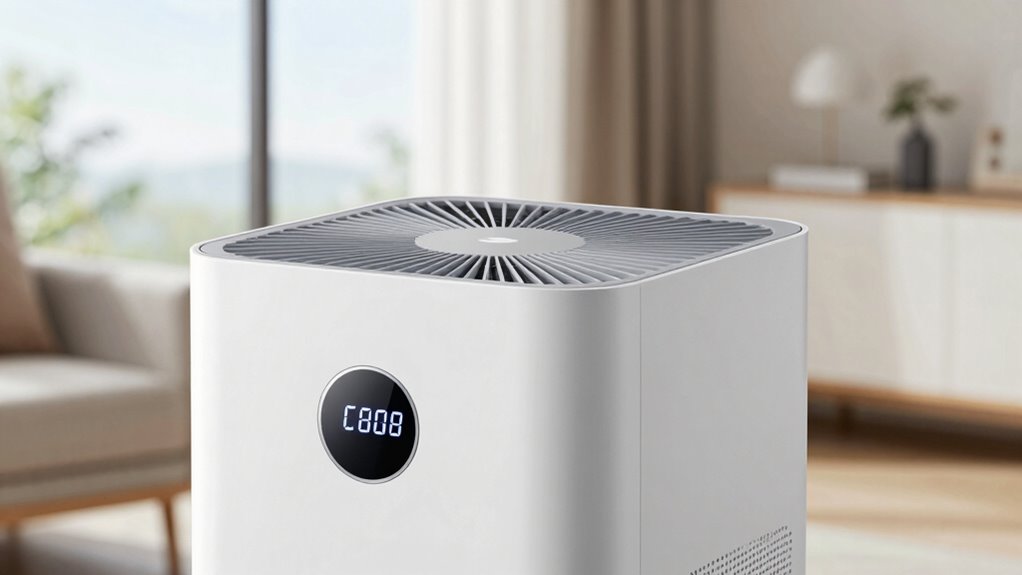
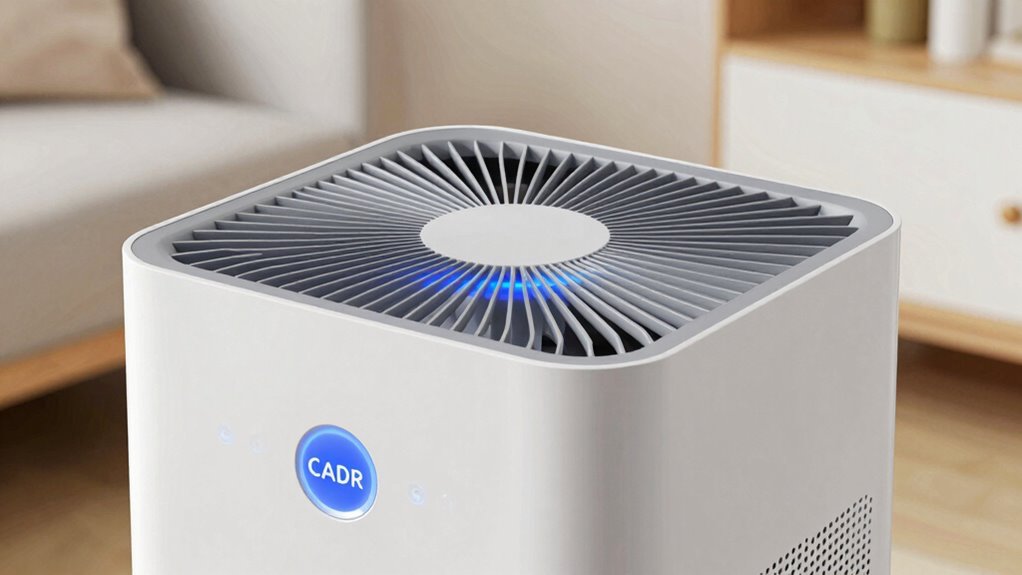
Ever wondered how to quickly gauge a purifier’s effectiveness? That’s where CADR, or Clean Air Delivery Rate, comes in. It measures how efficiently an air purifier improves air quality by indicating how much clean air it delivers per minute. A higher CADR means better air purification, especially for removing pollutants like dust, smoke, and pollen. It’s essential to consider CADR because it directly impacts your air quality, making your space healthier. Additionally, understanding CADR can help you choose a purifier that matches your needs without overloading the filter. A device with an appropriate CADR can extend your filter’s lifespan by preventing it from working harder than necessary, saving you money and maintaining ideal air quality over time. Air filtration technology plays a crucial role in how effectively a purifier operates and influences its CADR rating. Moreover, selecting a purifier with a suitable CADR rating ensures optimal performance tailored to your room size and pollution levels. Understanding how air quality standards are measured can also help you interpret CADR ratings more effectively and make informed purchasing decisions.
How Is CADR Calculated and How Should You Interpret It?
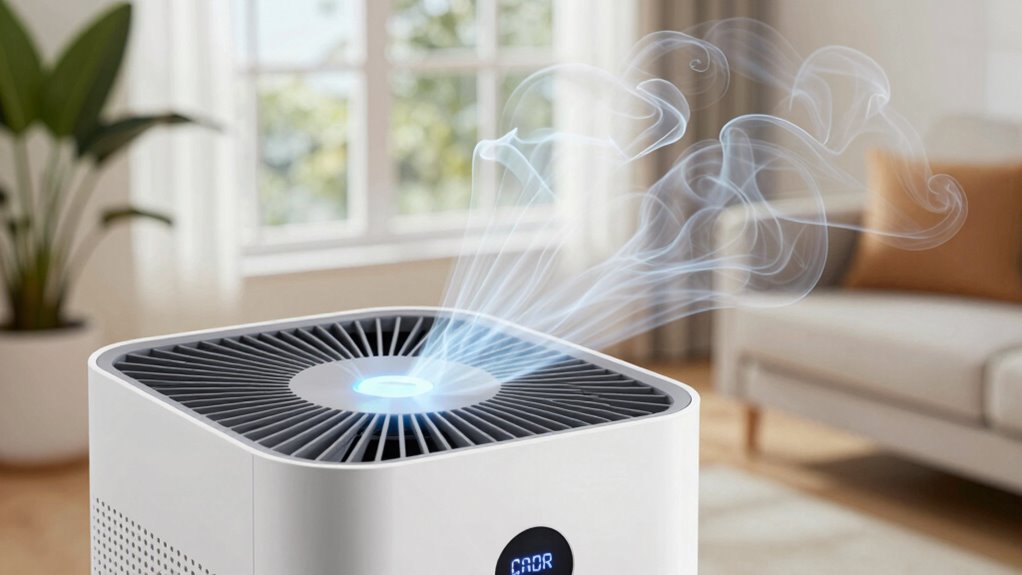
To understand CADR better, it’s important to know how these values are calculated and what they mean for your air quality. You’ll want to learn how different factors influence the results and how to interpret them accurately. This way, you can choose an air purifier that best fits your space and needs. Additionally, understanding Free Floating particles can help you better assess the air purification effectiveness. Recognizing how airborne contaminants are measured can help consumers make more informed decisions about the right purifier for their environment. Factors such as particle size and the specific testing methods used are crucial in understanding what the CADR ratings truly represent.
Calculating CADR Values
Calculating CADR values involves measuring how quickly an air purifier can remove specific pollutants from the air, such as smoke, dust, or pollen. To determine this, tests are conducted in controlled environments, tracking the reduction of particles over time. The resulting number reflects the device’s efficiency in improving air quality. Keep in mind:
- CADR measures removal speed, not overall device power
- Higher CADR indicates better performance for specific pollutants
- Tests are standardized for consistency across brands
- It helps compare device efficiency directly
- CADR focuses on targeted particle removal, not total airflow
- Proper testing methods are essential to obtain accurate CADR ratings.
Understanding how CADR is calculated allows you to make smarter choices, ensuring your air purifier effectively enhances your air quality without overestimating its capabilities.
Interpreting CADR Results
Understanding how CADR is calculated helps you interpret its results accurately. CADR measures how quickly an air purifier can remove specific pollutants, factoring in air exchange rates and filtration efficiency. A higher CADR indicates faster removal of dust, smoke, or pollen, meaning better overall performance. When comparing models, focus on the CADR values for the pollutants you want to target. Remember, a device with a high CADR in a small room won’t perform as well in larger spaces unless its air exchange rate is sufficient. Keep in mind that filtration efficiency impacts CADR; a purifier with a high CADR but low filtration efficiency may not effectively remove pollutants. Additionally, understanding the air exchange rate can help you determine how quickly an air purifier can refresh the air in your space. To get a complete picture of a purifier’s effectiveness, consider overall air quality and how it aligns with your specific needs. Being aware of filtration efficiency and its role in pollutant removal helps ensure you select the most suitable device for your environment. Recognizing the importance of proper sizing and placement can further optimize your air purifier’s performance, ensuring cleaner air more efficiently. Moreover, understanding filter lifespan and maintenance requirements can help you maintain optimal operation over time. Ultimately, understanding these factors helps you choose an air purifier that matches your space and air quality needs.
What Do CADR Ratings for Smoke, Pollen, and Dust Tell You?
CADR ratings for smoke, pollen, and dust provide a clear gauge of how effectively an air purifier can clean the air in your space. These numbers help you understand how well a device improves your air quality by tackling specific pollutants. Higher ratings mean the purifier can process more contaminated air faster, which indicates better device efficiency. Keep in mind:
- Smoke CADR shows how well it clears airborne pollutants like cigarette smoke.
- Pollen CADR reflects its ability to reduce allergens.
- Dust CADR indicates how effectively it filters larger particles.
- Matching CADR to room size ensures ideal performance.
- Ratings give you a quick way to compare models for your specific needs.
- Understanding modern toilet features and their water efficiency can also help you optimize clean indoor environments.
- To ensure optimal air purification, consider CADR ratings as a key factor when selecting an air purifier.
Do Higher CADR Numbers Always Indicate Better Performance?
A higher CADR number might seem like a clear sign of better air cleaning, but it doesn’t guarantee your room will stay fresh. Your space’s size, layout, and airflow can all affect how well the purifier performs. So, don’t assume a higher number always means ideal results in your environment. Additionally, factors like the air circulation within a room can significantly influence the effectiveness of the purifier. Proper airflow management can help maximize the benefits of a high CADR rating, ensuring the purifier works as effectively as possible. Understanding air exchange rates is essential for optimizing your air purification system and achieving the best indoor air quality. Recognizing how connected home technology interacts with your environment can further enhance your air quality management efforts.
Higher CADR Doesn’t Guarantee Coverage
While higher CADR ratings suggest a more powerful air purifier, they don’t always guarantee better coverage. A higher number indicates faster removal of particles, but factors like room size, air flow, and placement matter more for overall air quality. Just because an air purifier has a high CADR doesn’t mean it will effectively clean your entire space. Additionally, noise levels can increase with higher CADR, making it less suitable for quiet environments like bedrooms or offices. Understanding net worth can sometimes be analogous to understanding an air purifier’s specifications—more isn’t always better without considering context.
Performance Depends on Room Conditions
Higher CADR numbers don’t always translate to better performance because room conditions can considerably impact how well an air purifier improves air quality. Factors like room size, layout, and existing ventilation affect how effectively the purifier circulates and filters air. In a cluttered or poorly ventilated space, even a high-CADR unit may struggle to keep up. Noise levels also matter; a quieter purifier might be less effective in a large room or noisy environment. Keep in mind that ideal performance isn’t just about the number on the box—it depends on matching the purifier to your specific room conditions. Proper placement and setup can significantly influence overall effectiveness. Additionally, understanding airflow dynamics can help optimize purifier placement for better results. Recognizing how room conditions influence air purifier performance can help you make smarter choices and achieve better air quality results. For example, air circulation within the space plays a crucial role in how well the purifier can clean the air efficiently. Ultimately, understanding your space helps ensure you select a unit that truly enhances air quality without unnecessary noise.
How to Use CADR Ratings to Compare Air Purifiers Effectively

To compare air purifiers effectively, understanding CADR ratings is essential. These ratings help you gauge how well a purifier cleans specific pollutants in your room. When comparing models, focus on the CADR numbers for smoke, dust, and pollen to match your air quality needs. Keep in mind, higher CADR doesn’t always mean better performance if the filter isn’t suitable or needs frequent replacement. Also, consider the size of your space and the purifier’s recommended room size. Remember, once you’ve picked a model, regular filter replacement maintains ideal CADR performance.
Understanding CADR ratings helps select air purifiers suited to your room size and pollutant needs.
- Match CADR to your room size for efficiency
- Prioritize pollutants relevant to your air quality issues
- Check how often filters need replacement
- Look for consistent ratings across pollutants
- Avoid solely relying on the highest number without context
Common Mistakes When Reading CADR Ratings
Many people misinterpret CADR ratings by focusing solely on the highest number without considering other important factors. They often assume a higher CADR always means better air quality, but that overlooks air quality standards and real-world performance. CADR doesn’t account for how well the filter maintains its efficiency over time; neglecting filter maintenance can reduce effectiveness regardless of the rating. Additionally, some shoppers forget that CADR measures specific pollutants and may not reflect overall air quality improvement. It’s a mistake to rely only on the number without evaluating how the purifier handles ongoing filter upkeep or how it meets air quality standards for your space. Proper understanding requires considering both the CADR and the necessary filter maintenance to ensure consistent, healthy air.
How to Choose the Right CADR for Your Room Size and Air Quality Needs
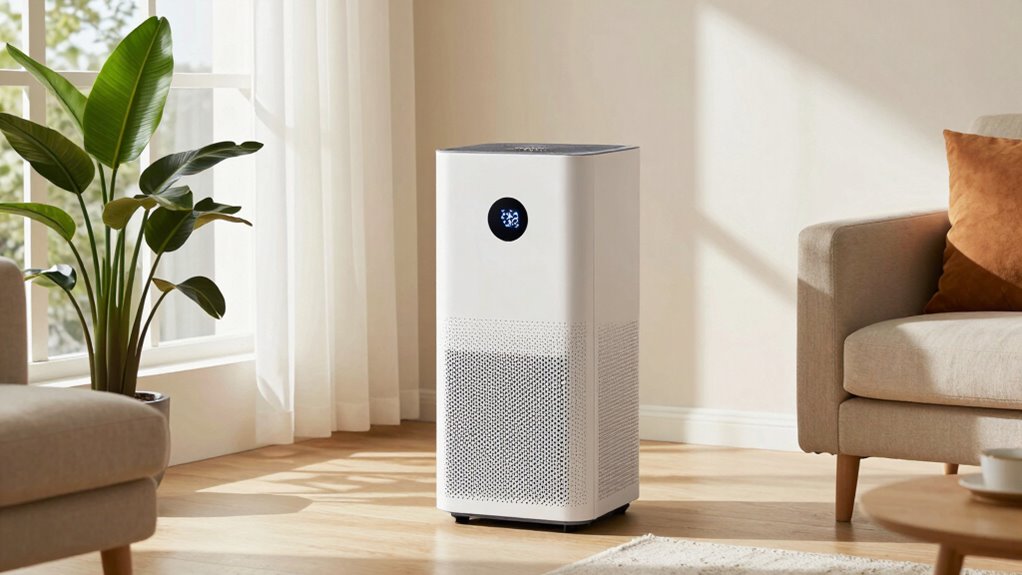
Choosing the right CADR for your room depends on matching the purifier’s capacity to the space’s size and your specific air quality concerns. To do this effectively, consider how often you’ll monitor air quality and adjust settings accordingly. A higher CADR is ideal for larger rooms or significant pollution, while lower CADR suits smaller spaces or minor concerns. Keep in mind that regular air quality monitoring helps you determine if your purifier meets your needs. Additionally, understanding filter replacement schedules ensures your device maintains ideal performance.
- Match CADR to room size for efficient purification
- Prioritize air quality monitoring to track improvements
- Select a purifier with appropriate filter replacement schedules
- Consider your specific air pollution concerns
- Balance CADR with energy efficiency and noise levels
Tips for Picking the Best Air Purifier Based on CADR and Other Features
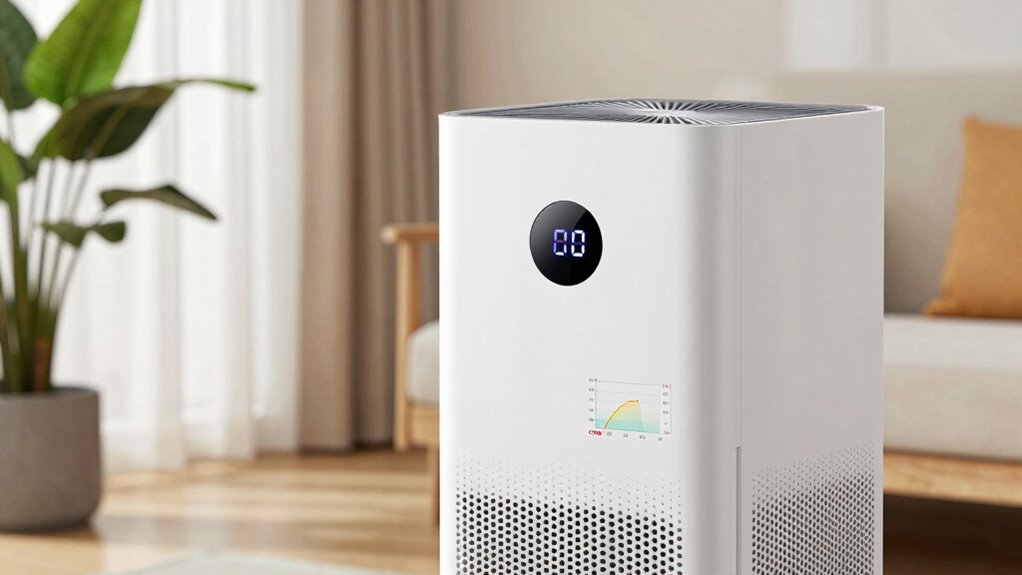
Selecting the best air purifier involves more than just matching its CADR to your room size; you also need to contemplate additional features that enhance performance and convenience. Look for devices with smart air quality sensors that automatically adjust fan speed, ensuring clean air without constant manual control. Consider filters that are easy to replace and require minimal device maintenance, saving you time and hassle. Check for features like quiet operation, energy efficiency, and user-friendly controls, which improve overall usability. Keep in mind that a higher CADR doesn’t guarantee better air quality if the device isn’t suitable for your specific needs. Prioritize models that combine effective CADR ratings with practical features to maintain *superior* air quality effortlessly.
Frequently Asked Questions
How Does CADR Compare to Other Air Purifier Performance Metrics?
You’ll find that CADR measures how quickly an air purifier can clean the air, mainly focusing on air exchange rates. Compared to filtration efficiency, CADR shows real-world performance, but it doesn’t account for the purifier’s ability to remove specific pollutants. While a high CADR indicates faster air exchange, consider filtration efficiency to gauge how well the unit filters out particles for cleaner indoor air.
Can CADR Ratings Change Over an Air Purifier’s Lifespan?
The ball’s in your court—CADR ratings can fluctuate over an air purifier’s lifespan. As filters clog and components age, expect a slight dip in CADR performance, reflecting a natural decline. Regular maintenance and timely filter replacements help maintain consistent CADR levels, ensuring your purifier continues to do its job effectively. Keep an eye on performance, and don’t be surprised if those numbers shift gradually over time.
Is There a Standard Testing Method for CADR Across Brands?
There isn’t a strict standardized testing method for CADR across brands, which can lead to brand variability. Different manufacturers may test their air purifiers under varying conditions, making direct comparisons tricky. To get the best idea of a purifier’s performance, look for third-party lab tests or certified ratings. Keep in mind that real-world performance might differ from the published CADR due to these inconsistencies.
How Do Room Shape and Furniture Affect CADR Effectiveness?
Room shape and furniture considerably shape CADR effectiveness. You’ll notice that airflow patterns can be disrupted by obstacles, causing air to circulate unevenly. Strategic obstacle placement promotes better airflow, helping the purifier cover the entire space. Irregular room shapes can create stagnant spots where pollutants linger. To maximize CADR, position your air purifier centrally and clear clutter, ensuring unimpeded airflow patterns for cleaner, healthier air throughout your space.
Are Lower CADR Ratings Acceptable for Small or Personal Spaces?
Yes, lower CADR ratings are acceptable for personal spaces since they effectively improve air quality within small or confined areas. If you’re using an air purifier in a personal space, focus on achieving safe levels of clean air rather than high CADR numbers. A device with a modest rating can still maintain healthy air quality, especially when room size and furniture are considered, ensuring you stay safe and comfortable.
Conclusion
Think of CADR as the map guiding your air purifier journey. Just like a compass points north, understanding CADR helps you find the right device for your space. Don’t get lost in numbers — focus on what truly matters for your air quality needs. With this knowledge, you’ll navigate the world of air purifiers confidently, ensuring your home stays fresh and healthy, no matter where your quest takes you.