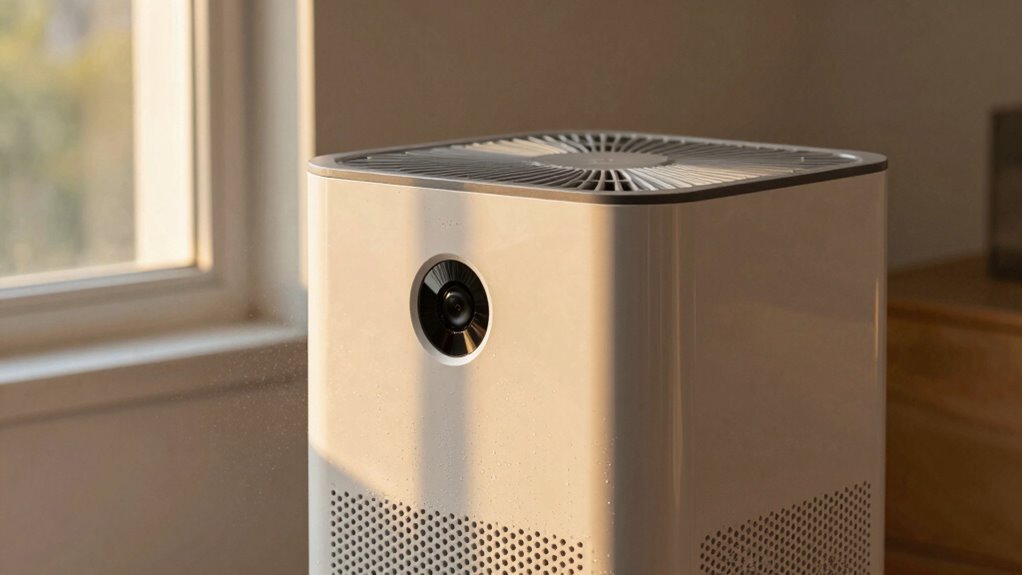

It’s normal for your dehumidifier to feel warm while operating because it generates heat from its compressor and motor as part of the moisture removal process. This warmth helps improve efficiency and isn’t a sign of trouble. Factors like dust buildup, blocked vents, or extended use can make it feel warmer. If you’re curious about how to manage this heat safely, there’s more to know to keep your unit running smoothly.
Key Takeaways
- The warmth from dehumidifiers is caused by the compressor and motor, which generate heat during operation.
- This heat helps improve energy efficiency and is a normal part of the dehumidification process.
- Proper airflow and placement prevent excessive heat buildup and ensure safe operation.
- Regular maintenance, such as cleaning filters and vents, can prevent overheating.
- Feeling warmth is typical and does not indicate malfunction unless accompanied by other signs of issues.
Is It Normal for My Dehumidifier to Feel Warm?

It’s common for your dehumidifier to feel warm during operation, but it’s important to understand why. The warmth helps improve energy efficiency by allowing the device to operate effectively without overworking its compressor. When the compressor runs, it generates heat as a natural part of removing moisture from the air. This heat isn’t a sign of a malfunction but a normal process that helps your dehumidifier perform efficiently. Additionally, the warmth can influence noise levels, but modern units are designed to operate quietly despite feeling warm. If your dehumidifier feels excessively hot or makes loud noises, it might be worth checking the vents or filters. Proper ventilation and energy-efficient design are key to optimal operation. The heat produced can also aid in maintaining the overall device lifespan, ensuring your dehumidifier functions well over time. Regular maintenance and proper placement can help prevent overheating issues. Furthermore, understanding how free floating components work in your dehumidifier can help troubleshoot minor problems. Overall, a warm device during use is typically normal and a sign of proper operation.
Why Do Dehumidifiers Feel Hot When Operating?
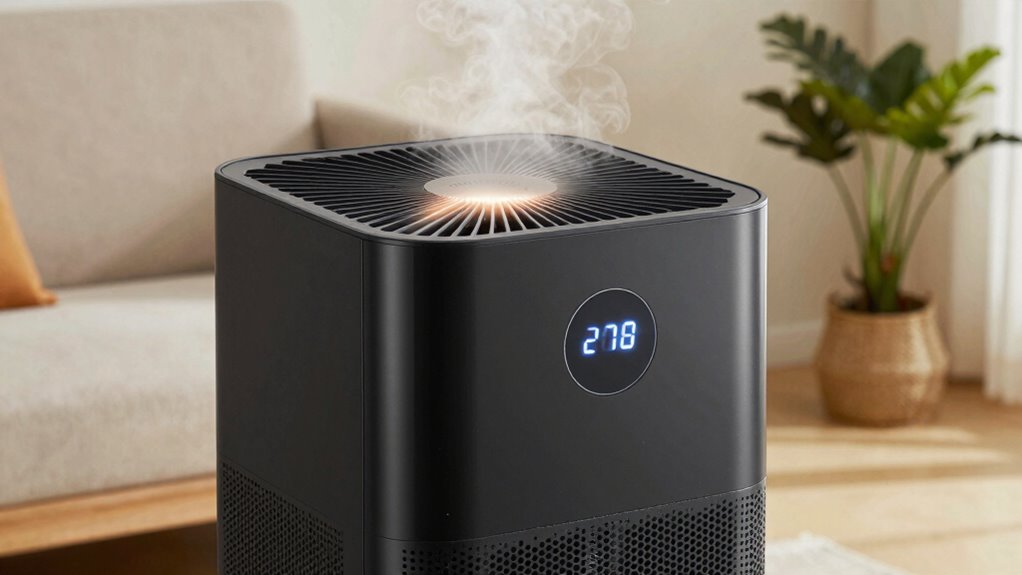
Have you ever noticed your dehumidifier feeling hot while it’s running? That’s normal and linked to its energy efficiency. When operating, the compressor and condenser generate heat, which can make the unit feel warm. This heat release is part of the dehumidifier’s process of removing moisture and maintaining ideal humidity levels. You might also notice increased noise levels as the compressor works harder, especially in smaller or less insulated rooms. This warmth and noise are signs your dehumidifier is functioning properly, not malfunctioning. Normal operation also involves heat dissipation from the compressor and condenser components, which is essential for effective moisture removal.
What Factors Cause Your Dehumidifier to Get Hot?

Ever wonder why your dehumidifier gets hot even when it’s working properly? The main factor is the heat generated during the dehumidification process, which is normal. As the appliance pulls moisture from the air, it uses a compressor and fan, both of which produce heat. This heat is a byproduct of the refrigeration cycle, similar to an air conditioner. While this is typical, it’s important to *contemplate* humidifier safety; excessive heat could indicate appliance overheating. If your dehumidifier feels unusually hot or the casing becomes very warm, it might be a sign of a problem. Ensuring proper ventilation around the unit can help prevent overheating and maintain safe operation. Proper device maintenance and regular cleaning can also help reduce the risk of overheating and prolong the lifespan of your appliance. Regularly checking for malfunctions can help identify issues early before they lead to overheating. Remember, a slightly warm appliance is normal, but persistent heat should be monitored. Additionally, choosing reliable backup power sources can ensure your appliances operate safely during outages. Proper home automation can also help monitor device temperatures and alert you to potential issues.
Should I Be Concerned If My Dehumidifier Gets Too Hot?

If your dehumidifier feels excessively hot to the touch or the casing becomes uncomfortably warm, you should pay close attention. While some warmth is normal, overheating can signal issues with appliance safety. Here’s what you should consider:
- Check for dust buildup — dust can cause overheating, requiring proper dehumidifier maintenance. Regular cleaning helps prevent dust accumulation that can impair airflow and lead to excess heat.
- Ensure proper airflow — blocked vents can trap heat, so keep vents clear.
- Inspect the power cord — damaged cords may lead to overheating and pose safety risks.
- Monitor for strange noises or smells — these can indicate internal problems needing professional attention.
- Be aware of AI-related risks — understanding AI cybersecurity is crucial, as cyber threats can target smart appliances and compromise safety.
- Regularly check the internal components for signs of wear or damage to prevent electrical issues that could cause overheating.
If these signs persist, it’s best to turn off the unit and consult a technician. Regular maintenance ensures safe operation and prevents potential hazards.
How Can I Reduce the Warm Feeling Without Affecting Performance?
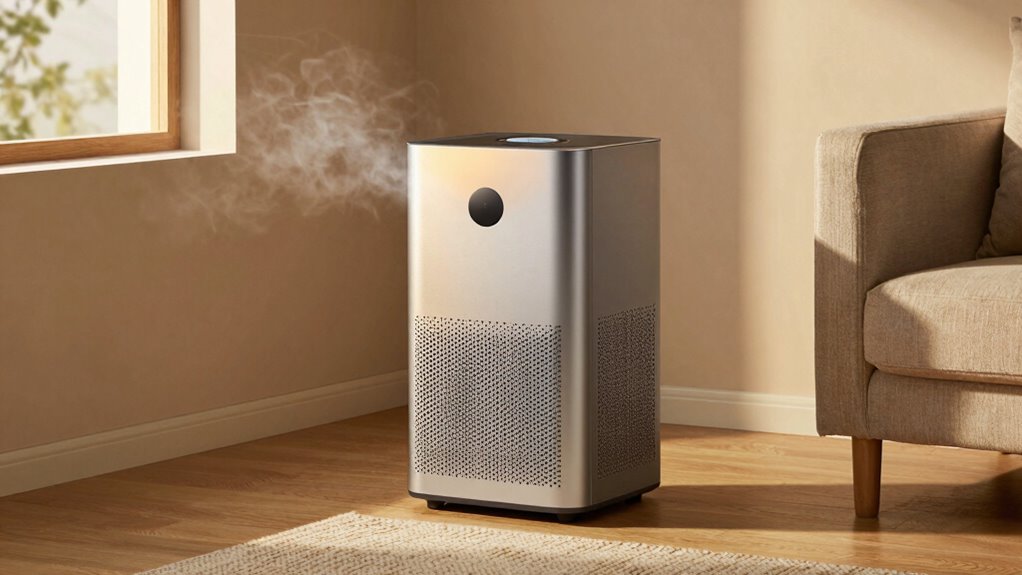
To reduce the warm feeling from your dehumidifier without compromising its performance, start by ensuring it’s placed in a well-ventilated area with plenty of space around it. Proper placement helps dissipate heat more effectively, reducing the warm sensation. If fan noise bothers you, consider adjusting the fan speed to a lower setting; this can decrease heat output and noise while maintaining dehumidification. Be mindful of energy consumption—using features like timers or energy-saving modes can help run the unit efficiently without increasing warmth. Additionally, cleaning filters regularly improves airflow, which can reduce heat buildup. Keep the unit away from direct sunlight or heat sources, and ensure it’s on a level surface. Understanding heat distribution can help you optimize placement and reduce residual warmth in your space. Being aware of thermal behavior and how your dehumidifier operates allows you to make informed adjustments to maintain a comfortable environment. For example, proper airflow management can significantly impact how heat is dispersed and perceived. Knowing how to improve air circulation effectively can further enhance comfort and efficiency. These steps help keep the room comfortable without sacrificing dehumidifier performance.
When Should I Troubleshoot or Call a Technician?
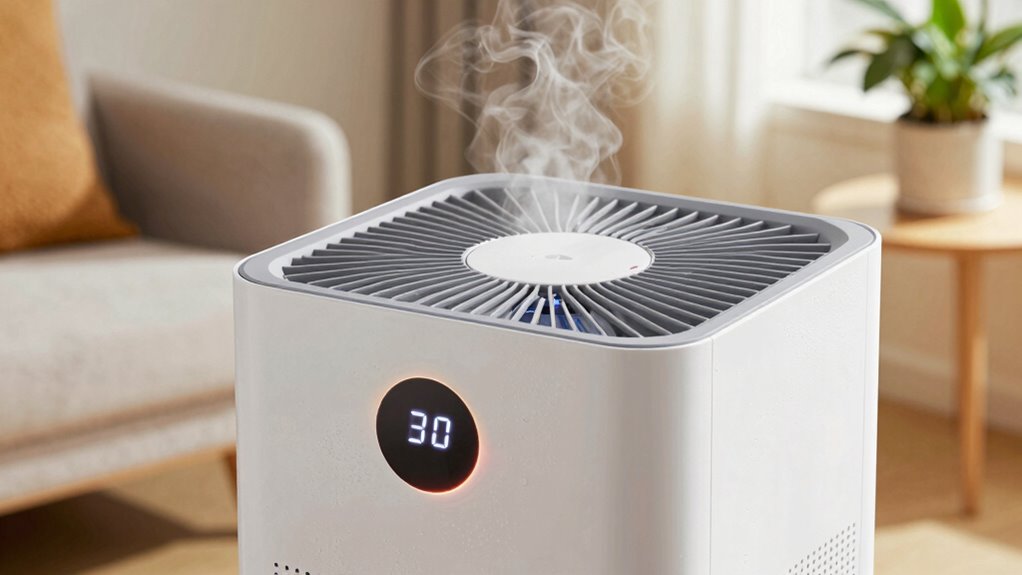
Knowing when to troubleshoot or call a technician is essential to guarantee your dehumidifier works efficiently. If you notice persistent issues, it may be time to seek professional help. Consider the following:
- The unit isn’t removing moisture or shows no signs of operation.
- Unusual noises or vibrations occur during operation.
- The dehumidifier cycles on and off frequently, impacting energy efficiency.
- You’ve performed basic maintenance tips, like cleaning filters and coils, but issues persist.
- Understanding humidistat function can help you better diagnose operational problems. Additionally, issues related to connected equipment or improper settings may contribute to the problem. Recognizing manipulation tactics used by some faulty units can also aid in troubleshooting. Regularly monitoring performance indicators can help catch problems early before they worsen.
Addressing these signs early helps maintain peak performance and energy efficiency. Troubleshooting simple problems can save you money and extend your dehumidifier’s lifespan. However, if problems continue after basic maintenance, calling a technician ensures safe, effective repairs and prevents further damage. Acting promptly keeps your dehumidifier running smoothly.
Frequently Asked Questions
Can a Hot Dehumidifier Cause a Fire Risk?
A hot dehumidifier can pose a fire hazard if not used properly. To guarantee safety, always follow the manufacturer’s instructions, keep the unit away from flammable materials, and regularly clean filters. Avoid overloading outlets and unplug the dehumidifier when not in use. These safety precautions help prevent potential fire risks, so stay vigilant and maintain your dehumidifier to keep your home safe.
Does Room Temperature Affect Dehumidifier Heat?
You notice the dehumidifier feels warmer in your room, and yes, room temperature does influence its heat. When humidity levels are high, the device works harder, generating more warmth. Better air circulation helps it run efficiently, preventing excessive heat buildup. Cooler rooms might keep it feeling less hot, while warmer spaces can make it seem hotter. Adjusting humidity levels and ensuring proper airflow can help maintain a comfortable temperature.
Is It Safe to Leave a Hot Dehumidifier Unattended?
Yes, it’s safe to leave a hot dehumidifier unattended when placed properly and with noise level concerns in mind. Make certain you position it on a flat, level surface away from curtains or clutter to prevent overheating. Regularly check the device for signs of overheating or unusual noise, and avoid covering vents. If you follow these safety tips, you can confidently leave your dehumidifier running without worry.
How Often Should I Clean My Dehumidifier to Prevent Overheating?
You should clean your dehumidifier at least once a month to prevent overheating, as dust buildup can cause it to work harder and get too hot. Regular maintenance tips include checking and cleaning the filter and coils during your cleaning schedule. Keeping your dehumidifier clean guarantees efficient operation, reduces the risk of overheating, and extends its lifespan. Don’t neglect these simple steps for safe, effective performance.
Can Using a Fan Help Reduce Dehumidifier Warmth?
Using a fan can definitely help reduce your dehumidifier’s warmth by boosting airflow and aiding heat dissipation. Fan assistance improves ventilation around the unit, preventing heat buildup and making it feel cooler. Keep in mind, though, it’s not a cure-all; ensuring your dehumidifier is clean and well-maintained also plays a key role in managing warmth. Combining these strategies can make your space more comfortable and your device more efficient.
Conclusion
Remember, it’s normal for your dehumidifier to feel warm during operation—it’s working hard to remove moisture from the air. In fact, some models can reach surface temperatures of up to 140°F, which is common and safe. If it feels excessively hot or you notice unusual smells or sounds, don’t hesitate to troubleshoot or call a technician. Maintaining your unit in good shape guarantees it runs efficiently and keeps your air comfortable and safe.